
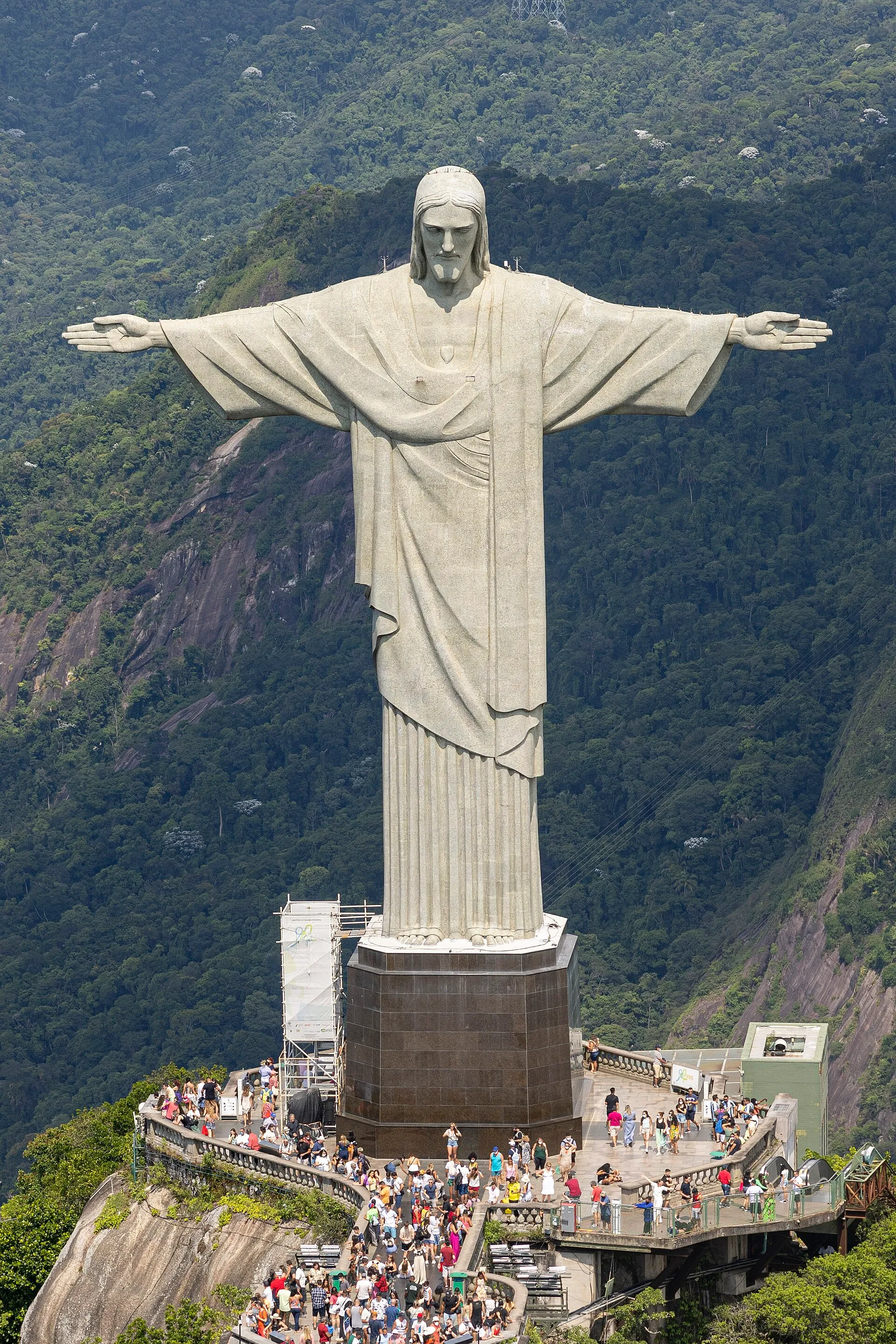
Spiritual Significance
Cristo Redentor was conceived as a symbol of Catholic faith presiding over a rapidly modernizing city during the 1920s, when Brazil's political and cultural elites debated the role of religion in the new republic. Inaugurated on October 12, 1931 — the feast day of Nossa Senhora Aparecida — the open-armed pose was deliberately chosen to represent universal welcome rather than judgment, a theological statement of divine embrace over a nation of profound social inequality. The small chapel inside the pedestal, dedicated to Our Lady of Aparecida, hosts weddings, baptisms, and regular devotional services, making this both a tourist landmark and an active place of worship. For many Cariocas the statue embodies not just religion but civic identity — it was illuminated in national colors when Brazil won the 2002 World Cup, draped in symbolic lighting during the 2016 Olympics opening ceremony, and projected with messages of solidarity during the COVID-19 pandemic. The statue's placement atop Corcovado within the Mata Atlantica rainforest adds an environmental dimension: Cristo watches over Tijuca National Park, a reminder that stewardship of creation accompanies spiritual aspiration.
Visitor Etiquette
Although Cristo Redentor functions primarily as a tourist destination, the chapel inside the pedestal is a consecrated space where religious services occur regularly. Dress modestly if you plan to enter the chapel — covered shoulders and knees are expected. The summit platform itself has no formal dress code, but respectful behavior is expected: avoid loud music from portable speakers, do not climb on railings or barriers for photos, and be mindful that for many Brazilian visitors this is a pilgrimage site, not merely a viewpoint. Photography is permitted everywhere on the summit platform, but be considerate of other visitors waiting for their turn at popular photo positions. The site is wheelchair accessible via elevators installed during the 2003 renovation.
Christ the Redeemer timeline
- 1850s
A monument first proposed
The Vincentian priest Pedro Maria Boss suggests a Christian monument on Corcovado to honor Princess Isabel, but the imperial government shelves the idea.
-
Corcovado rack railway opens
Brazil's first electric railway climbs the mountain to carry timber and passengers, giving the future statue its most scenic approach nearly 50 years before it existed.
-
Fundraising and construction begin
During the centennial of Brazilian independence the Catholic Circle of Rio launches Monument Week, raising public donations to fund the design by Paul Landowski and engineer Heitor da Silva Costa.
- October 12, 1931
Cristo Redentor inaugurated
The 38-meter monument is unveiled on the feast day of Nossa Senhora Aparecida after soapstone tiles shaped in France are fixed to its reinforced-concrete frame.
-
Named a New Wonder
A global poll names Christ the Redeemer one of the New Seven Wonders of the World, cementing its status as Brazil's defining landmark.
-
Major restoration
A full cleaning and repair renews the soapstone skin and upgrades the lightning-protection system ahead of the World Cup and Olympic decade.
-
Lightning chips the thumb
A storm strike breaks a fingertip from the statue's right hand, a reminder of the constant maintenance the exposed summit demands.
When to Visit
Daily: 8 AM - 7 PM year-round. Best: Sunrise (8-9 AM) or late afternoon for fewer crowds and softer light. Avoid: 11 AM - 3 PM when tour bus waves create peak congestion at the summit. Weather check: Clouds at Corcovado's 710-meter altitude can completely obscure views — check the forecast before committing. The cog train departs every 20 minutes from Cosme Velho station and takes 20 minutes to reach the summit. December-February (Brazilian summer) is peak season with the longest queues.
Admission and Costs
Train + entry: R$98 (about $20) round trip from Cosme Velho. Van tour: R$80-100 per person (slightly cheaper, same summit access). Guided tour: R$150-250 with transport included. Private guide: R$500-800 for personalized experience with hotel pickup. Book 1-2 weeks ahead at paineirascorcovado.com.br — peak season slots (December-February) sell out fast.
The Case for a Guide
Cristo Redentor is one of the most photographed statues in the world, yet the specific decisions behind its Art Deco form, the soapstone tile installation story, and the panoramic geography visible from Corcovado require someone who knows Rio to unlock.
- Art Deco soapstone tile installation story: The outer surface consists of millions of small triangular soapstone (esteatita) tiles, each shaped by hand in studios in France and shipped to Brazil — guides explain how sculptor Paul Landowski worked with engineer Heitor da Silva Costa to solve the curved surface coverage problem and why soapstone was chosen over other materials.
- Lightning strike repairs: The statue has been struck by lightning over 25 times, with the most significant damage in 2008 and 2014 chipping fingers and the head — guides explain the repair process, the reinforced lightning rod system installed during the 2010 renovation, and why the subtropical summit climate makes strikes inevitable.
- Corcovado rack railway history: The cog railway opened in 1884, predating the statue by nearly 50 years, and was originally used to transport timber from the Tijuca Forest — guides explain the full history of the line and why it remains the most scenic approach despite the van alternative.
- Sunrise mass access for believers: A small Catholic chapel inside the pedestal hosts regular masses, and the first train on Sunday mornings carries worshippers for a sunrise service — guides explain access logistics for visitors who want to attend rather than simply photograph.
- Panoramic landmark identification: From 710 meters, the entire Guanabara Bay panorama stretches before you — guides name every visible beach, neighborhood, bridge, and island, turning the view from a beautiful blur into a comprehensible map of Rio that serves the rest of your visit.
Tips for Visitors
Book ahead: Peak season slots (December-February) sell out 1-2 weeks in advance. Weather is crucial: clouds at summit altitude can completely obscure views, so check the forecast before committing. Wear layers: the summit is significantly cooler and windier than sea level Rio de Janeiro. Bring sun protection: there is minimal shade at the top. The cog train from Cosme Velho is the most scenic route, but van tours are slightly cheaper and faster. Combine wisely: many visitors pair Cristo Redentor with Sugarloaf Mountain on the same day — do Christ the Redeemer in the morning and Sugarloaf for sunset. Photography: morning light illuminates the statue's face; afternoon visitors shoot into the sun.
Frequently Asked Questions
What months offer the clearest views from Christ the Redeemer?
July and August — Rio's dry winter — deliver the least cloud cover at Corcovado's 710-meter summit and the most reliable panoramic visibility over Sugarloaf and Guanabara Bay. The Brazilian summer (December-February) brings heavy afternoon thunderstorms that frequently shroud the statue in mist, plus the largest tourist crowds. March through May offers a good compromise with drier weather and thinning holiday crowds.
Can tourists visit Christ the Redeemer any day of the week?
Yes — the summit is open every day of the year, from 8 AM to 7 PM, including Sundays, when the first train of the morning carries worshippers up for Mass in the pedestal chapel. Closures are the exception, not the rule; crowds are the real constraint. Aim for the 8-9 AM sunrise slot or the last two hours before closing, and avoid the 11 AM to 3 PM window when tour-bus groups pack the three tiers of viewing terraces below the statue.
How do you get up to Christ the Redeemer — train, van, or on foot?
Three routes reach the 710-meter summit. The historic cog railway from Cosme Velho, running since 1884, is the most scenic, climbing about 20 minutes through the Tijuca rainforest with departures every 20 minutes. Official vans from Paineiras or Largo do Machado are faster and marginally cheaper, though they stop short of the top and leave a short shuttle or a climb of 220 steps (an escalator and panoramic lifts offer a step-free alternative). Fit hikers can walk up the Trilha do Corcovado from Parque Lage in roughly two hours and still pay the summit entry at the top. There is no private-car or taxi access to the statue itself.
Is there a fee to enter Christ the Redeemer?
There is no charge to stand before the statue, but reaching the summit inside Tijuca National Park is ticketed. The official cog train from Cosme Velho station, entry included, runs about R$98 ($20) round trip; licensed vans from Paineiras or Largo do Machado cost a similar R$80-100 for the same access. Add a guide and you are looking at R$150-250 for a small-group tour with transport, or R$500-800 for a private guide with hotel pickup. Book at paineirascorcovado.com.br a week or two ahead, as summer slots sell out fast.
What happens if it is cloudy the day I booked Christ the Redeemer?
At 710 meters the summit often sits in the cloud line, so mist can erase the Guanabara Bay panorama even when the beaches below are sunny. Timed tickets are generally non-refundable for weather, which is why Cariocas check the Corcovado forecast before committing and favor the clear winter mornings of June through August. If the peak is socked in, an experienced guide can shift your slot later in the day or pivot to Sugarloaf Mountain, whose lower cable-car station usually stays beneath the cloud.
What should visitors know before going to Christ the Redeemer?
Book 1-2 weeks ahead at paineirascorcovado.com.br as peak season slots (December-February) sell out fast. Wear layers because the summit is significantly cooler and windier than sea level. Bring sun protection as there is minimal shade at the top.