
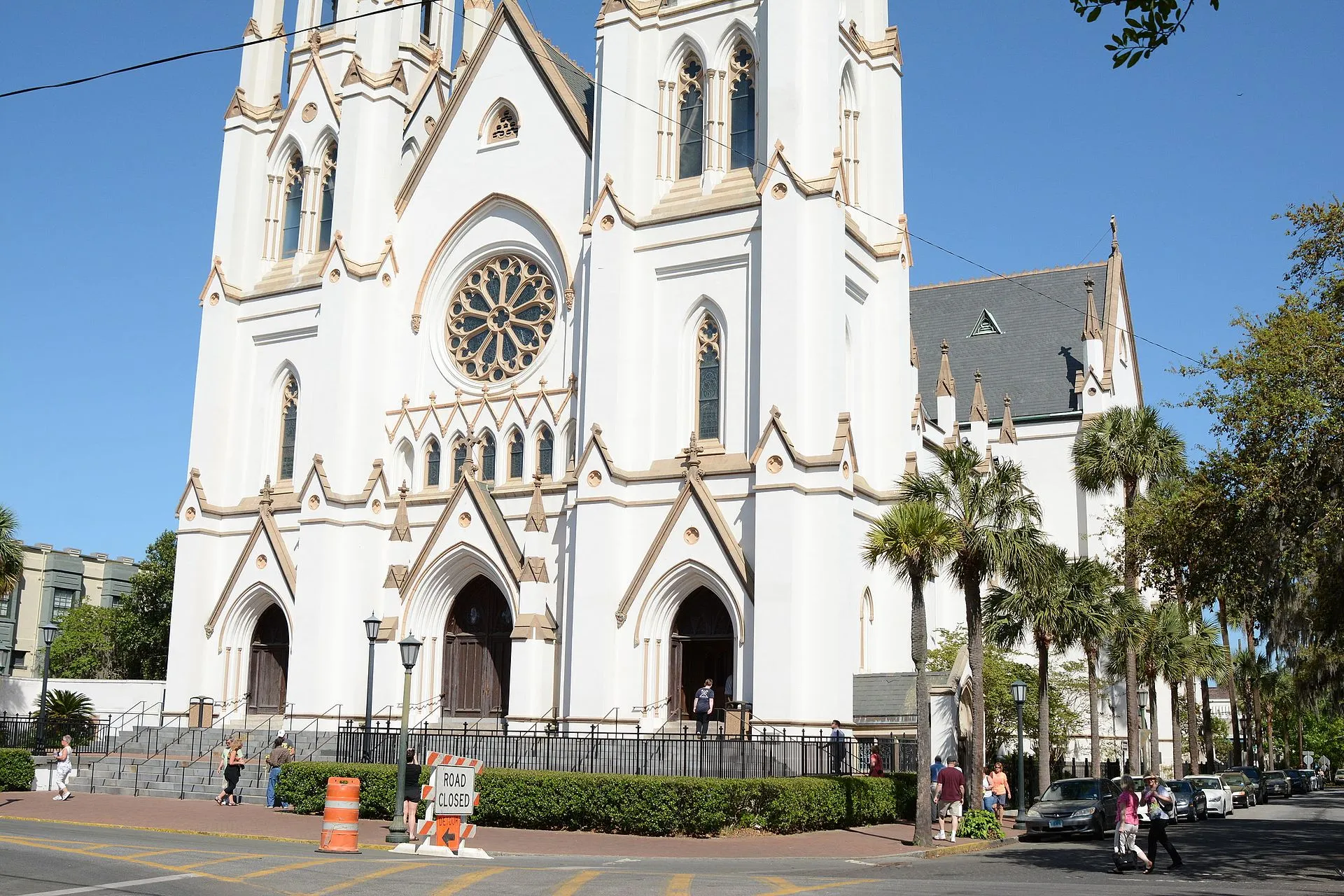
Visitor Etiquette
The Cathedral of St. John the Baptist is an active Catholic parish church where Masses are held daily — visitors who arrive during a scheduled Mass should enter quietly, remain in the side aisles, and refrain from moving through the nave until the service concludes. Dress code is expected: covered shoulders and knees as a courtesy in this place of active worship. Maintain a whispered voice at all times, silence mobile phones, and avoid disturbing anyone who may be praying privately in the pews or side chapels. Photography is permitted without flash for personal use; professional photography and filming require advance permission from the parish office. Do not approach or touch the marble altar, the sanctuary furnishings, or the area near the tabernacle. The cathedral has no bag check or luggage storage, so large luggage or backpacks may obstruct the narrow side aisles.
Spiritual Significance
The Cathedral of St. John the Baptist was founded in 1799 by French Catholic refugees who had fled the Haitian Revolution — people who had lost homes, property, and community in one of the most violent upheavals of the Atlantic world, and who responded by immediately establishing a parish church as the first communal act of their new life in Savannah. That founding impulse — that a displaced community's first priority was the construction of a sacred gathering place — defines the cathedral's spiritual character as a church of exile and resilience. The devastating fire of 1898 that gutted the interior just two years after completion was experienced by the parish as a spiritual trial: the congregation had sacrificed enormously to build a worthy house of worship, and its near-total destruction tested whether their devotion was authentic or circumstantial. The decade of restoration that followed, funded by a parish that was not wealthy, and decorated by European craftsmen summoned to work at the edge of the American South, was the community's answer to that trial — and the result surpassed what had burned. The over 50 stained glass windows depicting biblical scenes and saints are not decorative embellishment but a theological program: the colored light flooding the nave throughout the day enacts the same visual theology as the great medieval cathedrals, making visible the doctrine that divine illumination enters the world through specific figures and stories. John the Baptist, to whom the cathedral is dedicated, was the voice crying in the wilderness to prepare the way for what comes after — a patron whose identity resonates for a community of exiles who also prepared a way in unfamiliar territory.
When to Visit
Self-guided visits: Monday through Friday 9:00 AM to 5:00 PM, Saturday 9:00 AM to 5:00 PM. Visitors are welcome to enter quietly when services are not in progress. Mass schedule: Multiple daily Masses; Sunday Masses typically at 8:00 AM, 10:00 AM, 11:30 AM (Latin), and 5:00 PM. Check the parish website for current times. Best for stained glass: Morning light (9-11 AM) illuminates the eastern windows most dramatically; afternoon light (2-4 PM) brings the western rose window to life. Docent tours: Volunteer-led tours are offered on select days, typically weekday mornings. Check with the parish office for the current schedule
Admission and Costs
Admission: Free. The cathedral welcomes all visitors at no charge. Donations are appreciated and support building maintenance. Group walking tour including the cathedral: $20-35 per person as part of a 2-hour Historic Squares walking tour. Private sacred architecture tour: $175-300 for up to 6 people, focusing on the cathedral's design, construction, fire, and reconstruction alongside other religious buildings in the Historic District. Photography permits: Personal photography is permitted without flash. Professional photography and filming require advance permission from the parish
The Case for a Guide
The cathedral's beauty is immediately apparent, but its stories reward those who arrive with someone who can decode the iconographic program and frame the fire as a narrative of communal faith tested and affirmed.
- Stained glass as visual theology: Each of the 50-plus windows depicts specific biblical scenes and saints in a theological sequence; a guide walks visitors through the windows as a visual narrative, explaining the program that determined their placement throughout the nave
- 19th-century European glasswork techniques: The Austrian and German craftsmen from the Innsbruck Glassworks and Munich's Mayer studio used layered colored glass, silver staining, and enamel painting techniques that represent the pinnacle of the era; a guide explains these methods so windows read as craft achievements, not merely "pretty light"
- The 1898 fire as spiritual test: The parish had barely completed the building when fire gutted the interior — a guide frames the decade-long reconstruction as a story of community resilience, explaining how the replacement art program surpassed the pre-fire interior in ambition and quality
- Haitian refugee origins: The 1799 founding by French Catholics fleeing the Haitian Revolution places the cathedral in a global story of diaspora faith; a guide connects the colonial Atlantic world to the building standing on Lafayette Square
Tips for Visitors
Dress respectfully: While there is no strict dress code for visitors, shoulders and knees should be covered as a courtesy in this active place of worship. Silence is expected: The cathedral is an active parish church. Keep voices to a whisper, silence phones, and avoid disrupting anyone who may be praying. Avoid Mass times for touring: If your goal is to explore the architecture and art, visit outside of scheduled Mass times when you can move freely through the nave. Bring binoculars: The ceiling details and upper window panels are far above eye level. Compact binoculars reveal extraordinary detail in the murals and glass. Visit Flannery O'Connor's home: The author's childhood home is directly across Lafayette Square from the cathedral. The O'Connor family attended Mass here, and the proximity connects two pillars of Savannah's cultural identity. Combine with the squares: Lafayette Square is one of the most beautiful of Savannah's Historic Squares, and the surrounding blocks contain exceptional residential architecture that complements the cathedral visit
Frequently Asked Questions
What time of year is best for visiting the Cathedral of St. John the Baptist?
The cathedral's stunning interior is climate-controlled and rewarding year-round, but spring and fall bring the most pleasant conditions for combining your visit with a walk around Lafayette Square and the surrounding Historic District. The stained glass windows catch the most dramatic light during morning visits in the spring and fall months, when the sun angles illuminate the Austrian glass to its full luminous potential.
Can tourists visit Cathedral of St. John the Baptist any day of the week?
Self-guided visits: Monday through Friday 9:00 AM to 5:00 PM, Saturday 9:00 AM to 5:00 PM. Visitors are welcome to enter quietly when services are not in progress.
What is the entrance fee at Cathedral of St. John the Baptist?
Admission: Free. The cathedral welcomes all visitors at no charge. Donations are appreciated and support building maintenance. Group walking tour including the cathedral: $20-35 per person as part of a 2-hour Historic Squares walking tour.
Are guided tours available at Cathedral of St. John the Baptist?
Guides walk visitors through the 50-plus stained glass windows as a visual narrative, explaining the theological program behind their placement. They also frame the 1898 fire and decade-long reconstruction as a story of community resilience and artistic ambition.