
Landmarks Along
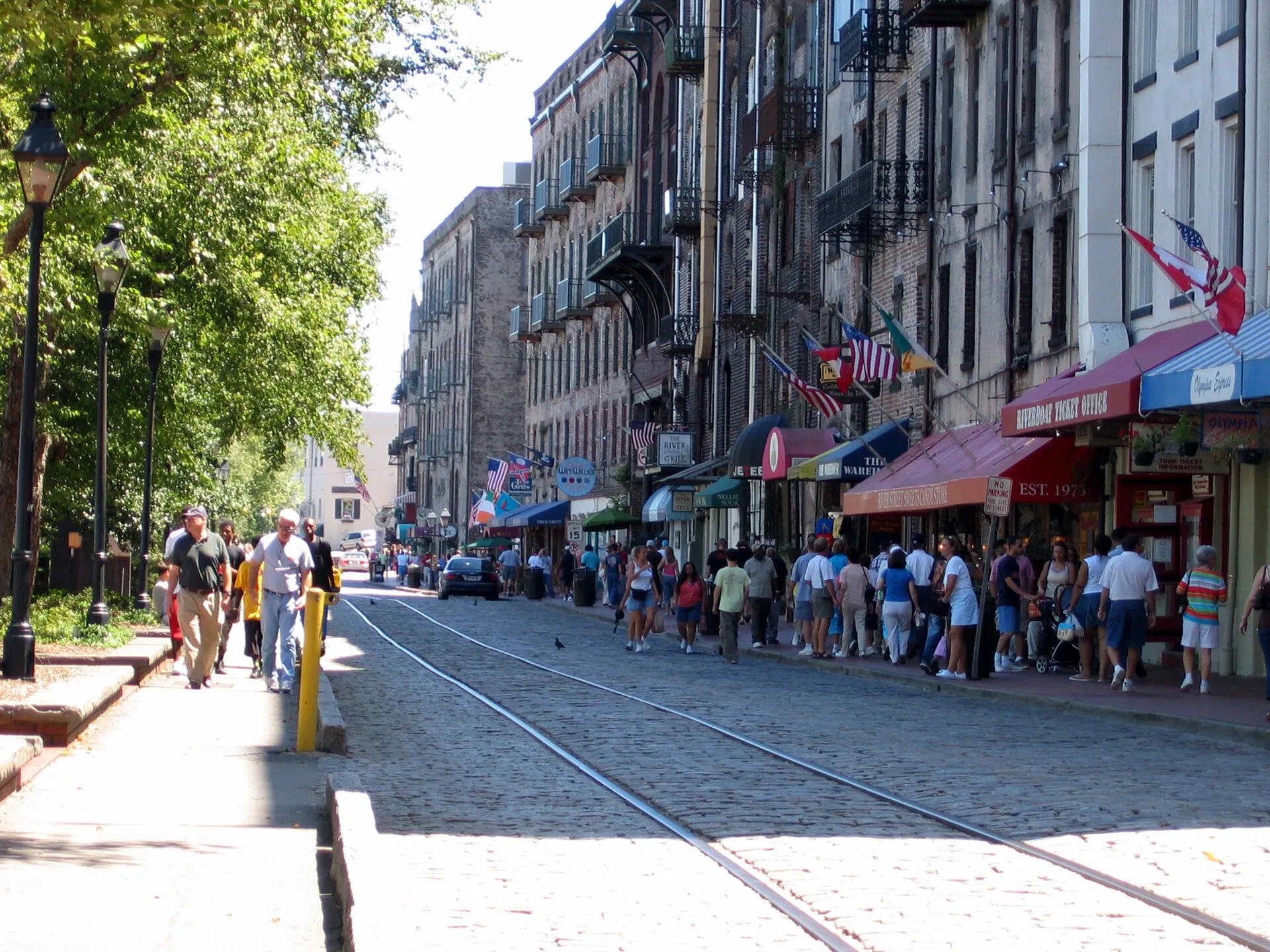
River Street packs its history and its shopping into roughly half a mile, so it rewards a slow walk from end to end.
- The working port — Ocean-going container ships pass within a few hundred feet of the promenade, nudged along by tugboats. No other stretch of shops in the country puts you this close to a deep-water shipping lane.
- River Street Sweets — Founded in 1973, this praline shop helped make the confection a Savannah signature; staff hand out warm samples pulled straight from the copper kettles, and the pralines, taffy, and bear claws are made in the window. Savannah's Candy Kitchen a few doors down offers the same theater.
- Warehouse galleries and boutiques — Original timber beams, iron hardware, and hand-laid brick survive inside the converted stores, which now hold local art galleries, Savannah-made goods, and souvenir shops.
- The Waving Girl statue — At the eastern end, a bronze of Florence Martus commemorates the woman who reportedly greeted every ship entering and leaving the port for 44 years, from 1887 to 1931, becoming the port's unofficial hostess.
- The African American Monument — Dedicated in 2002, this family group in bronze carries an inscription by the poet Maya Angelou and marks the waterfront's connection to the transatlantic slave trade.
- Waterfront restaurants and pubs — Seafood houses, Irish pubs, and rooftop bars line the street, many with patios angled toward the river so you can eat while the ships pass. Weekend evenings bring live music to several of them.
- Plant Riverside District — At the west end, the reborn power plant anchors a newer cluster of restaurants, bars, and public plazas that extend the promenade beyond the historic warehouses.
Photo Spots
River Street gives photographers a rare combination of texture, scale, and living movement, and a few vantage points stand out.
- The ramps of Factors Walk — Shooting down the ballast-stone ramps toward the river captures the cobblestones, the iron crosswalks, and the warehouse facades in a single frame that says old Savannah better than any other.
- A patio with a passing ship — Frame a restaurant table or a lamppost against a container vessel gliding by; the juxtaposition of a leisurely lunch and a moving wall of steel is the shot visitors remember.
- The Waving Girl at the east end — The bronze statue reads best in morning light with the Talmadge Bridge and the open river behind it.
- Golden hour on the promenade — Late-afternoon sun rakes across the uneven stones and warms the brick, and the water picks up the light as the patios fill.
- Rooftop over Bay Street — Climb to one of the bluff-top rooftop bars for an elevated panorama of the river, the bridge, and the steepled Historic District skyline.
River Street timeline
- 1730s
Bluff warehouses rise
Merchants build brick and ballast-stone stores at the base of the bluff to hold cotton, rice, and naval stores before shipment.
- 1880s
Cotton Exchange era
Savannah ranks among the busiest cotton ports on the Atlantic; factors set world prices from offices along the bluff-top Factors Walk.
-
The Waving Girl begins
Florence Martus starts greeting every ship entering and leaving the port, a ritual she keeps for 44 years.
-
Rousakis Plaza revival
A waterfront renovation paves Rousakis Plaza and turns the derelict warehouses into a dining and entertainment district.
-
Talmadge Bridge opens
The cable-stayed Talmadge Memorial Bridge replaces its 1950s predecessor and frames the downriver view.
-
Plant Riverside opens
A former power plant at the west end reopens as the Plant Riverside District, extending the waterfront promenade.
When to Visit
Street access: Public at all hours, though most shops and restaurants operate from 10:00 AM to 10:00 PM, later on weekends. The cobblestone promenade itself never closes, and it is at its quietest — and safest to photograph — in the early morning before the tour trolleys arrive.
Best time of day: Late afternoon, when low light hits the river and the restaurant patios fill up, or evening for the lively bar and live-music scene. Ship watching is a matter of luck: container ships pass at unpredictable intervals, but mornings tend to see the most traffic, and the massive vessels are visible for several minutes before they draw level with the promenade. First Saturday festivals bring live music, street performers, and craft vendors to the waterfront on the first Saturday of most months, and the district stays busy through the St. Patrick's Day season in March, when Savannah hosts one of the largest celebrations in the country.
Admission and Costs
- Walking the waterfront — Free. The cobblestone promenade, ship watching, and people watching cost nothing.
- Group historical walk — $20-35 per person, covering River Street's cotton-trade history as part of a broader Savannah tour.
- Riverboat cruise — $30-50 per person for a 1-2 hour narrated cruise on the Savannah River aboard a replica paddlewheeler, with views of the port, the Talmadge Bridge, and the Historic District from the water.
- Food and drink tour — $55-85 per person, with tastings at several River Street and Bay Street establishments.
Most of what makes River Street memorable is free; the paid options mainly add historical context, a seat on the water, or a curated crawl through the district's kitchens and bars.
The Case for a Guide
Without context, River Street is a pleasant waterfront strip of shops and restaurants in old brick buildings. With a guide, the warehouses become chapters in a global trade story: how Georgia cotton reached the textile mills of Manchester, how the ballast stones under your feet arrived from Europe and Africa in ships that carried enslaved people on other voyages, and how the engineering of the bluff-top city required an entire infrastructure of ramps, bridges, and iron-reinforced retaining walls to connect the wharf level to the residential streets above.
A good guide supplies the economic and human context that casual visitors miss:
- The factors — the brokers who graded and sold plantation cotton worked from the offices along Factors Walk, and their ledgers connected the Lowcountry to a web of commerce that stretched across the Atlantic.
- Decline and reinvention — the collapse of the cotton trade left these warehouses derelict for nearly a century before the adaptive-reuse movement of the 1970s produced the district visitors enjoy today, a story about the tension between preservation and commercialization.
- The harder history — guides who take their work seriously connect the waterfront to the transatlantic slave trade commemorated by the African American Monument, rather than treating the street as a shopping backdrop.
- Reading the port — a guide can tell you what the passing ships are carrying, why the channel is dredged so deep, and how the modern Port of Savannah grew out of the very wharves you are standing on.
That interpretation is what turns a stroll past candy shops into an understanding of how a single street built — and rebuilt — a city.
Tips for Visitors
- Watch your step. The ballast-stone cobblestones are beautiful but treacherous. Flat, sturdy shoes are essential — sandals, heels, and thin soles are poor choices on this surface.
- Mind the descent. Access from the bluff-top Historic District means dropping about 40 feet via steep stone staircases or the Factors Walk ramps. Those with mobility concerns should use the ramp near the Hyatt or the elevator inside City Hall.
- Skip the parking hunt. River Street has very limited parking. Park in the bluff-top garages and walk down, or use a rideshare to the east or west end.
- Combine with the squares. River Street sits at the northern edge of the Historic District; climb to Bay Street and you are immediately in the square grid, steps from the Cathedral of St. John the Baptist.
- Keep it for a rainy day. The covered warehouse arcades and many indoor restaurants make River Street one of the better places to be during Savannah's frequent afternoon showers.
- Carry your drink. Savannah's open-container law applies here, so you can walk the waterfront with a beverage in a plastic to-go cup — just not glass.
Frequently Asked Questions
What are the business hours along River Street?
Street access: Public at all hours, though most shops and restaurants operate from 10:00 AM to 10:00 PM (later on weekends).
Is River Street free to visit?
Walking the waterfront: Completely free. The cobblestone promenade, ship watching, and people watching cost nothing. Group historical walk: $20-35 per person, covering River Street's cotton trade history as part of a broader Savannah tour.
What footwear is best for walking River Street's cobblestones?
Watch your step: The ballast stone cobblestones are beautiful but treacherous. Flat, sturdy shoes are essential — sandals, heels, and thin soles are poor choices on this surface.
Can you really watch cargo ships pass River Street?
Yes, and it is the street's signature sight. River Street sits on a working shipping channel served by the Port of Savannah, one of the busiest container ports in the United States. Ocean-going vessels pass within a few hundred feet of the restaurant patios, guided by tugboats. Traffic is unpredictable but tends to be heaviest in the mornings.
How do you get down to River Street from the Historic District?
From Bay Street on the bluff you descend roughly 40 feet to the waterfront. Options are the steep ballast-stone staircases, the sloping cobblestone ramps along Factors Walk, or — for step-free access — the elevator in City Hall and the ramp near the Hyatt at the east end.