
Walking Route
Landmarks Along
Following the canal south from Toulouse strings together some of the finest sights in the Languedoc. The route begins at the Port de l'Embouchure, where the Ponts-Jumeaux carry an 18th-century marble bas-relief above the water, then passes the central quays of Port Saint-Sauveur. Beyond the city the towpath climbs to the Seuil de Naurouze, the summit watershed marked by a stone obelisk to Pierre-Paul Riquet. Next comes Castelnaudary, the cassoulet capital, sprawled around the wide Grand Bassin. The canal then skirts the medieval fortress city of Carcassonne before threading the Malpas tunnel, among the first navigable canal tunnels ever bored. Near Béziers the water drops through the dramatic Fonseranes staircase locks—nine chambers stepping down in a single flight—and crosses the Orb on the Pont-canal de Béziers. Further on, the rare round lock at Agde lets boats turn toward the sea, and the canal finally opens into the vast Étang de Thau lagoon at Sète on the Mediterranean. Each stop rewards a pause off the saddle.
Photo Spots
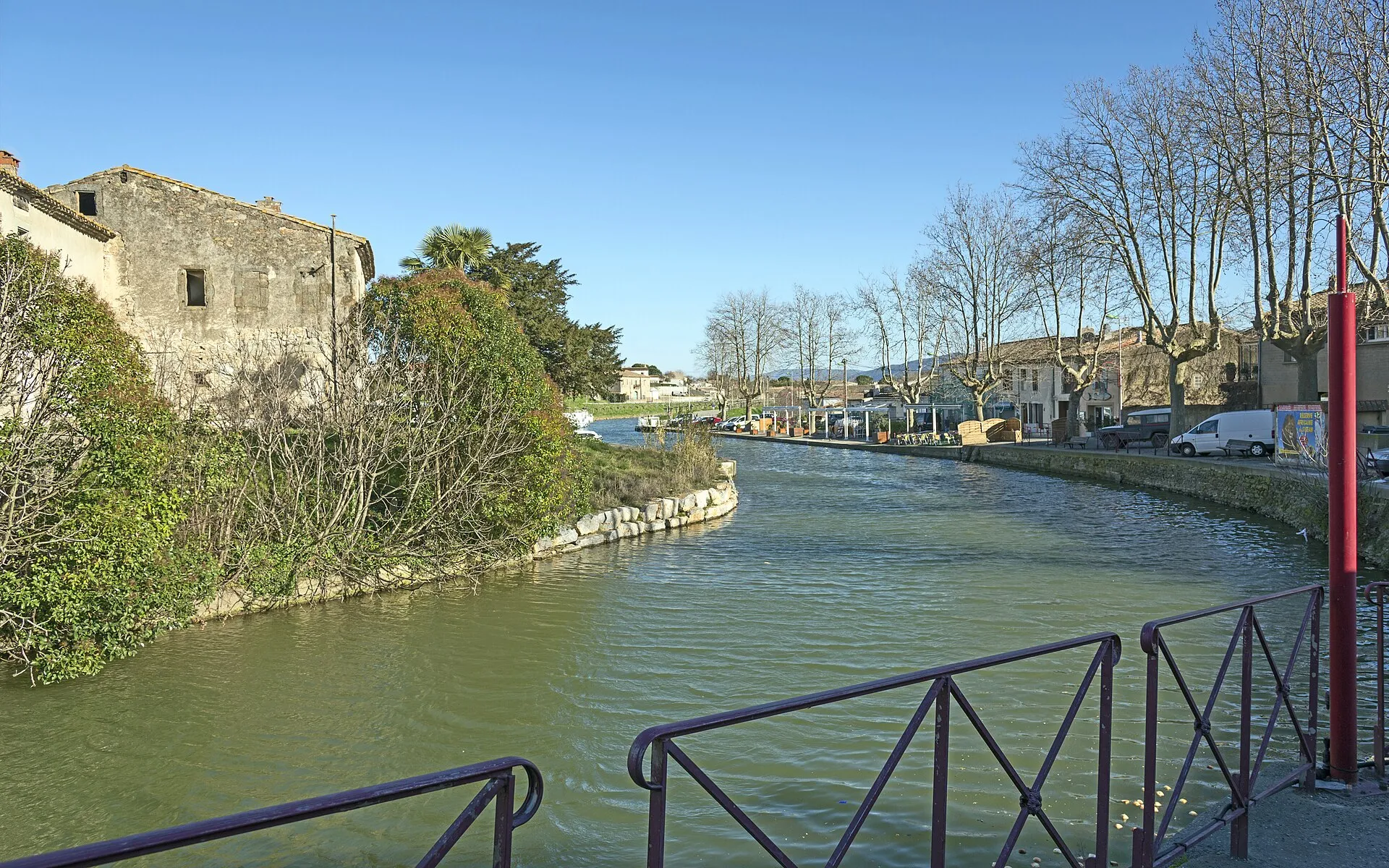
The canal is at its most photogenic where the plane-tree tunnels arch overhead, their branches meeting to form the long green vaults that define the waterway—shoot them in the low, raking light of dawn or dusk when reflections double the effect on still water. In Toulouse, the Ponts-Jumeaux at the Port de l'Embouchure frame the marble bas-relief and the meeting of three canals, while Port Saint-Sauveur offers rows of moored barges beside the Grand Rond gardens. A classic Riquet oval lock, such as the Écluse de Castanet-Tolosan southeast of the city, gives foreground drama as chambers fill and boats rise. Downstream, the Fonseranes staircase locks near Béziers are the canal's signature shot, their stepped chambers descending in a single sweep, and the adjacent Pont-canal de Béziers lets you photograph a boat sailing above the river Orb. Old hump-backed stone bridges and the mouth of the Malpas tunnel make tight, framed compositions. For a wide finale, the open Étang de Thau at Sète delivers sea light and sky. Bring a polarizer to cut glare off the water and tame the dappled shade.
When to Visit
May-June: Trees in full foliage, pleasant temperatures for cycling. September: Still warm, fewer tourists than high summer. Golden hours: Dawn and dusk for beautiful light through trees. Avoid: July-August peak crowds on boats, hot for cycling
Admission and Costs
Towpath access: Free (walking and cycling). Boat tour (1-2 hours): €12-25 ($13-27) per person. Day boat rental: €100-200 ($110-215) (no license required). Week-long boat rental: €800-2,500 ($865-2,700) depending on boat size. Guided cycling tour: €50-80 ($55-85) per person (half-day). Bike hire: roughly €15-25 ($16-27) per day from Toulouse rental shops.
The Case for a Guide
You can enjoy the canal perfectly well on your own, but a good guide turns a pretty towpath into a story you can read in the landscape. The value is concrete:
- Boat handling made easy — on a captained cruise the crew works the locks and moorings while you watch the countryside slide by; first-timers learn the ropes before committing to a multi-day hire.
- Reading the engineering — guides point out the oval lock chambers, the feeder channels, and the low summit at Naurouze that most visitors cycle straight past.
- The best cycling sections — locals know which stretches are smoothly surfaced, which are rooty, and where to find shade, water, and a lunch stop.
- Local flavor — from cassoulet in Castelnaudary to canalside wine tastings, a guide plans the day around the food and villages rather than just the kilometers.
Many visitors pair a morning on the water with the pink-brick heart of the city around the Place du Capitole and the Romanesque Basilique Saint-Sernin, both a short walk from the central quays.
Tips for Visitors
Bike rental: VélôToulouse stations near canal, or dedicated rental shops. Boat tip: First-timers should take short tours before multi-day rental. Shade variable: Tree disease means some sections now less shaded. Water and snacks: Limited services between towns, bring supplies. Lock hours: Locks staffed roughly 9 AM - 7 PM in season. Photography: Best at bridges and locks for iconic shots
Frequently Asked Questions
When is the best season to visit Canal du Midi?
May-June: Trees in full foliage, pleasant temperatures for cycling. September: Still warm, fewer tourists than high summer. Golden hours: Dawn and dusk for beautiful light through trees. Avoid: July-August peak crowds on boats, hot for cycling
How does a guide enhance a Canal du Midi experience?
Engineering stories: Understand Riquet's revolutionary lock system. Boat handling: Captained tours handle locks, you relax. Cycling routes: Guides know best sections and hidden picnic spots.
What practical tips help when visiting Canal du Midi?
Bike rental: VélôToulouse stations near canal, or dedicated rental shops. Boat tip: First-timers should take short tours before multi-day rental. Shade variable: Tree disease means some sections now less shaded.
How do you get to the Canal du Midi in Toulouse?
The canal runs right through the city. Toulouse-Matabiau, the main train station, sits beside the water, and metro Line A (Marengo-SNCF) plus several bus lines stop within a few minutes' walk. Sightseeing cruises and bike rentals cluster around Port Saint-Sauveur in the center.
Can you cycle the entire Canal du Midi, and how long does it take?
Yes. A near-continuous towpath follows the full 240 km from Toulouse to the Mediterranean at Sète. Fit riders cover it in 4-6 days; many people instead ride shorter flat day sections, as some unpaved stretches are bumpy and shade varies where diseased plane trees have been felled.