
Excavation History
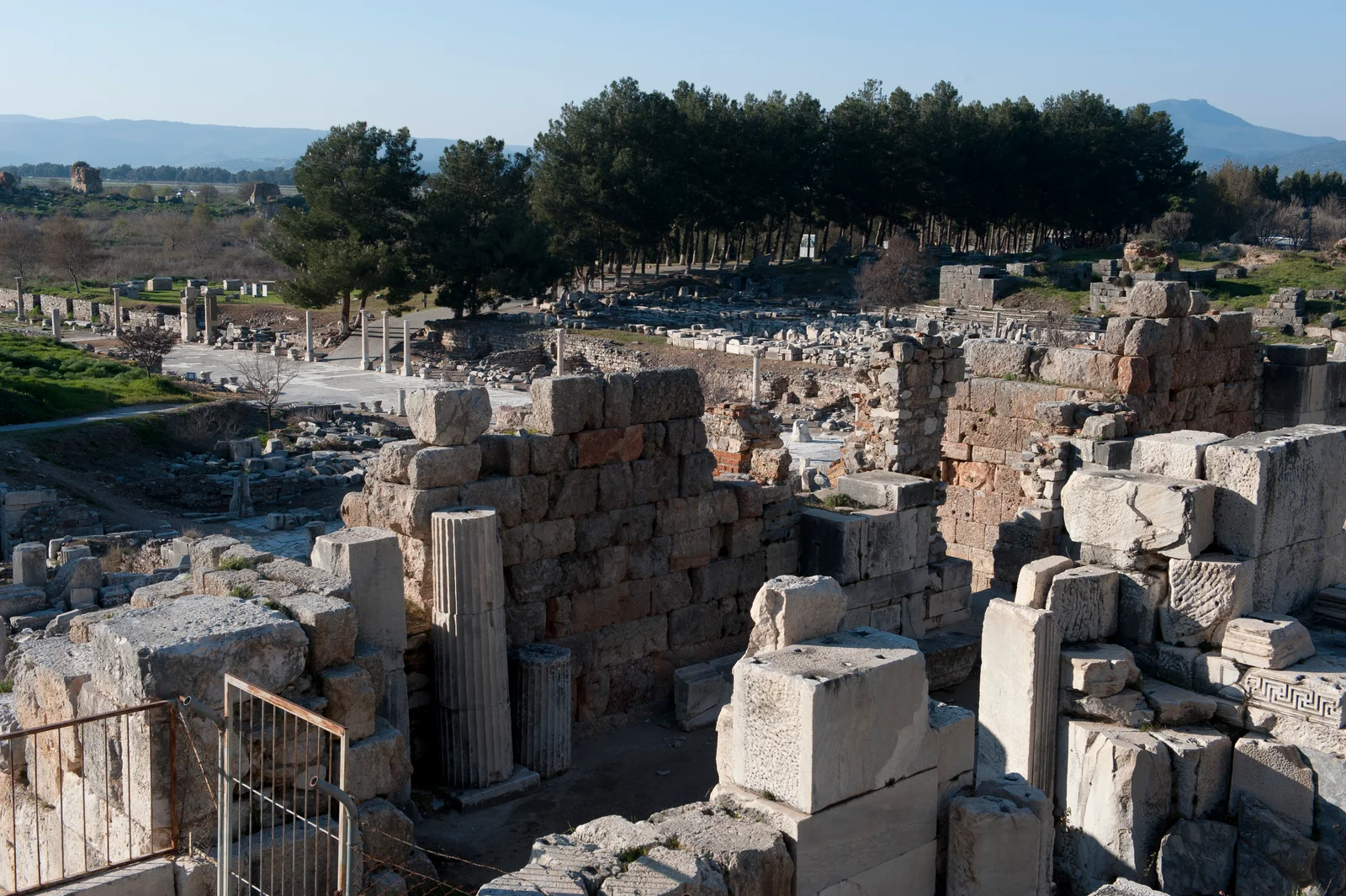
The theatre has been studied as part of the Austrian Archaeological Institute's long Ephesus campaign, running since 1895, and its excavation exposed both the Hellenistic core and the successive Roman enlargements that raised the seating and rebuilt the stage. Archaeologists have traced how the auditorium was extended upward and the skene raised to three storeys as the city grew wealthier under Roman rule.
Conservation has been a continuous concern: the seating stone is fragile, and stabilising the tiers and the surviving stage wall against earthquake damage and the wear of millions of visitors is ongoing work. Study of the building's phases has helped date the wider transformation of this quarter of the city, including the layout of Harbour Street and the agora that adjoined the theatre.
Key Artifacts
The theatre's own great "artifact" is its architecture — the three-tiered cavea, the orchestra and the footings of the monumental stage building, whose fallen columns and carved fragments lie around the site. Decorative sculpture and architectural pieces recovered here and across Ephesus are displayed in the Ephesus Archaeological Museum in Selçuk, which is the place to see the finer movable finds.
Inscriptions associated with the theatre and its surroundings record civic donations and the games and festivals staged in it, evidence of how central the building was to public life. For the biblically minded, the theatre needs no object at all: its documented role in the Acts 19 riot makes the empty auditorium itself the relic.
When to Visit
Like the rest of Ephesus the theatre is unshaded, so come early or late to avoid both the heat and the densest crowds. The upper seating is a stiff climb on uneven stone and is punishing at midday in summer; in the cooler hours it is a rewarding place to sit, catch your breath and take in the scale of the site.
The theatre faces west, so late-afternoon light is the most flattering on the seating and the stage ruins, and the low sun down Harbour Street makes for memorable photographs. Spring and autumn are far more comfortable than the fierce months of July and August. Budget twenty to thirty minutes here if you climb the tiers, and treat it as the natural turning point of a route that starts at the upper gate and ends near the lower one.
Admission and Costs
Entry to the theatre is covered by the single Ephesus site ticket and carries no extra charge; the same admission includes Curetes Street, the library and the agoras. The base adult ticket costs a few hundred lira and is paid by card at either gate, with prices revised for inflation, so check the current rate before travelling.
There is no additional fee to climb into the seating. If you want the history brought to life, a licensed guide for a small group runs roughly €100–160 ($110–175) for a half-day covering the whole site, and audio guides can be hired at the entrances for a small sum. All figures are estimates that move with the exchange rate.
The Case for a Guide
A guide transforms the Great Theatre from an impressive bowl of stone into a stage crowded with history. They set out its building phases — Greek beginnings, Roman expansion — explain how a theatre of this size functioned socially and politically, and recount the silversmiths' riot of Acts 19 while you stand where the crowd once chanted. Good guides use the view down Harbour Street to explain the lost harbour and the city's rise and decline, tying the theatre to the Library of Celsus and the Temple of Artemis into a single narrative. In a site as vast and unlabelled as Ephesus, that connective storytelling is exactly what a self-guided walk cannot supply.
Tips for Visitors
Climb at least partway up the cavea even in the heat — the experience of the theatre is entirely about scale and sightlines, and it is lost from the orchestra floor. Test the acoustics: a companion speaking quietly from the centre of the orchestra can be heard remarkably far up the seating.
Wear proper shoes, as the ancient steps are steep, worn and without railings. Stand at the top to look down Harbour Street and picture the vanished sea at its end — it is the clearest way to grasp why Ephesus mattered. Combine the visit with the neighbouring Library of Celsus and the commercial agora, all clustered at this lower end of the site.
Frequently Asked Questions
How many people did the Great Theatre hold?
At its Roman peak the theatre seated an estimated 25,000 spectators, which makes it the largest theatre in Anatolia. The seating (the cavea) is banked in three horizontal tiers up the slope of Mount Pion, and the steepness of the upper rows gave even the highest seats a clear line to the stage.
What is the connection to St Paul and the Bible?
The theatre is the setting of the riot of the silversmiths described in Acts 19. Demetrius, a silversmith who made shrines of Artemis, stirred a crowd that packed into the theatre chanting "Great is Artemis of the Ephesians" for about two hours, alarmed that Paul's preaching was undermining the cult and their trade. Standing in the auditorium with that passage in mind is one of the reasons the theatre draws so many visitors.
Can you still see performances or go onto the stage?
You can walk into the orchestra and lower seating on a normal visit, which is the best way to feel the scale and test the acoustics. Occasional cultural events have been staged here, but to protect the ancient fabric large concerts are no longer routinely permitted, so treat any performance as a rare exception rather than something to plan around.