
Visitor Etiquette
Modest dress is strictly enforced at the entrance: shoulders and knees must be covered for every visitor, regardless of gender, and sarongs or shawls can be rented at the foot of the staircase for anyone who arrives underprepared. Remove your shoes before stepping onto the main terrace and before entering any shrine building — racks are provided at the thresholds. Monks hold a protected status here: do not touch a monk, and women should never hand an object directly to one, placing offerings on the cloth or shelf provided instead. Photography is welcome across the grounds but inappropriate during active worship, so lower your camera while monks are chanting or pilgrims are kneeling at the chedi. Walk clockwise when you circle the shrine, keep your feet from pointing at Buddha images when you sit, and switch your phone to silent before entering the inner sanctuary.
Spiritual Significance
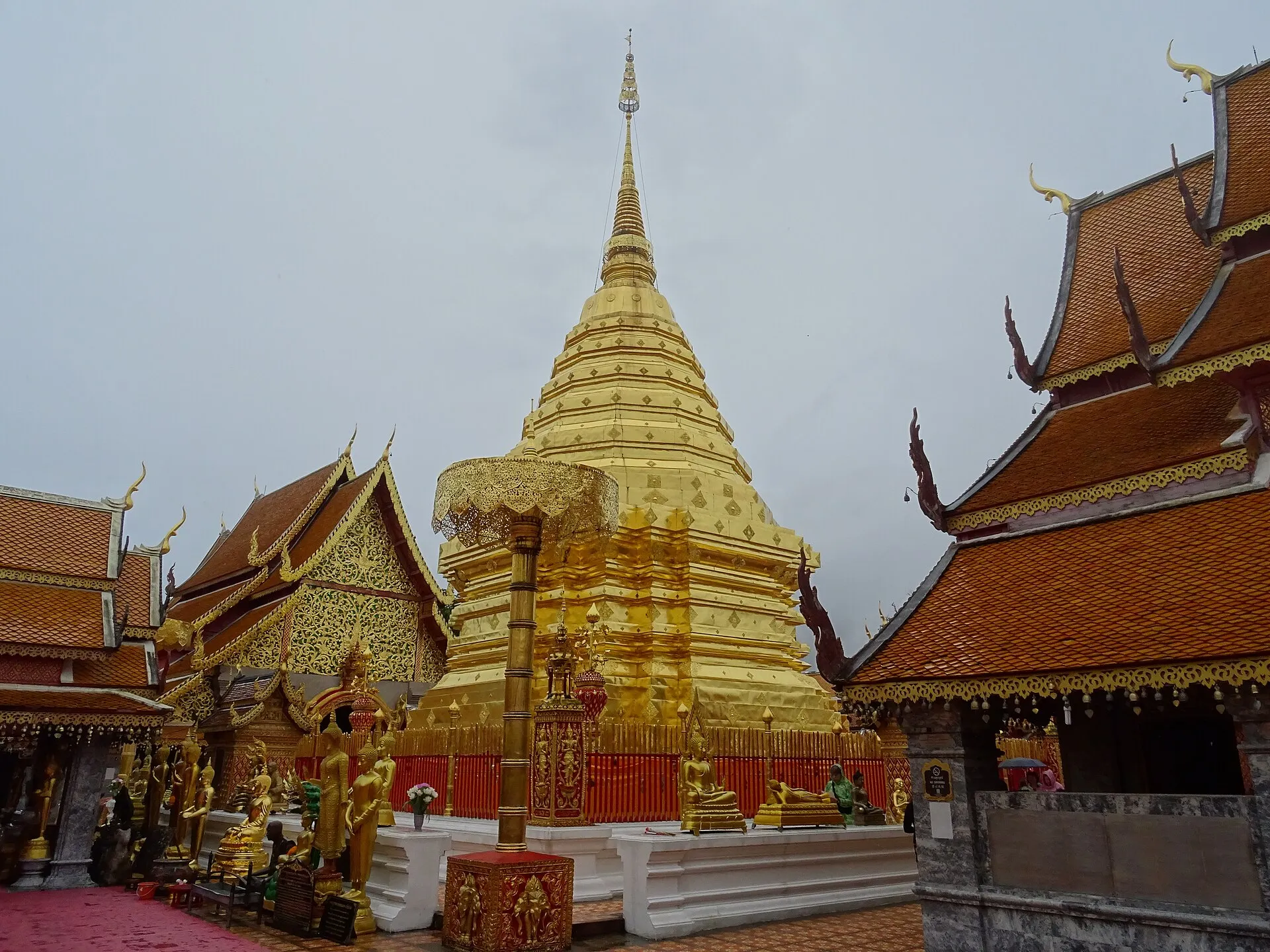
The golden chedi is believed to enshrine a relic of the Buddha, which makes Doi Suthep one of the holiest pilgrimage destinations in Northern Thailand. Tradition holds that a white elephant bearing the relic from Chiang Mai climbed the mountain, trumpeted three times, knelt and died on this spot — and the temple rose where it fell. Circling the chedi clockwise three times is the central devotional act here, each circuit believed to accrue merit, while pilgrims ring the row of bells along the terrace so their tones add to a continuous hum of collective prayer. Resident monks begin chanting around 6:30 AM, filling the terrace with a meditative calm before the tourist rush. The temple's deepest pull shows on Visakha Bucha, the holy day marking the Buddha's birth, enlightenment and passing, when thousands of devotees walk through the night up the mountain road to reach the shrine by dawn — a tradition tied to the memory of Kruba Srivichai, whose monument stands at the foot of the climb. The buildings' Lanna architecture, distinct from central-Thai temple design, reflects Northern Thailand's separate kingdom history and its old cultural ties to Myanmar and Yunnan.
Doi Suthep Temple timeline
-
Founded under the Lanna king Keu Na
King Keu Na, the sixth ruler of Chiang Mai's Mangrai dynasty, enshrines a Buddha relic brought north by the monk Sumana and builds the temple on the spot the legendary white elephant chose.
- 16th century
The chedi rebuilt to its gilded form
Later Lanna rulers enlarge the central chedi and sheathe it in gold-plated copper, giving it roughly the squat, radiant silhouette that crowns the terrace today.
- 1934–1935
Kruba Srivichai's mountain road
The revered northern monk Kruba Srivichai rallies thousands of volunteers from across the Lanna region to cut the road up the mountain in months; before it, pilgrims climbed a steep forest footpath on foot.
- Today
Working monastery and pilgrimage magnet
Monks chant here every dawn, Visakha Bucha draws an overnight pilgrimage up the mountain, and the temple is Chiang Mai's single most visited sight.
Doi Suthep Temple in Pictures
When to Visit
The temple welcomes visitors 6:00 AM – 6:00 PM daily, and the hour you arrive shapes the whole experience. Come at opening, between 6 and 8 AM, and you will share the terrace with resident monks at their morning chanting, catch the chedi glowing in low light, and climb the stairway before the first tour buses grind up from the city. Late afternoon, roughly 4–6 PM, is the other prime slot, when the sun gilds the golden spire and the valley below begins to sparkle. Midday is hot, hazy and thick with tour groups, so it is the stretch to avoid. Allow one to two hours on the grounds, adding about 30 minutes if you climb the steps rather than taking the funicular. Season matters as much as time of day: the cool, dry months of November–February bring the clearest panoramas, while the March–April burning season can blot the view out completely.
Admission and Costs
Entry to the upper terrace is ฿30 (~$0.85) for foreign visitors; the funicular that saves the climb adds a small fare, while the 306-step naga stairway is free to anyone who prefers to walk. Reaching the mountain is where the real spending happens. A shared songthaew (red truck) from the Old City runs about ฿40–50 ($1.20–1.45) each way and leaves once it fills; chartering one for the round trip is roughly ฿600–800 ($17–23). A guided half-day group tour with hotel pickup costs ฿600–1,000 ($17–29) per person, and a private guide with transport for up to six people ฿2,000–3,500 ($57–100). Bring small cash for the entry booth, bottled water and the donation bowls at the shrines, since card payment is not an option on the mountain.
The Case for a Guide
A knowledgeable guide turns a photogenic stop into a legible one. They tell the founding legend in full — why King Keu Na released the white elephant, what its trumpeting and circling meant within Buddhist belief, and how the story anchored Northern Thai identity over seven centuries — and they explain the road itself, the one Kruba Srivichai willed into existence with volunteer labour in the 1930s. At the chedi a guide shows you how to circumambulate clockwise, how to make a proper offering, and what the specific gestures and prayers mean, so you take part with understanding rather than mimicry. Practically, a guide with a regular driver knows how to time the 15 km of winding, bus-clogged mountain road to dodge the worst congestion, points you to the terrace angles where the golden spire sits cleanly against the sky, and tracks the morning-chanting schedule so your group can witness the ceremony without disrupting it.
Tips for Visitors
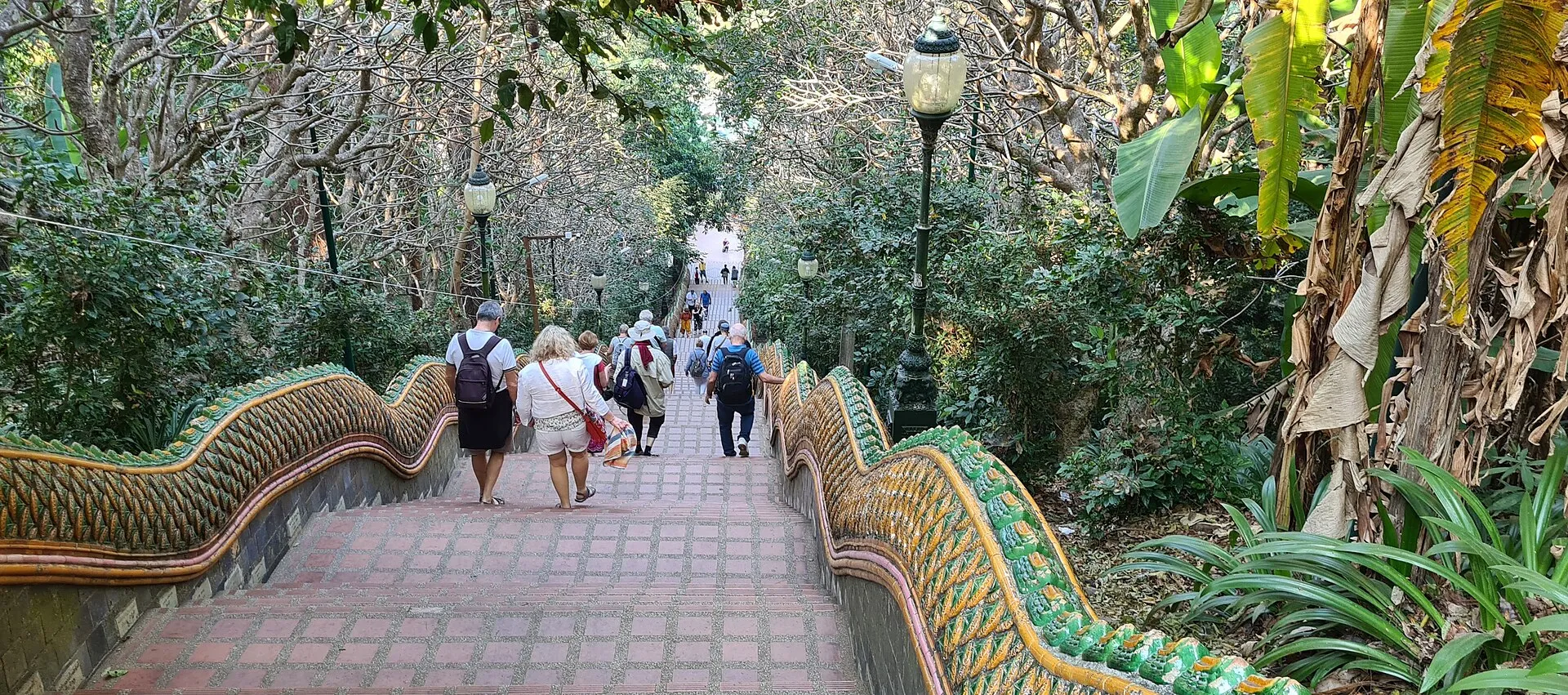
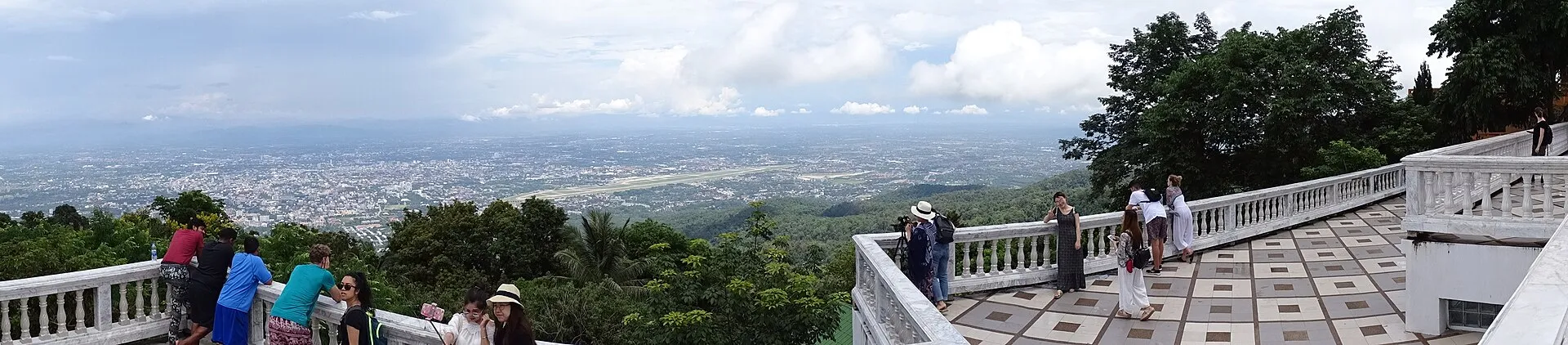
Climb the stairs rather than taking the funicular if your knees allow it — the 306-step naga stairway is culturally meaningful and the slow ascent changes how the terrace reveals itself at the top. Early-morning visits (6–8 AM) catch the monks' chanting and the quietest light; carry water, because the elevation and the climb leave you thirsty faster than you expect. Dress is enforced at the gate, so arrive with shoulders and knees covered to avoid renting a cover-up. The best valley photographs come from the northern edge of the terrace rather than the crowded main viewpoint, and most visitors never find it. Bhubing (Phuping) Palace, the royal winter residence with its gardens, sits 4 km further up the same road and pairs naturally with a Doi Suthep visit — check its opening days (typically mornings on weekends and public holidays) before counting on it. If you ride a scooter, test the brakes before the long, steep descent back to Chiang Mai.
Frequently Asked Questions
What is the ideal season for visiting Doi Suthep Temple?
November through February is the prime window, when the mountain air at 1,073 metres stays cool, the skies clear, and the climb up the Naga stairway feels invigorating rather than draining. December usually delivers the crispest visibility of the year over the Chiang Mai valley. Steer clear of the March–April burning season, when agricultural haze can erase the famous panorama entirely and make breathing uncomfortable at elevation; the June–September monsoon brings heavy afternoon downpours but far thinner crowds.
What time does Doi Suthep Temple open, and when should I arrive?
The temple is open to visitors daily from 6:00 AM to 6:00 PM. Come at opening, 6:00–8:00 AM, to catch the resident monks' morning chanting and photograph the golden chedi in soft light before the tour buses arrive from the city. Late afternoon, around 4:00–6:00 PM, is the other sweet spot, when low sun gilds the terrace and the valley lights begin to flicker on. Midday is the hottest and most crowded stretch; most visitors need one to two hours on the grounds.
How much does it cost to visit Doi Suthep Temple?
Foreign visitors pay a 30-baht (about $0.85) entry to the upper terrace; the funicular that spares you the stairs is a small extra fare, while the 306-step Naga stairway itself is free. Getting up the mountain is the larger cost: a shared songthaew (red truck) from the Old City runs roughly 40–50 baht ($1.20–1.45) each way, a chartered one 600–800 baht ($17–23) return, and a guided half-day tour with hotel pickup 600–1,000 baht ($17–29) per person.
How do I get from Chiang Mai up to Doi Suthep?
The temple sits about 15 km northwest of the Old City up a steep, winding road that the revered monk Kruba Srivichai had carved through the forest in 1934–35. Most independent visitors ride a shared red songthaew from near Chang Phuak Gate or Wat Phra Singh, which leaves once it fills and costs around 40–50 baht ($1.20–1.45) each way. Grab cars, chartered songthaews and rented scooters are the alternatives; if you ride a scooter, check the brakes, because the descent is long and steep.
Is it worth hiring a guide for Doi Suthep Temple?
For a first visit, yes. A local guide unpacks the white-elephant founding legend, shows you how to circle the chedi and make an offering correctly rather than copying other tourists, and times your arrival around the monks' chanting so you witness it without intruding. A guide with a trusted driver also navigates the congested mountain road and can pair the temple with Bhubing Palace or a Hmong village further up without wasted backtracking.