
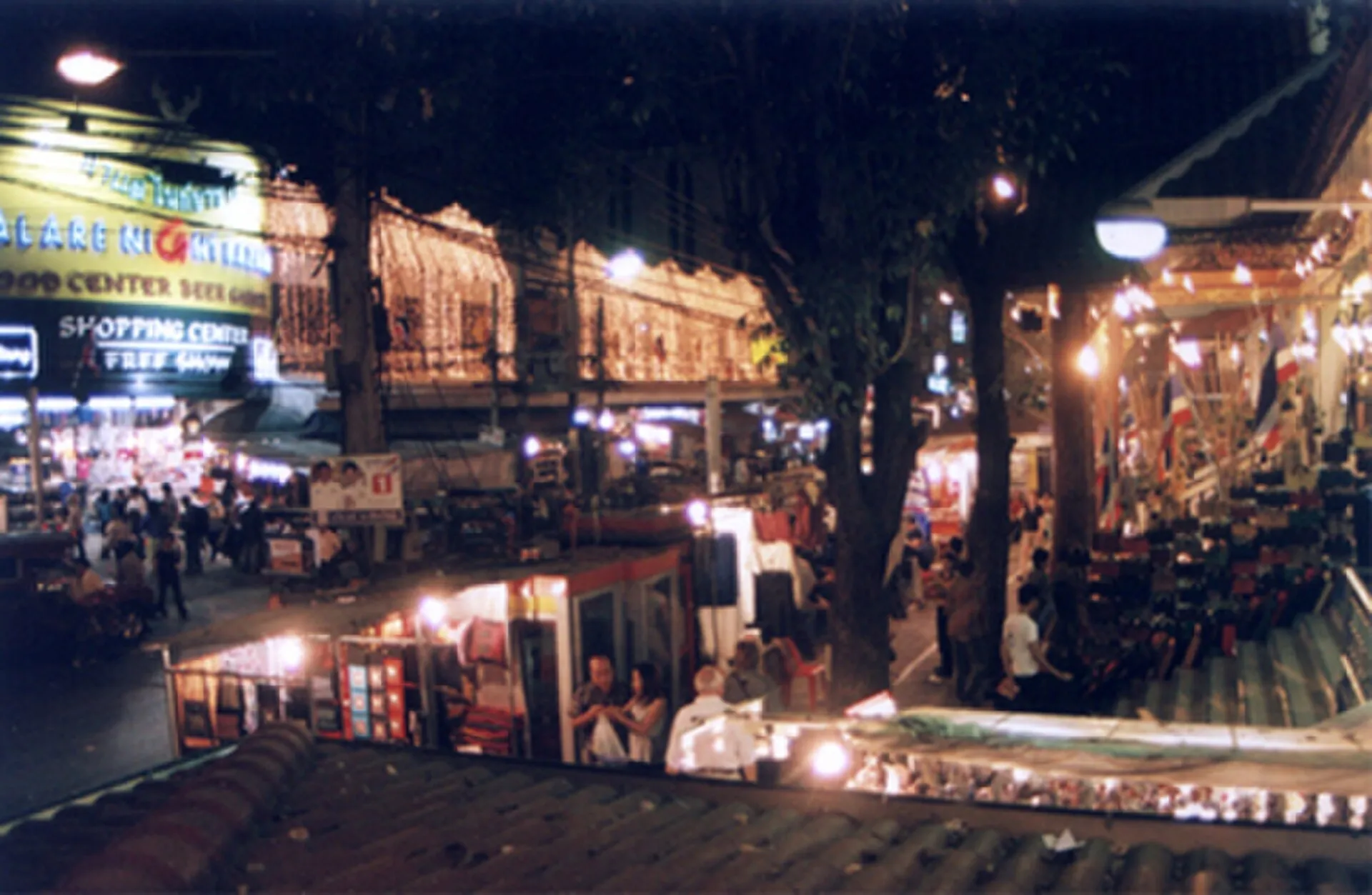
Food Stalls
The bazaar is a genuine dinner destination, not just a shopping run. The covered Kalare Night Bazaar food court is the easiest sit-down option, often staging a khantoke dinner with traditional Lanna dancing, while the Anusarn section packs in seafood grills and casual Thai kitchens. For a more contemporary spread, the Ploen Ruedee Night Market just off Chang Klan gathers stalls plating everything from Northern Thai dishes to burgers and craft drinks around communal tables with live bands. Seek out Northern specialties you will not find as easily down south: khao soi (a coconut-curry egg-noodle soup topped with crispy noodles), sai ua (herby grilled Chiang Mai sausage), nam prik ong (a tomato-and-pork chili dip) and nam prik num with sticky rice, plus skewers of grilled pork. Fresh coconut ice cream, mango sticky rice and Thai iced tea round out a walk-and-eat dinner for well under ฿200 ($6) a head.
What To Buy
Hill-tribe handicrafts: authentic textiles, embroidery and silver jewelry from the mountain villages around Chiang Mai. Wood carvings: teak elephants, Buddha figures and decorative panels. Celadon and lacquerware: the jade-green glazed ceramics that are a Northern Thai signature. Anusarn Market: an indoor, air-conditioned section with higher-quality goods. Umbrellas and paper crafts from nearby Bo Sang, Lanna-style lamps and cotton clothing. Foot and shoulder massage stalls (฿150–250 / $4–7) for a break between purchases. Bargain everywhere, and remember that many pieces here are made by the same artisan communities you can visit by day around Chiang Mai.
Chiang Mai Night Bazaar timeline
-
Chiang Mai founded as the Lanna capital
King Mangrai establishes Chiang Mai at the junction of trade routes linking Yunnan, Burma and the Bay of Bengal — the crossroads heritage that would later make the city a natural marketplace.
- Late 1800s
Yunnanese caravan traders settle Chang Klan
Haw (Chinese Muslim) merchants leading mule caravans down from Yunnan set up trading posts along what is now Chang Klan Road, giving the district its enduring commercial character.
- 1960s
The modern Night Bazaar takes shape
As tourism to Northern Thailand grew, permanent stalls and shophouses coalesced into a nightly market of hill-tribe handicrafts and street food, trading after dark to beat the daytime heat.
- Today
A sprawling nightly marketplace
The bazaar now fills several buildings and side streets — including the covered Kalare and Anusarn sections — drawing thousands of shoppers every evening.
When to Visit
Hours: 6:00 PM – 11:00 PM daily, rain or shine, with most stalls fully set up by 6:30. Peak buzz is 7:30–9:30 PM, when the food courts and buskers hit their stride; come at 6:00–7:00 PM for thinner crowds and easier bargaining. Allow 2–3 hours to browse, eat and still have time to haggle properly. If your visit lands on a weekend, weigh the bazaar against Chiang Mai's two walking streets: the Saturday Walking Street on Wualai Road, the old silversmiths' quarter just south of the moat, and the larger Sunday Walking Street along Ratchadamnoen Road inside the Old City. Both close their lanes to traffic and lean more local, but each runs only that one night. The cool season (November–February) is the most pleasant time to wander the open-air lanes.
Admission and Costs
Market entry: free. Handicrafts: ฿100–1,000+ ($3–29) depending on the piece. Clothing: ฿150–500 ($4–14) for shirts and trousers. Street food: ฿40–150 ($1–4) per dish. Foot massage while you rest: ฿150–250 ($4–7) for 30 minutes. Guided shopping tours: ฿800–1,200 ($23–35) per person for 2–3 hours; a private guide for up to six people runs ฿1,500–2,500 ($43–72). Getting there costs little — a shared songthaew is about ฿30–50 ($1–1.50) and a Grab or tuk-tuk ฿60–120 ($2–3.50) from most hotels.
The Case for a Guide
A local guide earns their fee fastest at a market this size and this varied. They can tell genuine hill-tribe handicraft from mass-produced imports at a glance, steer you to the stalls with the best silverwork, celadon or textiles, and negotiate in Thai so you pay closer to local prices. Guides also read the food courts for you — pointing out the vendors locals actually queue for — and explain the cultural background of what you are buying, from Hmong embroidery to Lanna silver-working techniques. For larger purchases, they can arrange reliable international shipping and vouch for the vendor. On a first visit especially, that context turns an overwhelming maze of stalls into a focused, confident evening.
Tips for Visitors
Bargaining etiquette: open around half the asking price, stay friendly, and walk away if it stalls — you are often called back. Quality check: inspect stitching and materials, as some goods are Chinese imports rather than local craft. Cash is essential: bring small bills (฿20, ฿50, ฿100) since most vendors do not take cards, though there are ATMs along Chang Klan Road if you run short. Transport: fix your tuk-tuk fare before riding or use the Grab app. Watch your belongings — the crowds attract pickpockets, so keep valuables zipped and in front. Shipping: many vendors arrange international shipping for bulky buys (roughly ฿500–2,000 / $14–58). Sunday alternative: the Sunday Walking Street is bigger and more authentic if your visit falls on a Sunday.
Frequently Asked Questions
When is the best time to visit Chiang Mai Night Bazaar?
The bazaar runs every evening from about 6 PM to 11 PM, and it is liveliest between 7:30 and 9:30 PM, when the food courts fill up and buskers play. Arrive closer to 6 PM if you prefer thinner crowds and more relaxed bargaining before the tour groups roll in. November to February — Chiang Mai's cool, dry season — is the most comfortable time to wander the open-air lanes, while April's Songkran heat and the July–September monsoon showers can cut an evening short.
How does bargaining work at the Night Bazaar?
Prices are not fixed, so haggling is expected and good-natured. A common approach is to counter at roughly half the opening price, keep smiling, and be ready to walk away — vendors often call you back with a better offer. Buying more than one item from the same stall gives you leverage for a discount. Check stitching and materials before you commit, since some goods are mass-produced imports rather than genuine Northern Thai craft, and carry small bills (฿20–100 / $0.60–3) because most stalls do not take cards.
How do I get to Chiang Mai Night Bazaar and get around it?
The market stretches along Chang Klan Road, a short walk southeast of the Tha Phae Gate and the Old City moat. Songthaews (shared red trucks) charge about ฿30–50 ($1–1.50) per person for a hop across town, while a Grab or metered tuk-tuk from most hotels runs ฿60–120 ($2–3.50); agree the tuk-tuk fare before you set off. The lanes are flat and walkable, so many visitors combine the bazaar with dinner and simply stroll back toward the Old City afterward.
Is the Night Bazaar worth it, or should I visit the Sunday Walking Street instead?
Both are worth doing if your dates allow. The Night Bazaar runs every night and leans toward handicrafts, souvenirs and sit-down food courts, making it the reliable choice on any evening. The Sunday Walking Street inside the Old City is larger, more atmospheric and more locally oriented, but only on Sunday nights. A local guide adds the most value on a first visit — steering you to the higher-quality stalls, explaining hill-tribe textiles and silver-working, and negotiating fair prices on your behalf.