
Historical Significance
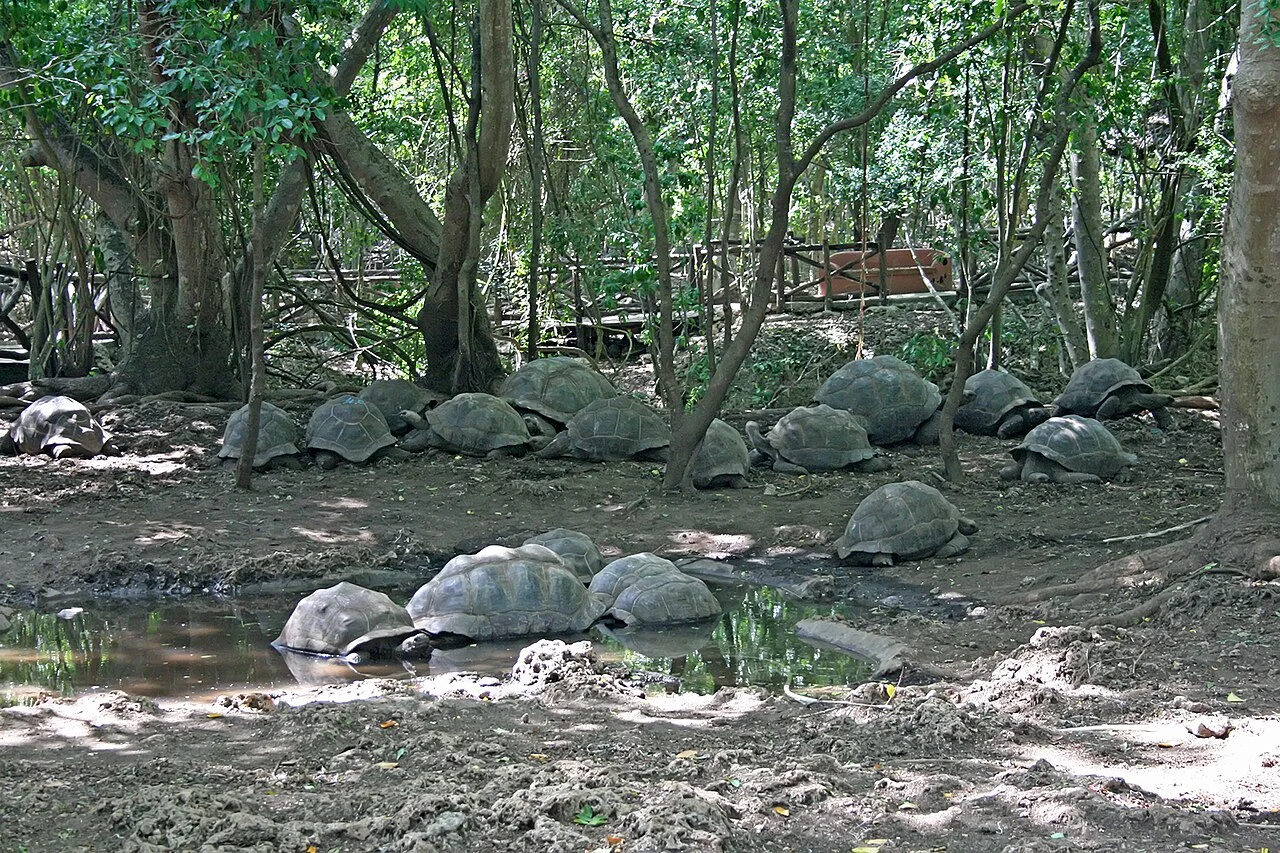
The "prison" that gives Changuu its popular name was built in 1894 on the orders of Lloyd Mathews, the British-born First Minister of the Zanzibar Sultanate, who bought the island in 1893. Mathews intended the coral-rag compound to detain rebellious enslaved people, but the Sultanate abolished the legal status of slavery in 1897 and the jail never held a single prisoner. Instead the completed building found a second use as a quarantine station: from around 1923, ships arriving in Zanzibar with suspected yellow fever, cholera, or bubonic plague offloaded passengers to Changuu for isolation, and the barracks-like cells housed detainees waiting out the incubation period rather than convicts. That public-health chapter is why the island is sometimes labelled "Quarantine Island" on older maps. The Aldabra giant tortoises that now define Changuu arrived separately, as a diplomatic gift from the Governor of the Seychelles in the early 1900s, when four animals were sent to Zanzibar; their descendants have made the island an internationally recognised sanctuary for a species that was hunted to near-collapse across the western Indian Ocean. Walking the empty prison quadrangle and the tortoise pens together, a good guide connects the two histories — coerced labour and colonial disease control on one side, cross-ocean conservation on the other — that share this five-hectare speck of coral.
When to Visit
Boats to Changuu depart from the Stone Town waterfront from approximately 8 AM until early afternoon — the latest practical departure allowing for adequate time on the island before the return crossing. Most visitors spend 2 to 3 hours on the island — enough time for a tortoise encounter, a guided tour of the old prison buildings, and a snorkel. The best snorkelling visibility is at high tide, which varies daily; ask your boatman for the tidal schedule. Avoid the wet season (April–May, November) when the crossing can be rough and snorkel visibility is reduced by rain runoff.
Admission and Costs
Speedboat return from Stone Town: $20–35 per person (negotiate with the boatman or book through your guesthouse). Island entry fee: a flat $4 per adult and roughly $2 per child under 12, payable in cash at the jetty on arrival — this entrance fee is separate from the boat fare and funds the tortoise sanctuary. Snorkelling equipment hire: $5–10 if not included in the boat price. A full Changuu trip including boat, entry, and snorkel gear runs $30–50 per person — one of Zanzibar's best-value half-days. If you book Changuu as a combined tour — commonly paired with a morning in Stone Town or a half-day snorkelling package to the nearby sandbanks — expect $45–75 per person all-in, with the boat, guide, entrance, and equipment bundled. The small beachside restaurant on the island serves grilled fish and cold drinks at tourist prices (budget $10–20 for lunch). Carry small dollar bills or Tanzanian shillings for the entrance kiosk and restaurant; there is no card machine or ATM on the island.
The Case for a Guide
- Tortoise identification and age estimation — guides who work the island regularly know individual tortoises by name and can estimate ages by shell size and surface texture patterns that casual visitors cannot read
- Prison history context — the story of a slave prison that never imprisoned anyone connects to the broader history of the East African slave trade that Stone Town's Anglican Cathedral memorial also addresses
- Marine ecology — a guide who accompanies snorkelling excursions can identify coral species, explain bleaching impacts, and point out species camouflaged against the reef floor that independently snorkelling visitors swim directly over
- Tidal timing expertise — knowing which snorkel area has the best visibility at the current tide state, and which rocks shelter the most diverse fish communities, is experiential knowledge that maximises a short reef visit
Tips for Visitors
Worth it for almost everyone: the combination of a short crossing, a walk-through tortoise sanctuary, and easy reef snorkelling makes Changuu Island the single most efficient half-day near Stone Town. Skip it only if a packed group itinerary would drop you here for barely half an hour, or if rough wet-season seas would spoil the crossing — the island rewards an unhurried two to three hours. Bring sunscreen and apply it before the boat crossing — the 20-minute open-water passage offers no shade. Do not sit on or ride the tortoises; they can live to 200 years and are irreplaceable. Bring a small amount of cash for the entry fee and the restaurant — card payments are not reliably available on the island. The crossing can be wet in choppy conditions — pack your phone and camera in a waterproof bag. For the best photographs, visit early in the morning when the tortoises are most active in the cooler temperatures and the light is soft and warm. Combine with a morning in Stone Town — the Forodhani Gardens waterfront from which boats depart is also the site of the evening food market, creating a natural bookend to a full Zanzibar day. For a wildlife-focused alternative, pair Changuu's tortoises with the endemic red colobus monkeys of Jozani Forest in the island's interior.
Frequently Asked Questions
How do you get to Changuu Prison Island?
Speedboats depart from the main waterfront jetty in Stone Town, a 20-minute crossing across the clear channels between Zanzibar and the small island. Boats are arranged through guesthouses, tour operators, or directly with boatmen at the jetty — agree the price before boarding and confirm it includes the return journey and waiting time. The crossing is calm in the dry season from June through October and in January and February; the wet season can make it rough.
Can I snorkel around Changuu Island?
Yes — the shallow coral gardens surrounding the island are among the most accessible snorkelling sites near Stone Town, with good visibility in the dry season revealing hard and soft coral formations, parrotfish, angelfish, and occasionally small reef sharks. Most boat operators carry masks and fins for hire or include them in the trip price. The best snorkel window is at high tide when water clarity peaks over the reef flat.
How old are the giant tortoises on Changuu?
The oldest individuals are estimated at 130 to 150 years, placing their hatching dates in the 1870s to 1890s — well before the island's prison was built and before the First World War. The tortoises were a gift from the Governor of Seychelles in the early 1900s; the original population has grown to around 100 individuals through breeding on the island.
How much is the entry fee for Prison Island Zanzibar?
The island entry fee is a flat $4 per adult (roughly $2 for children under 12), collected in cash at the jetty on arrival — separate from the boat fare. It covers access to the tortoise sanctuary, the old prison buildings, and the beach, and it funds the conservation team that feeds and monitors the tortoise population. Bring small US-dollar bills or Tanzanian shillings; the entrance kiosk does not take cards, and there is no ATM on Changuu. The all-in cost of a visit — return speedboat from Stone Town plus the entrance fee and snorkel gear — typically lands at $30–50 per person.
Is Prison Island in Zanzibar worth visiting?
For most visitors, yes — Changuu is one of the best-value half-days near Stone Town, combining a short boat ride, a face-to-face tortoise sanctuary you can walk through, and easy snorkelling over coral in a single trip. It is worth it if you want wildlife and history without a long journey inland. Consider skipping it if you are prone to seasickness in the wet season, if you have already met giant tortoises elsewhere, or if a rushed group tour would give you only 30 minutes on the island — the experience rewards a slower two-to-three-hour visit at your own pace.
Why is Changuu called Prison Island if no one was imprisoned there?
Changuu earned the name from the prison building completed on it in 1894 by Lloyd Mathews, the First Minister of the Zanzibar Sultanate, who intended it to hold recalcitrant slaves after the Sultanate's own reforms. The jail was finished but never received inmates; the island instead served as a quarantine station for yellow-fever and later cholera cases arriving by sea, then as a colonial-era retreat. The empty prison compound still stands, which is why "Prison Island" stuck even though its cells never held a prisoner.
Can I combine Prison Island with snorkelling or a Stone Town tour?
Yes, and most visitors do. Boat operators at the Stone Town waterfront routinely bundle the Changuu crossing with masks and fins for the coral gardens off the island's beach, and many sell a combined half-day that pairs the tortoise sanctuary and snorkel with a guided Stone Town walk earlier in the day. Because the boats leave from the Forodhani Gardens jetty — the same waterfront that hosts the evening food market — Prison Island slots naturally into a full Zanzibar day rather than needing a dedicated trip.