
Visitor Etiquette
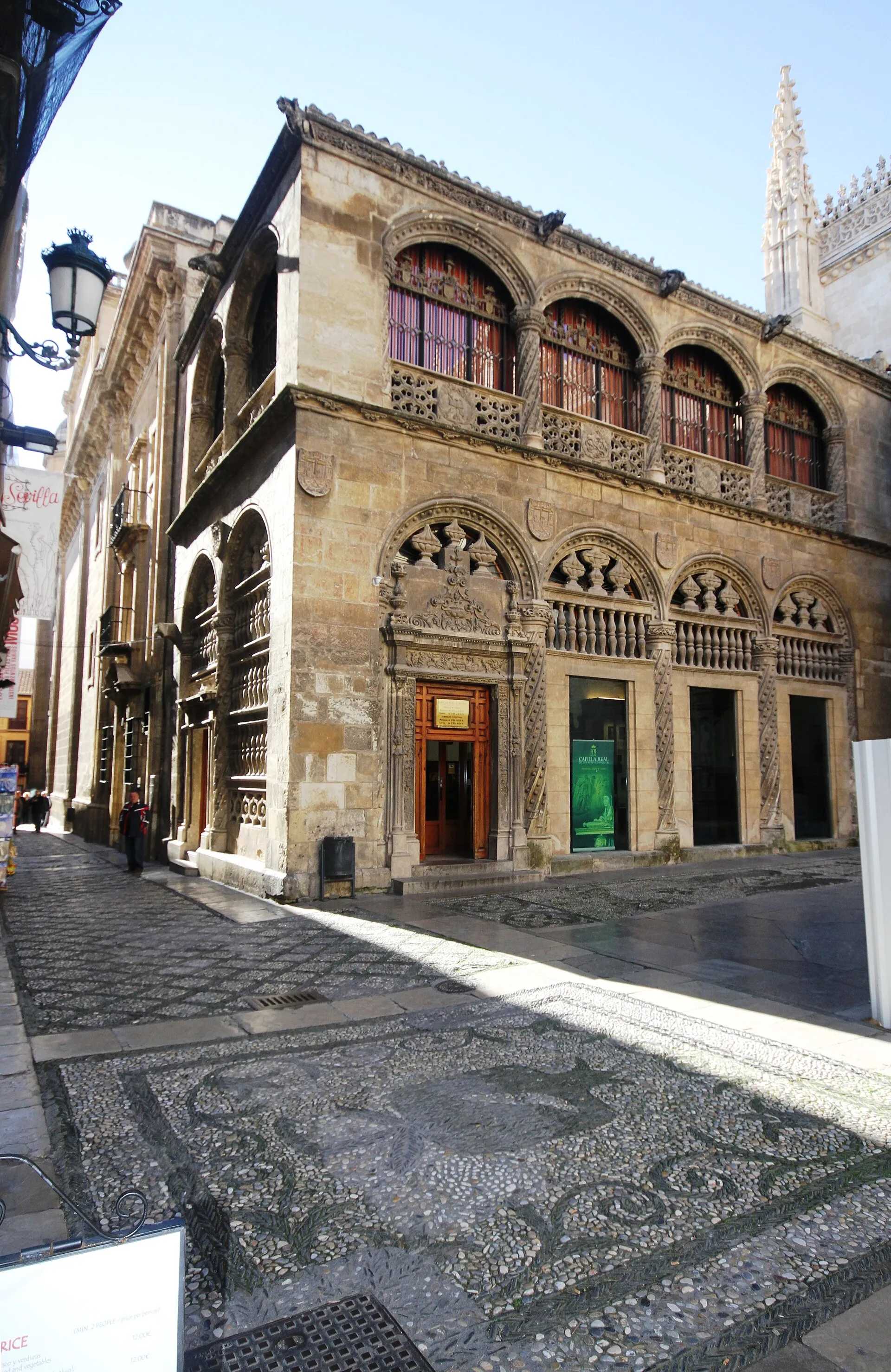
The Royal Chapel is an active Catholic place of worship and the mausoleum of the Catholic Monarchs — a site of genuine historical and spiritual reverence that demands a respectful atmosphere. Dress code is enforced: shoulders and knees must be covered for all visitors; sleeveless tops and shorts are not permitted. Photography is prohibited inside the chapel — this rule is enforced by security staff and applies to the main nave, the sacristy with its royal art collection, and the crypts. Visitors who attempt to photograph the cenotaphs or altarpiece will be asked to delete the images. Silence is expected throughout the interior; the chapel's modest size and high stone vault amplify sound considerably. Do not touch the marble cenotaphs, the iron rejas (grilles), or any artwork in the sacristy. The crypts below, where the actual lead coffins of Ferdinand and Isabella rest, are viewed through a window from above — do not attempt to descend. Groups of children should be managed quietly, and tour guides are expected to lead their groups in a whispered tone.
Spiritual Significance
Isabella I chose to be buried in Granada not out of personal preference but as a theological statement: by insisting on burial in the city whose conquest completed the 780-year Reconquista, she was declaring that her entire reign had been a religious mission and that Granada was its consummation. Her last will, composed as she was dying in 1504, was explicitly understood as a spiritual document — its instructions about indigenous peoples in the Americas, its endowments for masses in perpetuity, and its charitable bequests all reflect a queen who understood political power as a divine stewardship to be accounted for before God. Ferdinand and Isabella founded the chapel as a perpetual chantry: Franciscan monks were attached to pray for the monarchs' souls indefinitely, turning the building into a machine of spiritual intercession that was still operating, in modified form, when their remains were moved here in 1521. The contrast between the marble cenotaphs showing the monarchs in idealized repose and the humble lead coffins in the crypt below is itself a theological comment: human vanity and divine reality sit in explicit tension, with the grand public monument directly above the plain actual burial — as if Isabella, even in death, wanted visitors to understand the difference between worldly representation and genuine humility before God. The altarpiece behind the high altar depicts the Reconquista battles alongside scenes from the lives of John the Baptist and the Evangelists, fusing political history and sacred narrative into a single visual argument that the Catholic Monarchs' military campaigns were continuous with Scripture's own story of divine purpose working through human history.
When to Visit
Monday-Saturday: 10:15 AM - 6:30 PM (last entry 6:00 PM). Sunday & holidays: 11:00 AM - 6:00 PM (last entry 5:30 PM). Closed: During religious services (check schedule at entrance). Best time: Early morning right at opening, when tour groups haven't arrived yet. Least crowded: Weekday afternoons after 3:00 PM, particularly in winter months
Admission and Costs
General admission: €5 (chapel + sacristy museum). Audio guide: €3 extra (available in 8 languages). Guided group tour: €15-25 per person (45-60 minutes, includes entry). Private guide: €100-180 for up to 6 people (tickets purchased separately). Combined ticket with Cathedral: Often available at the door for a small discount. Reduced rates: Students, seniors, and large groups qualify for discounted admission
The Case for a Guide
The Royal Chapel's impact multiplies dramatically when you understand what these monarchs accomplished, at what cost, and why they chose to be buried here. Without context, the tomb is a beautiful sculpture; with it, it is one of the most politically and spiritually charged spaces in European history.
- Reading the cenotaphs' theological message: A guide explains why the marble cenotaphs showing Ferdinand and Isabella in idealized repose are placed directly above plain lead coffins in the crypt — the deliberate contrast between public representation and private humility
- Isabella's Flemish art collection: The sacristy holds works by Rogier van der Weyden, Memling, Botticelli, and Perugino — paintings Isabella personally owned; a guide explains what her Flemish and Italian tastes reveal about her theological sensibility and the religious networks she cultivated
- Royal regalia as relics: Ferdinand's sword, Isabella's silver crown, and her scepter are intimate objects that guides use to humanize monarchs who otherwise risk becoming historical abstractions; the hand mirror is often the most affecting item
- The wrought-iron reja: Master Bartolomé de Jaén's magnificent iron grille separating the nave from the chancel is considered the finest Spanish metalwork of the period; a guide traces the iconographic program in the ironwork
- Isabella's testament: A copy of the queen's last will is displayed; guides read out and explain the famous instruction that indigenous peoples in the Americas be treated justly — and explain the subsequent history that made this instruction largely irrelevant
Tips for Visitors
No photos inside: Photography is strictly forbidden in the chapel interior; guards enforce this actively, so keep your phone away. Combine with the Cathedral: Granada Cathedral is literally next door through a separate entrance — plan to visit both in a single morning or afternoon. Allow 45-60 minutes: The chapel is compact but dense with detail; rushing through means missing the sacristy's remarkable art collection. Dress respectfully: As an active place of worship, covered shoulders and knees are expected. Visit the crypt: Many visitors miss the small staircase leading down to the actual burial vault beneath the cenotaphs — don't skip it. Context helps enormously: Read up on Isabella and Ferdinand beforehand, or hire a guide; the chapel's impact multiplies when you understand what these monarchs accomplished and at what cost
Frequently Asked Questions
When is the best time of year to visit the Royal Chapel of Granada?
April through June and September through October provide the most pleasant conditions for visiting, with mild weather that makes the walk through Granada's historic centre enjoyable before and after stepping inside. As a fully indoor attraction the chapel is comfortable year-round, but visiting during shoulder season means shorter queues at the entrance and a more contemplative atmosphere around the royal tombs.
Is Royal Chapel of Granada accessible to visitors daily?
Monday-Saturday: 10:15 AM - 6:30 PM (last entry 6:00 PM). Sunday & holidays: 11:00 AM - 6:00 PM (last entry 5:30 PM). Closed: During religious services (check schedule at entrance).
How does a guide enhance a visit to Royal Chapel of Granada?
Decode the political symbolism: Every detail in the chapel — from the heraldic emblems to the positioning of the tombs — communicates a carefully crafted message about royal power and religious authority.
What should visitors know before visiting Royal Chapel of Granada?
No photos inside: Photography is strictly forbidden in the chapel interior; guards enforce this actively, so keep your phone away.