
Notable Rooms
Unlock hidden meaning: Arabic calligraphy covers nearly every surface — guides translate inscriptions and explain their poetic and religious significance. Navigate the complex: The Alhambra spans 26 acres with multiple palaces, gardens, and fortifications; guides ensure you see everything without getting lost or running out of time. Nasrid Palaces timing: Your timeslot is strict — experienced guides pace the visit so you never feel rushed through the most important rooms. Historical depth: From the Reconquista to Washington Irving's rediscovery, the Alhambra's story stretches across centuries that a guide brings vividly to life. Skip the queues: Licensed guides use priority entry lanes, saving 30-60 minutes of waiting during busy periods
Fortification History
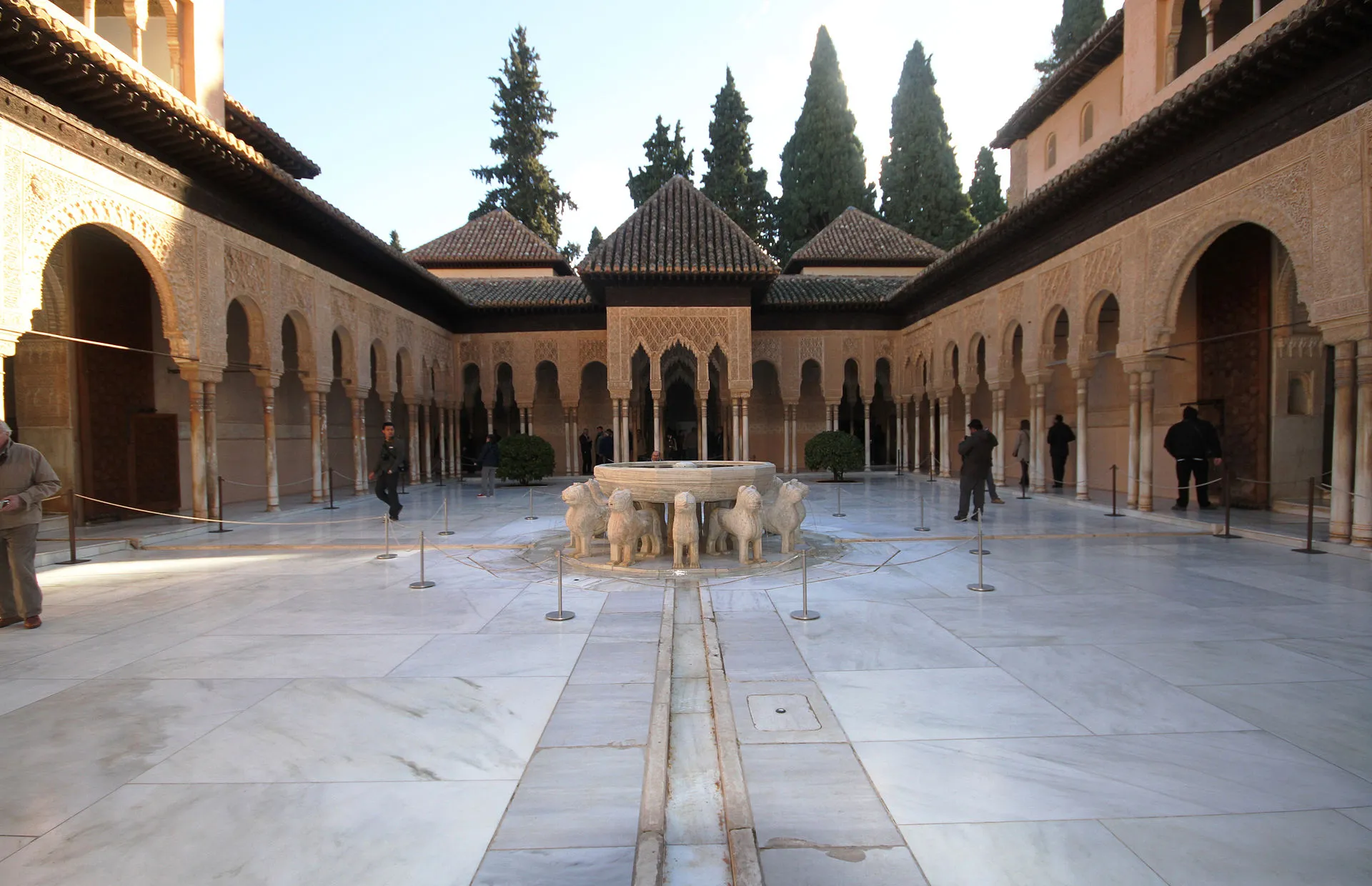
Court of the Lions: Twelve marble lions support a fountain at the center of this legendary courtyard, surrounded by 124 slender columns. Nasrid Palaces: Three interconnected palaces showcasing the pinnacle of Moorish decorative arts — the Hall of the Ambassadors alone took 14 years to complete. Generalife Gardens: The sultans' summer retreat features cascading terraces, long water channels, and intimate courtyards that feel worlds away from the main palace. Alcazaba fortress: The oldest section of the complex offers commanding views from the Torre de la Vela across Granada to the Sierra Nevada mountains. Palace of Charles V: A striking Renaissance circle-within-a-square design, housing the Alhambra Museum and the Fine Arts Museum (both free). Sunset from the towers: The warm light transforms the red fortress walls and creates unforgettable views over the Albaicín neighborhood below
When to Visit
Summer (April 1 - October 14): 8:30 AM - 8:00 PM (day visit) | 10:00 PM - 11:30 PM (night visit). Winter (October 15 - March 31): 8:30 AM - 6:00 PM (day visit) | 8:00 PM - 9:30 PM (night visit). Closed: December 25 and January 1. Best time: First slot at 8:30 AM avoids heat and crowds; late afternoon brings warm golden light. Least crowded: Weekdays from November through February
Admission and Costs
General admission: €14 (full complex including Nasrid Palaces with assigned timeslot). Gardens & Alcazaba only: €7 (excludes Nasrid Palaces). Night visit - Nasrid Palaces: €8 (Nasrid Palaces only, evening hours). Night visit - Generalife Gardens: €5 (gardens illuminated at night). Guided group tour: €40-75 per person (2.5-3 hours, skip-the-line entry included). Private guide: €180-300 for up to 6 people (tickets purchased separately)
The Case for a Guide
The Alhambra's Arabic inscriptions, geometric tile sequences, and water engineering are invisible languages that remain locked without an expert who can read them aloud in the rooms where they appear.
- Nasrid mathematical tile patterns: The muqarnas ceilings and tilework in the Hall of the Ambassadors follow a specific mathematical sequence — guides trace the geometric logic, explaining how Nasrid craftsmen encoded infinity and divine order into finite plaster without any repeating errors over hundreds of panels.
- Gravity-fed water engineering: The entire Alhambra's irrigation system runs entirely on gravity from a mountain aqueduct built eight centuries ago; guides trace the route from the Sierra Nevada snowmelt through hidden channels into every courtyard fountain and garden jet.
- Inscribed poetry translation: "Wa la ghalib illa Allah" — "There is no victor but God" — appears thousands of times in the plasterwork; guides translate specific poems by Ibn Zamrak that describe the palace rooms from within the rooms themselves, a unique self-referential literary device.
- Christian additions identified: After 1492, Ferdinand and Isabella inserted Gothic chapels and Renaissance additions; guides point out exactly which columns, doorways, and ceilings are original Nasrid work and which are Christian-era insertions, distinguishing two architectural worlds that coexist in every room.
- Sunrise garden access strategy: The Generalife gardens face east and receive early light that transforms the cypress hedges and water channels into something otherworldly; guides who know the first-entry slot and pace the visit accordingly ensure you reach this section before the heat and the crowds arrive.
Tips for Visitors
Arrive 20 minutes early: Security checks and the walk from the entrance gate to the Nasrid Palaces takes longer than you'd expect. Wear comfortable shoes: You'll walk 3-4 km across uneven stone paths, gravel, and steep inclines throughout the complex. Bring water: Summer temperatures in Granada regularly hit 40°C, and shade is limited between sections. Don't miss the free museums: The Palace of Charles V contains two excellent museums included with your general admission. Photography is allowed: No flash inside the Nasrid Palaces, and tripods are prohibited. Allow 3-4 hours: A thorough visit covering all areas requires half a day; the Generalife alone deserves at least 45 minutes
Frequently Asked Questions
What months offer the best Alhambra experience?
April, May, September, and October combine comfortable temperatures with the Generalife gardens at their most spectacular, and the Sierra Nevada backdrop is still snowcapped in spring for dramatic photographs. Summer months remain popular but Granada's intense July-August heat above 35°C makes the exposed palace courtyards and hillside paths exhausting, while winter visits are quieter and tickets are far easier to secure, though shorter daylight hours limit time in the gardens.
When can visitors explore Alhambra?
Summer (April 1 - October 14): 8:30 AM - 8:00 PM (day visit) | 10:00 PM - 11:30 PM (night visit). Winter (October 15 - March 31): 8:30 AM - 6:00 PM (day visit) | 8:00 PM - 9:30 PM (night visit). Closed: December 25 and January 1.
Why is it worth hiring a guide for the Alhambra?
Unlock hidden meaning: Arabic calligraphy covers nearly every surface — guides translate inscriptions and explain their poetic and religious significance.
What practical tips help when visiting the Alhambra?
Arrive 20 minutes early: Security checks and the walk from the entrance gate to the Nasrid Palaces takes longer than you'd expect.