
Tips for Visitors
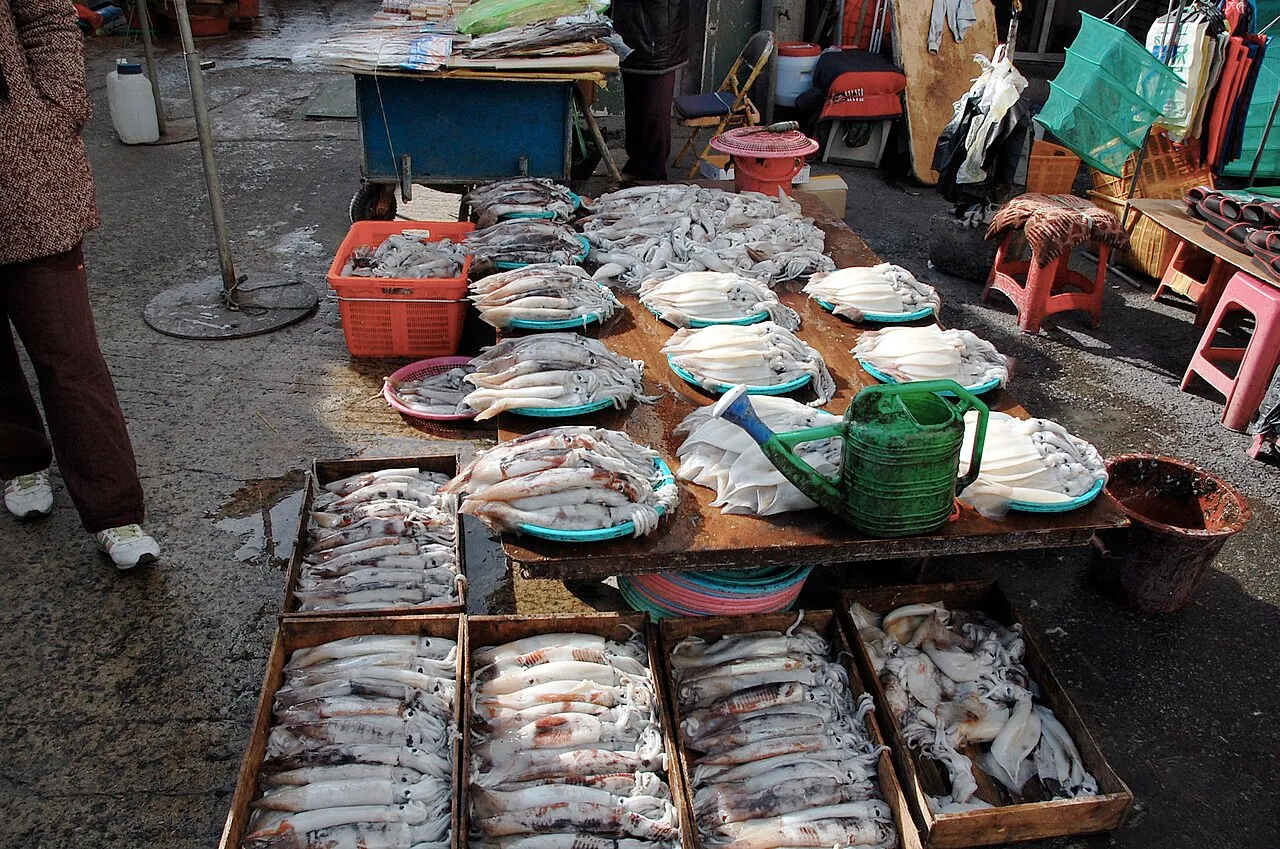
Bring cash: Many stall vendors operate cash-only. Translation app: Useful for weights and prices on signboards, though a guide is more reliable. Smell warning: The outdoor stall row has strong ocean and fish smells — not unpleasant if you expect it, overwhelming if you don't. Combine with: Gamcheon Culture Village is 15 minutes by taxi — a Jagalchi morning + Gamcheon afternoon covers Busan's two most distinctive characters. Post-market: Walk along the Nampo-dong waterfront to the BIFF Square film festival area, where famous Korean directors' handprints are set in the pavement.
When to Visit
Market hours: Daily 6 AM – 10 PM. Best trading activity: 6–9 AM (unloading from harbour boats). Best for eating: 10 AM – noon (freshest preparation, fewer crowds before lunch rush). Closed: One day per month — check current schedule, typically first Tuesday.
Admission and Costs
Browsing the market: Free. Live seafood selection: Prices per 100g vary by species — flounder approximately ₩15,000–25,000 per kg, abalone ₩30,000–50,000 per kg. Restaurant table fee: ₩5,000 per person. Side dishes (rice, doenjang jjigae soup, banchan): ₩3,000–6,000 per person.
The Case for a Guide
Without a guide, Jagalchi is confusing and potentially expensive — prices are not posted, selection requires understanding of freshness indicators, and the vendor-to-restaurant-floor system is opaque to first-time visitors.
- Species identification: The guide identifies the 20+ species typically on display — distinguishing gwangeo (olive flounder, Busan's preferred hoe fish) from ureok (kelp grouper), and explaining which species are in season for peak flavour
- Price negotiation: Jagalchi vendors adjust prices based on perceived customer knowledge — a guide prevents tourist markup and ensures you pay local rates for the weight selected
- Hoe eating protocol: The guide explains the specific dipping sauce pairings (sesame oil first, then ssamjang, then gochujang with garlic), the wrapping technique with perilla leaf and garlic, and how to order the secondary dishes correctly
- Ajumma culture: The guide introduces the specific history of the jagalchi ajumma as a Korean War survival story — a human connection to the market that transforms seafood shopping into a cultural encounter
Frequently Asked Questions
What makes Jagalchi Fish Market special?
Jagalchi is not just a market — it is a living institution shaped by Busan's port identity and the Korean War. The famous jagalchi ajumma (market women) who staff the outdoor stalls established their livelihoods during the 1950s when the waterfront became a displacement settlement for refugees, and many current vendors are second- or third-generation successors to those original stall owners. The combination of live seafood tanks, immediate preparation of raw fish (hoe), and the gritty harbour atmosphere makes it unlike any curated food market elsewhere.
How do you eat at Jagalchi Fish Market?
In the seven-storey main building, select live seafood from vendors on the ground floor (abalone, flounder, octopus, sea cucumber, prawns), pay for the weight, and the vendor prepares it as hoe (raw slices) served with sesame oil, gochujang dipping sauce, doenjang paste, and ssamjang. Take your selection upstairs to restaurant floors that charge a small table fee (approximately ₩5,000 per person) to eat your chosen seafood. First- timers find the process confusing; a guide navigates the selection, negotiates the weight price, and translates the preparation preferences.
What time is best to visit Jagalchi Fish Market?
Early morning from 6 to 9 AM captures the busiest trading period when fishing boats unload directly at the harbour and vendors are at full activity. This is the most atmospheric time. Late morning (10 AM–noon) is ideal for eating — all preparations are freshest, vendors are fully stocked, and the restaurant floors are less crowded than lunchtime. The market operates until approximately 10 PM, and evening visits have their own appeal with illuminated stalls along the outdoor row.