
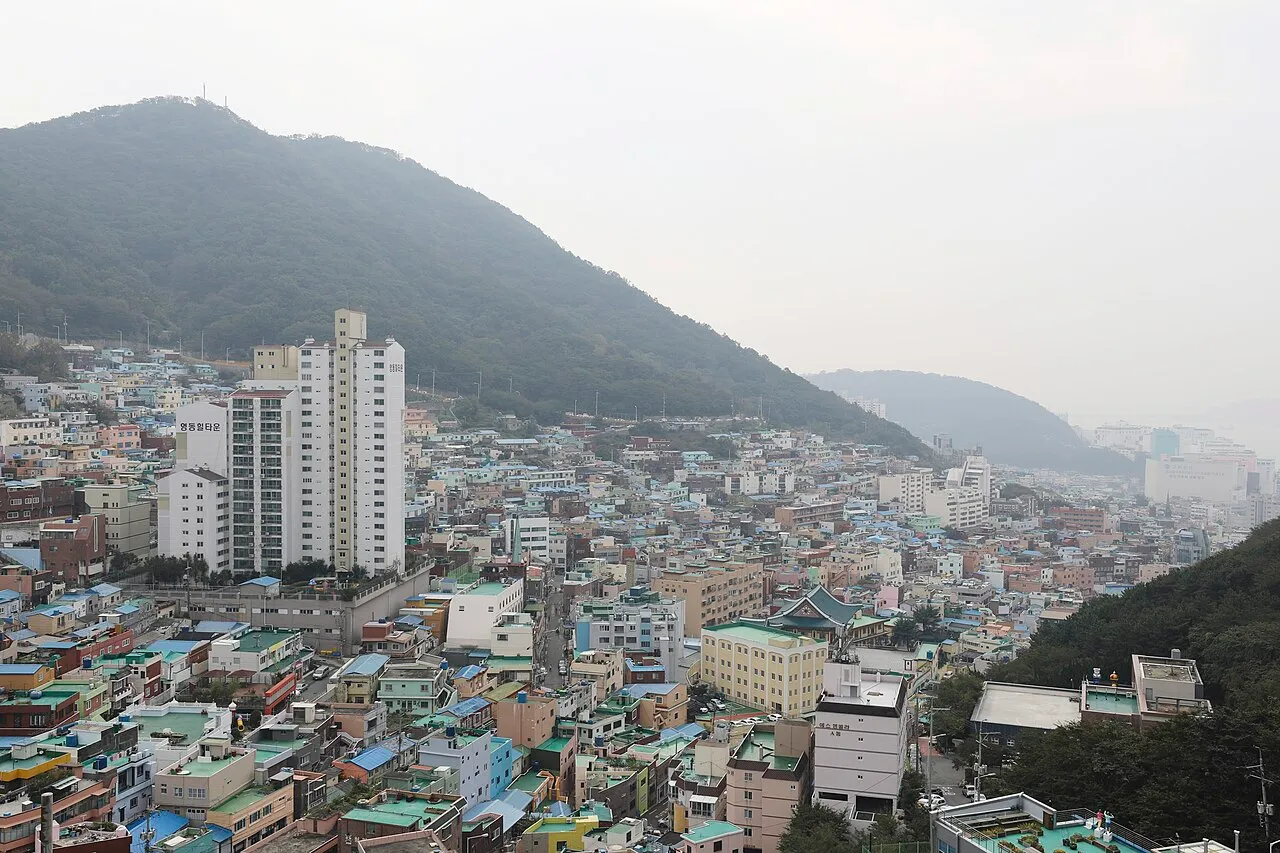
Walking Routes
The village rewards a loop rather than an out-and-back. Start at the information centre by the main gate, buy the ₩2,000 stamp map, and follow the marked route that traces the upper ridge before dropping through the residential lower alleys — roughly a two-hour walk at an unhurried pace, longer if you stop for coffee.
Landmarks come in a natural sequence. The main terrace viewpoint near the entrance is where the classic postcard shot of pastel rooftops tumbling toward the harbour is taken; a few steps on sits the Little Prince and the Desert Fox sculpture, the village's most photographed spot and almost always queued. From there the route threads past the fish-scale mosaic staircase, the mural-lined "light-house" alley, and the House of the Singing Fish installation before reaching the small star-observatory rooftop with the widest panorama.
The stamp route covers the highlights, but the real texture is in the secondary alleys that branch off it — narrow, unsigned, and steep, several of them dead-ending at private courtyards. A guide who knows which turns lead to resident studios versus front doors keeps you out of people's homes while still finding the hanji paper workshop and rooftop terraces the map never mentions. Pair the walk with a morning at Jagalchi Fish Market, a 15-minute taxi ride away.
Local Life
Gamcheon is a living neighbourhood first and a photo backdrop second — around a thousand people still live in the terraced houses, many of them descendants of the Taegukdo Korean War refugees who founded the settlement in the 1950s, and the movement's temple still stands at the top of the hill. Painted signs in several alleys read "residents live here" and ask visitors to keep their voices down and stay out of doorways and courtyards.
The 2009 art project deliberately kept original residents in place as gallery hosts, café owners, and craftspeople rather than displacing them. That means the coffee you buy at a rooftop café with a harbour view, the ceramics in a garden-wall studio, and the hanji paper crafts are often sold by the same families who have lived here for decades — spending a little in these resident-run shops is what keeps the tourism income in the village. Children still walk to school through the tourist alleys in the morning, so the quietest, most respectful window is right at opening before the tour buses arrive.
When to Visit
Open: The information centre, stamp tour, and most galleries run daily 9 AM – 6 PM (some cafés and studios close earlier on weekdays and on Mondays). The village itself is a residential neighbourhood, so its lanes are technically accessible anytime, but arriving before or after staffed hours means no map, no open studios, and walking past people's homes in the dark. Best time: Weekday mornings 9–11 AM for quieter alleys and the best low-angle light on the pastel walls. Busy period: Weekend afternoons, Korean public holidays, and cruise-ship days pack the main terrace and the Little Prince statue with queues.
Admission and Costs
Entrance to the village: Free — there is no gate or ticket. Stamp-tour map: ₩2,000 (about $1.50) at the entrance information centre, which marks the route and doubles as a stamped souvenir. Art gallery admissions: most are free; some small resident-operated exhibitions charge ₩1,000–3,000 (under $2.50). Rooftop café coffee with a harbour view runs about ₩5,000–7,000 ($4–5). Getting up the hill: community bus from Toseong Station is ₩1,200–1,500, or a taxi from Nampo-dong is roughly ₩5,000–7,000.
The Case for a Guide
Gamcheon's alleyways look charming from the main terrace but the depth of the village — three layers of alleys, resident-run studios, and the full community history — is only accessible with someone who knows the layout and the stories.
- Taegukdo community origins: The Taegukdo religious movement's founding story, the specific decision to settle this hostile hillside in wartime, and how the community maintained its identity through the decades before the art project arrived is a story no entrance map explains
- Navigating side alleys: The stamp tour covers the main route; a guide knows the secondary alleys where resident ceramicists, traditional hanji paper artists, and elderly residents' hand-tended rooftop gardens are found — experiences entirely absent from the standard tourist circuit
- The art installations: Individual artworks have specific artist stories and community meanings; the famous Little Prince statue, the fish-scale staircase mosaic, and the House of the Singing Fish all have narratives a guide can convey
- Respectful visiting: The village has genuine residents — children walk to school through the tourist alleys and elderly people live behind the photographed walls; a guide manages the boundary between tourism and residential community in a way solo visitors often get wrong
Tips for Visitors
Getting there: From Busan city centre take Metro Line 1 to Toseong Station, Exit 6, then community bus 2, 2-2, or 1-1 up the hill (about 10 minutes); a taxi from Nampo-dong is around 15 minutes. Shoes: Wear comfortable walking shoes — the alleys are steep, cobbled, and uneven, and there is no flat route through the village. Early arrival: The ₩2,000 stamp-tour map can sell out on busy weekends, so arrive close to the 9 AM opening. Photography etiquette: The main terrace and the Little Prince statue are always crowded; shoot in the first hour after opening for manageable queues, and never photograph residents' windows or interiors. Combined visit: Pair Gamcheon with Jagalchi Fish Market — 15 minutes by taxi — for a morning that covers both Busan's art identity and its seafood culture, then finish at the ocean-cliff Haedong Yonggungsa Temple.
Frequently Asked Questions
What is the history of Gamcheon Culture Village?
Gamcheon was originally settled in the early 1950s by followers of the Taegukdo religious movement who arrived in Busan as Korean War refugees. The community built tightly packed houses on an otherwise uninhabitable steep hillside, creating the distinctive terraced layout where no house blocks another's view. In 2009, the city of Busan partnered with local artists and residents on the Dreaming of Marymond project, which commissioned murals, sculptures, and small galleries to revitalize the neighbourhood while keeping original residents in their homes.
How do you navigate Gamcheon Culture Village?
A self-guided map (stamp tour) is available at the entrance for ₩2,000 — visitors collect rubber stamps at art installations along a marked route. The village's alleyways are narrow, steep, and unsigned, making it easy to get lost on side paths that dead-end at private homes. A guide knows all the art installations, the best viewpoints looking back over the harbour, and which doors lead to resident-run galleries versus private residences — essential for respectful exploration.
When is the best time to visit Gamcheon?
Weekday mornings (9 AM–11 AM) are the most pleasant — the village is genuinely quiet and the pastel colours photograph best in morning light before midday haze. Weekends and afternoons bring school groups and tour buses that crowd the main viewpoints and narrower alley segments. Spring and autumn offer the most comfortable temperatures for the steep hillside walking. In summer the heat and humidity at midday make extended village walking uncomfortable.
How do you get to Gamcheon Culture Village from Busan city centre?
From Nampo-dong or Jagalchi, take Busan Metro Line 1 to Toseong Station — Toseong is one stop west of Jagalchi and two stops from Nampo. Leave via Exit 6, walk to the small bus stop beside the Pusan National University hospital, and take community bus 2, 2-2, or 1-1 for the steep 10-minute climb to the village entrance. A taxi from Nampo-dong costs roughly ₩5,000–7,000 and takes about 15 minutes. Coming straight from Jagalchi Fish Market a taxi is quicker at around 15 minutes rather than backtracking to the subway.
Is Gamcheon Culture Village worth visiting?
Yes for most first-time Busan visitors — it is worth it if you enjoy photography, street art, and offbeat neighbourhoods, and the harbour view over the pastel rooftops genuinely earns the Santorini of Korea nickname. Budget two to three hours. Skip it, or keep it short, if you have limited mobility (the village is nothing but steep stairs and cobbled slopes), if you only have one day in Busan and would rather spend it on Gwangalli Beach or the temples, or if you dislike crowds and cannot arrive before mid-morning. It rewards curiosity about the community far more than a quick photo stop.
How much does it cost to visit Gamcheon Culture Village?
Walking the village is free — there is no entrance gate. The only near-essential purchase is the ₩2,000 (about $1.50) stamp-tour map from the information centre at the entrance, which routes you past the main artworks and doubles as a souvenir once stamped. A handful of resident-run galleries charge ₩1,000–3,000 admission, and the rooftop cafés run about ₩5,000–7,000 for coffee with a harbour view. A whole visit costs very little beyond transport and whatever you spend in the craft studios.