
Guided Tours
Kelvingrove was built at the height of Glasgow's industrial confidence — the city that built a third of the world's ships and made the phrase Clyde-built a global standard of quality. The gallery was intended as a statement of civic ambition: Glasgow wished to be seen as a city of culture as well as commerce, and the collection assembled by its early curators included works that rival the holdings of major national galleries. The purchase of Dalí's Christ of St John of the Cross in 1952 was controversial at the time — critics called the price excessive for a contemporary work — but the painting attracted queues from the day of its display and has never left Glasgow. The building's own history intersects with the story of Charles Rennie Mackintosh, the Glasgow Style movement of the 1890s–1900s, and the School of Scottish Colourists — all of whom are represented in the collection and whose work connects directly to the city's wider artistic identity.
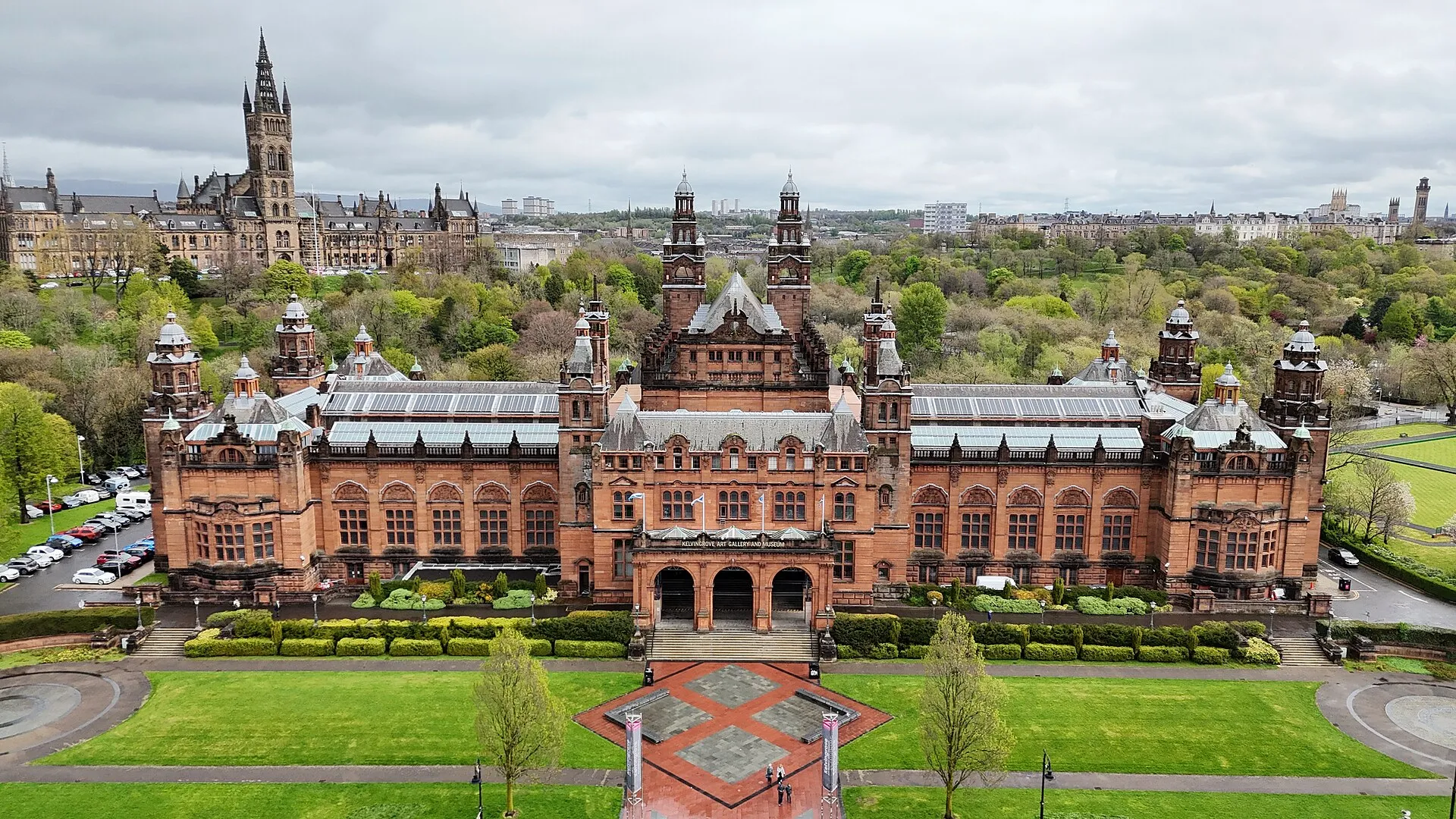
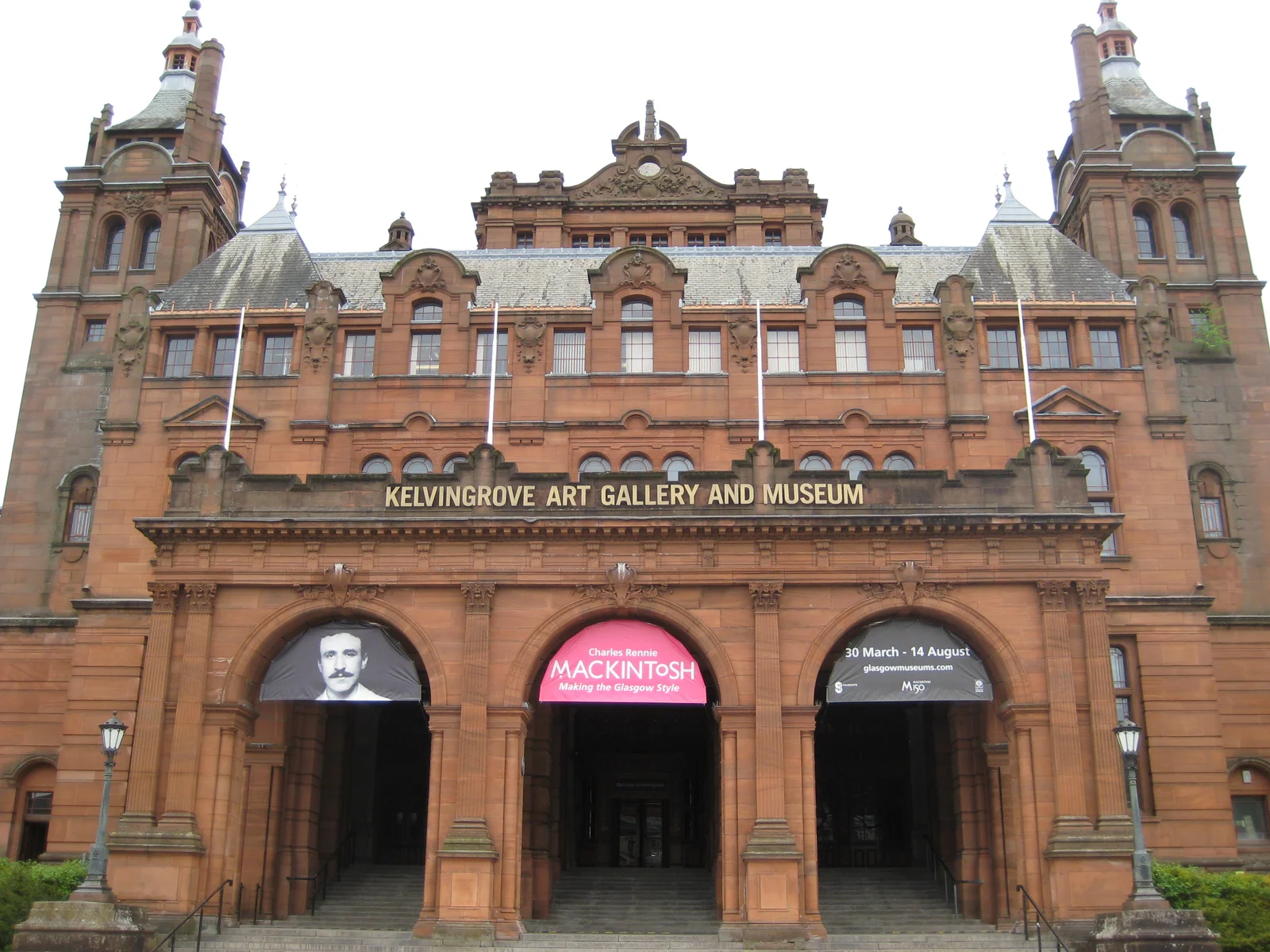
Kelvingrove Art Gallery and Museum in Pictures
When to Visit
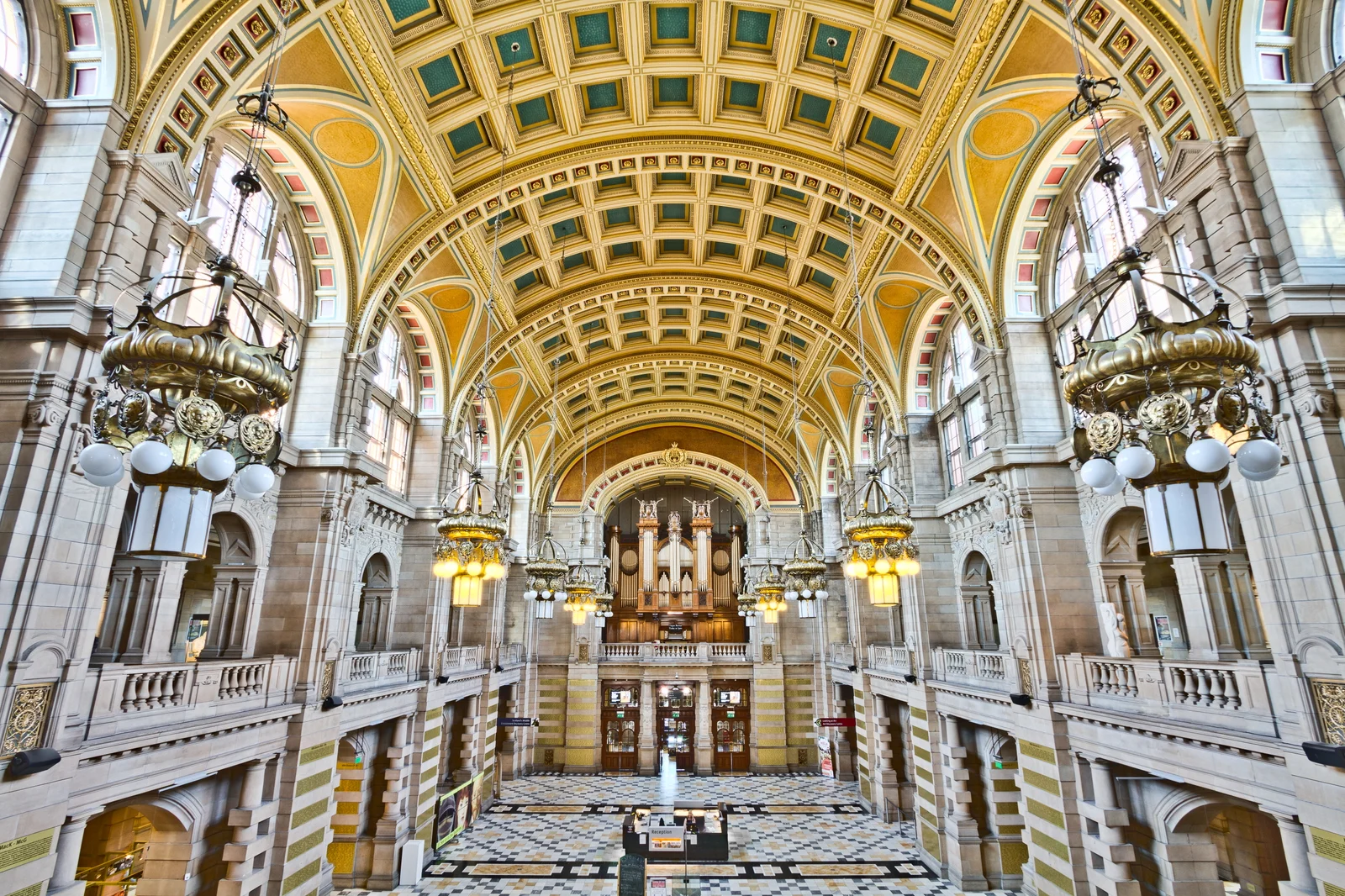
Monday–Thursday and Saturday: 10 AM–5 PM. Friday and Sunday: 11 AM–5 PM. Free entry. Closed Christmas Day and New Year's Day. The museum is busiest on Saturdays and during school holidays; weekday mornings (10 AM–12 PM) are quietest. A free daily organ recital takes place in the Grand Hall at 1 PM on most days — a genuinely unusual and enjoyable experience in the context of a world-class art gallery. The museum's café serves breakfast and lunch; the shop stocks excellent art books and Scottish gifts.
Admission and Costs
Permanent collection: free. Temporary exhibitions: typically £8–12 adults. Café: standard café prices. Guided group tours (organised in advance): typically £8–12 per person for a 1.5-hour themed tour. Private tours with a specialist guide: £80–150 for up to 6 people. The museum offers specialist education programmes and handling sessions for school groups; these can sometimes be arranged for adult visitors with advance notice. Audio guides are available at the information desk.
The Case for a Guide
A guide at Kelvingrove provides value that the gallery's own excellent interpretation cannot fully replicate:
- Curatorial selection — With over 8,000 objects across 22 rooms, a guide focuses the visit on the works most worth lingering over and explains what makes each one significant
- Dalí context — The story of the Dalí purchase, the painting's unusual composition based on a drawing by Saint John of the Cross himself, and its meaning within Dalí's Surrealist period requires specialist explanation
- Scottish Colourists — The group of four Scottish painters (Cadell, Hunter, Ferguson, Peploe) who brought Post-Impressionist colour to Scottish painting between 1900 and 1930 is little known outside Scotland but internationally significant; a guide brings their work to life
- Architecture — The building's Spanish Baroque style, its iconic central tower, and the Grand Hall's spatial engineering are worth exploring with someone who knows the architectural history
Tips for Visitors
Attend the 1 PM organ recital in the Grand Hall if your schedule allows — it is unusual, free, and atmospheric. The gallery is large enough that even at maximum visitor numbers it rarely feels crowded; there is always a quiet corner. The Lord Kelvin exhibition in the science galleries tells the story of one of the greatest physicists in history, who worked at the University of Glasgow for 53 years and whose work on thermodynamics and electromagnetism underpins much of modern technology. The museum is directly adjacent to Kelvin Hall and the University of Glasgow campus, making a natural half-day circuit through the West End on foot from the university cloisters to the gallery.
Frequently Asked Questions
Is Kelvingrove Art Gallery free to enter?
Yes, general admission to the permanent collection is entirely free. Temporary exhibitions may charge entry. The museum is free every day, all year. Donations are welcomed. The café and shop are separate charges. This makes Kelvingrove one of the best-value attractions in the UK — comparable collections in London or Edinburgh charge significant admission fees.
How long does a visit to Kelvingrove take?
A thorough visit to the highlights takes 2–3 hours. A comprehensive visit covering all 22 rooms spread across three floors could absorb a full day. The Spanish Baroque building itself is worth exploring as an architectural experience, and the Grand Hall — with a full-scale Spitfire suspended above visitors' heads — makes an immediate impression that justifies the visit before a single painting is examined.
What are the must-see works at Kelvingrove?
Salvador Dalí's Christ of St John of the Cross (1951), purchased controversially by Glasgow Corporation for £8,200 in 1952 and now one of the most reproduced paintings in the world, is the single most famous work. Rembrandt's Man in Armour (1655) is another masterpiece. The Dutch and Flemish collection, the French Impressionist works (Monet, Pissarro, Degas), and the extensive collection of Scottish Colourist paintings (Cadell, Hunter, Ferguson, Peploe) are all internationally significant.