
What To Buy
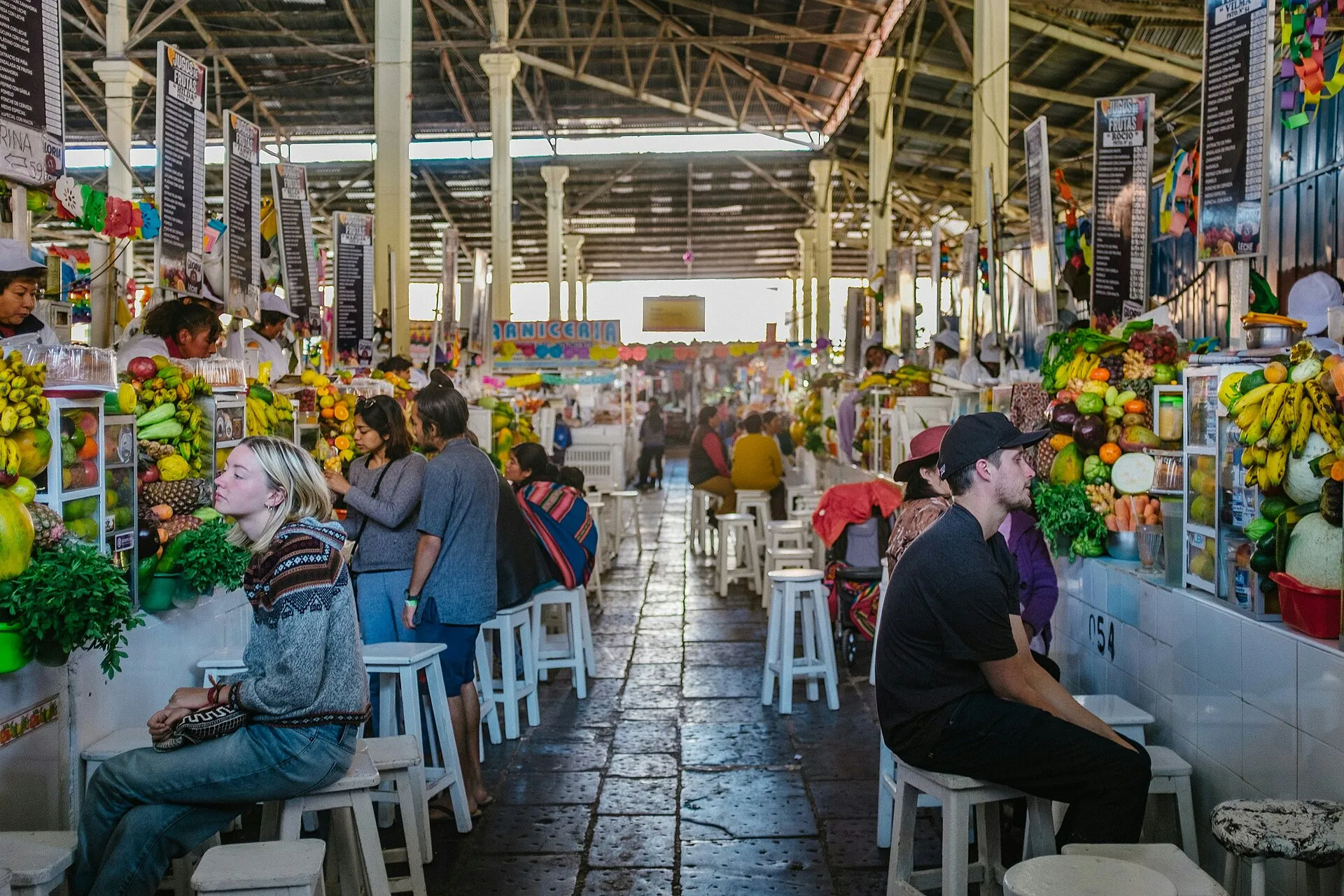
Juice alley: A dozen competing vendors blend fresh juices to order — try lucuma (a caramel-sweet Andean fruit) or aguaymanto (golden berries) for flavours you won't find at home. Comedor breakfast: Sit at a tiny counter and eat a S/8 bowl of quinoa soup followed by a plate of lomo saltado — the most authentic and affordable meal in Cusco. Potato diversity: Peru has over 3,000 potato varieties; the market displays dozens of types in colours ranging from deep purple to bright yellow, each with distinct culinary uses. Fresh cheese section: Stacks of queso fresco (fresh white cheese) made daily in highland dairies, sold by weight — pair with bread for a simple Andean snack. Flower section: An explosion of colour near the entrance — affordable bouquets of roses, native orchids, and Andean wildflowers. Coca leaf stalls: Bags of dried coca leaves sold openly for tea and chewing — an ancient Andean tradition and a genuine remedy for altitude discomfort. Textiles and souvenirs: The aisles nearest the main entrance sell alpaca-blend scarves, chullo hats, and woven goods — friendlier to your wallet than the boutiques around the Plaza de Armas, though a polite haggle is expected and true baby-alpaca is rare at these prices.
Food Stalls
The comedor section is San Pedro's gastronomic core — dozens of tiny kitchen stalls where cooks prepare the same recipes their families have served for generations. For breakfast, order caldo de gallina (rich hen broth with noodles and potato) or quinoa con leche (quinoa porridge with warm milk and cinnamon). At lunch, the stalls compete for customers with enormous portions of lomo saltado, ají de gallina, seco de cordero (lamb stew), and chicharrón (deep-fried pork) served with giant-kernel Andean corn and sweet potato. The juice vendors along the central aisle blend any combination of fruits to order — try the especial blends that combine lucuma, banana, papaya, and maca root for a high-altitude energy boost. Near the bread section, vendors sell chuta — a large, slightly sweet bread traditional to Cusco — alongside empanadas filled with cheese or meat. For the adventurous, look for anticuchos (grilled beef heart skewers) and cuy al horno (roasted guinea pig), both prepared fresh to order at dedicated stalls.
San Pedro Market timeline
- Inca era
The Andean catu tradition
Long before the Spanish arrived, Andean communities gathered at open-air barter markets known as catu to trade potatoes, maize, coca and freeze-dried chuño — the produce-trading rhythm that still defines San Pedro today.
-
Templo de San Pedro completed
The baroque church of San Pedro Apóstol rises just north of today's market hall, built partly with stone from dismantled Inca structures and giving the neighbourhood and its market their name.
-
The covered market hall opens
Cusco inaugurates its central market inside a wrought-iron hall long attributed to the engineering office of Gustave Eiffel, sheltering hundreds of stalls under a single soaring roof.
- 2000s
Gateway to Machu Picchu
As Cusco becomes the staging point for visits to Machu Picchu, San Pedro's juice alley and comedor counters grow into a traveller favourite while remaining the everyday larder for local households.
When to Visit
Monday-Saturday: 6 AM - 6 PM (busiest 7-11 AM). Sunday: 6 AM - 2 PM (reduced hours). Best: 7:30-9:30 AM when the market is at peak activity but not yet overwhelmed with tour groups. Duration: 1-2 hours for a thorough guided tour with tastings. If you have just arrived in Cusco at 3,400 m altitude, an early, unhurried market stroll is a gentle way to spend a first acclimatization morning before tackling higher sights.
Admission and Costs
Market entry: Free. Guided food tour: S/60-120 ($16-32) per person including tastings at 5-8 stalls. Private guide for a small group: S/150-300 ($40-80) plus the cost of food. Full breakfast at a comedor: S/6-12 ($1.60-3.25) — soup, main course, and juice. Fresh juice: S/3-8 ($0.80-2.15) — try lucuma, maracuyá, or a mixed Andean superfruit blend.
The Case for a Guide
A local food guide turns San Pedro from an overwhelming maze into a legible culinary map. The most immediate value is translation, and not only between Spanish, Quechua and English: a guide reads the stalls for you, naming chuño and moraya (two kinds of freeze-dried potato), pointing out maca and kiwicha, and explaining which of Peru's 3,000-plus potato varieties fills each sack. Guides know which comedor cooks run the cleanest kitchens and the richest broth, so you eat confidently rather than guessing; they steer you past the tourist-priced juice stalls clustered by the entrance to the better-value vendors deeper inside; and they arrange tastings across five to eight stalls that would be awkward to line up alone. Just as importantly, a guide connects the produce on the tables to the highland farms of the Sacred Valley and the Inca agricultural terraces you can visit afterwards, so a morning at the market becomes an introduction to Andean food culture rather than a quick photo stop.
Tips for Visitors
Go hungry: A market food tour involves constant tasting — arrive with an empty stomach to make the most of it. Bring small bills: Most vendors don't break S/100 or S/200 notes — carry S/5 and S/10 bills. A guide is invaluable: Without one, you'll eat well but miss the stories behind the ingredients — guided tours identify unfamiliar produce and explain traditional uses. Watch your belongings: The market is crowded and vibrant — keep bags in front of you and phones in pockets. Combine with the Plaza de Armas: The market is a 10-minute walk from the plaza — do both in a morning circuit. Ease into the altitude: Sip mate de coca from the herb stalls, a traditional Andean remedy for the thin highland air. Avoid Sunday afternoons: The market closes early on Sundays and the best produce is gone by late morning.
Frequently Asked Questions
When is the best time to shop at San Pedro Market?
The market runs Monday to Saturday from 6 AM to 6 PM, with reduced Sunday hours of 6 AM to 2 PM. Come between 7:30 and 9:30 AM, when the stalls are fully stocked and buzzing with local shoppers but the tour groups have not yet arrived. A thorough guided visit with tastings takes one to two hours, and it pairs naturally with breakfast at a comedor counter. Avoid Sunday afternoons, when many vendors pack up early and the freshest produce is long gone.
How much does a San Pedro Market food tour cost?
Entry is free, since San Pedro is a working public market. A guided food tour runs about S/60-120 ($16-32) per person and includes tastings at five to eight stalls, while a private guide for a small group is closer to S/150-300 ($40-80) plus the cost of food. If you would rather explore on your own, a full comedor breakfast of soup, a main course and juice costs just S/6-12 ($1.60-3.25), and a fresh fruit juice is S/3-8 ($0.80-2.15).
Is a guided food tour worth it at San Pedro Market?
For most first-time visitors, yes. Without a guide you will eat well but miss the story behind the ingredients — a good local guide identifies unfamiliar Andean produce such as chuño, maca and kiwicha, explains which of Peru's 3,000-plus potato varieties you are looking at, and steers you to the comedor cooks with the best broth. Guides also translate between Spanish, Quechua and English, help you avoid tourist-priced juice stalls near the entrance, and put the market in the wider context of highland farming you can then see for yourself in the Sacred Valley.
How do I get to San Pedro Market and is it safe?
The market sits about five blocks southwest of the Plaza de Armas, a flat 10-minute walk, and the San Pedro station for the Machu Picchu-bound PeruRail service is right beside it. It is a busy, welcoming place, but the crowds make it a spot to stay alert, so keep your bag in front of you, carry small S/5 and S/10 bills rather than large notes, and hold onto your phone. Arriving before mid-morning also means thinner crowds and an easier, calmer first visit.