
Visitor Etiquette
Non-Muslim visitors are welcome but must join an official guided tour to access the interior — independent entry is not permitted. Tours are run by the mosque administration and cover the prayer hall, ablution halls, and hammam level. Appropriate dress is mandatory: both men and women must wear clothing that covers shoulders and knees; women are required to wear a headscarf inside (available to borrow at the entrance). Remove footwear before stepping onto the prayer hall carpet — shoe storage is provided at the entry points. Photography inside is generally permitted during official tours, but the tour guide will indicate where cameras must be put away, particularly near active prayer areas. The mosque is an active place of worship with five daily prayers; tour schedules are arranged so visitors are not present during prayer times, and the mosque closes to tourist access during those windows. Loud conversation, running, and behavior that would disturb the spiritual atmosphere are not appropriate anywhere within the complex perimeter.
Spiritual Significance
King Hassan II grounded his vision in a Quranic verse — "God's throne was built upon water" — to justify placing the mosque on a platform over the Atlantic Ocean. This was not architectural novelty for its own sake but a theological statement: the mosque's physical location was chosen to embody a divine attribute, making the building an act of worship before a single prayer was offered within it. The 210-meter minaret carries a laser beam directed toward Mecca, so that worshippers across Casablanca and ships at sea can orient themselves toward the qibla from miles away — a literal enactment of the Islamic principle that all Muslim prayer around the world shares a single direction, collapsing global geography into a unified act of submission. The 6,000 Moroccan artisans who spent 80 million work-hours constructing the mosque were engaged in a form of devotion themselves: the Moroccan craft traditions of zellige mosaic, carved cedarwood, and marble inlay are understood in Islamic culture as applied theology — human hands rendering divine geometric order visible in material form. Hassan II, who died in 1999 and was laid to rest in the Mausoleum of Mohammed V in Rabat, conceived the mosque as an enduring gift to the nation — a monument meant to outlast any single reign and anchor communal worship for generations. The transparency of the glass floor panels — allowing Atlantic waves to be seen beneath the prayer hall — confronts worshippers with the vastness of creation even as they prostrate themselves before the Creator, a spatial reminder of human smallness and divine immensity woven into the act of salat itself.
Hassan II Mosque timeline
- Early 1980s
National project launched
King Hassan II launched the mosque project and public subscription for the Atlantic promontory site.
-
Construction begins
Michel Pinseau's design moved from plan to worksite with Bouygues engineers and Moroccan craftsmen.
-
Mosque inaugurated
The completed mosque opened with its 210-meter minaret and rare official tours for non-Muslim visitors.
When to Visit
Non-Muslim guided tours run Saturday–Thursday at 9 AM, 10 AM, 11 AM, and 2 PM. The mosque is closed to tourists on Fridays, the main congregational prayer day, and keeps a reduced schedule during Ramadan — confirm times locally before setting out. Aim for the 9 AM slot: groups are smallest and morning light floods the prayer hall through the eastern doors. Allow about 1 hour for the guided interior and another 30 minutes for the exterior and esplanade.
Getting there is straightforward. The Casablanca tramway's T1 line stops at Hassan II, a short walk from the esplanade; a metered petit taxi from the city centre costs only a few dirhams, and the mosque is a scenic 15-minute coastal walk from the Old Medina or a longer stroll from the Corniche. The vast esplanade is broad, flat and step-free, so the exterior is comfortable for wheelchair users and strollers even though the interior tour involves removing shoes and crossing the carpeted prayer hall.
Admission and Costs
Official guided tour: 130 MAD (€12) per person, includes interior access and guide. Students/children: 60 MAD (€5.50) with valid ID. Exterior and esplanade: Free (open to all, no ticket needed). Private guide for mosque + city context: 500-900 MAD (€46-83) for combined half-day tour. Photography inside: Permitted (no flash); no extra fee.
The Case for a Guide
Independent entry is not permitted — the only way inside is an official guided tour, so a knowledgeable guide is not a luxury here but the mechanism of access itself. Beyond opening the doors, a good guide turns a walk through vast marble halls into a story you can read:
- Reading the craft — decoding the zellige geometry, the carved cedar muqarnas, and the polished tadelakt plaster that most visitors admire without understanding
- Theology in stone — explaining why the mosque was built over the ocean, why sections of the floor are glass, and how the minaret's qibla laser links Casablanca to Mecca
- Numbers made human — putting the 25,000-worshipper hall, the 210-meter minaret, and the 80 million work-hours into a scale you can feel while standing beneath the roof
- Timing and access — steering you to the calmer 9 AM tour, handling the ticket queue, and sorting the borrowed headscarf and shoe storage before you step onto the carpet
- City context — connecting the mosque to the wider city, from the Old Medina to the Art Deco downtown and the seafront Corniche
A licensed guide (guide touristique) also quietly manages the etiquette, freeing you to concentrate on the building rather than worrying about a misstep inside an active place of worship.
Tips for Visitors
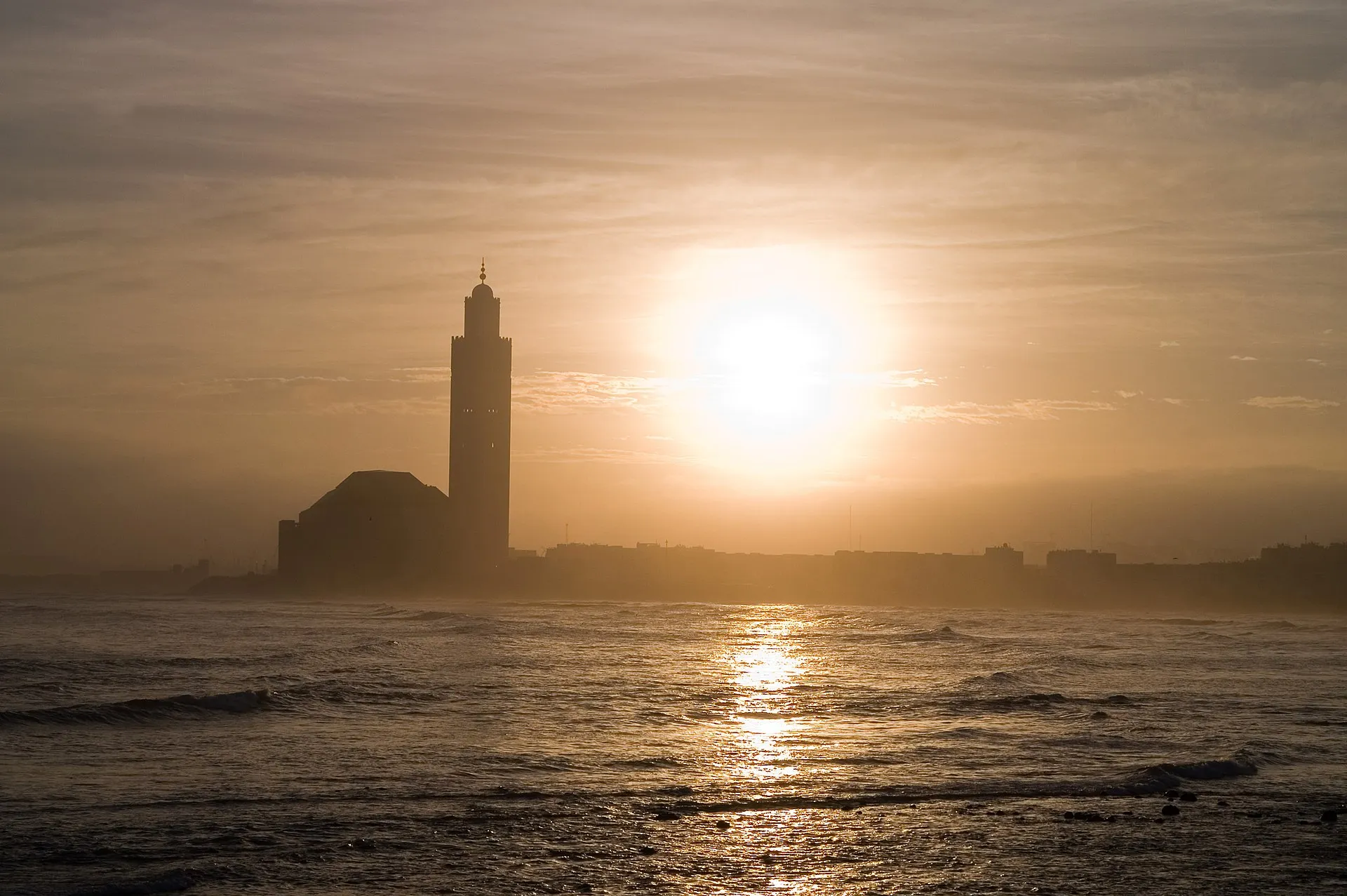
Arrive early: Tour groups form quickly; 15 minutes before scheduled time ensures your spot. Dress modestly: Shoulders and knees covered; women should bring a headscarf (free scarves available at entrance). Remove shoes: Required inside the prayer hall; shoe bags are provided. Photography tip: The best exterior shot is from the coastal walkway south of the mosque at golden hour. Windy platform: The ocean-facing esplanade can be very windy; secure loose items. Tramway access: The closest tram stop is "Hassan II" on line T1.
Frequently Asked Questions
What time of year should visitors plan a trip to Hassan II Mosque?
March through November provides consistently pleasant conditions for visiting, with the Atlantic breeze keeping the ocean-facing esplanade comfortable even in summer. The mosque's interior tours run year-round, but the exterior and esplanade are most enjoyable from April through October when rain is rare and the light on the white marble is spectacular. Winter months of December through February bring occasional storms that can make the exposed platform blustery and wet, though Casablanca rarely gets truly cold.
What time does Hassan II Mosque open to sightseers?
Non-Muslim guided tours: Saturday-Thursday at 9 AM, 10 AM, 11 AM, and 2 PM. Closed to tourists on Fridays: Friday is the main prayer day. Ramadan hours: Reduced schedule; check locally.
Is entry to Hassan II Mosque free for visitors?
Official guided tour: 130 MAD (€12) per person, includes interior access and guide. Students/children: 60 MAD (€5.50) with valid ID. Exterior and esplanade: FREE (open to all, no ticket needed).
What should visitors know before visiting Hassan II Mosque?
Arrive early: Tour groups form quickly; 15 minutes before scheduled time ensures your spot. Dress modestly: Shoulders and knees covered; women should bring a headscarf (free scarves available at entrance).