
Walking Route
Walking Routes
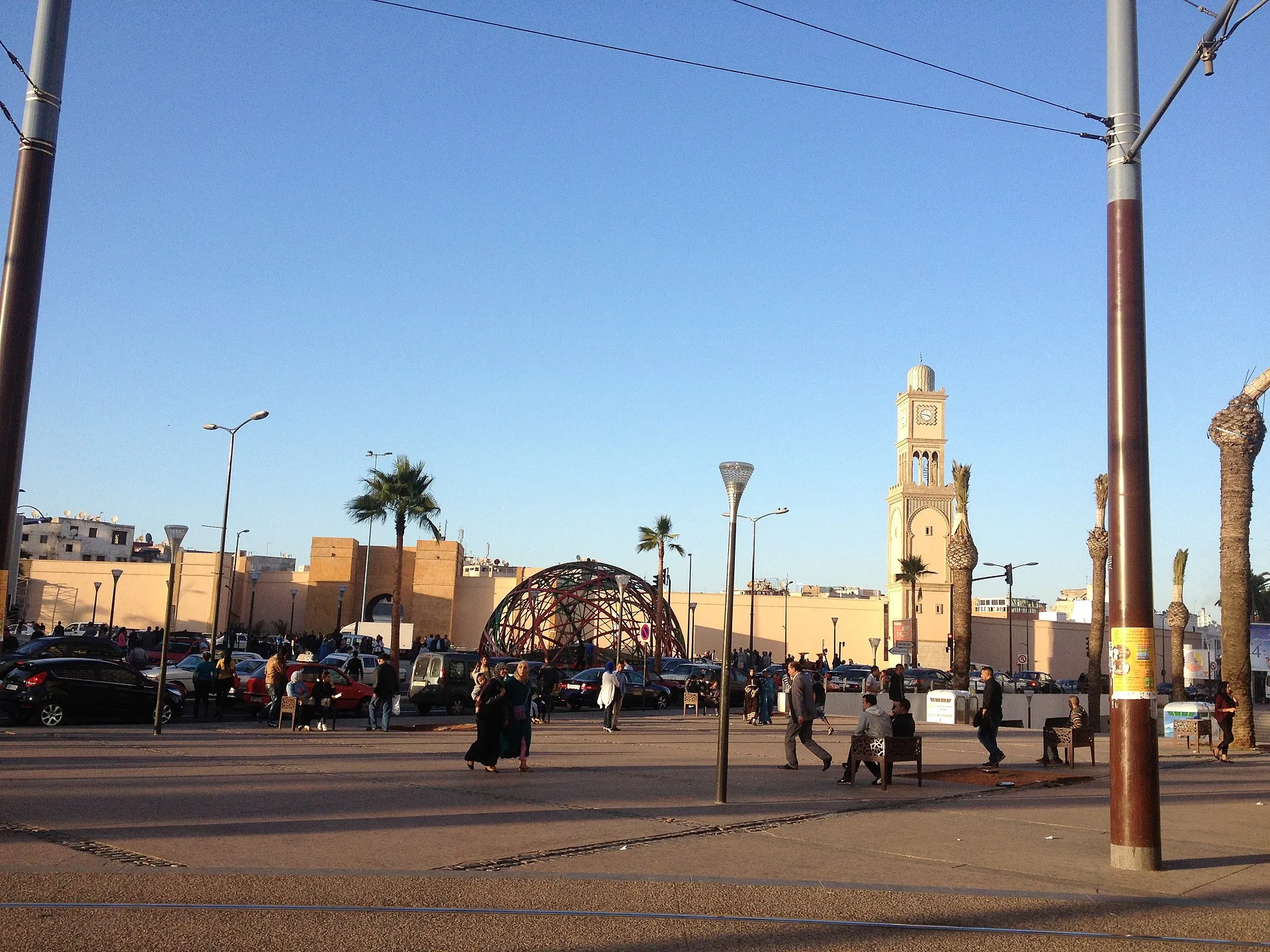
A walking route through the Old Medina typically begins at the main gate near Place des Nations Unies, where the contrast between modern Casablanca and the walled quarter is most dramatic and the early-20th-century clock tower (Tour de l'Horloge) marks the corner of the ramparts. From there, a guide leads through the fabric souk, past the spice stalls, and to the Sidi Allal el Kairouani mosque — explaining the architectural traces of the town's Portuguese and Alaouite past visible in the fortification walls and gate design. The route continues to the Sqala bastion for port views, then down to the fish market near Bab Marrakech.
Because the whole quarter takes only 15-20 minutes to cross, the walk is less about distance than about reading the details:
- Start early — weekday mornings, when the souks are busiest and most photogenic, are the ideal window
- Follow the trades — the lanes cluster by craft, from textiles to spices to metalwork, so the route naturally tells a story of the medina's working economy
- Detour for food — the sandwich stands and msemen (flatbread) stalls offer a taste of authentic street food along the way
- Finish at the sea — ending at the Sqala and the fish market pairs the history with an Atlantic view
The entire circuit takes 1.5-2 hours at a walking pace and pairs naturally with the coastal walk to the Hassan II Mosque or onward to the Corniche.
Local Life
The medina's fabric souk is a corridor glowing with bolts of Moroccan silk, cotton, and wool in every color, where tailors still cut and sew to order. Spice and herb stalls display pyramids of ras el hanout, cumin, saffron, and traditional herbal remedies — a guide identifies the best merchants that locals trust and explains the blends behind Moroccan cooking. The Sidi Allal el Kairouani mosque, the medina's most prominent, is viewable from the main lane (exterior only for non-Muslims) and honours a saint from Kairouan whose koubba draws local devotion.
The Sqala bastion preserves the 18th-century artillery fortifications from Sultan Sidi Mohammed ben Abdallah's reconstruction, its cannons still overlooking the port. Near the port gate, the fish market sells the morning's fresh Atlantic catch — sardines, sea bream, and squid that you can have grilled at nearby stalls for a few dirhams. For a sit-down break, the hole-in-the-wall cafes where Casablancais sip espresso and watch the street give a genuine sense of the neighborhood's daily rhythms, while the msemen and sardine-sandwich stands near Bab Marrakech are the medina's most reliable cheap eats. It all sits a short walk from the Hassan II Mosque, making the quarter an easy add-on to a mosque morning.
Old Medina of Casablanca timeline
- 15th century
Anfa, the port before Casablanca
The site began as the Amazigh harbour town of Anfa, a trading and corsair port on the Atlantic long before the modern city existed.
-
Portuguese raze Anfa
A Portuguese expedition destroyed Anfa to end the raids launched from its harbour, leaving the site largely abandoned for decades.
-
The white house is built
The Portuguese returned to fortify the site as Casa Branca, the white house whose name — later Casablanca and ad-Dar al-Bayda — the city still carries.
-
Earthquake empties the town
The great earthquake that levelled Lisbon damaged the settlement, and the Portuguese withdrew, leaving the old port in ruins.
- 1770s
Sultan Sidi Mohammed rebuilds the medina
Sultan Sidi Mohammed ben Abdallah rebuilt the walled town, raising the ramparts, gates, mosques, and the Sqala artillery bastion that define today's medina.
-
French occupation reshapes the city
French bombardment and occupation launched the colonial port and Art Deco downtown that grew up around — and dwarfed — the old walled quarter.
When to Visit
Access: Open 24 hours as a residential and commercial neighborhood. Morning (9-11 AM): Market stalls at peak activity, best time for photography and energy. Afternoon (2-4 PM): Quieter, some stalls close for afternoon break. Best time: Weekday mornings when the souks are busiest and most photogenic; Fridays are slower as many shops close around midday prayers. Allow: 1-2 hours for a guided walk through the main alleys and souks, or half a day if you fold in the fish-market lunch and the walk to the Hassan II Mosque.
Admission and Costs
Entering the medina: Free (public neighborhood). Guided medina walk: 200-400 MAD (€18-37) for a private 1.5-hour tour. Combined medina + Art Deco tour: 400-700 MAD (€37-65) for a half-day tour contrasting old and new Casablanca. Food tour through the medina: 300-500 MAD (€28-46) including tastings. Grilled fish at the port stalls: 30-80 MAD (€3-7) per plate. Tipping a private guide: 50-100 MAD (€5-9) for a half-day is customary.
The Case for a Guide
The Old Medina rewards a guide precisely because it hides its story. To an unaccompanied visitor it can read as a plain working neighborhood; a licensed Casablanca guide (guide touristique) turns the same lanes into a legible history of the city that grew up around them.
- History made visible — a guide reads the 1755 earthquake, the Portuguese Casa Branca fort, and Sultan Sidi Mohammed ben Abdallah's 1770s reconstruction directly off the walls, gates, and the Sqala bastion
- Souk savvy — steering you to the fabric and spice merchants locals actually trust, and settling a fair price in Darija so you skip the tourist mark-up
- Access and etiquette — knowing which sites (like the Sidi Allal el Kairouani mosque) are exterior-only, and how to photograph vendors respectfully
- The best fish — pointing you to the port stalls grilling the freshest Atlantic sardines and sea bream rather than the first tout who calls out
- Pairing the day — folding the medina into a wider itinerary with the Hassan II Mosque and the seafront Corniche so the old quarter reads in context
Tips for Visitors
Stay alert: The medina is safe by day but exercise normal city caution, especially with valuables in the crowded souk lanes. Cash only: Virtually no card payment is available inside the medina; carry small dirham notes. Bargaining expected: Start at half the asking price for souvenirs and textiles and settle somewhere in the middle. Compact area: The entire medina takes 15-20 minutes to cross, so it is hard to get truly lost — the port lies to the north and Place des Nations Unies to the south. Combine with the mosque: The Hassan II Mosque is a 15-minute walk along the coastline. Getting there: The Casablanca tramway and Casa-Port station are both within walking distance, and a metered petit taxi from central hotels costs only 15-30 MAD (€1-3). Photography: Ask before photographing vendors and their stalls; most are happy to oblige. Best frames: the whitewashed walls against the modern skyline from Place des Nations Unies, the textile corridor, and the port view from the Sqala.
Frequently Asked Questions
When is the best season to wander the Old Medina of Casablanca?
May through June and September through October are the standout months, with warm but not sweltering temperatures that keep the outdoor souks lively and the narrow alley walks pleasant. Peak summer in July and August remains comfortable thanks to Atlantic breezes, unlike inland Moroccan cities that become oppressively hot. The winter months of December through February are the least favorable due to rain that turns the medina's stone lanes slippery and dampens the outdoor market energy.
What time of day is best for exploring Old Medina of Casablanca?
Access: Open 24 hours as a residential and commercial neighborhood. Morning (9-11 AM): Market stalls at peak activity, best time for photography and energy. Afternoon (2-4 PM): Quieter, some stalls close for afternoon break.
How much should visitors budget for Old Medina of Casablanca?
Entering the medina: FREE (public neighborhood). Guided medina walk: 200-400 MAD (€18-37) for a private 1.5-hour tour. Combined medina + Art Deco tour: 400-700 MAD (€37-65) for a half-day tour contrasting old and new Casablanca.
What safety and payment tips help in Old Medina of Casablanca?
Stay alert: The medina is safe by day but exercise normal city caution, especially with valuables. Cash only: Virtually no card payment available inside the medina. Bargaining expected: Start at half the asking price for souvenirs and textiles.
How old is Casablanca's Old Medina and what is its history?
The medina is the oldest surviving part of Casablanca, but it is not medieval. The site began as the Amazigh port of Anfa, which the Portuguese razed in 1468 and where they later built the fort of Casa Branca in 1515. The town was abandoned after the 1755 earthquake that also destroyed Lisbon, then rebuilt in the 1770s by Sultan Sidi Mohammed ben Abdallah, who gave it the name ad-Dar al-Bayda (the white house). The walls, gates, and Sqala sea bastion you see today date largely from that 18th-century Alaouite reconstruction rather than the Portuguese era.
How does the Old Medina compare to the medinas of Fez and Marrakech?
It is far smaller and much younger. Where the medinas of Fez and Marrakech sprawl over hundreds of hectares of medieval lanes, Casablanca's walled quarter takes only 15-20 minutes to cross and dates mostly from the 1770s. That means fewer monuments and no maze, but also fewer touts and a working, lived-in feel: this is a genuine residential and trading neighborhood rather than a tourist stage set, which is exactly its appeal for travelers who have already seen the imperial cities.
Where are the best photo spots in the Old Medina of Casablanca?
The most striking shots contrast old and new: frame the whitewashed medina walls and gates against the modern towers rising just beyond them, especially from Place des Nations Unies where the 20th-century clock tower marks the quarter's edge. Inside, the fabric souk's corridor of hanging textiles and the pyramids of spice at the herb stalls are the most colorful frames. The Sqala bastion gives the best wide view over the fishing port and the Atlantic. Always ask a vendor before photographing them or their stall.
How do you get to the Old Medina and where does it sit in Casablanca?
The medina occupies the corner between the port and Place des Nations Unies, on the northern edge of downtown Casablanca. The Casablanca tramway and Casa-Port station are both within walking distance, and a metered petit taxi from most central hotels costs only 15-30 MAD (€1-3). It is a roughly 15-minute coastal walk from the Hassan II Mosque, so most visitors pair the two, and the Corniche seafront is a short taxi ride further west.
Is the Old Medina of Casablanca worth visiting?
Yes, if you treat it as an authentic slice of daily life rather than a monument circuit. It will not overwhelm you the way Fez or Marrakech does, but an hour or two here buys real texture: fabric and spice souks, a fresh fish market by the port, 18th-century fortifications, and a whitewashed old town pressed right up against the city's skyscrapers. Paired with the Hassan II Mosque and the Corniche, it completes a one-day portrait of Casablanca that spans the traditional and the modern.