
Tips for Visitors
Sunset crowd management: The eastern staircase fills with visitors during the 60 minutes before sunset; climb via the north staircase from Wat Pa Houak (ask at your guesthouse for directions) to avoid the queue and see the murals. Dawn alternative: A 6 AM sunrise visit means you share the summit with monks and early-rising Lao residents rather than camera-toting crowds. Water: Bring at least 500ml for the climb — there are no vendors on the stairs. Combine with: The Royal Palace Museum opens directly across the road from the east staircase at 8 AM — visit both in the same morning, then reserve a full day for the turquoise jungle pools of Kuang Si Waterfall 30 km south of town. Rain slippery: The stone steps become hazardous in wet weather — rubber-soled shoes are essential during the monsoon months.
When to Visit
Open: Daily 6 AM – 6 PM. Entry fee gate: Lower staircase entrance. Sunset: Arrives at summit 60–90 minutes before local sunset time for a good position — sunset in dry season approximately 5:30–6:30 PM. Morning: Quiet sunrise visits (6–7 AM) are possible with far fewer visitors.
Admission and Costs
Entry fee: 20,000 LAK (approximately $1). Summit access: Included. Wat Pa Houak mid-hill shrine: Free to enter; small donation appreciated.
The Case for a Guide
Mount Phousi looks straightforward — climb the stairs, see the sunset, descend. A guide opens the layers that most visitors never find.
- Wat Pa Houak murals: The north-approach cave temple with its 18th-century Lao paintings is the most overlooked significant site in Luang Prabang — a guide leads you through the north staircase approach rather than the tourist-standard east staircase, ensuring you see the murals before ascending
- That Chomsi stupa significance: The stupa's hair relic tradition, the annual Boun Awk Phansa festival when monks circumambulate the hill at dawn, and the specific spiritual meaning of the hill in Lao Buddhist cosmology all require explanation
- Boun Pi Mai festival: During Lao New Year (Pi Mai, mid-April), the Pha Bang sacred Buddha image is carried from the Royal Palace to Mount Phousi in procession — a guide contextualises the timing and ritual significance of this annual event
- Photography angles: The four cardinal compass points at the summit offer dramatically different views — a guide identifies the best angle for each light condition and explains what you are seeing in the landscape below
Frequently Asked Questions
How do you climb Mount Phousi?
The standard ascent begins on the east side of the hill from the staircase on Sisavangvong Road, directly opposite the Royal Palace Museum. A second staircase on the north side (near Wat Pa Houak) offers a different approach. The climb involves 328 steps on the eastern staircase, rising 100 metres in approximately 15–20 minutes at a steady pace. The steps are steep and uneven in places — adequate footwear is important. The summit holds the That Chomsi stupa, a small shrine, and 360-degree views over the entire Luang Prabang peninsula and the surrounding mountains.
What time is the best sunset from Mount Phousi?
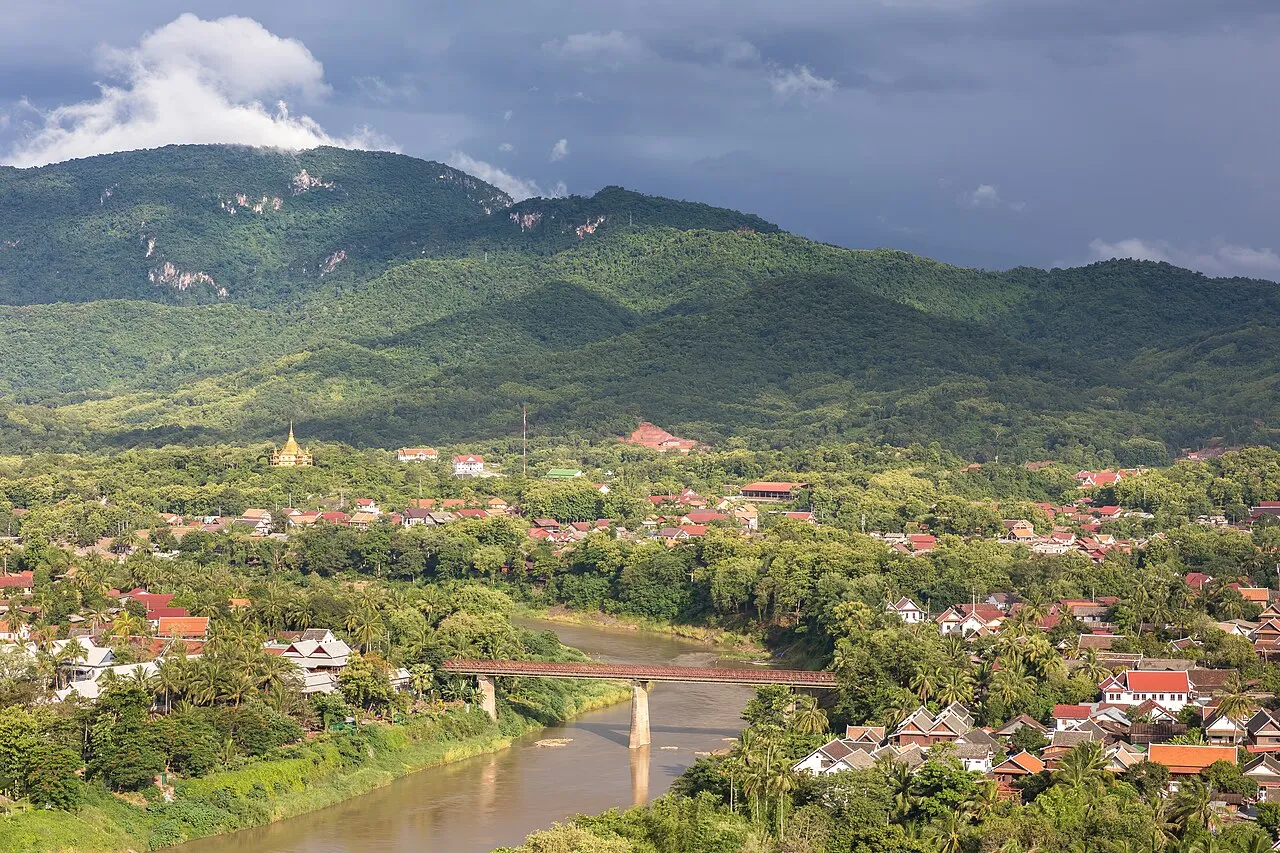
Sunset from the That Chomsi stupa terrace is the defining Mount Phousi experience — the Mekong River turns orange and gold, mountain silhouettes layer in the west, and the town's temple spires are visible below. In the dry season (November–March), sunsets typically occur between 5:30 and 6:30 PM. The summit fills with visitors from 30–45 minutes before sunset; arrive 60–90 minutes early for a position on the terrace railing. The summit is free to access but the entry gate at the bottom of the stairs has a small admission fee.
Is there anything to see besides the view at the top?
The ascent passes through two significant shrines. The lower shrine, Wat Pa Houak (accessible from the north staircase approach), contains rare 18th-century murals depicting scenes from Lao mythology and the Ramayana that are among the oldest surviving painted interiors in Luang Prabang. The summit itself holds the That Chomsi stupa, believed to contain a hair relic of the Buddha, and a smaller cannon used to signal time to the town — a reminder that the hill served both spiritual and civic functions before tourism.