
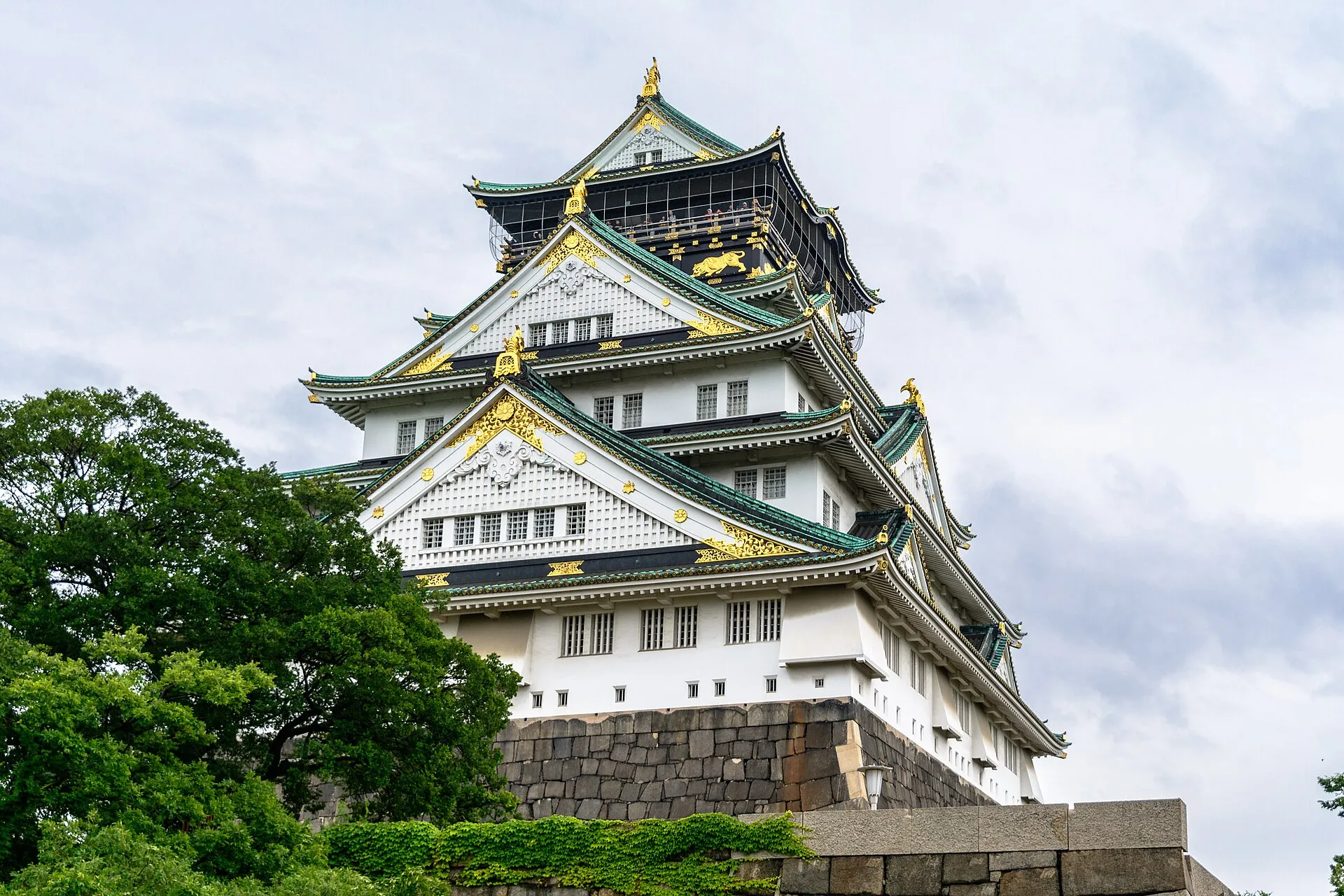
Osaka Castle timeline
-
Ishiyama Hongan-ji founded
A fortified temple of the Jodo Shinshu Buddhist sect occupied this strategic bluff above the Yodo River, holding out against warlord Oda Nobunaga for a decade before surrendering in 1580.
-
Toyotomi Hideyoshi begins the castle
On the ruins of the temple, the warlord who had nearly unified Japan started a fortress meant to outshine every rival — the first-generation keep rose over the next few years.
- 1614-1615
The Winter and Summer Sieges
Tokugawa Ieyasu besieged the castle twice; the 1615 Summer Campaign ended with the keep in flames and the death of Hideyoshi's heir, Hideyori, extinguishing the Toyotomi line.
- 1620-1629
The Tokugawa rebuilding
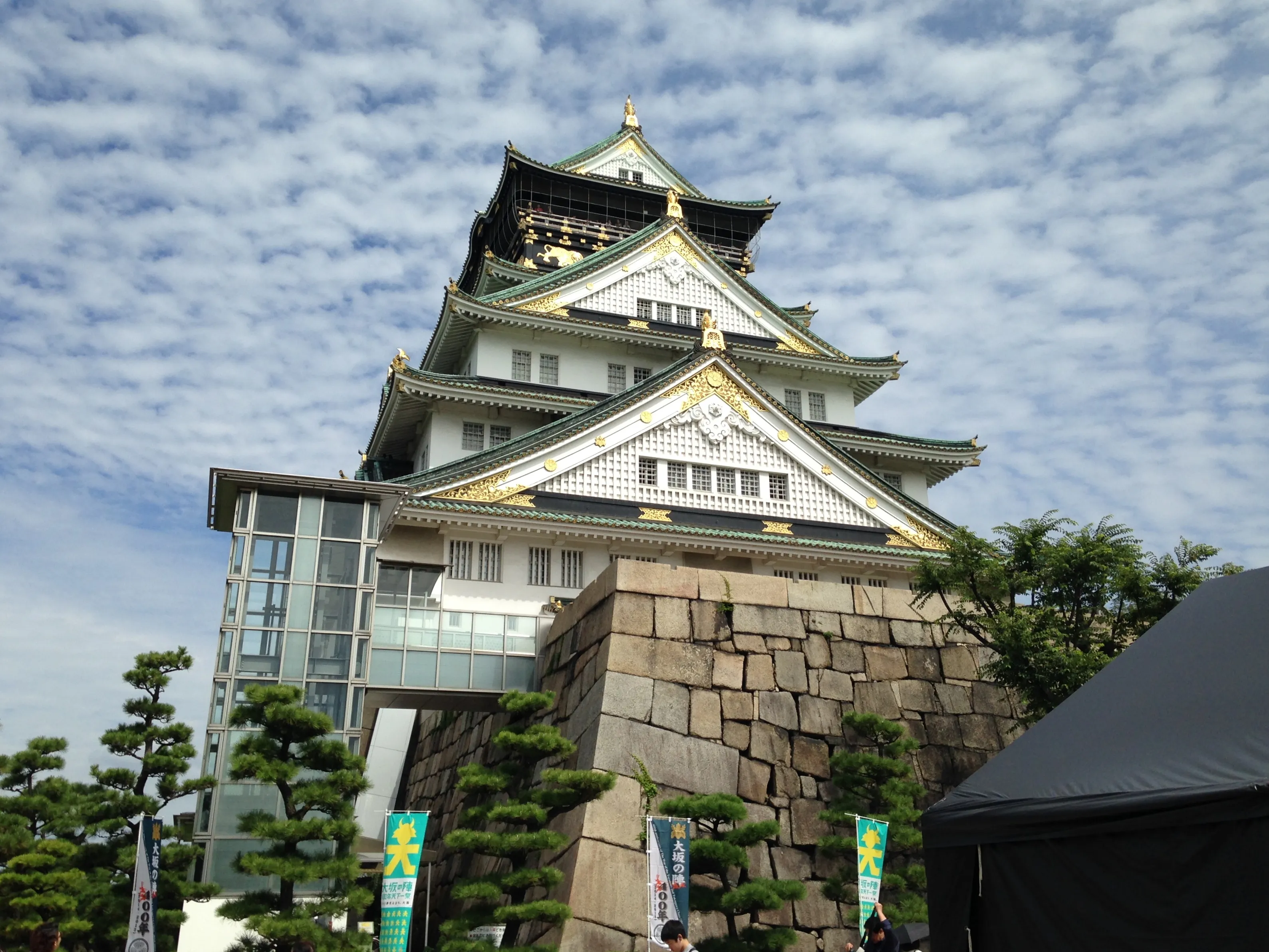
The shogunate buried the Toyotomi ruins and raised a larger castle on new foundations, using stone hauled by daimyo across Japan — the walls, moats and giant stones seen today date from this work.
-
Lightning destroys the keep
A bolt struck the Tokugawa tower and burned it to the ground; the castle would stand without a main keep for the next 266 years.
-
Meiji Restoration fires
Much of the remaining complex burned during the fall of the shogunate, and the grounds were turned over to the Imperial Army as an arsenal.
-
The modern keep rebuilt
Osaka citizens donated around 1.5 million yen to raise the present ferro-concrete tower, modelled on the Toyotomi-era keep shown in a folding-screen painting.
- 1995-1997
Heisei restoration
A major refit re-gilded the roof ornaments, added a lift and modernised the museum, reopening the keep in 1997 as it appears today.
Fortification History
The defences on show today are Tokugawa engineering, not Hideyoshi's. When the shogunate rebuilt the castle in the 1620s it demanded stone from daimyo across western Japan under the tenka-bushin levy — a deliberate drain on the lords' wealth as much as a building programme. The largest result is the Takoishi, or Octopus Stone, set beside the Sakuramon gate on the approach to the inner keep: a single slab of granite with a surface of roughly 59 square metres and an estimated weight of about 108 tonnes, quarried from the Seto Inland Sea and contributed by the lord of Bizen. Several of the castle's other "giant stones" stand nearby, each marked with the crest of the clan that delivered it.
The layout multiplies the obstacles. A double moat — the inner one still partly water-filled, the outer dry in places — rings the complex, and the walls rise in sloped tiers designed to be scaled only under fire from the turrets above. Those turrets matter: the Sengan-yagura and Tamon-yagura guarding the Otemon gate, the Inui-yagura and a handful of gates and storehouses survived every fire and are now Important Cultural Properties, the last genuine Edo-period fabric of the fortress. It took Tokugawa Ieyasu two full campaigns and an army some accounts put near 200,000 strong to break the earlier castle in 1615; the stonework that replaced it was built so that no siege would ever be so close again.
Notable Rooms
The keep's eight interior floors house a museum best toured from the top down. The 8th-floor observation deck, about 50 metres up, gives a 360-degree view over the park, the moats and the Osaka skyline. Descending, the upper floors trace the life of Toyotomi Hideyoshi with armour, letters and a scale model of the castle at its Momoyama-era height, while the 5th floor centres on the Summer Siege of 1615, pairing a large folding-screen painting of the battle with a miniature diorama of the clashing armies. Lower floors set out the castle's three building phases and display samurai arms and battle relics, many with English captions.
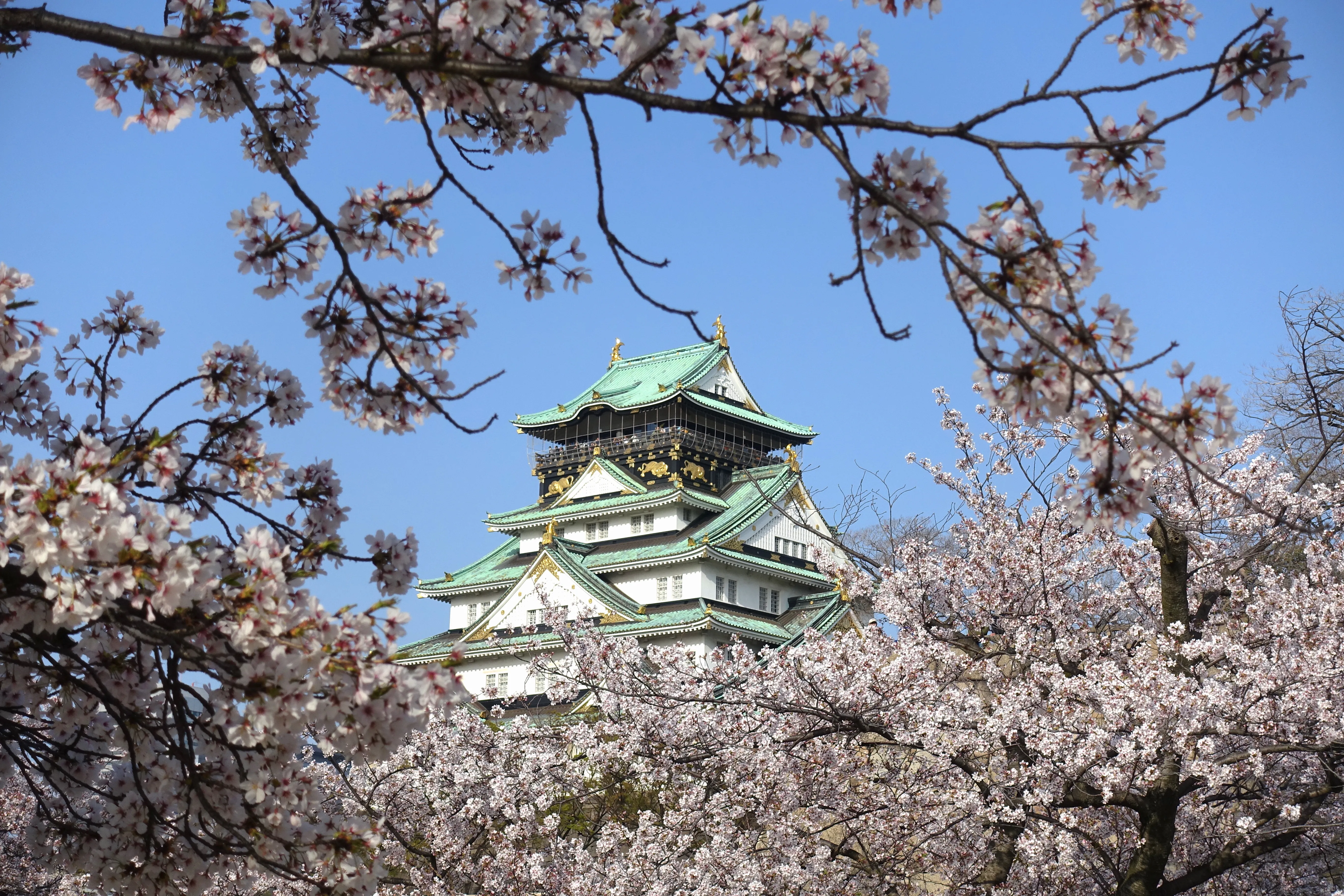
Outside the keep, the walled Nishinomaru Garden occupies the former western citadel and holds about 600 cherry trees — part of the roughly 3,000 across Osaka Castle Park — making it one of the city's most prized hanami (blossom-viewing) spots, with the keep framed beyond the trees. The garden also preserves a former guesthouse lawn and offers the classic postcard view of the tower reflected over the inner moat.
Osaka Castle in Pictures
When to Visit
The keep museum opens daily 9 AM - 5 PM, with last admission at 4:30 PM, and closes only from 28 December to 1 January. Evening hours are added during the late-March to early-April cherry-blossom weeks, Golden Week in early May, and the summer Obon period, so check the season before planning a late visit. The surrounding Osaka Castle Park is open around the clock and free, which means the moats, outer walls and floodlit keep can be enjoyed well outside museum hours — early morning is best for photographs before the day's crowds and tour groups arrive.
Admission and Costs
Keep museum entry is ¥600 ($4) for adults and free for junior-high students and younger. The walled Nishinomaru Garden has a separate ¥200 ($1.50) charge, rising to about ¥350 ($2.50) during the cherry-blossom light-up, while the wider park costs nothing. A shared half-day walking tour typically runs ¥4,000-6,000 ($27-40) per person; a private licensed guide for the castle and nearby sights is around ¥25,000-35,000 ($165-230) for a small group. The Osaka Amazing Pass, sold for sightseeing across the city, includes keep admission.
The Case for a Guide
Osaka Castle looks like one monument but is really three, built by rival dynasties across 350 years — a guide keeps the Toyotomi, Tokugawa and modern layers from blurring into a single photogenic tower and explains how each shaped the Japan we know.
- Whose castle is this, really?: Most visitors assume they are seeing Hideyoshi's fortress, yet the walls, moats and keep were built by his enemies and successors — a guide shows where the buried Toyotomi stonework was rediscovered and why the Tokugawa literally built over their rivals' legacy
- The Tokugawa stone-hauling system: The giant blocks in the walls were a tax in muscle, not Hideyoshi's vanity project — a guide explains tenka-bushin, the shogunate's practice of forcing daimyo to quarry and drag enormous stones so they could never afford to rebel
- Reading the Summer Siege: The 1615 campaign that ended the Toyotomi line is retold on the keep's museum floors through folding-screen paintings — a guide decodes the chaos of the painted battle and points out where the fighting actually happened on the grounds outside
- Golden shachihoko and fire: The tiger-fish ornaments on the roof are talismans against fire, bitterly ironic for a keep that burned twice — a guide explains their mythology and why the 1931 rebuild restored them in gold
- The surviving Edo-period gates and turrets: Scattered among the modern crowds are genuine 17th-century structures, several of them Important Cultural Properties — a guide leads you to the real Otemon gate and the Sengan and Tamon turrets that most visitors walk straight past
Tips for Visitors
Ride the lift straight to the 8th-floor observation deck for the city panorama, then walk down through the exhibits — it saves the queue and the climb. English captions run throughout, so a self-guided visit is easy. The keep sits in the middle of a large park, a 15-20 minute walk from any station, so wear comfortable shoes and allow time to cross the moats. During cherry-blossom season book guides 2+ months ahead and expect the Nishinomaru Garden to be busy; weekday mornings are calmest. There is little shade on the ramparts, so carry water in summer.
Frequently Asked Questions
Which season shows Osaka Castle at its best?
Late March to early April is the peak, when roughly 3,000 cherry trees across Osaka Castle Park — about 600 of them in the walled Nishinomaru Garden — come into bloom and the garden runs an evening blossom light-up. October and November bring maple and ginkgo colour that frames the white-and-gold keep, and the air is dry and cool. July and August are hot and humid, which makes the shadeless stone ramparts tiring around midday, while January and February are cold but quiet, with the occasional dusting of snow on the roof ornaments.
What are Osaka Castle's opening hours?
The keep museum is open daily from 9 AM to 5 PM, with last admission at 4:30 PM, and closes only from 28 December to 1 January. Hours are extended into the evening during the late-March to early-April cherry-blossom weeks, Golden Week in early May, and the summer Obon period. The surrounding Osaka Castle Park is open around the clock and free to enter, so the moats, outer walls and turrets can be seen even outside keep hours.
How much does it cost to enter Osaka Castle?
Entry to the keep museum is ¥600 ($4) for adults and free for junior-high students and younger. The Nishinomaru Garden charges a separate ¥200 ($1.50), rising to about ¥350 ($2.50) during the cherry-blossom light-up, and the wider park is free. A half-day guided walking tour typically runs ¥4,000-6,000 ($27-40) per person, while a private licensed guide for the castle and nearby sights costs around ¥25,000-35,000 ($165-230) for a small group.
How do you get to Osaka Castle?
The castle sits inside a large park ringed by stations, each a roughly 15-20 minute walk across the grounds to the keep. Osakajokoen Station on the JR Osaka Loop Line is closest to the Aoyamon approach and the Nishinomaru Garden; Tanimachi 4-chome Station on the Tanimachi and Chuo subway lines is nearest the grand Otemon gate; and Morinomiya and Temmabashi stations serve the park's southern and western edges. From central Osaka the Loop Line reaches Osakajokoen in under 15 minutes, which makes the castle an easy pairing with Dotonbori and Kuromon Ichiba Market.
How long should you spend at Osaka Castle?
Allow about 90 minutes to two hours for the keep itself: the eight museum floors work best from the top down, riding the lift to the 8th-floor observation deck for the view and then walking down through the Summer Siege and Toyotomi Hideyoshi galleries. Add another hour or two to enjoy the grounds — the Otemon gate, the vast moats, the surviving Edo-period turrets, the Hokoku Shrine and, in spring, the Nishinomaru Garden. Visitors combining the castle with other sights in Osaka usually set aside a relaxed half day.
Is Osaka Castle an original or a reconstruction?
The keep you climb is a 1931 ferro-concrete reconstruction — the third tower to stand here — rebuilt as a museum with a lift and air-conditioned floors, so set expectations for a modern interior rather than a wooden castle. The history around it is genuine: the colossal stone walls, the double moat and the surviving 17th-century turrets and gates were built by the Tokugawa shogunate in the 1620s and several are designated Important Cultural Properties. English captions run throughout the exhibits, so the displays are easy to follow without a guide.