
What To Buy
Kuromon rewards knowing what you are after before you wade in. Lead with your guide — or your appetite — toward the specialists:
- Whole and sliced tuna: The signature buy is ultra-fresh hon-maguro, cut to order from the whole fish; the fattier otoro and chutoro cuts command the highest prices and sell first.
- King crab and shellfish: Snow crab and king-crab legs are grilled while you wait, ¥1,500-3,000 a portion; scallops and oysters are shucked and seared at the counter.
- A5 wagyu: Skewers and thin slices of A5-grade Kobe and Miyazaki beef, grilled over charcoal in front of you.
- Seasonal fruit: Premium strawberries (¥500-1,000), Yubari melon and Shine Muscat grapes, displayed and priced like delicacies when in season.
- Kitchen knives: Hand-forged hōchō from specialist cutlers make lasting souvenirs — Sakai, just south of central Osaka, has forged blades since the 16th century and its knives are prized by chefs worldwide.
Food Stalls
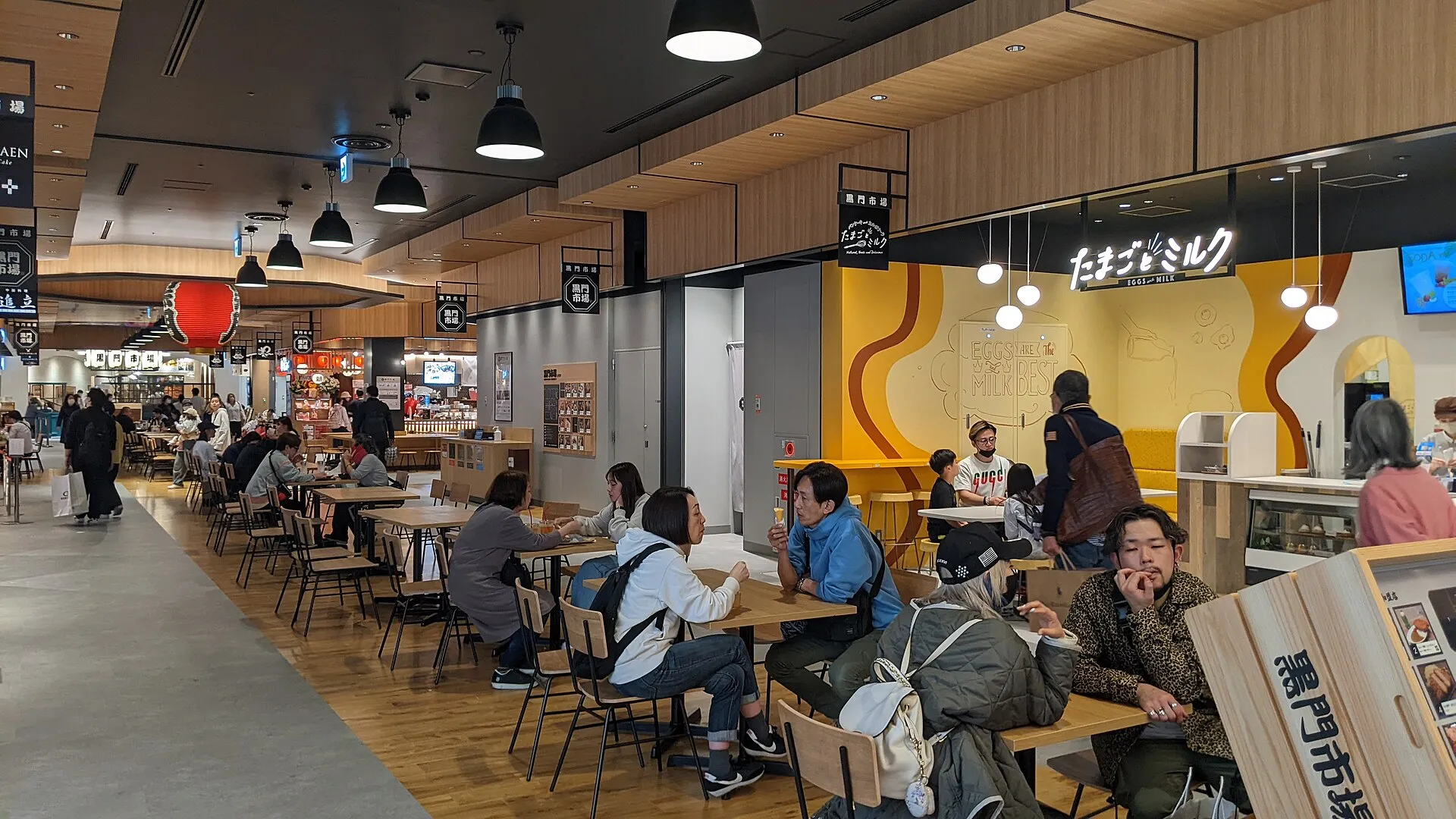
Half the point of Kuromon is eating as you go, standing at the counter where each dish is made:
- Grilled king crab: Snow-crab and king-crab legs cracked and seared over charcoal to order.
- Tuna sashimi: Cut from the whole hon-maguro while you watch the fishmonger's knife work.
- Fugu: In winter, licensed stalls serve pufferfish — as sashimi or in a warming nabe — an Osaka specialty that only certified cooks may prepare.
- Wagyu skewers: A5 beef grilled on the spot, or thin-sliced for yakiniku.
- Oysters: Opened fresh and grilled with ponzu or lemon.
- Takoyaki: Osaka's molten octopus balls, turned in cast-iron moulds by vendors who have drilled the batter for decades.
- Tamagoyaki: Pillowy, faintly sweet rolled omelette folded to order.
After your market breakfast, Osaka Castle sits a short metro ride northeast for an afternoon of history.
Kuromon Ichiba Market timeline
- Edo period (1820s)
A market grows by the Enmyō-ji gate
Fishmongers and greengrocers cluster around the Enmyō-ji temple in Nippombashi, and the lane becomes known as the Enmyō-ji Market — the earliest recorded ancestor of today's arcade.
- Meiji era
Kuromon: named for a black gate
Locals nickname the market after the temple's large black-lacquered gate — *kuromon*, "black gate." The gate is long gone, but the name it gave the market has outlasted it.
-
Fire razes the Enmyō-ji temple
A fire destroys the temple that anchored the quarter. The congregation moves on, yet the trading lanes endure and keep the Kuromon name, decoupled now from the shrine that inspired it.
- Postwar
Roofed into "Osaka's Kitchen"
The lanes are covered with the vaulted arcade seen today, and the wholesale larder that supplies central Osaka's restaurants earns its enduring nickname, Naniwa no Daidokoro — "Osaka's Kitchen."
- 2010s–present
A graze-as-you-go destination
Stalls add grills, counters and English signage as overseas visitors arrive in force; the market reinvents itself around eat-on-the-spot seafood while a core of chefs' suppliers still trades at dawn.
Kuromon Ichiba Market in Pictures


When to Visit
Most stalls trade daily, roughly 9 AM to 6 PM, though hours are set shop by shop: some open at 8, others rest on Wednesdays or Sundays, and the grilled-seafood and sushi counters keep the longest hours. The sweet spot is 10 AM to 1 PM, when the morning catch is fully laid out and the best cuts have not yet sold through. By 3-4 PM many counters begin packing down, so a late-afternoon visit means a thinner choice.
The single busiest window is late December: in the run-up to New Year the arcade fills with Osakans buying crab, tuna and osechi ingredients, and moving through the crowd becomes slow going — thrilling to witness, but not the time for a leisurely graze.
Admission and Costs
Entry is free — Kuromon is a working market, not a ticketed attraction, so your only spend is what you eat, buy, and whether you hire a guide. Grazing prices are modest: a plate of sushi or sashimi runs about ¥500-2,000, grilled king-crab legs or scallops ¥800-3,000 per portion, a skewer of A5 wagyu ¥1,000-2,500, and a takoyaki snack ¥500-800. Seasonal fruit — perfect strawberries, Yubari melon, Shine Muscat grapes — is sold at a premium when at peak ripeness.
For a guided visit, a shared small-group food tour with several tastings typically costs ¥8,000-12,000 per person over two to three hours, while a private licensed guide runs ¥20,000-30,000 for a half-day and will tailor the route to your tastes. Carry cash in yen: many stalls are cash-only, and the reliable ATMs sit in the convenience stores at either end of the arcade rather than among the stalls.
The Case for a Guide
First-timers can find Kuromon bewildering — the signage mixes languages, prices are rarely posted, and the stalls that genuinely serve chefs look much like those angling for tourists. A guide who knows the arcade turns that sensory overload into a purposeful, delicious morning.
- Reading the catch: Your guide explains the tuna grading on display, separates everyday fish from the prized hon-maguro, and knows which counters slice to order from whole fish rather than pre-cut trays.
- Fugu, done safely: Pufferfish is a Nippombashi winter treat but demands a licensed preparer; a guide steers you to the certified stalls and explains what you are eating.
- Finding the chefs' suppliers: Locals know which vendors restaurants actually buy from, and can unlock tastings of high-grade wagyu and seasonal fruit that stalls often keep for regulars.
- Etiquette and language: Few vendors speak much English; a guide translates, handles the cash-only quirks, and keeps you on the right side of the eat-at-the-stall custom so the exchange stays warm.
Tips for Visitors
Arrive before 10 AM for the freshest seafood — vendors receive their deliveries early and the best cuts sell out fast — and bring enough yen, since many stalls take cash only. Observe the eat-at-the-stall etiquette: Osaka custom frowns on walking while eating, so stand in the counter space the vendor provides and drop your skewers, shells and cups in that stall's own bin rather than carrying rubbish down the lane. Keep the narrow walkway clear while you eat.
Many stalls close by 3-4 PM, so plan the visit for the first half of the day. If market prices feel steep, the restaurants on the adjacent side streets serve comparable seafood for less, and the shops near Dotonbori a short walk west stay open later into the evening.
Frequently Asked Questions
When is the best time to shop and eat at Kuromon Ichiba Market?
Most stalls trade daily from about 9 AM to 6 PM, though hours vary vendor by vendor and some rest on Wednesdays or Sundays. Come between 10 AM and 1 PM for the fullest display of morning catch, before the grilled-seafood counters sell through their best cuts. Late December is the market's busiest stretch, when Osakans crowd in for New Year ingredients — atmospheric, but shoulder to shoulder.
How much does it cost to visit Kuromon Ichiba Market?
Entry is free; you pay only for what you eat and buy. A plate of sushi or sashimi runs about ¥500-2,000, grilled king-crab legs or scallops ¥800-3,000, and a skewer of A5 wagyu ¥1,000-2,500. A shared small-group food tour with tastings is roughly ¥8,000-12,000 per person, while a private licensed guide costs ¥20,000-30,000 for a half-day.
How do you get to Kuromon Ichiba Market?
The arcade runs through Nippombashi in central Osaka. The closest station is Nippombashi on the Osaka Metro Sakaisuji and Sennichimae lines (and Kintetsu Nippombashi); exit 10 opens almost onto the market's southern end. It is also a 5-10 minute walk east of the Namba hub and Dotonbori, so the two pair naturally in one outing.
What should visitors know before exploring Kuromon Ichiba Market?
Arrive hungry and early — vendors take morning deliveries and the prized cuts sell out fast. Many stalls are cash-only, so carry yen. Eat at the counter or in the stall's standing space rather than walking and eating, which local etiquette discourages, and bin your skewers and shells at the stall you bought from. Most counters wind down by 3-4 PM.