
Walking Route
Walking Routes
Positano rewards a slow, downhill wander from the coast road to the water, and the map above traces the essentials. Begin at the Chiesa di Santa Maria Assunta, whose majolica-tiled dome is visible across the whole village and whose interior holds a 13th-century Byzantine icon of the Madonna. Local legend gives the town its name: sailors carrying the stolen icon are said to have heard it plead "Posa, posa" ("lay me down") until they set it ashore here. Descend beneath the church to the MAR museum for the frescoes of the Roman villa, then thread down Via dei Mulini, the main pedestrian street, where ceramics workshops sell hand-painted local pottery and boutiques display the linens and sandals of Moda Positano.
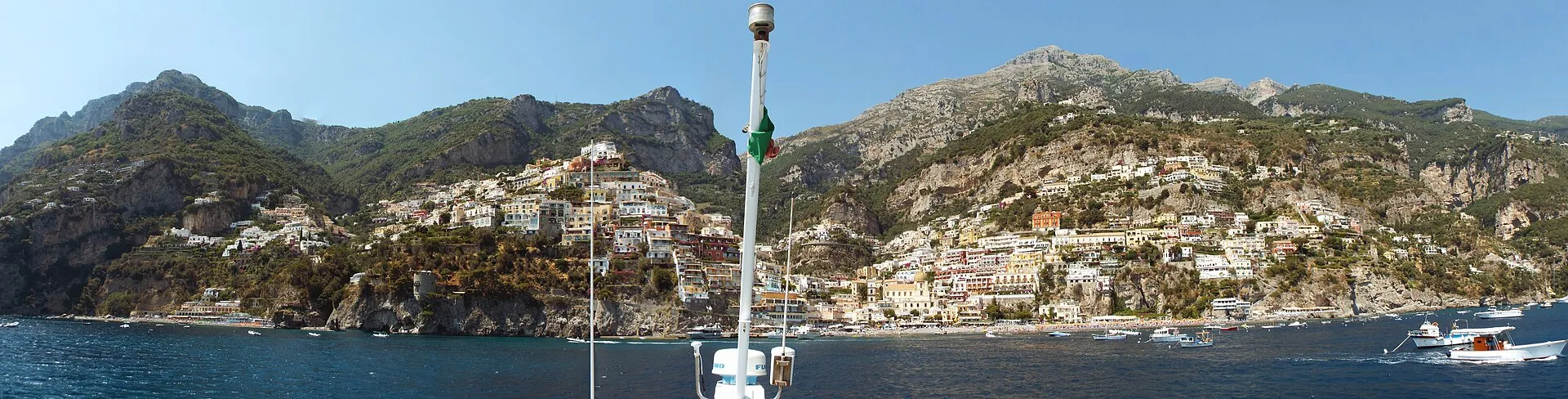
At the bottom, Spiaggia Grande delivers the postcard: the cascading village reflected in the sea, best photographed in the morning before the light flattens. For a quieter swim, follow the cliffside Via Positanesi d'America west, past two medieval watchtowers, to smaller Fornillo beach. Offshore, the Li Galli islands -- mythologised as the home of Homer's Sirens and once owned by the dancer Rudolf Nureyev -- are reachable only by boat. The best framed views of the dome come from the bougainvillea-draped steps above the beach and from the terrace of the church itself.
Local Life
Getting to Positano takes planning, and the reward for doing it well is arriving unfrazzled:
- Ferry -- seasonal boats (roughly April to October) connect Positano with Amalfi, Sorrento, Capri, and Salerno; the water approach is by far the most scenic and skips the coast-road traffic.
- Bus -- blue SITA coaches run the SS163 from Sorrento and Amalfi, inexpensive but standing-room-only and slow in summer.
- Private driver -- the stress-free option from Naples or Sorrento, and the only comfortable way to arrive with luggage.
- Car -- do not drive to Positano: parking is scarce and among the priciest on the coast, and the one-way loop road is punishing.
Village rhythm favours early risers. Shops and the church open in the morning, quieten during the afternoon riposo, and the whole amphitheatre of houses glows at golden hour, when the day-trippers have left and dinner terraces fill. For food, look past the beachfront to the family trattorie on the upper lanes for scialatielli ai frutti di mare and lemons the size of grapefruit.
When to Visit
The village is extremely vertical -- pace yourself on the stairs and treat any walk as half-again longer than the distance suggests. A mid-morning arrival beats the day-trip crowds from Sorrento and Naples; midday is for the beach, and the hour before sunset is the finest, when the pastel façades catch the light and the crowds thin. Beach shoes are essential on the pebbles. Serious walkers can link Positano to the Sentiero degli Dei (Path of the Gods), the ridge trail that runs roughly 7.8 km from Bomerano above Agerola down to Nocelle, from where about 1,700 steps descend to the sea.
Admission and Costs
Positano itself is free to enjoy: there is no town entry, the Chiesa di Santa Maria Assunta is free to visit, and the public stretches of Spiaggia Grande and Fornillo cost nothing. Comfort is where the money goes. A sun-bed and umbrella in the private beach sections run about EUR 20-40 (roughly $22-44) per person per day, a seasonal ferry to Amalfi around EUR 10 (about $11), and a shared boat tour past the Li Galli islands and sea grottoes from EUR 40-60 (about $44-66) per person, with private charters several times that. A guided walking tour is usually EUR 30-60 (about $33-66) per person, and is often included in wider Amalfi Coast day tours.
The Case for a Guide
A place this vertical and this layered hides far more than a self-guided stroll reveals, which is why a local guide is worth the fee here more than in most seaside towns. Beyond navigation, a good guide turns Positano's façades into a story:
- Shortcuts through the maze -- guides know which of the interlocking stair-lanes drop you fastest from the coast road to the beach, sparing tired legs.
- History you would otherwise walk past -- the "Posa, posa" legend of the Black Madonna, the Roman villa beneath the church, and the emigration that named Via Positanesi d'America.
- The 1950s reinvention -- how artists, writers, and Moda Positano fashion transformed a poor fishing village into a global icon.
- Access to the quiet corners -- Fornillo beach, the Path of the Gods trailhead at Nocelle, and boat launches for the Li Galli islands and grottoes.
- Honest, current logistics -- which ferries are running, where to eat away from the tourist mark-ups, and how to reach hotels perched at the top of long stair climbs.
Tips for Visitors
Book beds and dinner terraces well ahead in high season -- Positano's capacity is tiny and demand is not. Guides can arrange boat trips to the Li Galli islands and sea grottoes and know the shortcuts through the labyrinthine paths. Seek out authentic ceramics and linens among the tourist shops, and taste limoncello made from the coast's oversized lemons. As a base, Amalfi is flatter and better connected while Positano is the more dramatic; hilltop Ravello trades the verticality for gardens and long views. Whichever you choose, let the Amalfi Coast's ferries and buses do the driving.
Frequently Asked Questions
Which months are ideal for a trip to Positano?
May through September delivers the full Positano experience -- swimming from pebble beaches, dining on clifftop terraces, and golden light on the pastel-colored houses cascading to the sea. Late May and September offer the warmth without peak-summer crowds that pack the narrow stairways. Winter months from December through February see most hotels and beach clubs closed, and the village takes on a quiet, local character quite different from its glamorous summer identity.
What practical tips should visitors know before exploring Positano?
Positano is built as a near-vertical staircase, so the single most useful thing to pack is comfortable, grippy shoes and the patience to pace yourself on the roughly 1,500 steps between the coast road and the beach. Arrive by mid-morning to beat the day-trip coaches from Sorrento and Naples, bring water shoes for the pebble beaches, and travel light -- most hotels sit at the top of long stair climbs with no vehicle access, and porters or luggage-transfer services are common.
How much should visitors budget for Positano?
Wandering the village, the beach at Spiaggia Grande, and the church of Santa Maria Assunta all cost nothing. The real spending is optional comfort: a sunbed-and-umbrella set in the private section of the beach runs roughly EUR 20-40 (about $22-44) per person, a seasonal ferry hop to Amalfi around EUR 10 (about $11), and a scenic boat charter toward the Li Galli islands EUR 150 upward. A half-day guided walking tour typically costs EUR 30-60 (about $33-66) per person, and is often folded into wider Amalfi Coast day tours.
Is a walking tour of Positano worth it?
For a village this vertical and this layered, a local guide earns their fee. They thread the labyrinth of stairs by the shortest routes, unpack the history behind the Black Madonna in Santa Maria Assunta and the Roman villa preserved beneath it, point out the artists and film people who reinvented Positano in the 1950s, and lead you to quieter corners -- Fornillo beach, the Path of the Gods trailhead, and boat launches for the sea grottoes -- that day-trippers rarely find.