
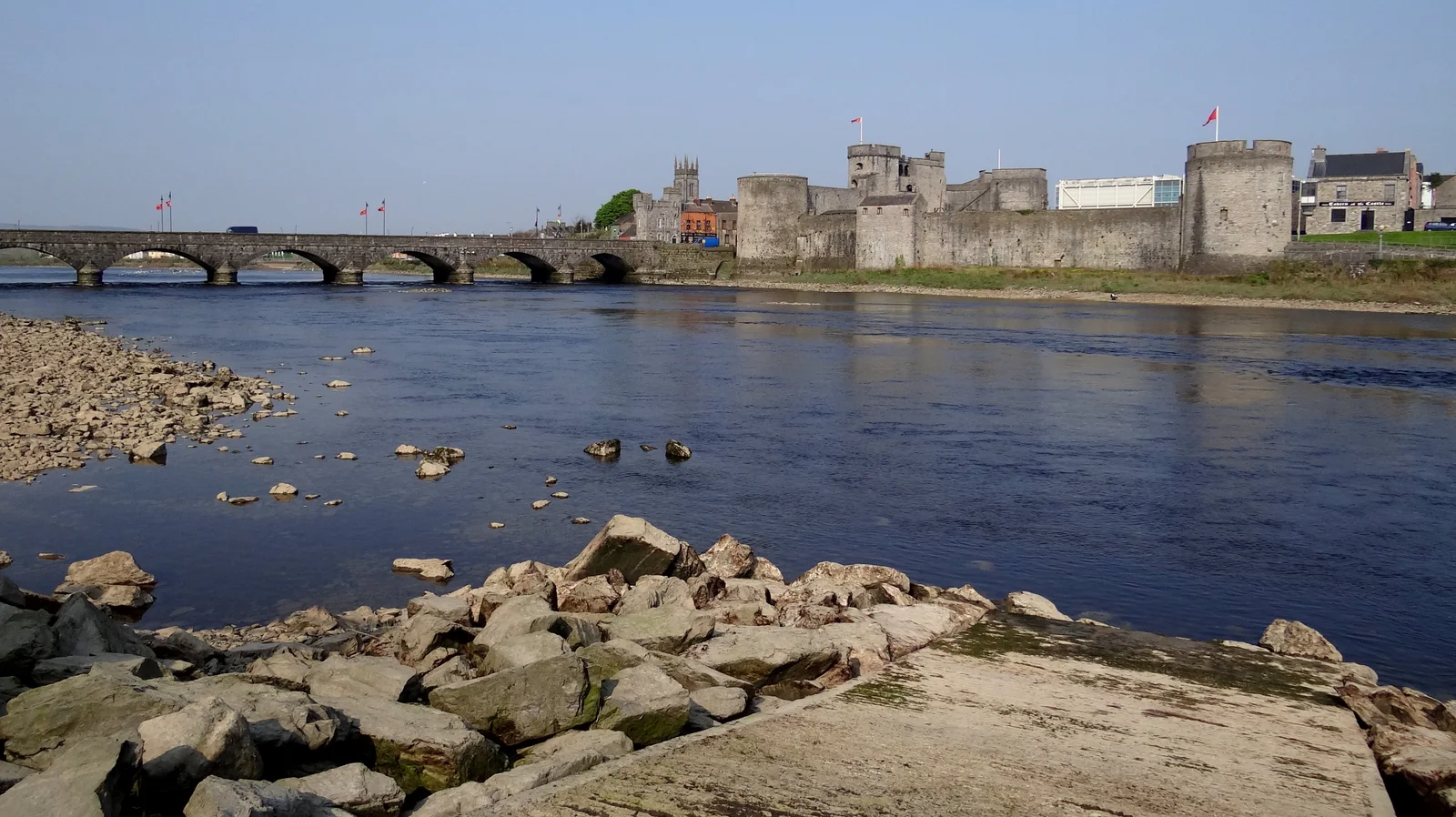
Fortification History
The castle was built to hold a strategic pinch-point: the lowest fordable and bridgeable stretch of the Shannon, where control of the crossing meant control of trade and troop movement between Munster and the west. Its designers relied on rounded towers rather than square ones because curved masonry deflected missiles and resisted the undermining tactics that could bring down a right-angled corner, and the walls were battered — thickened and sloped at the base — to throw back dropped stones and complicate any assault.
The most dramatic chapter came during the Irish Confederate Wars, when the castle endured a hard siege in 1642. Attackers dug mines beneath the eastern wall to collapse it, and the defenders answered with counter-mines, a subterranean duel whose excavated tunnels are among the exhibition's most memorable features. The archaeological work carried out during the visitor centre's construction also uncovered the outlines of pre-Norman houses on King's Island, physical proof that a working settlement stood here before the royal fortress ever went up.
Notable Rooms
The heart of any visit is the gatehouse and its twin towers, where the exhibition reconstructs the machinery of a medieval entrance — portcullis, murder-holes, and guard chambers — in a space you can walk through rather than merely read about. From here, passages lead to the corner towers and up to the wall-walks, each landing opening onto a different angle over the courtyard and the river beyond.
Below ground, the exposed siege mines and counter-mines form an atmospheric, low-lit sequence that dramatises the 1642 attack, while the glass-floored galleries over the archaeological cuttings let you look down onto the footprints of houses that stood here centuries before the castle. The courtyard itself, ringed by its towers, is used for costumed demonstrations of crafts such as blacksmithing and archery during the busier months, bringing the enclosed space back to something like its working medieval bustle.
When to Visit
The castle opens daily throughout the year, typically from mid-morning until late afternoon, with longer hours in the summer season and a last admission roughly an hour before closing. Winter days can shorten the schedule, so it is worth checking the current times before setting out, especially around Christmas and New Year when reduced hours apply.
For the most comfortable visit, arrive soon after opening or in the last couple of hours of the afternoon, when tour groups thin out and the wall-walks are quieter for photography. The exposed towers catch the wind off the estuary, so a bright, calm morning in late spring or summer shows the courtyard and river views at their best, while the indoor exhibition makes the site a dependable option even in Limerick's frequent rain.
Admission and Costs
Standard adult admission is around €15 ($16), with reduced rates for children, students, and seniors, and a family ticket that brings the per-head cost down noticeably for two adults with children. Booking online in advance usually shaves a little off the gate price and guarantees entry on busy summer afternoons.
Entry covers the full interactive exhibition, the archaeological displays beneath the courtyard, and access to the towers and wall-walks, so there is no separate charge once inside. Occasional costumed living-history events and seasonal programmes may carry their own pricing; combined tickets bundling nearby attractions appear from time to time, so it is worth asking at the desk if you plan to see several city sights in a day.
The Case for a Guide
A knowledgeable local guide turns the castle's stonework into a readable story, pointing out where thirteenth-century masonry gives way to later rebuilding, why the gate towers were shaped as they are, and how the 1642 siege scarred the walls you walk past. Guides also connect the fortress to the wider city — the Viking longphort beneath King's Island, the Treaty Stone across the river, and the medieval lanes running down towards St Mary's — context that is easy to miss when exploring alone. For visitors short on time, a guide prioritises the highlights and navigates the towers efficiently.
Tips for Visitors
Wear sturdy footwear: the courtyard cobbles are uneven and the spiral tower stairs are steep and worn. The upper wall-walks reward the climb with wide views over the Shannon, King's Island, and the Treaty Stone on the opposite bank, so save phone or camera battery for the top.
Cross the Thomond Bridge after your visit to photograph the castle from the western shore, where the full sweep of towers and curtain wall reflects in the river on a still day. If you are travelling by car, use the paid parking on King's Island rather than the tighter medieval-quarter streets, and allow extra time on rugby match days when the nearby stadium draws heavy traffic into the area.
Frequently Asked Questions
Who actually built King John's Castle?
The fortress carries the name of King John of England, who ordered a royal castle raised on King's Island around 1200 to secure the Norman hold on the Shannon crossing; most of the stonework you see today was completed in the decades after his 1210 visit to Ireland. John never lived here, so the name marks royal authority rather than residence — a common pattern for the great Angevin castles of the period.
How long should I set aside for a visit?
Most visitors spend between ninety minutes and two hours here. The interactive exhibition in the visitor centre takes about forty-five minutes on its own, and the courtyard, wall-walks, and tower viewpoints easily fill the rest. Families with children exploring the archaeology pits and the costumed-history displays often stay longer.
Is King John's Castle suitable for children?
Yes — the exhibition was designed with families in mind, mixing touch-screens, projections, and hands-on stations that reconstruct siege warfare and medieval trades. Younger visitors tend to gravitate to the glass-floored views over the excavated houses beneath the courtyard. The wall-walks have steep steps, so a carrier is easier than a buggy for the upper levels.
Can I combine the castle with other Limerick sights?
Easily. The castle sits at the northern end of the medieval quarter, a few minutes' walk from St Mary's Cathedral, and roughly fifteen minutes on foot from The Hunt Museum across the river channels. Many people pair the castle with the Treaty Stone, which stands on the far bank directly opposite.