
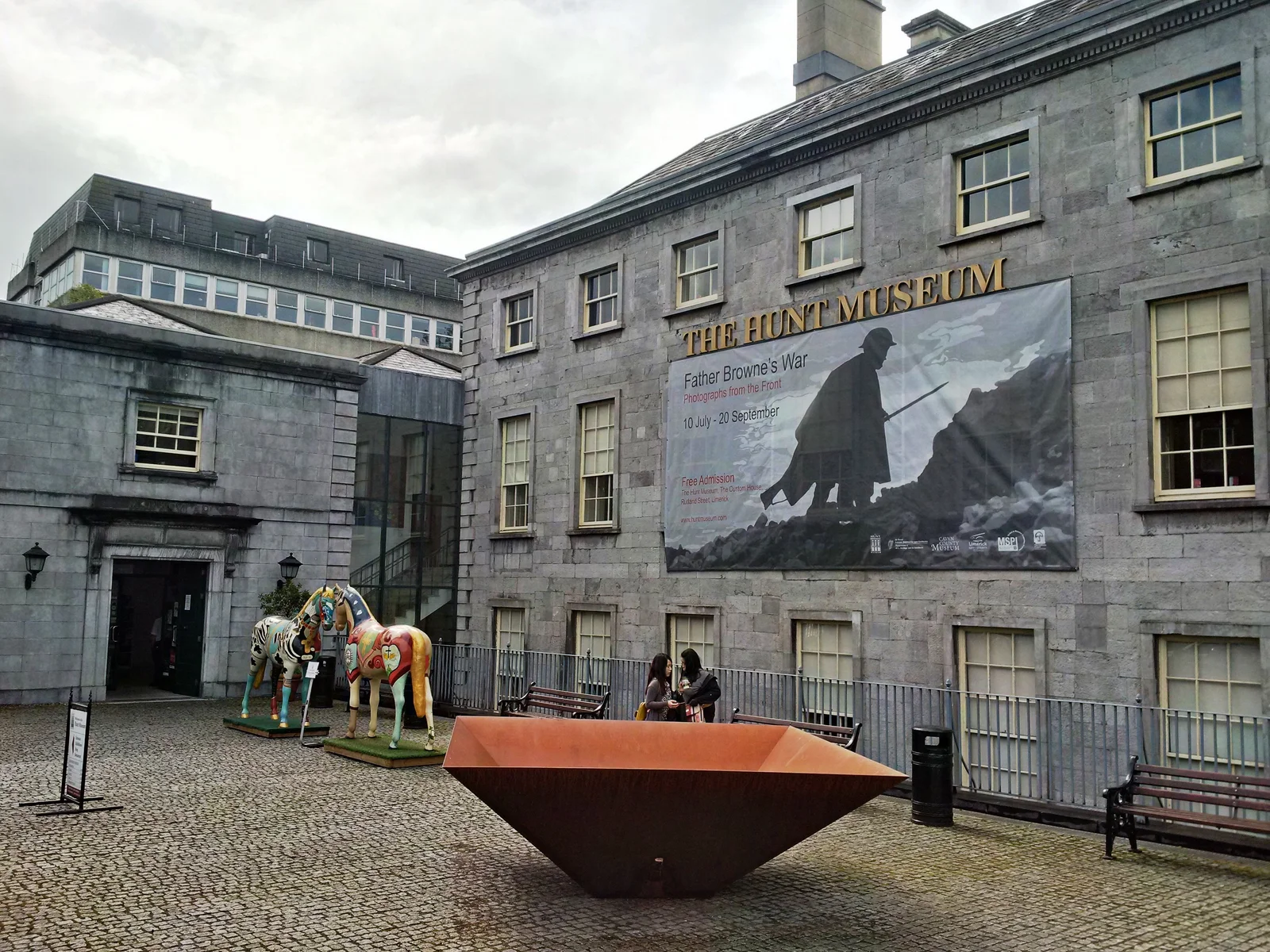
Collections Highlights
The collection's headline pieces are the small bronze rearing horse attributed to Leonardo da Vinci, a drawing associated with Picasso, and the coin traditionally said to be one of the thirty pieces of silver — objects whose fame and mystery draw many first-time visitors. But the deeper strength lies in the medieval and early Irish holdings: exquisite religious carvings, reliquaries and metalwork, and Bronze Age gold that speaks to Ireland's ancient past.
Alongside these are Greek and Roman antiquities, fine ceramics and glass, coins, and paintings ranging across the centuries, all reflecting the discerning, wide-ranging taste of the Hunts. Because the objects are displayed close-up and in a domestic scale, visitors experience them with an intimacy rare in larger institutions — the sense of examining treasures rather than merely viewing them is the museum's defining quality.
Guided Tours
The museum is well suited to independent, self-paced visiting, with clear labelling and an intimate scale that lets you get close to every object, so many visitors happily explore on their own. Its compact size means you can see the whole collection thoroughly without a guide.
For deeper engagement, the museum offers guided highlights tours and talks at set times or for booked groups, drawing out the stories behind the star pieces and the Hunts themselves, and a city guide will often include the museum as the cultural centrepiece of a wider Limerick tour. That pairing is the richest way to see it: the guide supplies the context and the human story behind the collection, while the intimate galleries let you meet the objects face to face.
When to Visit
As an indoor museum, the Hunt is a dependable choice in any weather and at any time of year — a natural refuge on one of Limerick's showery days. Check current opening hours, which typically run through the day with reduced hours on Sundays and around public holidays.
Allow one to one and a half hours to explore the collection at a comfortable pace, longer if you linger over the star pieces or stop at the riverside café. The museum is rarely crowded, making it a calm, unhurried visit. Its central, riverside location makes it easy to combine with the medieval quarter across the water, so it slots neatly into a half-day of Limerick sightseeing.
Admission and Costs
Adult admission is around €8–10 ($9–11), with reductions for students, seniors and families and free or reduced entry for children; check for any free-admission days the museum periodically offers. The ticket covers the full collection and any temporary exhibitions.
There are no extra charges once inside, and the riverside café is open to all whether or not you visit the galleries. A guided city walk taking in the museum will usually cover the entry, and the museum sometimes runs its own guided highlights tours. All prices are estimates that change over time, so confirm the current rate and any free days when planning your visit.
The Case for a Guide
A guide adds most by revealing the stories behind a collection that can otherwise feel like a beautiful jumble — who John and Gertrude Hunt were, how they gathered these treasures, and the truth and legend around the da Vinci horse and the "thirty pieces of silver". On a wider tour, a guide ties the museum's Irish medieval and Bronze Age pieces to the history you can see standing in the city — the castle, the cathedral, the Viking and Norman origins of Limerick — so the objects gain their proper setting. For a small museum whose depth is easy to underestimate, that narration turns a pleasant browse into a genuine encounter with art, history and the people who saved it.
Tips for Visitors
Don't just chase the famous names — the pleasure of the Hunt is in browsing the whole intimate collection, where a superb medieval carving or a piece of Bronze Age gold may sit unheralded near the da Vinci horse. Take your time, and ask staff to point out the pieces that repay a second look.
Combine the visit with the riverside café for a break with a Shannon view, and keep the museum for a wet afternoon if the forecast is mixed. Its position across the river from the medieval quarter makes it easy to pair with King John's Castle and St Mary's Cathedral for a full day in old Limerick.
Frequently Asked Questions
What is in the Hunt Museum's collection?
The museum holds the personal collection of John and Gertrude Hunt, antique dealers and scholars, running from the ancient world to the twentieth century: Bronze Age and early Christian Irish artefacts, medieval religious objects, ceramics, coins and paintings. It is displayed intimately, more like a connoisseur's home than a large public gallery, so you encounter objects up close.
Is it true there are works by da Vinci and Picasso?
The collection includes a small bronze horse attributed to Leonardo da Vinci and a drawing associated with Pablo Picasso, alongside other notable names. The museum also displays a coin traditionally said to be one of the thirty pieces of silver — a claim treated as legend rather than fact, but part of the collection's intrigue.
What building is the museum in?
It occupies the elegant eighteenth-century Custom House on Rutland Street, a Palladian building by the architect Davis Ducart, beautifully sited on the bank of the River Shannon. The Georgian interior is part of the pleasure of a visit, and the museum's riverside café is a popular spot in its own right.