
Activities
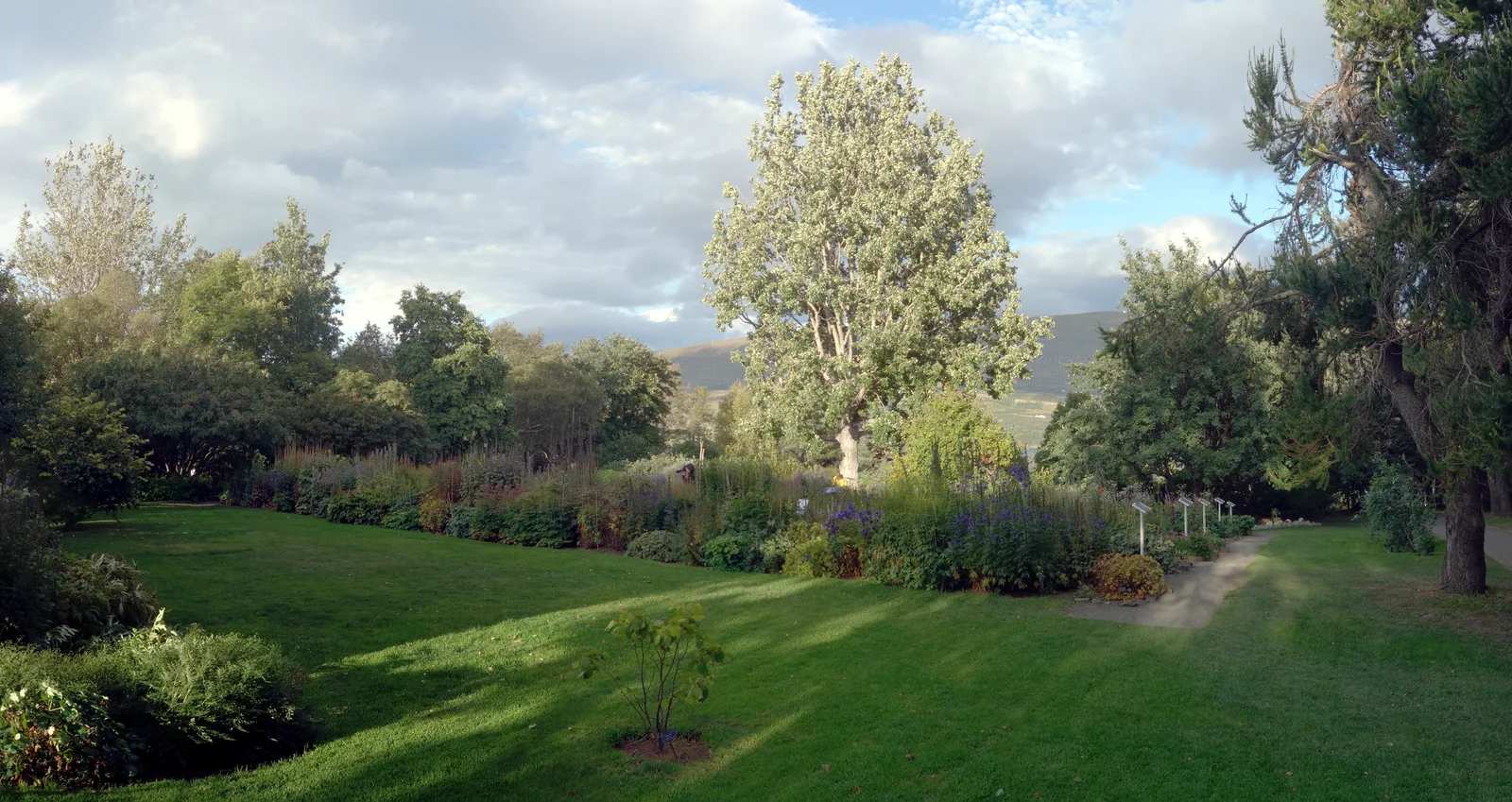
Wandering the formal beds and winding paths is the central activity, and the garden rewards an unhurried pace — plan on 45 minutes to an hour to see most of the grounds properly. A dedicated Icelandic flora section lets visitors compare, side by side, most of the wild plant species found across the country, which is a useful primer before heading out to hike in more remote parts of Iceland. The on-site café makes a natural stopping point midway through a visit, and its outdoor seating among the flowerbeds is popular on the rare warm afternoon. Photographers are drawn to the contrast between delicate cultivated blooms and the rugged mountain backdrop visible over the garden's boundary hedges, a combination that captures the general improbability of the whole enterprise this far north.
Seasonal Highlights
June and July bring the garden to its fullest, with roses, perennials, and a wide range of flowering shrubs in bloom under nearly round-the-clock daylight — an evening visit at 9 or 10 PM in midsummer, still fully lit, is a distinctly Icelandic experience. May sees the first bulbs and early perennials emerging as the garden reopens after winter, while August and early September bring a second wave of late-summer colour before the season winds down. The garden closes for winter once frost sets in, and the collection spends the darkest months dormant under snow, which is part of why the short, intense growing season is treated with such evident care by the staff who maintain it.
When to Visit
The garden operates on a seasonal schedule, typically open from late May through September, with the exact opening and closing dates shifting slightly year to year depending on the weather and the state of the plantings; it is closed through the winter months when little is in bloom and paths may be snow-covered. During the summer season, hours extend into the evening, taking advantage of Iceland's long midsummer daylight — visiting after regular working hours, when the light turns golden but never fully fades, is one of the nicest ways to see the collection. Peak bloom generally falls in June and July, though the garden's design ensures something is flowering across most of the open season.
Admission and Costs
Entry to Lystigarðurinn is free of charge, a deliberate continuation of its founding purpose as a public amenity rather than a paid attraction. There is no ticket booth and no need to book in advance. A small café inside the grounds, open during the main season, sells coffee, waffles, and light snacks at typical Icelandic café prices — expect this to be the only cost associated with a visit. Guided botanical walks are occasionally arranged through local tourism operators or the garden society for a modest fee, useful for visitors who want a deeper introduction to the collection's Icelandic and international specimens.
Tips for Visitors
Visit on a clear evening in June or July if your schedule allows — the extended daylight and the golden late light are when the garden feels most special, and crowds thin out considerably after the day-trip tour groups leave. Bring a light layer even in summer, since Akureyri's weather can shift quickly and the garden sits slightly elevated and exposed to the fjord breeze. The garden pairs naturally with Akureyri Church, a short walk away on its own hilltop, making an easy combined outing on foot through the upper part of town. Keep to the marked paths in the native-species section, where some plantings are part of ongoing conservation records rather than purely ornamental display.
Frequently Asked Questions
Why does a botanical garden exist this far north?
Akureyri sits at roughly 65.7° north, close to the Arctic Circle, yet the town enjoys a surprisingly mild microclimate for its latitude thanks to shelter from surrounding mountains and the moderating effect of the Gulf Stream reaching Iceland's northern coast. Founded in 1912, Lystigarðurinn set out to prove that ornamental horticulture was possible this far north, and more than a century of careful cultivation has shown that with the right siting and soil preparation, an astonishing range of species can survive — including many that would struggle at similar latitudes elsewhere in the world without such favourable coastal conditions.
Is the garden free to visit, and when is it open?
Entry to the garden itself is free, in keeping with its origins as a civic amenity created by and for the people of Akureyri rather than a commercial attraction. The garden is open seasonally, typically from late spring through early autumn, closing over winter when most of the plant collection is dormant under snow. Opening hours extend well into the evening in June and July thanks to Iceland's near-midnight sun, making a late-evening stroll among the flowerbeds one of the more unexpectedly peaceful things to do in Akureyri during the height of summer.
Who founded the garden, and is it still community-run?
The garden traces back to a local women's association in Akureyri, whose members petitioned the town council in the early 20th century for land to create a public green space at a time when few Icelandic towns had any dedicated parkland at all. It opened in 1912 as one of the earliest organised gardens of its kind in the country. Today the garden is managed by the municipality with support from horticultural volunteers and a dedicated garden society, and it continues to expand its plant records and international seed exchanges with botanical gardens elsewhere in Europe and North America.