
Guided Tours in Zadar: Choosing the Right Experience
How to choose the right guided tour in Zadar — old-town history walks around the Roman Forum and St Donatus, Kornati Islands boat trips, Museum of Ancient Glass visits, Plitvice day trips and the Sea Organ at sunset — with honest notes on timing, budget and getting around the peninsula.
Read the full guideUpdated · 13 min read
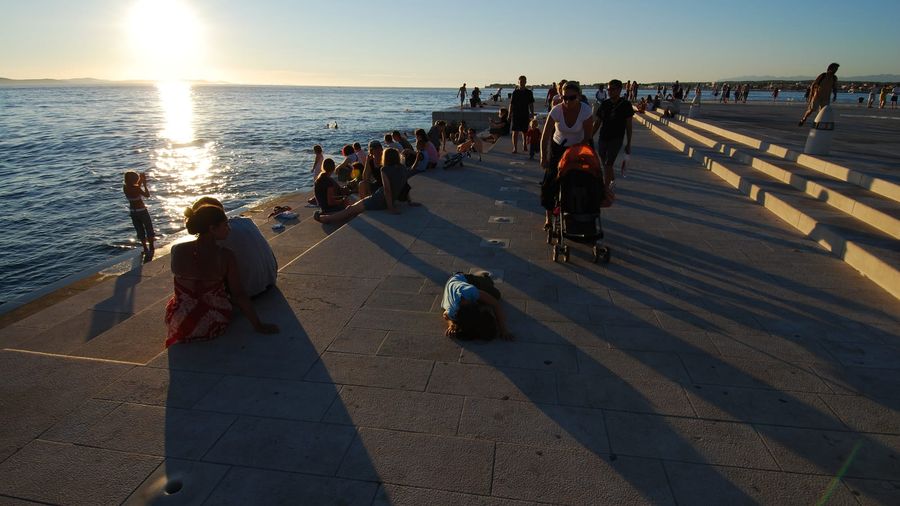
On Zadar's compact, walkable peninsula the real question is not whether to book a tour but which one adds something you can't get on foot. Spend on a history walk around the Roman Forum and St Donatus, a Kornati Islands boat trip, a Museum of Ancient Glass visit or a Plitvice day trip — and save the Sea Organ, the Sun Salutation and the old-town lanes for your own unhurried evenings.
Zadar rewards a slow wander more than most Croatian cities. The old town occupies a slender peninsula barely a kilometre long, layering a 1st-century-BCE Roman Forum, a 9th-century Carolingian rotunda, and two inventive pieces of public art into a walk you can cover in an afternoon. That density means the honest question is rarely whether to take a guided tour, but which one earns its price against a city you could otherwise explore with comfortable shoes and a sunset to aim for. This guide sorts Zadar's tours by what they are good for, what they cost, and when to go. Read it alongside the Zadar city guide and the wider Croatia overview for the bigger picture.
What does a guide actually add in Zadar?
Much of Zadar is free and self-explanatory, so a guide earns its fee on the layer beneath the surface. It buys the history that ties the Forum to the church built from its stones, expert interpretation inside the museums, and — most valuably — access and logistics on the boat trips and inland excursions you cannot manage on foot.
A great deal of Zadar you can manage alone. You don't need anyone to help you find the Roman Forum, sit on the Sea Organ's marble steps as the sun drops, or watch the Sun Salutation cycle through its light show after dark. Where a guide earns its fee is the layer beneath the postcard:
- Story and context. The round Church of St Donatus was raised around 810 CE from stone plundered directly from the Forum beside it — a good guide explains how a Roman civic square became a Carolingian church, and why the rotunda's bare-stone acoustics still host an early-music festival each summer.
- Interpretation indoors. The Museum of Ancient Glass holds some 3,000 Roman glass objects, and the Cathedral of St Anastasia's Romanesque apse rewards someone who can tell you what you are actually looking at.
- Access and logistics. The Kornati archipelago and the waterfalls of Plitvice Lakes are the two things you cannot reach on foot; a boat skipper or a coach guide absorbs the route, the timing and the park logistics so you don't.
If your trip is short and your interests are mainstream, you can see the whole old town without a single paid tour — the skill is spending your budget where it changes the experience.
What are the main types of guided tour in Zadar?
Zadar's tours sort into five broad formats: old-town history walks, Kornati Islands boat trips, Museum of Ancient Glass and cultural visits, Plitvice Lakes day trips, and evening waterfront or festival experiences. Matching the format to your interests matters far more than booking the priciest option.
The market sorts into a handful of distinct experiences, each justifying its price in a different way:
| Tour type | Best for | Typical length | Rough cost |
|---|---|---|---|
| Old-town history walk | First-timers, history lovers | 1.5–2.5 hrs | Free–€12 tip; €80–140 private half-day |
| Kornati Islands boat trip | Nature, swimmers, families | Full day | €50–80 per person, lunch included |
| Museum of Ancient Glass visit | Culture travellers, rainy days | 1–1.5 hrs | €10–15 per person with entry |
| Plitvice Lakes day trip | Waterfall seekers, photographers | Full day | Per person, plus park entry |
| Evening waterfront / festival | Everyone, at dusk | 1–2 hrs | Free; festival tickets extra |
The old-town walk is the natural first-day orientation, threading the Forum, St Donatus and the Cathedral of St Anastasia, with tip-based free tours departing near the Land Gate and licensed private guides going deeper on the history. Kornati boat trips leave the harbour for an 89-island national park you cannot otherwise reach, and Plitvice day trips run inland by coach — about 90 minutes each way — to Croatia's most famous waterfalls. Every evening the Sea Organ and Sun Salutation turn the western waterfront into a free show at sunset, while July and August bring the Musical Evenings in St Donatus, an early-music festival founded in 1961 and staged inside the rotunda for its unamplified acoustics.
How do you match Zadar's tours to your trip length?
Think in days rather than single bookings. With one day, pair a morning old-town history walk with the Sea Organ at sunset. A second day adds either a Kornati Islands boat trip or a Plitvice Lakes excursion. Three days or more justify both, plus a day trip down the coast to Split.
Rather than booking tours one at a time, it helps to think in days:
- One day: Take a morning walking tour of the Forum, St Donatus and the Cathedral of St Anastasia to absorb the history, wander the Museum of Ancient Glass after lunch, then claim a spot on the Sea Organ steps for sunset — the whole day stays on the peninsula.
- Two days: Keep day one as above, then choose your second-day character — a Kornati Islands boat trip for the pristine Adriatic, or a Plitvice Lakes excursion for the waterfalls. Both are full days, so pick one.
- Three days or more: Do both excursions, and use the third day for the coast — Zadar sits roughly ninety minutes north of Split, where a guide can walk you through Diocletian's Palace, or two hours from the Roman Pula Arena further up the Istrian coast.
Resist over-booking. Zadar rewards unstructured time — a coffee in the morning market, an aimless loop of the sea walls at dusk — as much as any ticketed tour.
When is the best time to take a tour in Zadar?
Zadar runs tours across most of the year, but the season shapes them. May, June and September are the sweet spot — warm, uncrowded, and ideal for both the Sea Organ steps and the Kornati boats. July and August are busier and hotter but bring the St Donatus festival, while October keeps the sea warm at lower prices.
Zadar handles crowds better than Dubrovnik — the peninsula is wide enough to absorb visitor numbers — but the calendar still matters:
- Spring (May–June): The ideal window — warm enough to swim on the Kornati trips, quiet enough to explore the Forum without queuing, and wildflower season on the islands.
- Summer (July–August): Busiest and hottest, but the only time for the Musical Evenings in St Donatus early-music festival; concerts begin late once the day's heat fades, so book marquee evenings ahead.
- Autumn (September–October): Arguably the best of all — warm sea, golden sunset light at the Sea Organ, thinning crowds and dropping accommodation prices.
- Winter (November–March): Quiet and atmospheric, with dramatic storms over the waterfront installations, though the Kornati boats mostly pause until spring.
Whatever the month, the Sea Organ and Sun Salutation are best at dusk, year-round. For a fuller month-by-month picture the Zadar city guide covers seasonal conditions, and if you are pairing the trip with the southern coast, the best time to visit Split notes line up neatly.
How much should you budget for guided tours in Zadar?
Zadar is gentler on a budget than the marquee Dalmatian cities, and much of its best is free. Tip-based walking tours run €8–12, a Museum of Ancient Glass visit €10–15, a Kornati boat trip €50–80 with lunch, and a private half-day guide €80–140. Spend your budget on the excursions and the interpretation, not the walking you could do yourself.
Thinking in ranges helps before you book:
| Tour type | Approximate cost |
|---|---|
| Tip-based old-town walking tour | €8–12 per person |
| Museum of Ancient Glass guided visit | €10–15 per person with entry |
| Private half-day guide (Forum, St Donatus, waterfront) | €80–140 for a small group |
| Kornati Islands boat day trip | €50–80 per person, lunch included |
| Plitvice Lakes day trip | Per person, plus national-park entry |
A few cost notes worth knowing before you book:
- The free layer is large. The Sea Organ, the Sun Salutation, the Forum column and the old-town lanes cost nothing — put your money toward the boat trips and the guided museum visits.
- Private-guide fees are per group, not per head. Splitting a half-day guide across four people brings the per-person cost down sharply.
- Park and entry fees are usually separate. Plitvice's national-park ticket and museum admission are typically charged on top of a guide's fee unless a package bundles them.
- Tipping is customary. Around €8–12 for a free walking tour and roughly 10% for a private guide is standard, in line with the rest of Croatia.
Treat every figure here as a planning guide rather than a quote — boat, museum and guide prices shift each season, so confirm the current rates when you book.
What local logistics make a Zadar tour day run smoothly?
Most of the difference between a smooth Zadar day and a frustrating one is practical. The old town is entirely walkable, so no transport is needed within it; the ferry terminal and the excursion boats sit a short walk away; and the airport, Plitvice and Split all lie beyond the peninsula, so plan those as dedicated half- or full-day trips.
A few details decide whether the day runs cleanly:
- Walk the old town. The peninsula is barely a kilometre end to end — the Forum and St Donatus anchor the centre, the Sea Organ runs along the western edge, and the Land Gate and Five Wells Square mark the landward boundary. No transport is needed inside it.
- Know where the boats leave. Jadrolinija ferries and the Kornati excursion boats depart from the terminal a short walk from the old town; confirm your dock and departure time the day before.
- Treat Plitvice and Split as full days. Both are worthwhile but sit ninety minutes or more inland or down the coast — don't stack either onto an old-town day.
- Time the marquee sights. Aim for the Sea Organ at sunset and the Forum in the early morning or late afternoon, when the light is best and the day-trip crowds thinnest.
- Mind the airport transfer. Zadar Airport is about 15 km from the old town, and its shuttle bus times to flights — check it before booking a taxi.
How do you find a good guide in Zadar?
Look for licensed guides with genuine expertise in Roman and early-medieval Dalmatian history, working in small groups. Croatia licenses guides working inside monuments and museums, so accreditation signals real training. The Zadar tourist office and reputable boat operators are the safest starting points, and smaller groups leave room for real conversation.
Zadar's best guides tend to work for established, transparent operators who publish their routes, group sizes and credentials up front — that openness is itself a signal. For the Forum, St Donatus and the Museum of Ancient Glass, a licensed guide trained in Dalmatian history turns a checklist of stones into a coherent story of Rome, Byzantium and the Carolingian world; for the Kornati boats, look for small-group operators who cover the archipelago's ecology rather than simply ferrying you between swimming stops. The Zadar tourist office keeps vetted registries and can book licensed walks and excursions, and the best guides read the room — adjusting the pace and dropping the script when a question is more interesting.
Related Guides
- Zadar city guide — attractions, the St Donatus festival, and practical tips for the wider stay
- Croatia country guide — how Zadar fits into a longer trip along the Dalmatian coast
- Best Time to Visit Split — pairing Zadar with the Dalmatian hub to the south
- Planning a Pula Trip — extending north to Istria and its Roman amphitheatre
Final thoughts: On a peninsula this compact, spend on the experiences that genuinely need a guide — a history walk around the Forum and St Donatus, a Kornati Islands boat trip, a Plitvice day out — and lean on your own two feet for the rest. Decide which Zadar you came for, book the boats and festival evenings ahead, and be on the Sea Organ steps when the sun goes down.
Frequently Asked Questions
Do you need a guided tour to see Zadar?
Not for the basics — the old town sits on a compact peninsula you can walk end to end in twenty minutes, and the Sea Organ, Sun Salutation and Roman Forum are all free to visit at your own pace. A guide earns its place where context or access changes the day: reading the layered Roman and Carolingian history around St Donatus, interpreting the Museum of Ancient Glass, and above all the boat trips to the Kornati Islands and the coach runs to Plitvice Lakes, where someone else handles the planning and the driving.
How much does a guided tour in Zadar cost?
Tip-based old-town walking tours run roughly €8–12 per person, and a private half-day guide covering the Forum, St Donatus and the waterfront is about €80–140 for a small group. A specialist visit to the Museum of Ancient Glass costs €10–15 per person including entry. Kornati Islands boat day trips are €50–80 per person, usually with lunch and snorkelling stops included, and a full-day Plitvice Lakes excursion is priced per person on top of the national-park entry fee.
When is the best time to take a tour in Zadar?
May, June and September are the sweet spot — warm enough for the Sea Organ steps and the Kornati boats, quiet enough to explore the Forum without queuing. July and August are busier but the wide peninsula absorbs crowds well, and it is the only window for the Musical Evenings in St Donatus early-music festival. October keeps the sea warm and drops prices. Whatever the month, save the Sea Organ and Sun Salutation for dusk.
Are the Kornati Islands boat trips worth it?
For most visitors, yes — the Kornati archipelago is a national park of 89 largely uninhabited islands you simply cannot reach on foot, and a small-group boat trip from Zadar harbour typically folds in swimming, snorkelling and lunch across a full day. If your time is very short and you would rather stay in the old town, skip it; if you have three days or more and want the pristine side of the Adriatic, it is the single excursion worth prioritising.
What is the best Zadar tour for a first-time visitor?
Start with a walking tour of the old town — the Roman Forum, the Church of St Donatus and the Cathedral of St Anastasia — to get the history and your bearings, then return to the waterfront for the Sea Organ and Sun Salutation at sunset. With a second day, add either a Kornati Islands boat trip or a Plitvice Lakes excursion depending on whether you want sea or waterfalls.