
Planning the Perfect Trip to Vík: Black Sand, Glaciers, and Puffins
A practical Vík trip planner — choosing your season on the South Coast, picking the right guided tours, budgeting in Icelandic króna.
Read the full guideUpdated · 9 min read
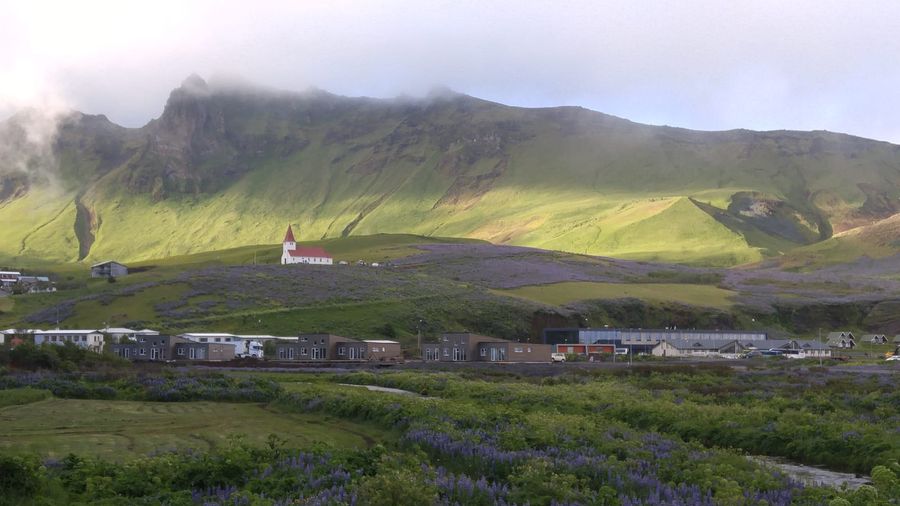
Planning Vík is really about deciding how much time to give it. Most travellers pass through on a single long day from Reykjavik, but the village rewards an overnight stay: dawn at Reynisfjara before the coaches arrive, a glacier hike on Mýrdalsjökull, and the drive east across the Eldhraun lava field. Settle your season first, then build the tours, budget, and logistics around it.
Vík í Mýrdal is a village of barely 300 people at the end of Iceland's paved South Coast road, wedged between the North Atlantic and the ice cap of Mýrdalsjökull. It is not a destination you visit for the town itself — the settlement is little more than a church, a petrol station, and a wool shop — but for what surrounds it: the jet-black volcanic sand of Reynisfjara, the basalt sea stacks of Reynisdrangar rising straight from the surf, and the puffin cliffs of Dyrhólaey. Planning a trip to Vík mostly comes down to how deeply you want to engage with that landscape, and how much you respect the ocean that shapes it.
When should you plan your Vík trip?
Vík is a year-round destination that changes character completely with the season. Summer brings puffins, long light, and reliable glacier access; the shoulder months trade crowds for atmosphere; winter is stormy but offers the Northern Lights and an empty beach. Whatever the month, Vík is one of Iceland's rainiest places, so waterproofs are non-negotiable.
The village sits below Mýrdalsjökull where Atlantic weather systems are forced upward and dump their moisture, giving Vík well over 2,000 mm of rain a year — among the highest in the country. That single fact should shape your packing more than the calendar does.
| Season | What to expect | Best for |
|---|---|---|
| June–August | Nesting puffins, near-endless daylight, easiest glacier access | First-timers, wildlife, hiking |
| May & September | Thinner crowds, superb low light, puffins present in May | Photographers, quieter visits |
| October–April | Storm-driven surf, Northern Lights on clear nights, empty beach | Winter drama, aurora chasing |
Atlantic puffins nest on the Dyrhólaey clifftops and the Reynisdrangar stacks from roughly May through August, arriving in late April and gone by the end of summer — so if seeing them matters, that window is fixed. Winter visits are genuinely rewarding for the drama of a black beach under storm light, but the South Coast road can close in severe weather, and daylight shrinks to a few hours. Whenever you come, aim to reach Reynisfjara early: the coach tours from Reykjavik tend to arrive around mid-morning, and the beach is transformed when you have it nearly to yourself.
How long do you need, and how does Vík fit a trip?
Vík works as a day trip, an overnight, or a stop on a longer Ring Road circuit — and the right length depends on how many of the surrounding sights you want. A day covers the headline stops in a rush; two nights lets you slow down, add a glacier walk, and push east to the lava fields.
Because Vík is 187 km from the capital, the classic approach is a single South Coast day tour that bundles it with the waterfalls of Seljalandsfoss and Skógafoss. That works, but it means arriving at Reynisfjara in the busiest part of the day and leaving before the light softens.
Staying overnight in or near the village unlocks the better version of the trip. You can watch puffins at dusk from the Dyrhólaey clifftops, catch the beach at sunrise, and use Vík as a launch point for a guided glacier hike on Mýrdalsjökull or the adjacent Sólheimajökull tongue. With two nights you can also drive east across the Eldhraun lava field — the vast, moss-green flow left by the catastrophic Laki eruption of 1783 — toward the glacier lagoons beyond Höfn. If Vík is one leg of a full Ring Road loop, treat it as the natural overnight break between the South Coast and the remote east.
Which tours are worth booking?
You do not need a guide to stand on a beach, but Vík's signature experiences — glacier travel and correct positioning at a dangerous shoreline — are markedly safer and richer with one. The rest you can do independently with a rental car and a weather app.
The most common way to see Vík is still a group day tour from Reykjavik, which is efficient and needs no driving. But the outings that genuinely benefit from local expertise are the ones on ice: glacier hikes and ice climbing on Mýrdalsjökull require certified guides, crampons, and someone who reads crevasse conditions. A private local guide at Reynisfjara and Dyrhólaey is the other worthwhile splurge, chiefly because they position your group away from the water's reach from the first moment. For a side-by-side price comparison of the group, small-group, private, and glacier options, see the tour tables in the getting around Vík guide.
If you are self-driving and only have time for one guided activity, make it the glacier — it is the experience you cannot safely replicate on your own. The beach, the sea stacks, the Dyrhólaey arch, and the red-roofed Víkurkirkja church on its hill are all free to explore at your own pace.
What should you budget for Vík?
Iceland is expensive, and Vík is no exception once you add tours, fuel, and a night's stay. Think in daily ranges: a day-tripper spends little beyond the coach fare and lunch, while an independent overnight visitor should plan for a rental car, one guided activity, and premium rural accommodation.
Costs at Reynisfjara itself are zero — there is no entry fee for any of the natural sights around Vík. The real spending is on how you get there, where you sleep, and which guided activity you choose. Accommodation in the village is limited and books out fast in summer, which pushes prices up; reserving early is the single most effective way to keep the budget in check.
A rough daily framework:
| Item | Rough cost |
|---|---|
| Rental car (per day, small 2WD) | ISK 8,000–15,000 |
| Dinner for two, village restaurant | ISK 8,000–14,000 |
| Guided day tour or glacier hike | see the getting around Vík price tables |
Booking directly with Icelandic operators is usually cheaper than international resale platforms, and many guides offer weather-related rescheduling — useful on a coast this exposed. Iceland runs almost entirely on cards, so you rarely need cash, even at the remote petrol station that doubles as the village's social hub.
How do you get to Vík and around?
Vík is 187 km from Reykjavik on Route 1 — about two and a half hours of driving without stops, though the point of the South Coast is the stops. Once you arrive, the key sights sit a few kilometres outside the village, so you need either your own wheels or a tour that includes them.
Most travellers either self-drive from Reykjavik — breaking the journey at Seljalandsfoss, Skógafoss, and Sólheimajökull, which is why the drive realistically fills a whole day — or let a guided day tour do it for them. The one thing to plan around is the last few kilometres: the village is walkable in five minutes, but Reynisfjara, Dyrhólaey, and the glacier access points all sit outside it with no local bus, and the long-distance Strætó coach drops you in the village but no further. For the full breakdown of driving routes, tour options, bus services, and how to reach each individual sight, see the companion guide on getting around Vík.
How do you stay safe at Reynisfjara?
Reynisfjara's beauty is inseparable from its danger, and it is the one place near Vík where planning is a matter of safety, not comfort. The threat is sneaker waves — surges that arrive silently, reach far up the sand, and have killed visitors who thought they were standing well clear of the water.
Unlike the predictable rhythm of most beaches, the Atlantic swell here can send a single wave 30–40 metres up the flat sand with no warning, and the backwash is strong enough to drag an adult off their feet. The rules are simple and absolute: never turn your back on the sea, never stand on the lower flat zone of the beach, and keep well back from the waterline. Watch instead from the upper black-sand ridge or from beside the hexagonal basalt columns and their cave, both of which are genuinely safe vantage points. Multilingual warning signs stand at every entrance for good reason — treat them as instructions, not decoration. This is precisely where a guide who has visited dozens of times earns their fee, positioning your group correctly before anyone drifts toward the surf.
Where should you base your Vík plans?
Vík is best understood as the dramatic finale of a South Coast journey rather than a standalone break — so anchor your planning to the wider route and let the village be the place you slow down and stay the night.
A satisfying South Coast plan runs west to east: the waterfalls first, then Sólheimajökull, then Dyrhólaey and Reynisfjara around Vík, with the Eldhraun lava field as the gateway to the east if you are continuing. Many travellers pair Vík with a night or two in Reykjavik at either end, where the tower of Hallgrímskirkja makes an easy orientation point before they head south. Get the season, the tours, and the beach safety right, and Vík delivers what few places in Europe can — a shoreline of black sand and sea stacks beneath a live volcano, seen at your own pace rather than through a coach window.
Frequently Asked Questions
How many days do you need in Vík?
Most people see Vík on a single long day trip from Reykjavik, but staying one or two nights lets you reach Reynisfjara at sunrise before the coaches arrive, add a glacier hike on Mýrdalsjökull, and drive east to the Eldhraun lava field. Two nights is the sweet spot if you want more than the highlights.
When is the best time to visit Vík?
June to August brings nesting puffins, the longest days, and the most reliable glacier access, while May and September are quieter with excellent light. October to April is dramatic but stormier, with Northern Lights possible on clear nights and Reynisfjara far less crowded.
Is Reynisfjara beach safe to visit?
Reynisfjara is safe if you respect the water. Its sneaker waves arrive without warning and have caused fatalities, so never turn your back on the sea and never stand on the lower flat sand. Watch from the upper black-sand ridge or the basalt-column cave, and follow the posted warning signs.
Can you visit Vík without renting a car?
A car gives the most freedom, since Reynisfjara and Dyrhólaey are a few kilometres outside the village and have no local bus. If you would rather not drive, a guided South Coast day tour from Reykjavik or a Strætó long-distance bus both reach Vík without your own vehicle.