
Planning the Perfect Trip to Killarney
How to plan a Killarney trip — jaunting cars, the Gap of Dunloe, and the Ring of Kerry, plus timing, budget, and transport advice for County Kerry.
Read the full guideUpdated · 10 min read
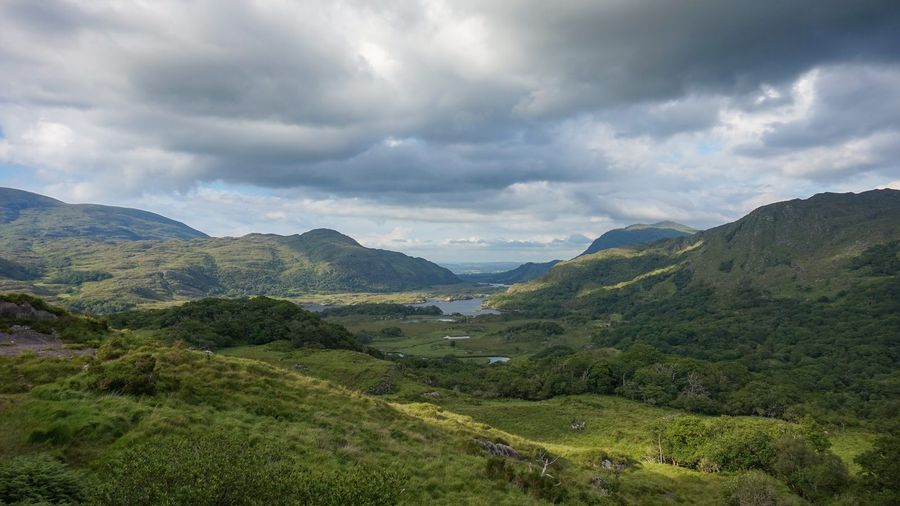
Give Killarney three unhurried days: one for the national park and a jaunting car, one for the Gap of Dunloe and the lake boat, and one for the Ring of Kerry. Base yourself in the compact town, decide early whether you will drive or join guided tours, and book the weather-dependent Skellig Michael boat well ahead. Do that and you see the best of County Kerry without a single rushed morning.
Killarney is less a destination than a doorway. The town itself — small, sociable, and built around visitors — is best thought of as a base camp for the lakes, mountains, and coast that surround it. What those few streets open onto is extraordinary: the 26,000 acres of Killarney National Park, the glacial defile of the Gap of Dunloe, and the 179-kilometre coastal circuit of the Ring of Kerry. This guide covers how to plan the trip — how long to stay, which tours to choose, when to come, what it costs, and how to move around the southwest of Ireland without wasting a day.
How long should you spend in Killarney?
Three days lets you do the three signature experiences — the national park, the Gap of Dunloe, and the Ring of Kerry — without cramming. Two days forces a choice between the Gap and the Ring; four or more opens up the Dingle Peninsula and a Skellig Michael boat.
The town of Killarney is walkable in an afternoon, so your days are really structured around the landscape beyond it. A sensible three-day plan devotes one day to the national park — Muckross House, Torc Waterfall, and a jaunting car along the lakeside roads that cars cannot use — then one day to the Gap of Dunloe walk paired with a boat back across the lakes, and a third to driving or touring the Ring of Kerry. If you only have two days, keep the national park day and pick either the Gap or the Ring, not both. With a fourth or fifth day you can add the quieter Dingle Peninsula, a mountain walk in MacGillycuddy's Reeks, or a landing trip to Skellig Michael.
How do you choose between the main Killarney experiences?
The national park, the Gap of Dunloe, and the Ring of Kerry each reward a different pace — a half-day amble, a full-day walk-and-boat combination, and a full-day scenic drive respectively. Match them to your energy and the weather rather than trying to stack them into one frantic day.
Each of Killarney's headline outings has a distinct character and time cost. The table below compares them so you can slot them into the right days:
| Experience | Time needed | Best for |
|---|---|---|
| Jaunting car in the national park | 1.5–2 hrs | A gentle introduction with a storyteller jarvey |
| Muckross House & gardens | Half day | Victorian country-house history and lakeside gardens |
| Gap of Dunloe + lake boat | Full day | Walkers who want the landscape up close |
| Ring of Kerry circuit | Full day | Coastal and mountain scenery from the road |
| Skellig Michael landing | Full day | Early-Christian history and seabirds (summer only) |
Start with a jaunting car on your first morning: the licensed jarveys are effectively guides, and the park's pedestrianised lake roads are the only way to reach Ross Castle and the Meeting of the Waters at a horse's pace. Save the Gap of Dunloe for a clear day, since its drama is in the mountain walls and lake crossing.
When is the best time to visit?
May, June, and September are the ideal months — long daylight, the greenest landscape, and thinner crowds than high summer. July and August bring the warmest weather but the heaviest tour-bus traffic on the Ring of Kerry; winter is quiet, atmospheric, and genuinely wet.
Kerry is one of the wettest corners of Ireland, so pack a waterproof layer whatever the month and treat a dry day as a gift to be spent outdoors. The trade-offs by season:
| Season | What to expect |
|---|---|
| June–August | Warmest and driest, longest days; Ring of Kerry busiest 10am–3pm |
| May & September | Mild, low-angle light ideal for the lakes, fewer coaches |
| April | Rhododendron blooms carpet the park (invasive, but spectacular) |
| November–March | Misty and atmospheric, lowest prices, short daylight |
If you come in peak summer, drive or tour the Ring early or late to dodge the mid-morning convoy of coaches, which by convention all travel the loop anticlockwise.
What will a trip to Killarney cost?
Budget for tours and transport more than sights: the national park and most viewpoints are free, but jaunting cars, the Gap-and-boat combination, and Ring of Kerry tours are where the money goes. A couple can see the highlights on roughly €150–250 in activities over three days.
Entry to Killarney National Park is free, and Muckross House charges only a modest admission, so your spending is concentrated on guided outings and getting around. Typical rates:
| Tour type | Price range |
|---|---|
| Jaunting car (up to 4, 1.5–2 hrs) | €80–120 per car |
| Gap of Dunloe + boat crossing | €35–50 per person |
| Ring of Kerry guided day tour | €50–80 per person |
| Private car + guide (full day) | €300–450 |
| Skellig Michael boat (weather-dependent) | €80–120 per person |
Accommodation is the other major line: Killarney has everything from budget hostels to grand lakeside hotels, with guesthouse doubles the best value. Book well ahead for summer and for the busy festival weekends, when the town fills and prices climb.
How do you get to and around Killarney?
Killarney is easy to reach by train — about 1.5 hours from Cork and 3.5 hours from Dublin with one change — but the Ring of Kerry needs a car or a coach tour. In the town and national park, walk, cycle, or take a jaunting car instead.
Killarney is the only town in the region on the rail network, which makes it unusually simple to reach without driving: direct and connecting trains run from Dublin, Cork, and beyond into the station in the town centre. Once you arrive, you need surprisingly little motorised transport. The national park's lakeside roads are closed to cars, so a jaunting car or a rented bicycle is the way through them, and the town itself is a ten-minute walk end to end. The one thing public transport cannot do for you is the Ring of Kerry, where there is no practical bus service around the peninsula — so either hire a car and drive the loop (clockwise in a private car gives you the better road position on the narrow sections) or take a guided coach and let someone else handle the hairpins.
Where should you base yourself?
Stay in or beside Killarney town. It puts the national park, the Gap of Dunloe, and the start of the Ring of Kerry within easy reach, and it has by far the county's best concentration of places to eat, sleep, and book tours.
There is little reason to base yourself anywhere else in the region. Killarney town sits at the hinge of everything — the park begins at its southern edge, the Ring of Kerry loops out from it, and the Gap of Dunloe is a short drive west — and it holds the densest cluster of hotels, guesthouses, restaurants, and operators in Kerry. Staying central means you can reach the lake shore on foot before the day-trippers arrive and return for dinner and a session of live music without a long drive. Kenmare, at the southern end of the Ring, makes a charming alternative for a quieter second base if you are touring the peninsula slowly, but for a first trip the town's convenience is hard to beat.
Is it worth hiring a guide?
Yes — Killarney's landscape carries layers of ecology, history, and folklore that signage barely hints at, and a good guide, whether a jarvey, a walking guide, or a Ring driver, turns scenery into a story. The guided options also solve the region's transport gap.
Much of what makes Killarney remarkable is invisible to the casual eye: the native oakwoods that are the last of their kind in Ireland, the only red deer herd never interbred with imported stock, the Cromwellian siege that Ross Castle survived on the strength of a prophecy. A jaunting car jarvey, often a third- or fourth-generation driver, narrates the park as you ride through it; a walking guide reads the Gap of Dunloe's glacial geology off the rock; a Ring of Kerry driver-guide decodes the fishing villages and stone forts you would otherwise pass without a glance. Book jaunting cars and specialist tours directly with Killarney operators rather than accepting approaches on the street — you get a better price and a better guide — and pair one guided outing early in your trip with self-directed wandering once you have the lie of the land.
Related Guides
- Planning a Dublin Trip: A First-Timer’s Guide — the capital counterpart, built around a walkable historic core
- Queenstown Adventure Planning — another lake-and-mountain base where the scenery is the whole trip
- Best Time to Visit Iceland — a fellow rain-swept Atlantic destination where timing shapes everything
Killarney rewards the traveller who plans loosely but deliberately: pick your three days, decide early whether you are driving or touring, and keep one day flexible for the weather. Lead with a jaunting car to find your bearings, walk the Gap of Dunloe when the sky is kind, and give the Ring of Kerry the full day it deserves. Do that, and the town's role becomes clear — a warm, easygoing base for one of the most concentrated stretches of beauty in Ireland.
Frequently Asked Questions
How many days do you need in Killarney?
Three days is the sweet spot. Give one day to the national park on foot and by jaunting car, one to the combined Gap of Dunloe walk and lake boat, and one to drive the Ring of Kerry. Two days works if you drop one of these, but the Ring alone eats a full day, so a two-day stay usually means choosing between the Ring and the Gap rather than doing both.
Do you need a car in Killarney?
Not for the town or the national park, which you can cover on foot, by bike, or by jaunting car. You do need a car — or a seat on a guided coach — for the Ring of Kerry, because there is no useful public transport around the Iveragh Peninsula. If you would rather not drive Ireland's narrow coastal roads, a small-group day tour of the Ring is the easiest answer.
Should you book the Skellig Michael boat in advance?
Yes, far in advance. Landing-tour boats from Portmagee are strictly licensed, run only from roughly mid-May to late September, carry a hard daily cap, and are cancelled whenever the Atlantic swell is unsafe. Popular dates sell out months ahead. Book early, keep a flexible day in your schedule for a weather postponement, and treat the trip as a bonus rather than a fixed plan.
Is Killarney a good base for exploring County Kerry?
It is the obvious one. Killarney town sits at the junction of the national park, the Gap of Dunloe, and the Ring of Kerry, and it has the county's densest cluster of hotels, guesthouses, restaurants, and tour operators. It is also the only town in the region on the rail network, which makes it easy to reach without a car.