
Planning a Dublin Trip: A First-Timer’s Guide
How to plan a first trip to Dublin — a walkable few days built around Trinity College and the Book of Kells, Dublin Castle, Kilmainham Gaol.
Read the full guideUpdated · 9 min read
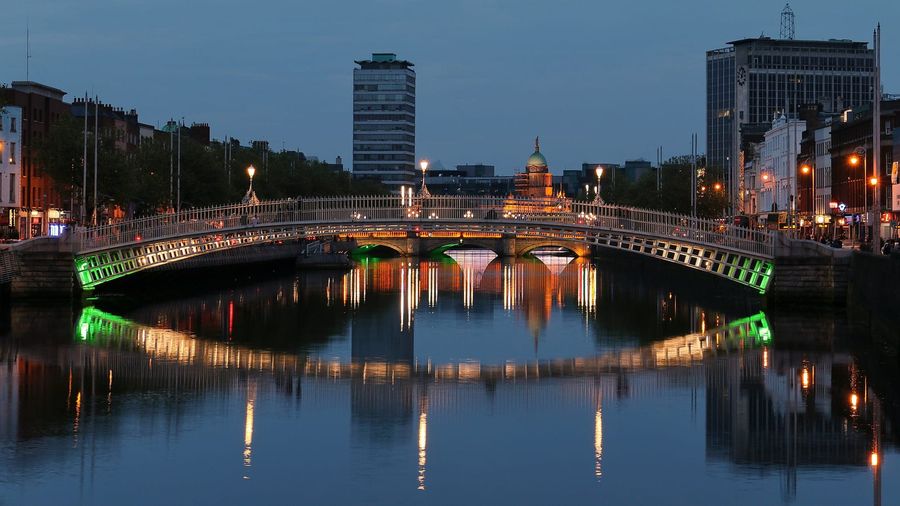
Two or three days is the ideal first visit to Dublin: build day one around Trinity College, the Book of Kells, and Dublin Castle south of the Liffey, give day two to Kilmainham Gaol and the Guinness Storehouse, and keep the evenings for the pubs. The city centre is compact enough to walk, and both the Book of Kells and Kilmainham Gaol need tickets booked ahead.
Dublin is a capital you can read on foot. The Dublin most visitors come for sits in a tight knot on either side of the River Liffey, and its landmarks — a medieval castle, a great university library, a famous brewery, and a jail that shaped modern Ireland — are close enough that the walking between them becomes part of the pleasure. This guide sets out how to plan a first trip: what to see, what to book before you leave, and how to fold in the pubs and a day trip without overloading the schedule. It balances the literary, historic Ireland of the guidebooks with the lived-in, sociable city you actually meet on the ground.
What should you see on your first day in Dublin?
Anchor day one on the south side of the river. Start at Trinity College to see the Book of Kells and the barrel-vaulted Long Room library, wander Grafton Street, then walk to Dublin Castle and Christ Church. It is a short, dense circuit that sets the historical scene for everything else.
Begin at Trinity College Library, the four-hundred-year-old heart of Ireland's oldest university. The draw is twofold: the Book of Kells, the astonishing ninth-century illuminated gospel manuscript, and the Long Room above it, a two-hundred-foot barrel-vaulted hall lined with two hundred thousand of the library's oldest volumes and busts of the great thinkers. Book a timed slot and go early to beat the coach parties. From the college gates it is a short walk through the shopping bustle of Grafton Street to Dublin Castle, the seat of British rule in Ireland for seven centuries and now a ceremonial and museum complex; the State Apartments and the medieval undercroft are the highlights, and the guided tour unpicks the layers of Viking, Norman, and Georgian city buried beneath it. Nearby stand Christ Church and St Patrick's cathedrals, an easy add-on to round out the medieval core.
How should you spend day two in Dublin?
Give day two to the harder, more moving history. Take a guided tour of Kilmainham Gaol, where the leaders of the 1916 Rising were held and executed, then cross to the Guinness Storehouse for the brewery experience and the panoramic Gravity Bar. The two make a deliberate contrast: sober reflection in the morning, a lighter afternoon.
The second day belongs to the story of Irish independence. Kilmainham Gaol is the most important historical site in the city: the jail where rebels from a century and a half of uprisings were imprisoned, and where the leaders of the 1916 Easter Rising were executed in the stonebreakers' yard. It can only be seen on a guided tour, numbers are strictly capped, and the tickets sell out — book well ahead. The tour is quietly devastating and explains modern Ireland better than any museum. In the afternoon, shift register at the Guinness Storehouse, the seven-storey brewery experience housed in a former fermentation plant at St James's Gate. It walks you through the making of the black stuff and finishes in the glass-walled Gravity Bar with a pint and a 360-degree view over the city — the single best panorama in Dublin.
Where should you go for the pubs and nightlife?
Temple Bar is the famous, tourist-heavy pub quarter — worth one wander for the atmosphere, but not where locals drink. For traditional music and a genuine feel, seek out the older pubs around Camden Street, the Stoneybatter neighbourhood, or a snug like Kehoe's off Grafton Street. A pint of stout and a session of live trad is the essential Dublin evening.
No trip to Dublin is complete without an evening in the pubs, but where you go matters. The cobbled lanes of Temple Bar are the district everyone photographs — bright, loud, and priced for visitors — and it is worth one stroll for the buzz. For a truer night out, though, the locals drift to the Victorian pubs scattered through the centre: Kehoe's and the Long Hall for the carved-mahogany interiors, the pubs around Camden Street and Aungier Street for a younger crowd, and Stoneybatter across the river for the neighbourhood feel. What ties them together is the tradition of live traditional music — the informal sessions where musicians gather around a table and play — and a properly poured pint of stout, which takes its time and rewards your patience.
What day trips can you take from Dublin?
Dublin sits beside sea and mountains, so a third day is easily filled beyond the centre. The DART coastal train runs north to the fishing village and cliff walks of Howth and south to Dalkey. Further afield, the monastic ruins of Glendalough in the Wicklow Mountains make a classic half-day into the hills, and Newgrange, older than the pyramids, lies to the north.
If you have a third day, Dublin's setting rewards a trip out of the city. The DART, the coastal commuter train, is the easiest escape: north to Howth, a working fishing village with a bracing cliff-path loop and seafood on the pier, or south to genteel Dalkey and the beaches of the bay. Deeper into the countryside, the glacial valley of Glendalough in the Wicklow Mountains holds one of Ireland's most atmospheric monastic sites — a round tower and ruined churches beside two dark lakes — and is an easy guided half-day. To the north, the Neolithic passage tomb of Newgrange, older than Stonehenge and the pyramids, is a striking option for anyone drawn to the deep past.
How should you get around and where should you stay?
Stay in or near the city centre — around Trinity College, St Stephen's Green, or the quays — and you can walk to nearly everything. Dublin's Luas trams and dense bus network cover the rest, and a Leap Visitor Card caps your public-transport spend. Skip a rental car for a city break; parking is dear and the centre is made for walking.
Dublin is a city to stay central in. Base yourself around St Stephen's Green, the streets near Trinity College, or the Liffey quays, and the great majority of what you have come to see is within a fifteen-minute walk. For longer hops — out to the Guinness Storehouse, the Phoenix Park, or the airport — the two Luas tram lines and the comprehensive bus network do the job, and a Leap Visitor Card gives you unlimited travel for a fixed daily cap that quickly pays for itself. There is no reason to hire a car for a city break here; the centre is walkable, parking is expensive and scarce, and day trips are easily done by train or on an organised tour.
Is it worth taking a guided walking tour of Dublin?
Dublin rewards a guide because so much of its story is invisible on the surface — the layers of Viking and Georgian city, the sites of the 1916 Rising, the literary geography of Joyce and Yeats. A good walking-tour guide threads these together and points you toward the pubs and streets you would never find alone, turning a pretty centre into a legible one.
Dublin is a literary and revolutionary city where much of the interest lies beneath the surface, and a guide is the fastest way to reach it. The centre is small enough to wander, but a knowledgeable local turns a collection of handsome streets into a connected story: the buried Viking settlement, the Georgian squares and their doors, the sites of the Easter Rising, and the pubs and lanes that shaped Joyce, Yeats, and Behan. Free and paid walking tours abound — history walks, literary pub crawls with actors performing between stops, and 1916 rebellion routes — and the best of them do what no map can, which is to tell you where to go next and why it matters. Pair a guided first morning with self-guided wandering once you have the city's shape, and Dublin opens up quickly.
Related Guides
- Krakow in 3 Days: A First-Timer's Itinerary — a parallel walkable-city itinerary weighing joyful sightseeing against difficult history
- Budapest in 3 Days — another compact European capital built for a short, unhurried break
- Planning the Perfect Vienna Trip — an imperial-city plan with the same balance of headline sights and café culture
Dublin gives you a capital you can hold in your head: a few days of great libraries, sobering history, and long pub evenings, all within walking distance of each other. Book the Book of Kells and Kilmainham Gaol before you go, keep the schedule loose enough for a session of trad music and an unhurried pint, and leave a day for the sea or the mountains. Do that, and you leave understanding why so many visitors come back.
Frequently Asked Questions
How many days do you need in Dublin?
Two full days cover the essentials — Trinity College and the Book of Kells, Dublin Castle, Kilmainham Gaol, and the Guinness Storehouse — with evenings for the pubs. A third day lets you slow down or take a day trip to the coast at Howth or south to Glendalough and the Wicklow Mountains without feeling rushed.
Should you book Book of Kells and Kilmainham Gaol tickets in advance?
Yes for both. The Book of Kells and the Long Room at Trinity use timed entry that sells out in summer, and Kilmainham Gaol is guided-tour only with a hard cap on numbers, so its slots often go days ahead. Book both online before you travel; the Guinness Storehouse is far easier but is also cheaper and quicker to enter with a pre-booked slot.
Is Dublin a walkable city?
Very. The core sits either side of the River Liffey, and you can cross the compact city centre on foot in half an hour, from Trinity College and Grafton Street south of the river to O’Connell Street north of it. Only the Guinness Storehouse and a couple of outlying sights need a short bus, tram, or taxi hop.
What is the best time of year to visit Dublin?
May, June, and September give the longest daylight and the mildest weather, with midsummer evenings staying light past 10pm. Expect rain in any month and pack a waterproof layer. March brings the huge St Patrick’s Festival crowds, and winter is quiet and atmospheric but short on daylight.