
Activities
The park is made for active exploration. Waymarked walking trails range from the gentle circuit of Muckross Lake and the easy path to Torc Waterfall up to serious hikes into the mountains and the Old Kenmare Road. Cycling is a favourite way to link the lakeshore sights, with bike rental available in Killarney town, and the flat estate paths suit families.
On the water, boat trips cross Lough Leane to Innisfallen Island's monastic ruins or run up to the Upper Lake, while the traditional jaunting cars offer a horse-drawn ride steeped in local character. The famous full-day Gap of Dunloe trip combines a jaunting car or walk through the pass with a boat return across the three lakes — one of Ireland's classic day excursions. Add wildlife watching, photography and simply picnicking by the shore, and the park easily fills several days.
Seasonal Highlights
Each season gives the park a different character. Spring brings fresh green to the oakwoods and, from May, the colour of rhododendron and the arrival of migrant birds, with lambs on the surrounding hills. Summer offers the longest daylight and the fullest range of boat trips, jaunting cars and open attractions, though it is also the busiest time.
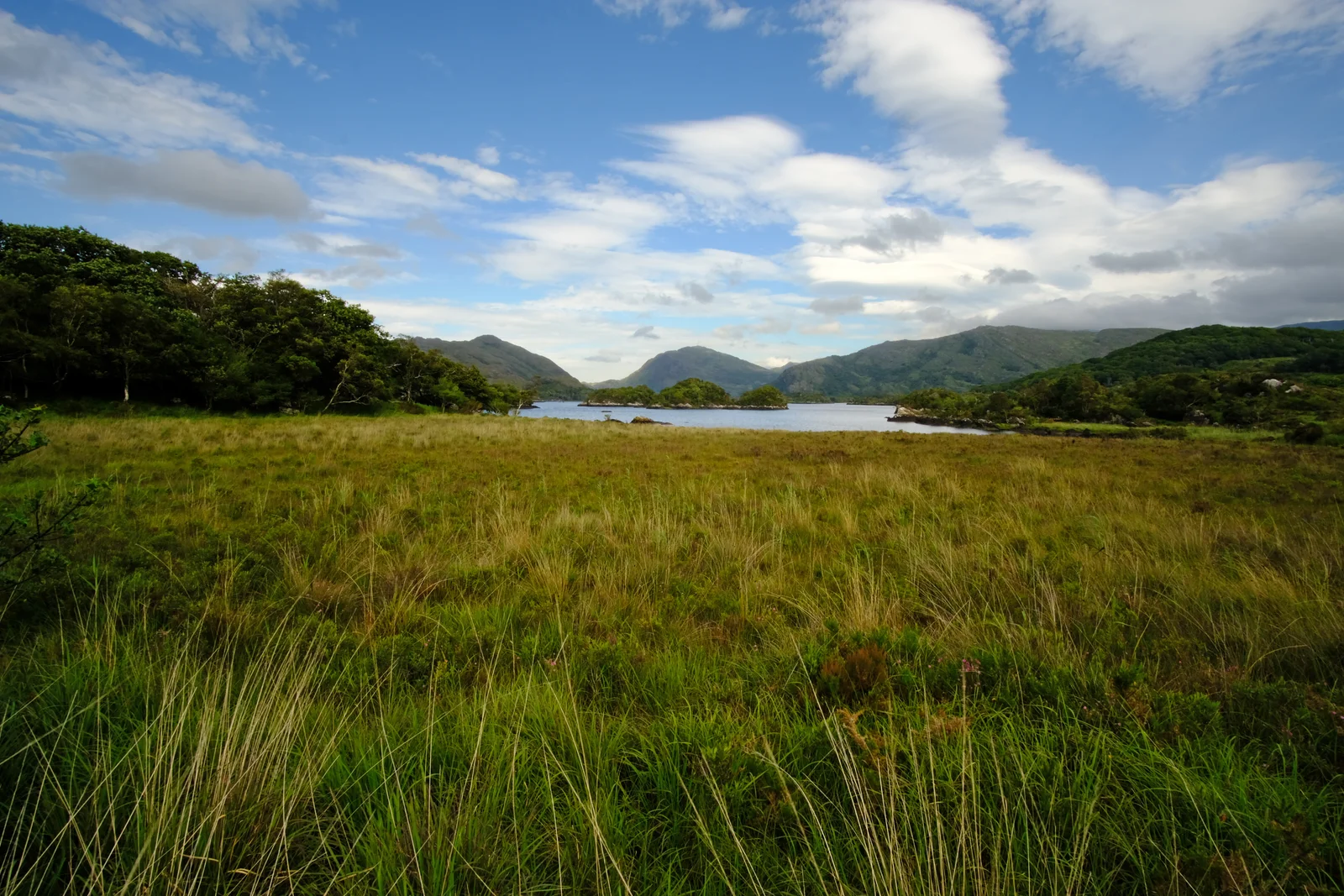
Autumn is arguably the finest: the native woodlands turn gold and russet, the light softens, and the red deer rut fills the glens with the roaring of stags — a genuinely wild spectacle. Winter is quiet and often dramatic, with snow on the McGillycuddy's Reeks reflected in the still lakes and the park almost to yourself, though some paths are wet and some services reduced. Whenever you come, the interplay of lake, mountain and ancient wood is the constant reward.
When to Visit
The park is open year-round and free, and rewards a visit in every season, but it is at its most glorious from late spring through autumn. May and June bring rhododendron colour and long daylight, while September and October offer golden woodland and the atmospheric autumn rut of the red deer. Ireland's changeable weather means you should come prepared for rain at any time and seize the bright spells.
A visit can be anything from a half-day stroll around Muckross Lake and the abbey to a full day taking in the waterfall, Ladies View and a boat trip or jaunting-car ride. The park is large and varied, so decide in advance whether to focus on the lakeshore, the woodland walks or the mountain drive. Early mornings are quietest and best for wildlife and reflections on the lakes.
Admission and Costs
Entry to the national park is free, as are its walking and cycling trails, the lakeshore, Muckross Abbey and Torc Waterfall — an outstanding amount of world-class scenery at no cost. Car parking at the main trailheads is generally free or low-cost.
Paid experiences within the park include guided tours of Muckross House (around €9–12 / $10–13), boat trips on the lakes and to Innisfallen Island by Ross Castle, and the traditional jaunting-car rides (roughly €20–30 / $22–33 per person depending on the route). A guided walking, cycling or driving tour of the park costs more but adds expert interpretation. All figures are estimates that vary by operator and season.
The Case for a Guide
A guide transforms a beautiful landscape into a legible one. Local guides know the park's ecology — the native red deer, the rare oak and yew woods, the workings of the Biosphere Reserve — and can read the story of the land, from the monastic ruins on Innisfallen to the Victorian estate that became Muckross House. They organise the classic Gap of Dunloe trip with its jaunting car and boat return, find the best trails and wildlife for your time and fitness, and connect the natural scenery to the human history of Killarney and the Ring of Kerry. For a park this large and layered, that expertise means seeing far more than the roadside viewpoints, and understanding what you see.
Tips for Visitors
Dress for rain whatever the forecast — Kerry weather turns fast — and wear proper footwear for the woodland and lakeshore trails, which can be muddy. Start early to enjoy the lakes and wildlife in peace before the day-trippers and coaches arrive.
Rent a bike to cover more ground on the flat lakeshore paths between Muckross House, the abbey and Torc, or take a traditional jaunting car for a slower, storied ride. Don't miss the short walk up to Torc Waterfall and the drive to Ladies View. Combine the park with its historic anchors, Muckross House and Ross Castle, and give the wild red deer a wide, respectful berth, especially during the autumn rut.
Frequently Asked Questions
What are the must-see spots in Killarney National Park?
The classic highlights are the three lakes (Lough Leane, Muckross Lake and the Upper Lake), the Torc Waterfall, the Ladies View panorama on the road toward Kenmare, the Gap of Dunloe mountain pass, and the historic estates of Muckross House and Ross Castle, both within the park. Muckross Abbey and the native oak and yew woodlands are further rewards.
Is the park free to enter?
Yes — the national park itself is free to enter and open year-round, including the walking and cycling trails, the lakeshore and the waterfall. Some attractions within it, such as guided tours of Muckross House or boat trips to Ross Castle's Innisfallen Island, carry their own charges, and the traditional jaunting car (horse and trap) rides are paid.
What wildlife might I see?
The park protects Ireland's only native red deer herd, present continuously since the last Ice Age, along with sika deer, red squirrels, and a rich birdlife. Its oak and yew woodlands are among the most important semi-natural woodlands in Ireland, and the whole park is a UNESCO Biosphere Reserve, recognised for this ecological richness.