
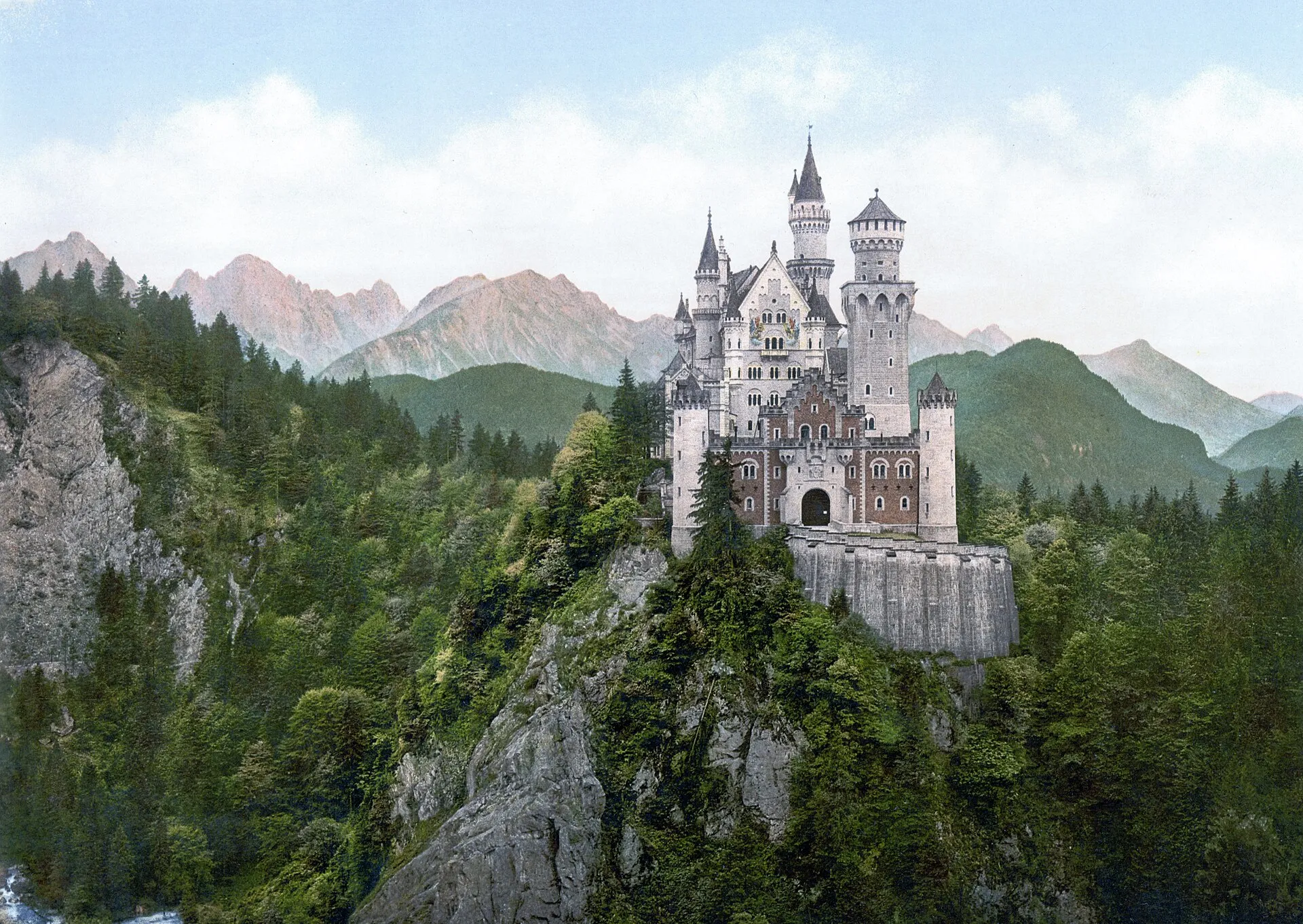
Neuschwanstein Castle timeline
-
Ludwig sketches the dream
In a May 1868 letter to Richard Wagner, Ludwig II described rebuilding the ruined Vorderhohenschwangau castles "in the authentic style of the old German knights' castles."
-
Foundation stone laid
Construction began on 5 September 1869 to a design by theatre-set painter Christian Jank, drawn before an architect ever formalised the plans.
-
Gatehouse completed first
The Torbau gatehouse was finished ahead of the rest; Ludwig lodged in its rooms to watch his fantasy rise on the crag opposite Hohenschwangau.
-
The king moves in
Ludwig took up residence in the still-unfinished Palas, but stayed only 172 nights across the years before his death.
-
Ludwig dies, doors open
Weeks after Ludwig drowned in Lake Starnberg on 13 June 1886, work halted with the keep and chapel unbuilt and the castle opened to paying visitors to service his debts.
-
Wartime art depot
Through the Second World War the Nazi looting agency stored artworks plundered from occupied France in the remote castle; Allied Monuments officers recovered the hoard here in 1945.
-
UNESCO World Heritage
In July 2025 UNESCO inscribed Neuschwanstein with Ludwig's palaces at Linderhof, Herrenchiemsee, and the Schachen royal house — recognition for a building barely 140 years old.
Notable Rooms
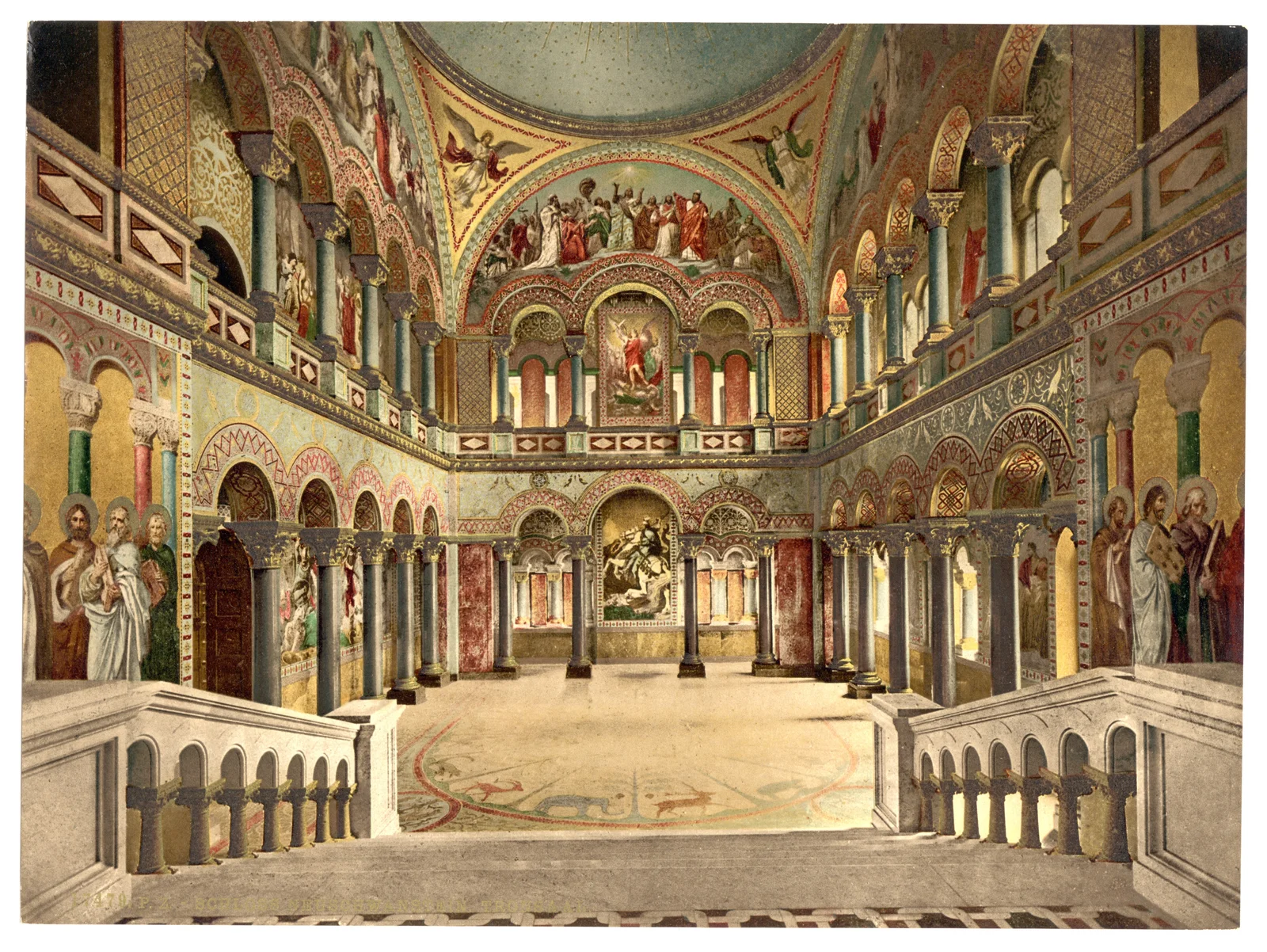
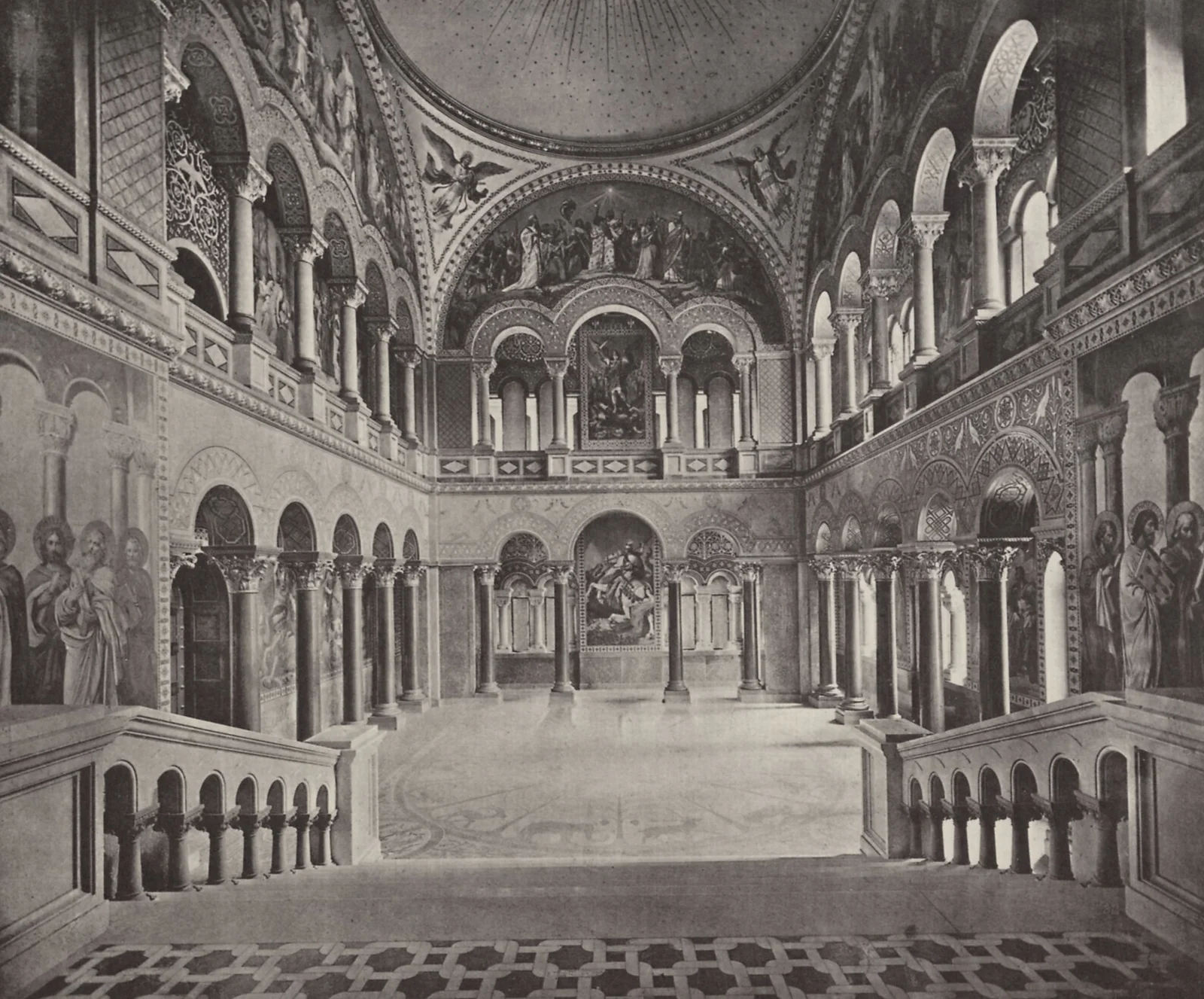
Throne Hall: A Byzantine-inspired, two-storey hall glittering with golden mosaic and a marble staircase — yet the throne itself was never installed, as Ludwig died before it was built. Singers' Hall (Sängersaal): Modelled on the minstrels' hall at Wartburg and covered in Parsifal murals, it was designed for Wagnerian performance but never hosted one in Ludwig's lifetime. Grotto: An artificial stalactite cave with a small waterfall and coloured lighting linking the study to the living room. Living room: The king's drawing room centres on a Schwanenecke — a "swan corner" where a marble swan planter and Lohengrin murals turn Wagner's Swan Knight into the furnishings, the swan motif that recurs across the whole palace. Study and bedroom: The Gothic carved-oak bed reportedly took 14 woodcarvers more than four years to finish. Kitchen: Startlingly modern for 1886, with hot and cold running water and a spit turned by the rising heat of its own fire.
Fortification History
Despite the drawbridge silhouette and mock battlements, Neuschwanstein was never built to withstand a siege — it is a 19th-century stage set dressed as a medieval stronghold. Constructed 1869–1886, it hid thoroughly modern engineering behind its Romanesque Revival stone: a steel-framed Throne Hall ceiling, hot-air central heating, running water on every floor, and electric bells to summon servants. The theatre painter Christian Jank supplied the fairy-tale silhouette, but it fell to a succession of court architects — first Eduard Riedel, then Georg von Dollmann and finally Julius Hofmann — to turn a stage drawing into a structure that could stand on the crag. Contrary to a persistent myth, Ludwig did not drain Bavaria's state treasury; he paid from his own royal income and mounting personal loans, and it was those debts his ministers seized on to declare him incapable and depose him. Work halted the moment he died in 1886, leaving the keep and a planned chapel unbuilt, and the castle opened to paying visitors within weeks to service the debt. Its isolation later gave it a darker role: through the Second World War the Nazi looting agency used Neuschwanstein as a depot for art plundered from occupied France, and Allied Monuments officers recovered the hoard here in 1945 — a chapter the fairy-tale postcard rarely mentions. Today its 1.5 million annual visitors make it Germany's most-visited castle. Marienplatz in Munich is the usual departure point for day trips.
Neuschwanstein Castle in Pictures
When to Visit
Castle hours run 9:00 AM – 6:00 PM in the main season (roughly April to mid-October) and 10:00 AM – 4:00 PM in winter, and the castle closes on January 1, Shrove Tuesday, and December 24, 25, and 31. Entry is by timed 30-minute guided tour only — it is the sole way to see the interior, and your printed ticket names an exact time you cannot change on the spot. Tours run live in German and English; visitors booked outside those slots are handed an audio-guide device that also covers a range of other languages, so an international traveller is never left without narration — but the language on your ticket is assigned by the schedule, not chosen at the door, which is another reason to book the slot you want early rather than take whatever is left on the day. In peak summer the castle pushes as many as 6,000 visitors through the interior in a single day, shepherded in guided groups of up to roughly 60 people that set off at fixed intervals — which is why the timed slots vanish weeks ahead and why the 30-minute loop can feel like a conveyor belt rather than a stroll. The first tours of the morning and the last of the afternoon draw the thinnest groups, so an early departure buys both a calmer walk through Ludwig's rooms and the best light on the Marienbrücke afterwards. Going independently from Munich, take the regional train from München Hbf to Füssen (about 2 hours, hourly, usually changing at Buchloe), then the RVO bus 73 or 78 for the final ten minutes to the Hohenschwangau/Neuschwanstein stop. A weekday morning departure beats the afternoon tour-bus waves; count on a 10–11 hour round trip once you add the transport each way and the climb at the far end.
Admission and Costs
Adult admission is about €21 ($23), with under-18s free, and every ticket is sold for a fixed entry time — there is no reliable walk-up sale in summer. Booking online through the Ticket-Center Hohenschwangau adds a roughly €2.50 reservation fee per ticket. A combined Königsticket covering both Neuschwanstein and neighbouring Hohenschwangau runs about €32. From Munich, a Bayern-Ticket covers the round-trip regional train plus the connecting bus for €30–50 depending on group size; organised day tours bundle coach, guide, and admission for €55–75 per person, and private tours run €600–900 for up to 6 people with a driver-guide. Up the hill from the village, a horse carriage costs €8 up and €4.50 down, or the shuttle bus €3 up and €2 down — both optional alternatives to the 30–40 minute walk. Drivers pay separately for one of the four village car parks (P1–P4) beside the Ticket-Center, about €10 for the day.
The Case for a Guide
Neuschwanstein's official tour is a brisk, tightly scripted loop through a dozen rooms, and much of what makes the castle fascinating sits just outside that script — which is where a guide pays for themselves.
- The Wagner code: Nearly every mural stages a specific opera — Tannhäuser in the study, Lohengrin's swan knight throughout, Parsifal in the Singers' Hall. A guide names the scenes the audio guide races past and explains Ludwig's obsession with the composer he bankrolled.
- Why it looks unfinished: Only about 14 of a planned 200+ rooms were ever completed; a guide points out the bare corridors and the never-built keep, and explains how the money and the king both ran out at once.
- The deposition and the death: In June 1886 a psychiatric commission declared Ludwig unfit to rule and removed him from a nearby castle; days later he drowned in Lake Starnberg alongside his doctor. A guide lays out the still-debated theories the tour skips.
- The view is off-site: The classic head-on photograph is taken from Marienbrücke, the footbridge spanning the Pöllat Gorge behind the castle, not from the courtyards — a guide times the walk to beat the crush. The bridge is named for Ludwig's mother, Marie of Prussia, who hiked the gorge; her son replaced the earlier wooden span with the slender iron one that still carries the crowds today.
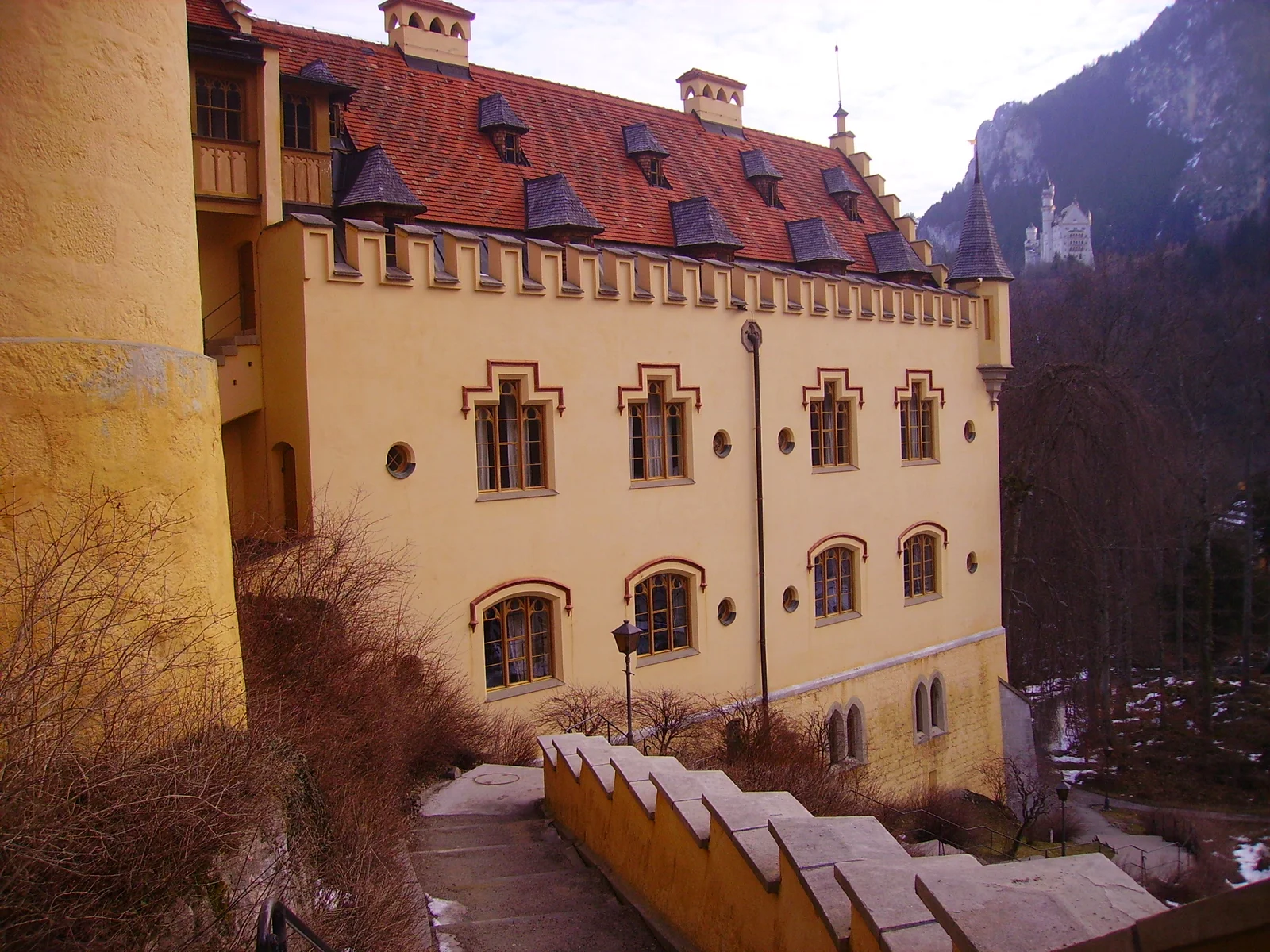
- Don't skip Hohenschwangau: The yellow castle across the valley is where Ludwig grew up; a guide uses the father-and-son contrast to explain the fantasy he built in reply, a stop most day-trippers miss. The same valley holds the swan-filled Alpsee lake and the Museum of the Bavarian Kings, easy add-ons if you build in a buffer between timed tours.
- Climb above the crowds: For a bird's-eye payoff, the Tegelbergbahn cable car rises to a 1,720 m ridge over Schwangau, opening a panorama across both castles and the Forggensee — it is the launch point for the paragliders you spot circling the valley, and a quick escape from the queue if your timed tour leaves an hour to fill.
Tips for Visitors
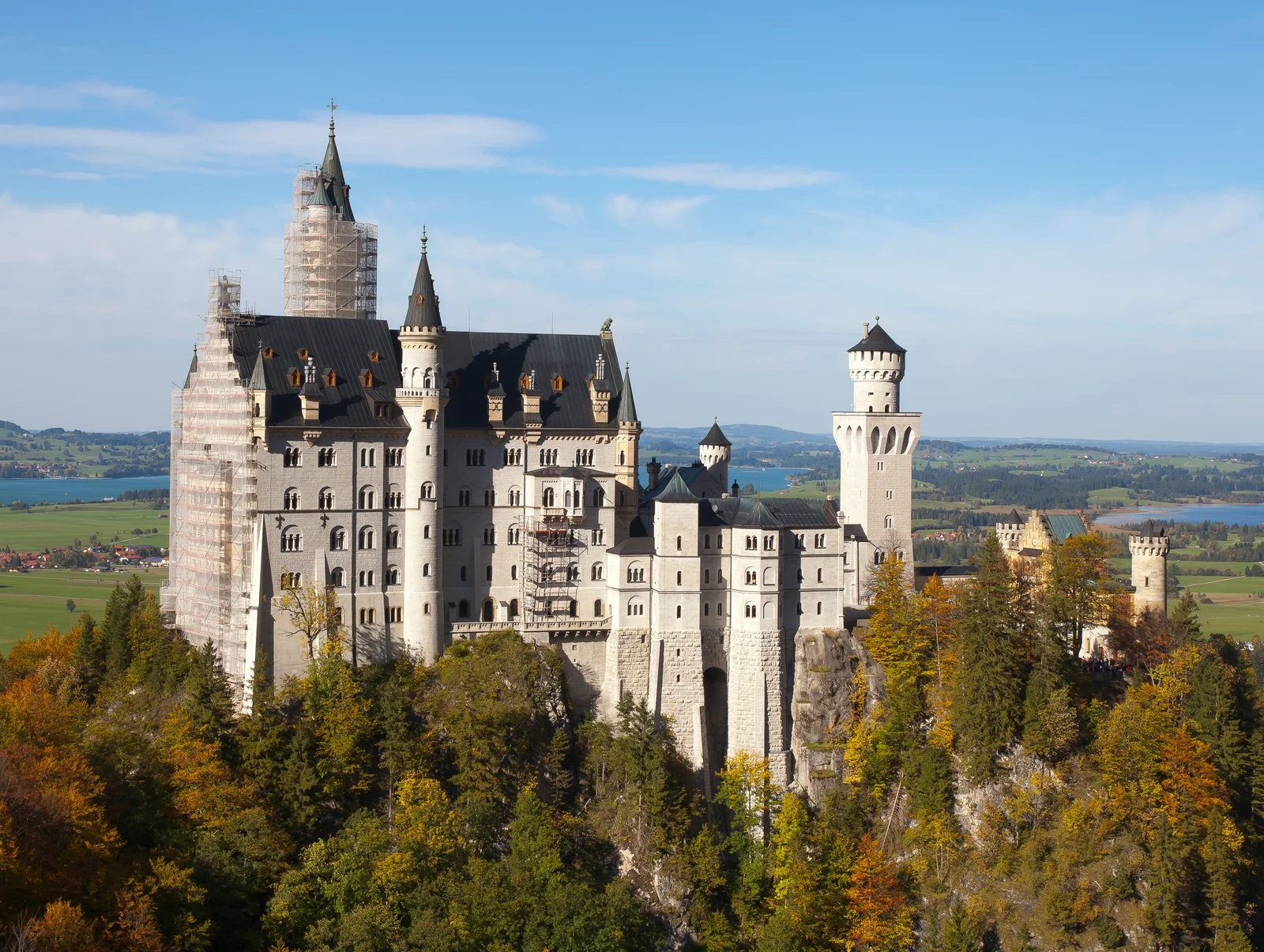
Reserve your timed slot online as far ahead as you can, because summer dates disappear weeks in advance. On the day, collect the physical ticket at the Ticket-Center in Hohenschwangau village around 90 minutes before entry, then allow time for the steep 30–40 minute climb to the gate — sturdy shoes matter, or take the shuttle bus or carriage. Note the shuttle drops you near the Marienbrücke viewpoint, an uphill-then-downhill few minutes from the castle gate rather than at the door, and it stops running in ice or high wind. Interior visits are guided only and last 30 minutes with no re-entry once you start, and photography inside is strictly banned, so save your camera for the exterior and the Marienbrücke. Sections of the facade have carried restoration scaffolding in recent years, so check current conditions if a clean postcard shot is the goal. Mountain weather turns fast: pack a layer even in July, and check whether Marienbrücke is open, as ice closes it in winter. When the bridge is shut the head-on shot is off the table for the season, but the castle still composes well from the Alpsee shore below Hohenschwangau, where the towers rise behind the lake — a lower, wider angle that stays open when the gorge above freezes. A guided day tour from Munich handles the ticketing, timing, and transfers that trip up most independent visitors.
Frequently Asked Questions
When is the best season to visit Neuschwanstein Castle?
May through September pairs green Alpine scenery with the reliable dry weather you want for the uphill walk and the exposed Marienbrücke viewpoint. September thins the July–August crowds slightly while the foothills begin to turn gold, and a fresh dusting of December snow produces the postcard shot — but winter storms regularly close the bridge and the mountain roads, and shorter opening hours mean far fewer timed slots to book.
What does a guide add to a visit to Neuschwanstein Castle?
The interior tour is a fixed 30-minute march with no re-entry, so a guide earns their fee outside that script: decoding which Wagner opera each painted room stages, explaining why barely a dozen of the 200 planned rooms were ever finished, and routing you to the Marienbrücke and Hohenschwangau viewpoints at the right time of day. Guides also untangle Ludwig II's deposition and mysterious 1886 death, the story the audio guide only sketches.
What is the admission price for Neuschwanstein Castle?
Adult admission is around €21 ($23) with under-18s free, and every ticket is timed — there is no walk-up door sale in high season, so book ahead and add the roughly €2.50 online reservation fee. A combined Königsticket with neighbouring Hohenschwangau runs about €32. From Munich, a Bayern-Ticket covers the round-trip train and bus for €30–50, while organised day tours bundle transport, admission and a guide for €55–75.
What should visitors do before arriving at Neuschwanstein Castle?
Reserve a timed slot online well in advance — summer dates sell out weeks ahead — then plan to reach the Ticket Center in Hohenschwangau village at least 90 minutes before your entry to collect the physical ticket. Budget 30–40 minutes for the steep climb to the gate (or take the shuttle bus or horse carriage), wear proper shoes, and remember there is no re-entry once your tour begins.
How much time do you need at Neuschwanstein Castle?
The guided interior loop itself lasts only 30 minutes, but the site rewards a half-day. Add the 30–40 minute climb each way, 15–20 minutes out to the Marienbrücke for the head-on view, and an hour for neighbouring Hohenschwangau Castle or the Museum of the Bavarian Kings, and a thorough visit runs three to four hours on the hill. As a day trip from Munich the whole outing is closer to 10–11 hours once you count the two-hour train and bus each way.
Can you visit Neuschwanstein Castle without a tour ticket?
Yes — only the interior requires a timed guided-tour ticket. The wooded approach, the castle courtyard, and the Marienbrücke footbridge over the Pöllat Gorge are all free to reach on foot, so visitors who only want the famous exterior photograph can skip the queue entirely. Many day-trippers pair a free Marienbrücke walk with the paid interior of nearby Hohenschwangau, where Ludwig II actually grew up.
Is Neuschwanstein Castle wheelchair accessible?
Only partially. The tour route climbs several flights of narrow spiral stairs, so the standard guided visit is difficult for wheelchair users and those with limited mobility, though the courtyard is reachable by the shuttle bus. Visitors who need step-free help can arrange assistance and a lift in advance by contacting the castle administration before booking, rather than relying on walk-up support on the day.
How do you get from Munich to Neuschwanstein Castle?
The castle sits about 130 km southwest of Munich, roughly a two-hour journey each way. Going independently, take the regional train from München Hbf to Füssen — hourly, about two hours, usually changing at Buchloe — then the RVO bus 73 or 78 for the final ten minutes to the Hohenschwangau/Neuschwanstein stop; a Bayern-Ticket covers the whole round trip for €30–50 depending on group size. Driving instead means the A7 autobahn towards Füssen and one of the four paid car parks (P1–P4) beside the Ticket-Center in Hohenschwangau, about €10 for the day and full by mid-morning in summer — but no car reaches the castle itself, so drivers still face the same uphill climb. Organised day tours bundle the coach, a guide, and timed admission for €55–75 and remove the ticket-timing risk. Either way the full outing runs 10–11 hours, so a weekday morning start beats the afternoon tour-bus waves.
What does the name Neuschwanstein mean?
Neuschwanstein translates as "New Swan Stone," and the swan you spot on gables, fountains and murals throughout the castle is no random flourish: it was the heraldic bird of the medieval Counts of Schwangau, whose lands Ludwig II inherited, and the emblem of Lohengrin, the Swan Knight of the Wagner opera the king adored. Ludwig himself never used the name — during his lifetime the building was simply the "New Hohenschwangau Castle," and it was rechristened Neuschwanstein only after he drowned in 1886, when the palace opened to the public.
Should you visit Hohenschwangau as well as Neuschwanstein?
It is usually worth pairing them. Hohenschwangau is the yellow-walled castle directly across the valley where Ludwig II actually grew up, and the father-and-son contrast explains the fantasy he later raised on the crag opposite — context most day-trippers miss. A combined Königsticket covers both for about €32, and the same valley holds the swan-filled Alpsee lake and the Museum of the Bavarian Kings. If you only want the famous exterior photograph you can skip both interiors and walk free to the Marienbrücke, but the Hohenschwangau tour is the one stop that makes the Neuschwanstein story make sense.