
Visitor Etiquette
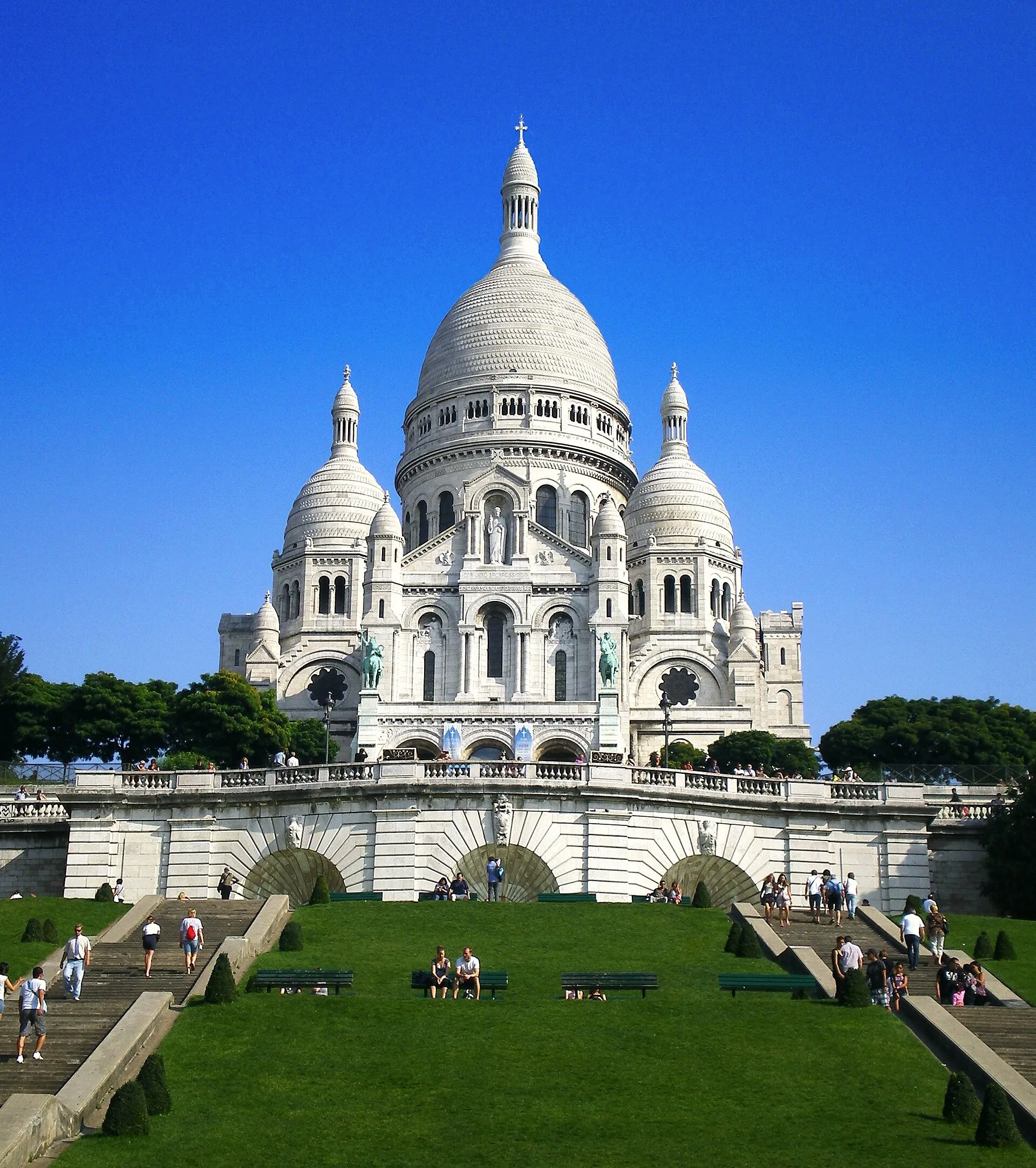
Dress code: Shoulders and knees must be covered inside the basilica. Silence: Perpetual adoration since 1885 - whisper inside. Photography: Allowed in the basilica but no flash. Respect the worshippers at prayer. Avoid scams: Don't let anyone tie a bracelet on your wrist at the steps. Pickpockets: Very common, secure belongings on crowded steps.
Spiritual Significance
Sacré-Cœur was conceived as an act of national repentance. Following France's humiliating defeat in the Franco-Prussian War of 1870–71 and the bloody trauma of the Paris Commune uprising, the French National Assembly voted to build a basilique votive — a church offered to God in penance — as a public declaration that the nation's suffering had been a consequence of its moral failures. The basilica was thus born not from civic pride but from collective contrition, a theological impulse embedded in every stone of its white travertine walls.
The hill itself carries deep martyrological significance. Montmartre derives from Mons Martyrum — the Mount of Martyrs — the place where Saint Denis, first Bishop of Paris, was beheaded by the Romans around 250 AD. According to tradition, he then carried his severed head to the site of the future Basilica of Saint-Denis, walking several miles northward. This early Christian martyrdom consecrated the hill long before the current basilica was imagined.
Inside, the enormous apse mosaic — the Christ in Glory — is among the largest mosaics in any church in the world, depicting the Sacred Heart of Jesus with arms outstretched over France and humanity. Since 1885, before the basilica was even completed, a continuous cycle of perpetual adoration has been maintained without interruption: day and night, every hour of every year, members of religious communities have prayed before the Blessed Sacrament in relays. This unbroken prayer — now spanning over 140 years — is regarded by the faithful as the basilica's most profound spiritual act. Nearby Notre-Dame Cathedral offers another dimension of Paris's layered Catholic heritage.
When to Visit
Basilica: Daily 6:00 AM - 10:30 PM. Dome: Daily 10:00 AM - 5:00 PM (May-September until 6:00 PM). Best time: Sunrise for uncrowded parvis and magical light. Sunset: Beautiful but crowded on the steps
Admission and Costs
Basilica entry: Free. Dome access: €7 (300 steps, no elevator). Funicular: €2.15 or metro ticket. Guided tour: €30-50 per person (includes Montmartre). Private guide: €200-350 for 3 hours
The Case for a Guide
Sacré-Cœur appears on every Paris itinerary as a scenic hilltop photo stop, but a guide reveals it as one of the most politically charged buildings in France — a monument born from national humiliation and religious penance whose construction was bitterly contested for decades.
- The Paris Commune trauma: The basilica was directly motivated by the 1870-71 Franco-Prussian War defeat and the violent Paris Commune uprising; a guide explains how conservative Catholic politicians proposed the basilica as national penance for France's "moral failures," and why left-wing Parisians protested its construction for generations.
- The mosaic Christ's outstretched arms: The enormous apse mosaic depicting Christ with open arms was designed as a literal act of consecration of France to the Sacred Heart; a guide explains the specific theological doctrine behind this gesture and why it was politically inflammatory at the time of installation.
- The Savoyarde bell: At 18.5 tonnes, the Savoyarde is one of the heaviest bells in the world; a guide explains how it was cast in Annecy in 1895, transported to Paris on a specially constructed cart, and required 28 horses to haul it up the Montmartre hill.
- 300-step dome climb strategy: The dome offers one of the highest panoramic views in Paris, but the 300 steps are uneven and the access is managed carefully; a guide advises exactly when to climb to avoid the post-mass crowds and which direction to face for the Seine alignment.
- Montmartre village history: The hill was a separate commune outside Paris until 1860 when Haussmann's annexation absorbed it; a guide traces which streets still follow the boundaries of the old vineyard plots, why the surviving Montmartre vineyard still produces wine annually, and how the artist colony that made the district famous arrived precisely because rents were cheap in the newly annexed periphery.
Tips for Visitors
Avoid scams: Don't let anyone tie a bracelet on your wrist. Take the funicular: Saves the 270-step climb up the hill. Metro Anvers: Closest stop, then walk up through gardens. Dress code: Shoulders and knees covered inside basilica. Silence: Perpetual adoration since 1885
- whisper inside. Pickpockets: Very common, secure belongings on crowded steps
Frequently Asked Questions
Which months offer the finest experience at Sacre-Coeur and Montmartre?
May through September provides the warmest evenings for sitting on the famous parvis steps and watching sunset over Paris, with summer offering dome access until 6 PM for the highest viewpoint in the city. The Montmartre grape harvest festival in October adds a unique neighborhood celebration with wine tastings and parades through the cobblestoned streets. December through February brings the fewest tourists to Place du Tertre and the surrounding artist quarter, though cold winds on the exposed hilltop require warm layers.
What time does Sacré-Cœur Basilica open to sightseers?
Basilica: Daily 6:00 AM - 10:30 PM. Dome: Daily 10:00 AM - 5:00 PM (May-September until 6:00 PM). Best time: Sunrise for uncrowded parvis and magical light. Sunset: Beautiful but crowded on the steps
Does Sacré-Cœur Basilica charge an admission fee?
Basilica entry: Free. Dome access: €7 (300 steps, no elevator). Funicular: €2.15 or metro ticket. Guided tour: €30-50 per person (includes Montmartre). Private guide: €200-350 for 3 hours
What does a guided visit to Sacré-Cœur Basilica include?
Guided tours cover Montmartre's artist legends, cabaret history, and hidden gems. Guides help navigate the bracelet sellers and explain the basilica's political and religious symbolism, plus discover vineyards and secret passages.