
Walking Route
Landmarks Along
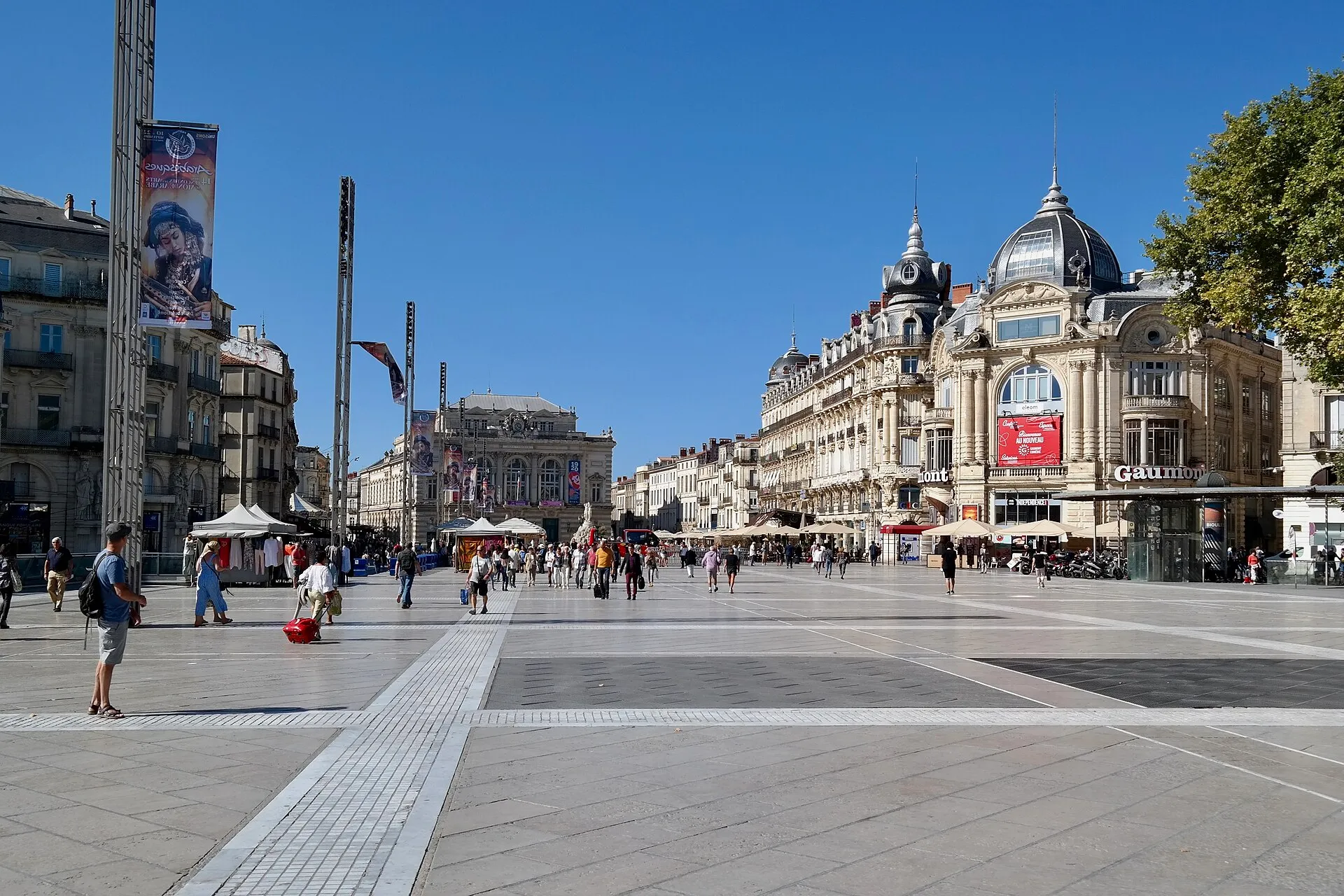
Place de la Comédie works like a compass rose, with a landmark or district at every point:
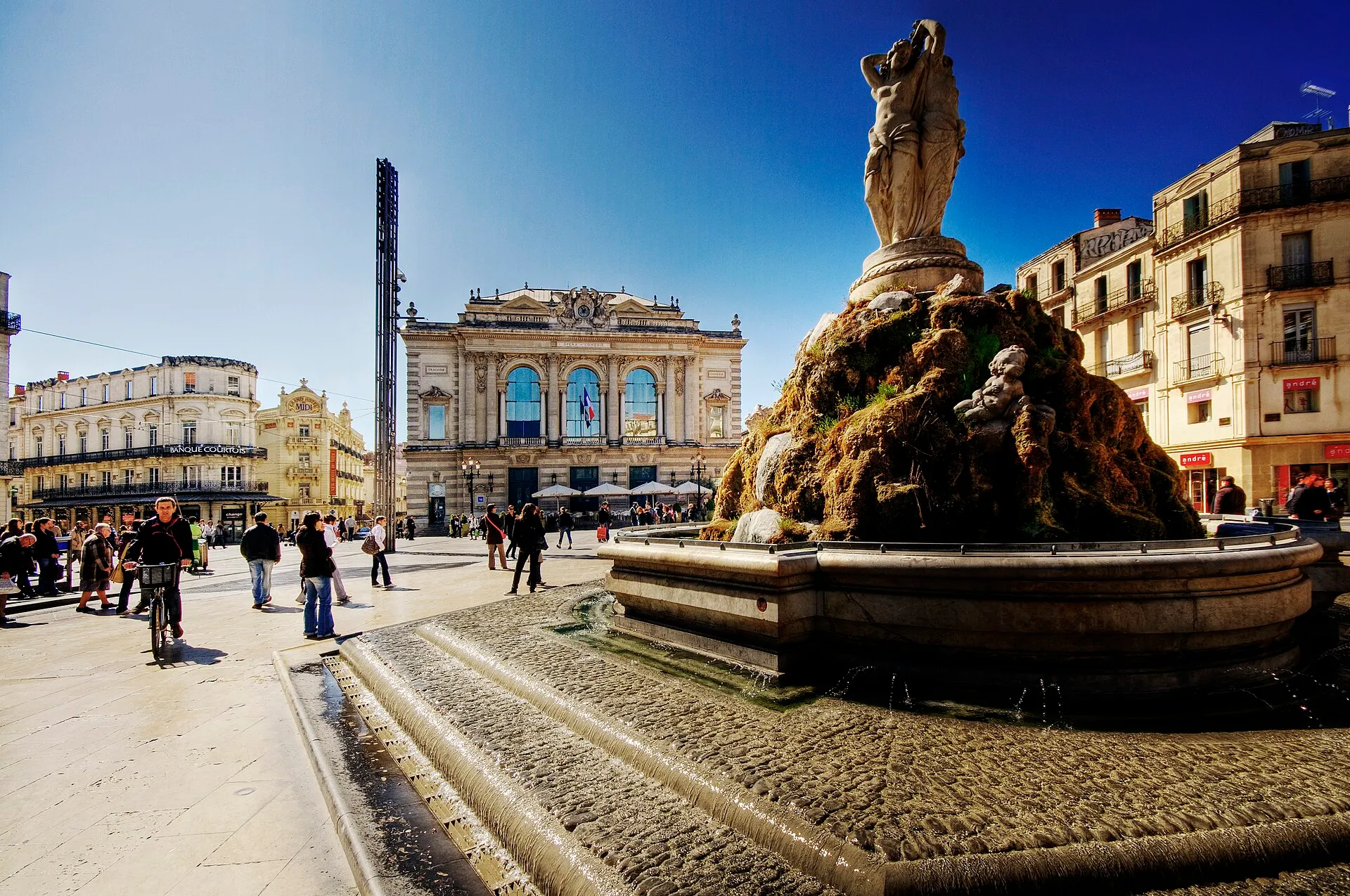
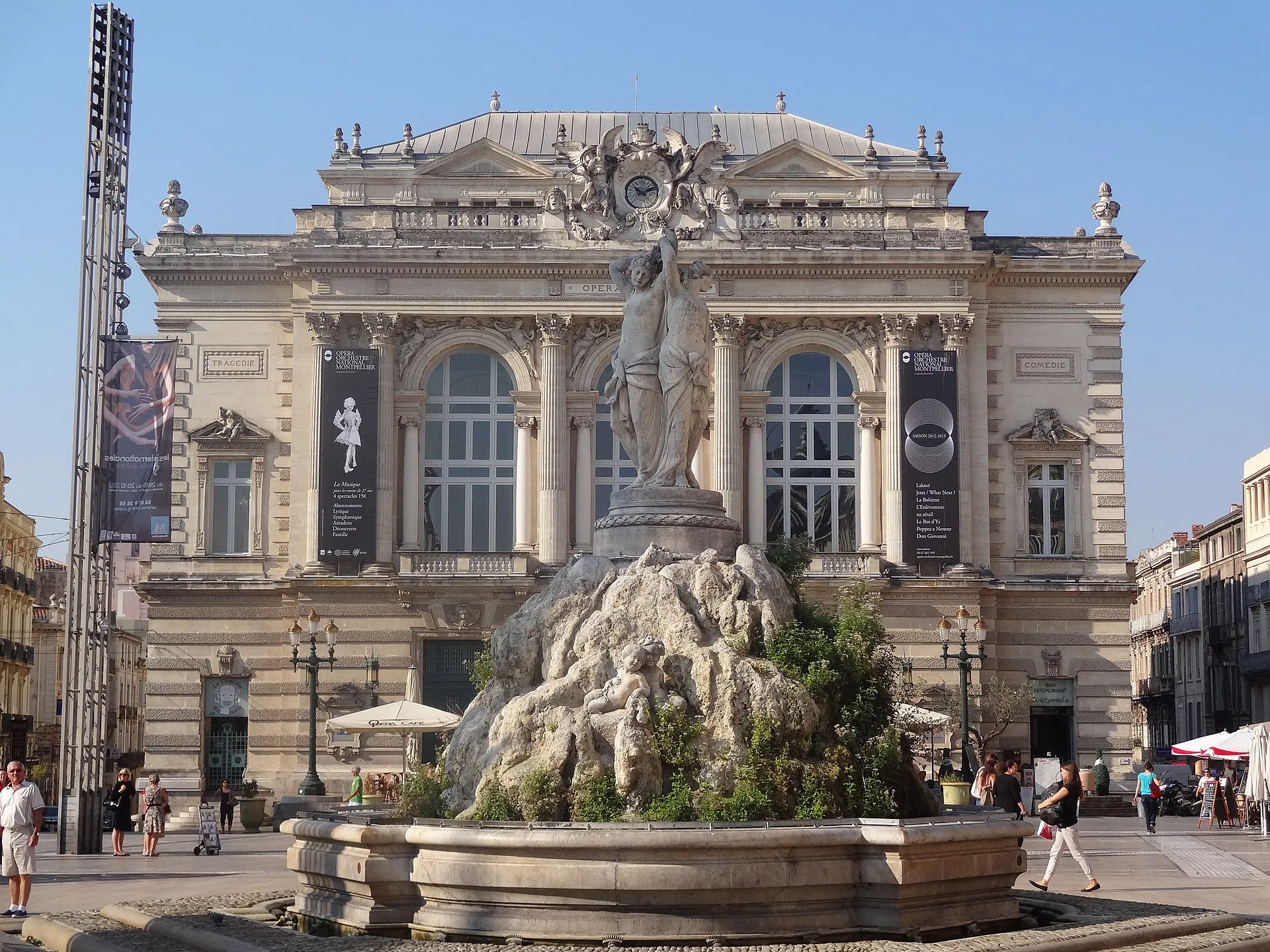
- Opéra Comédie (south) — The 1888 Italian-style opera house that gave the square its name, its curved façade and allegorical statuary closing off the southern end.
- Fontaine des Trois Grâces (centre) — Étienne d'Antoine's 1790 marble fountain, the city's emblem and its best-known meeting point.
- Esplanade Charles-de-Gaulle (north) — A long, tree-shaded promenade running toward the Musée Fabre and the Corum concert and congress hall.
- Rue de la Loge (west) — The main pedestrian shopping street, leading uphill into the boutiques and brasseries of the Écusson.
- Galeries Lafayette & Le Polygone (east) — The historic department store on the square and the covered Polygone centre behind it form Montpellier's main shopping zone, continuing into the monumental Antigone district.
- Gare Saint-Roch (south, 5 min) — The main railway station, putting Paris, Barcelona, and Marseille within easy reach of the square.
Photo Spots
- The Three Graces in morning light — Shoot the fountain between 8 and 10 AM, when soft side light models the marble and the square is uncluttered.
- The opera at blue hour — The Opéra Comédie's façade glows against a deep-blue dusk sky, with lit terraces reflecting in the paving — the shot behind the page's hero image.
- The whole Egg from above — Climb to a first-floor café window or the raised steps at the northern end to capture the oval sweep of the plaza in one frame.
- The Esplanade's plane-tree allée — The receding colonnade of trees north of the square makes a classic vanishing-point composition toward the Musée Fabre.
- Trams crossing the square — Montpellier's fashion-designed trams glide past the terraces; a slow pan catches their bright liveries against the stone.
- Rue de la Loge perspective — Frame the pedestrian street climbing west into the Écusson for a sense of the medieval city rising behind the Egg.
Place de la Comédie timeline
- 18th c.
A playhouse names the square
The Comédie takes its name from the salle de la comédie, the 18th-century theatre first built on its southern edge - the ancestor of today's opera house.
-
Fontaine des Trois Grâces unveiled
The Montpellier sculptor Étienne d'Antoine carves the marble group of the three Graces - Aglaé, Euphrosyne, and Thalie - that becomes the city's lasting emblem.
-
Fire destroys the old theatre
The second playhouse on the square burns down, clearing the way for the grander opera house that stands today.
-
The Opéra Comédie opens
Architect Joseph-Marie Cassien-Bernard, a pupil of the Paris Opéra's Charles Garnier, completes the Italian-style opera house along the square's southern curve.
- 1980s
Antigone extends the axis
Ricardo Bofill's monumental neoclassical Antigone district grows eastward from the square toward the river Lez, extending the city's grand promenade.
-
Trams return the square to walkers
Montpellier's first modern tram line opens and the Comédie becomes the hub where the network converges, cementing the plaza's car-free promenade.
Place de la Comédie in Pictures
When to Visit
Place de la Comédie never really closes — it is an open, free public space — but each hour wears a different mood, and timing your visit well transforms it.
- Early morning (8-10 AM) — The calmest window. Deliveries rattle across the paving, the low sun lights the opera's façade, and you can have a terrace almost to yourself over a café au lait.
- Evening promenade (6-9 PM) — The square's real theatre. The whole city seems to drift across the Egg for the ritual apéro, and every terrace fills. This is the hour to simply sit and watch.
- Saturdays — Street performers, buskers, and the overspill of the nearby markets bring the square to its liveliest and most crowded.
- Summer nights (June-September) — Open-air concerts, festival stages, and warm Mediterranean evenings keep the plaza humming well past midnight; this is why our month ratings peak from May through September.
- December — A Christmas market and a towering big wheel take over the square, and the opera's façade glows behind the stalls.
Admission and Costs
The square itself is free — walking, people-watching, and lingering on l'Œuf cost nothing, and it stays open day and night. You only spend money if you sit down, go inside, or hire a guide:
- Café terrace — A coffee on the square runs about €3-5 ($3.30-5.50); prices drop noticeably one street back toward the Écusson.
- Small-group walking tour — Roughly €10-18 ($11-20) per person, and the Comédie is where most Montpellier tours begin.
- Private guide — About €100-150 ($110-165) for a 1.5-2 hour private walk.
- Opéra Comédie tickets — Performances by the Opéra Orchestre national Montpellier range from about €15 to €80 ($16-88) depending on the programme and seat.
For current prices, tour meeting points, and the opera's season, the Montpellier tourist office — a few steps off the square — is the authoritative source.
The Case for a Guide
You can read the square in five minutes, but you can only understand it with someone who knows its layers — a good local guide turns a handsome plaza into eight centuries of city life.
- The fire-and-rebuild opera story — A guide unpacks how the square's theatres burned and rose twice before the 1888 Opéra Comédie, and why the house still defines the city's cultural life.
- Reading the Three Graces — The symbolism of Aglaé, Euphrosyne, and Thalie, and how a 1790 fountain became Montpellier's civic emblem, lands far better told on the spot.
- The promenade decoded — Guides explain the unwritten etiquette of the evening passeggiata and the café culture that makes l'Œuf tick.
- A springboard, not a stop — Most walks begin here, threading west into the Écusson's hidden courtyards or north to the Musée Fabre, so the square becomes the first chapter of a longer story.
Tips for Visitors
- Meet "at the fountain." The Fontaine des Trois Grâces is the universal Montpellier rendezvous — everyone knows it, and it is impossible to miss at the centre of the Egg.
- Sit one street back to save money. Café prices on the square carry a premium; walk a block into the Écusson for the same drink at a local rate.
- Mind your bag in the crowd. The evening promenade and market Saturdays draw pickpockets, as on any busy European square — keep valuables zipped and close.
- Use it as a hub. Every tram line stops beneath the square, and Gare Saint-Roch is a five-minute walk south, so plan your day to start and end here.
- It is easy underfoot. The flat, step-free paving makes the square and the Esplanade friendly for wheelchairs and strollers — a relief after the cobbles of the medieval quarter.
Frequently Asked Questions
When is the best time to walk through Place de la Comédie?
The square is open and free around the clock, but it changes character by the hour. Come at 8-10 AM for a quiet café au lait on an almost-empty terrace, when the low sun lights the opera façade. The real spectacle is the evening promenade from about 6-9 PM, when the whole city drifts across the Egg for the ritual apéro. Saturdays bring street performers and peak energy, summer nights add open-air concerts, and December fills the plaza with a Christmas market and a big wheel. Our month ratings peak from May to September, when warm Mediterranean evenings keep the terraces busy late.
Is Place de la Comédie free to visit?
Walking and lingering on the square costs nothing - it is one of Europe's largest pedestrian plazas and entirely free. You only pay if you sit down or go deeper: a coffee on a square-side terrace runs about €3-5 ($3.30-5.50), a small-group walking tour that starts here is roughly €10-18 ($11-20) per person, a private guide is around €100-150 ($110-165) for 1.5-2 hours, and seats for a performance at the Opéra Comédie range from about €15 to €80 ($16-88). Café prices drop noticeably one street back from the Egg.
What are the highlights of Place de la Comédie?
Two monuments define the square: the marble Fontaine des Trois Grâces of 1790 at its centre, long adopted as Montpellier's emblem, and the Italian-style Opéra Comédie of 1888 curving along the south side. Beyond them, the square is a hinge between the city's quarters - the tree-lined Esplanade Charles-de-Gaulle runs north toward the Musée Fabre, Rue de la Loge climbs west into the medieval Écusson, and the Polygone and Antigone districts open to the east. The living highlight, though, is the evening promenade itself.
How do you get to Place de la Comédie?
The square sits on top of Montpellier's transport hub: every tram line in the city converges on the Comédie stop beneath the plaza, so it is the easiest place in Montpellier to reach by public transport. The main railway station, Gare Saint-Roch, is a five-minute walk south, with TGV links to Paris, Barcelona, and Marseille. The whole square and the surrounding Écusson are pedestrianised, so once you arrive you explore entirely on foot.
Is Place de la Comédie accessible for wheelchairs and strollers?
Yes - unlike the cobbled lanes of the neighbouring Écusson, Place de la Comédie is paved flat with smooth, even stone and is step-free end to end, making it one of the easiest places in Montpellier to navigate with a wheelchair or stroller. The Esplanade Charles-de-Gaulle continues the level, tree-shaded surface north toward the Musée Fabre. The city's trams are low-floor and step-free, and the underground Comédie stop has lifts to street level.