
Walking Route
Walking Routes
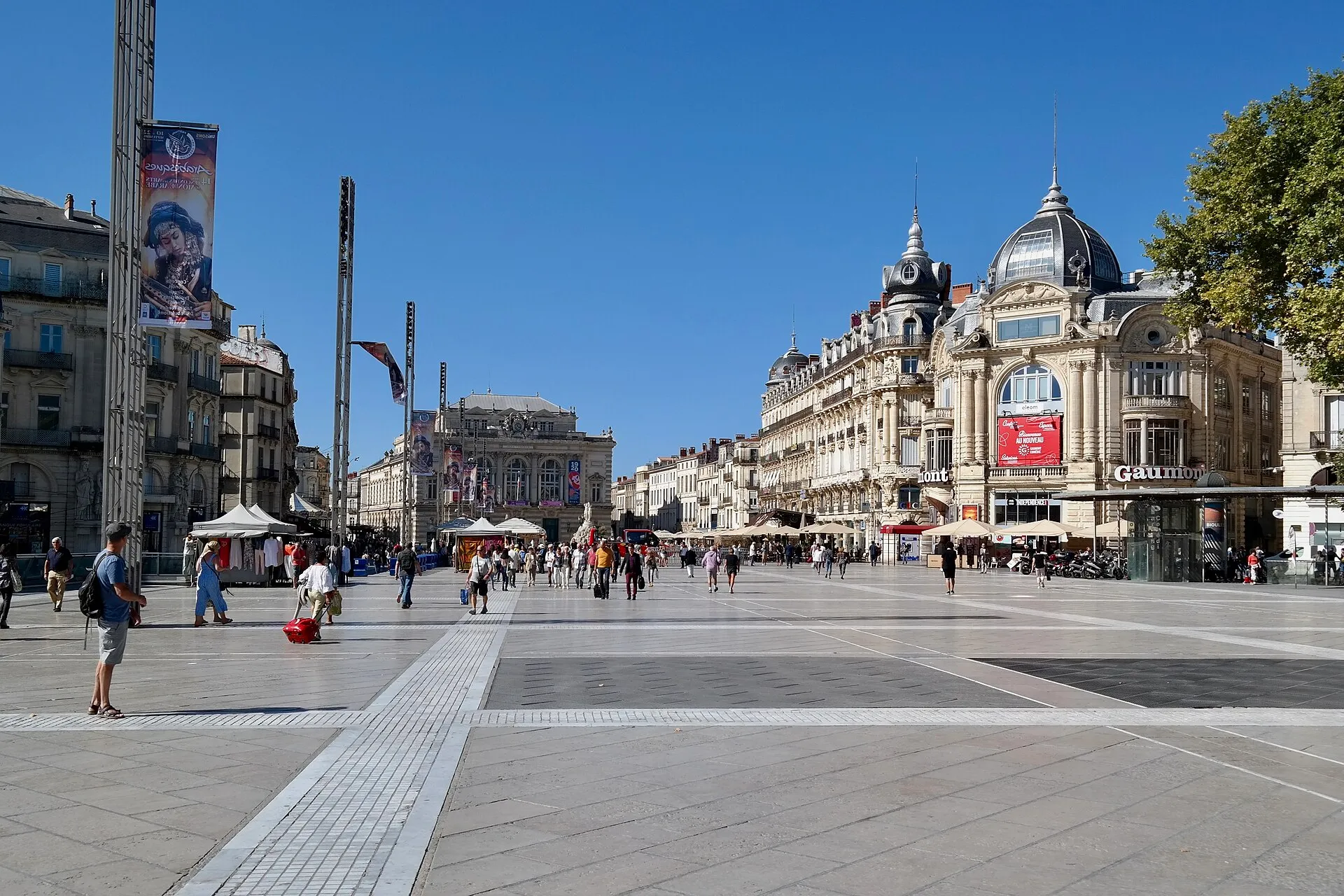
The Écusson has no straight line through it, and that is the point — but a little structure keeps you from doubling back. Start at Place de la Comédie and climb north-west on a gentle rising gradient: the quarter tilts uphill toward the Cathédrale Saint-Pierre and the Jardin des Plantes at its far edge, so an outbound loop that saves the descent for the return spares your knees on the cobbles. Thread the hôtels particuliers first thing in the morning, when the doors marked cour ouverte are propped open, then let the cathedral and garden fill the late morning.
Three unwritten rules help you read the maze:
- Follow the smell of coffee — the busiest lanes, such as Rue de l'Ancien Courrier and Rue du Bras-de-Fer, are the best bet for finding an open courtyard nearby.
- Look up — carved lintels, guild marks, and window grilles quietly date each building for you.
- Treat dead ends as invitations — several of the quarter's finest staircases sit at the back of culs-de-sac that look private but are not.
The mapped stops above trace one efficient version of this loop, from the fountain to the botanical garden.
Local Life
For all its age, the Écusson is a living student quarter rather than a museum. Montpellier is one of France's great university cities, and each evening the medieval lanes fill with an apéro crowd spilling out of tiny bars, while the medical-school heritage is a point of genuine local pride, not a tourist footnote.
A few addresses anchor daily life here:
- Halles Castellane — the covered market off Rue de la Loge, best before noon for oysters from the nearby Étang de Thau, Pélardon goat cheese, and Languedoc charcuterie.
- Place Saint-Roch and Place Jean-Jaurès — the two liveliest café squares, their terraces tracing the footprint of a long-gone priory.
- Rue de l'Ancien Courrier — the quarter's smartest shopping lane, threading independent boutiques through some of its oldest surviving houses.
- Jardin des Plantes — founded in 1593 and the oldest botanical garden in France, a free, shaded green lung on the northern rim of the Écusson.
L'Écusson timeline
- 10th c.
A trading post takes shape
Montpellier grows from a market village on the spice and pilgrim roads into the walled merchant town whose shield-shaped outline gives the Écusson its name.
-
Medicine begins to be taught
Montpellier's reputation for medical teaching gains formal protection, drawing scholars from across the Mediterranean to the streets of the future Écusson.
-
Medical faculty statutes issued
The statutes of 1220 formalise a faculty that calls itself the oldest medical school still in operation anywhere; Rabelais and Nostradamus would later study here.
-
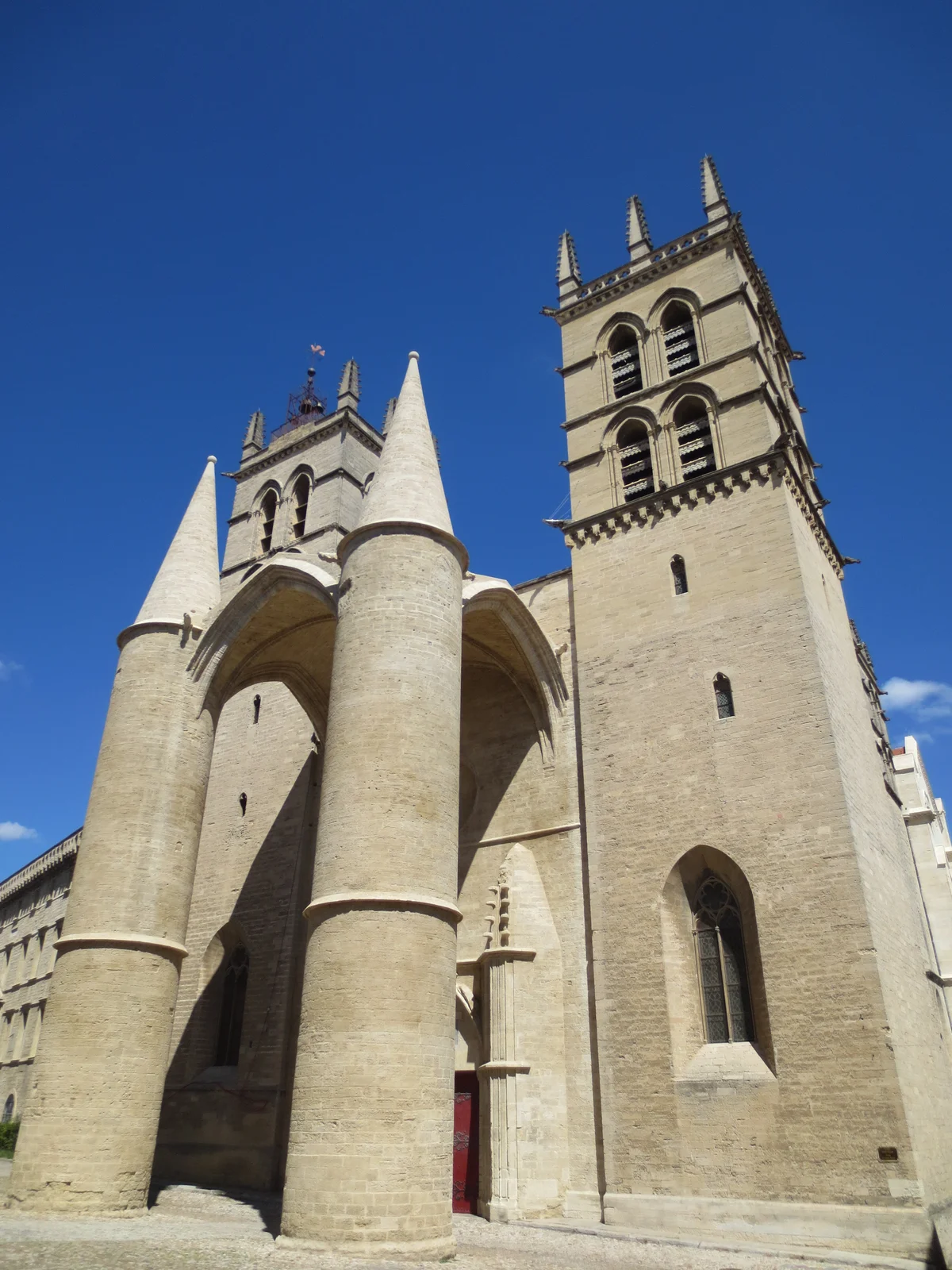
Cathédrale Saint-Pierre begun
The fortress-like Gothic cathedral rises at the quarter's upper edge beside the former monastery that still houses the Faculty of Medicine.
- 16th-18th c.
Age of the hôtels particuliers
Merchant and royal-officer wealth fills the Écusson with private mansions whose sculpted courtyards and open staircases hide behind plain street doors.
-
Jardin des Plantes founded
France's oldest botanical garden is laid out on the northern rim of the quarter, giving the medieval core a green edge that survives today.
L'Écusson in Pictures
When to Visit
The Écusson is open-air and free to enter at any hour, but its rhythms reward good timing. Aim for 9-11 AM, when shopkeepers roll up their shutters and the cour ouverte doors to the private courtyards are most reliably propped open. The narrow, high-walled lanes hold shade well into the afternoon, so golden hour turns the honey-coloured stone luminous without the glare of midday. Weekday mornings feel authentically local, while Sunday afternoons are the one time to avoid, when most independent shops close and the quarter goes quiet. In July and August, walk early — the enclosed streets trap the Mediterranean heat by midday.
Admission and Costs
Wandering the Écusson costs nothing. Street access is free, and many of the hôtels particuliers open their courtyards at no charge to anyone who spots a cour ouverte sign and pushes the door. The catch is access to the finest private courtyards, which usually open only for guided visits: expect roughly €12-20 ($13-22) per person for a small-group walking tour, or €120-180 ($130-195) for a private guide over two to three hours who holds standing arrangements with residents. The Cathédrale Saint-Pierre and the streets themselves ask nothing; only a handful of interiors and the occasional exhibition carry a ticket.
The Case for a Guide
A map gets you into the Écusson; a guide gets you inside it. The quarter's greatest rooms are private, and much of what makes it extraordinary is invisible from the lane.
- Locked doors open — established guides hold standing permission from residents to enter the sculpted courtyards and staircases of hôtels particuliers that are otherwise shut.
- The maze makes sense — the lanes defeat most first-time visitors; a guide threads an efficient loop instead of a string of dead ends.
- Stones start talking — carved lintels, guild marks, and layered façades become a readable timeline of medieval, Gothic, and Renaissance building.
- The medical-school stories land — the 800-year saga of Rabelais, Nostradamus, and Europe's oldest working faculty is far richer told on the spot.
Tips for Visitors
- Wear proper shoes. The Écusson is paved end to end in worn cobbles and uneven flagstones; smooth soles and heels struggle, and step-free routes are limited for wheelchair and stroller users, who will find the flatter Rue de la Loge and Grand-Rue Jean-Moulin easiest.
- Respect the residents. The open courtyards belong to private homes — enter quietly, keep voices low, and don't photograph windows or interiors.
- Watch the doors. A cour ouverte sign means you may step in; courtyards generally open 9 AM-6 PM, and some close over the lunch break.
- Carry water in summer. The tall, narrow lanes offer welcome shade but little breeze, and cafés cluster on the squares rather than mid-lane.
- Let yourself get lost. The best discoveries here come from wandering, and the quarter is small enough that you are never truly far from Place de la Comédie.
Frequently Asked Questions
When is the best season to discover the courtyards of L'Écusson?
May through September brings the longest hours for accessing the hidden courtyards of the hôtels particuliers, when doors marked cour ouverte stay open later into warm Mediterranean evenings. Montpellier's near-300 days of sunshine make even winter visits pleasant by French standards, but July and August drive intense heat into the enclosed medieval streets. The shoulder months of April and October balance comfortable temperatures with thinner crowds in the narrow pedestrian lanes.
What are the best times of day to explore L'Écusson?
Aim for 9 to 11 AM, when shopkeepers are rolling up their shutters and the cour ouverte doors to the private courtyards are most reliably propped open. The tall, high-walled lanes hold shade well into the afternoon, so golden hour turns the honey-coloured stone luminous without midday glare. Weekday mornings feel authentically local and uncrowded; the one window to avoid is Sunday afternoon, when most independent shops close and the quarter falls quiet.
How much does it cost to visit L'Écusson?
Walking the streets is completely free, and many hôtels particuliers open their courtyards at no charge to anyone who spots a cour ouverte sign and pushes the door. Access to the finest private courtyards usually comes with a guided visit: budget roughly €12-20 ($13-22) per person for a small-group walking tour, or €120-180 ($130-195) for a private guide over two to three hours who holds standing arrangements with residents. The cathedral and the lanes themselves ask nothing.
Where are the best photo spots in L'Écusson?
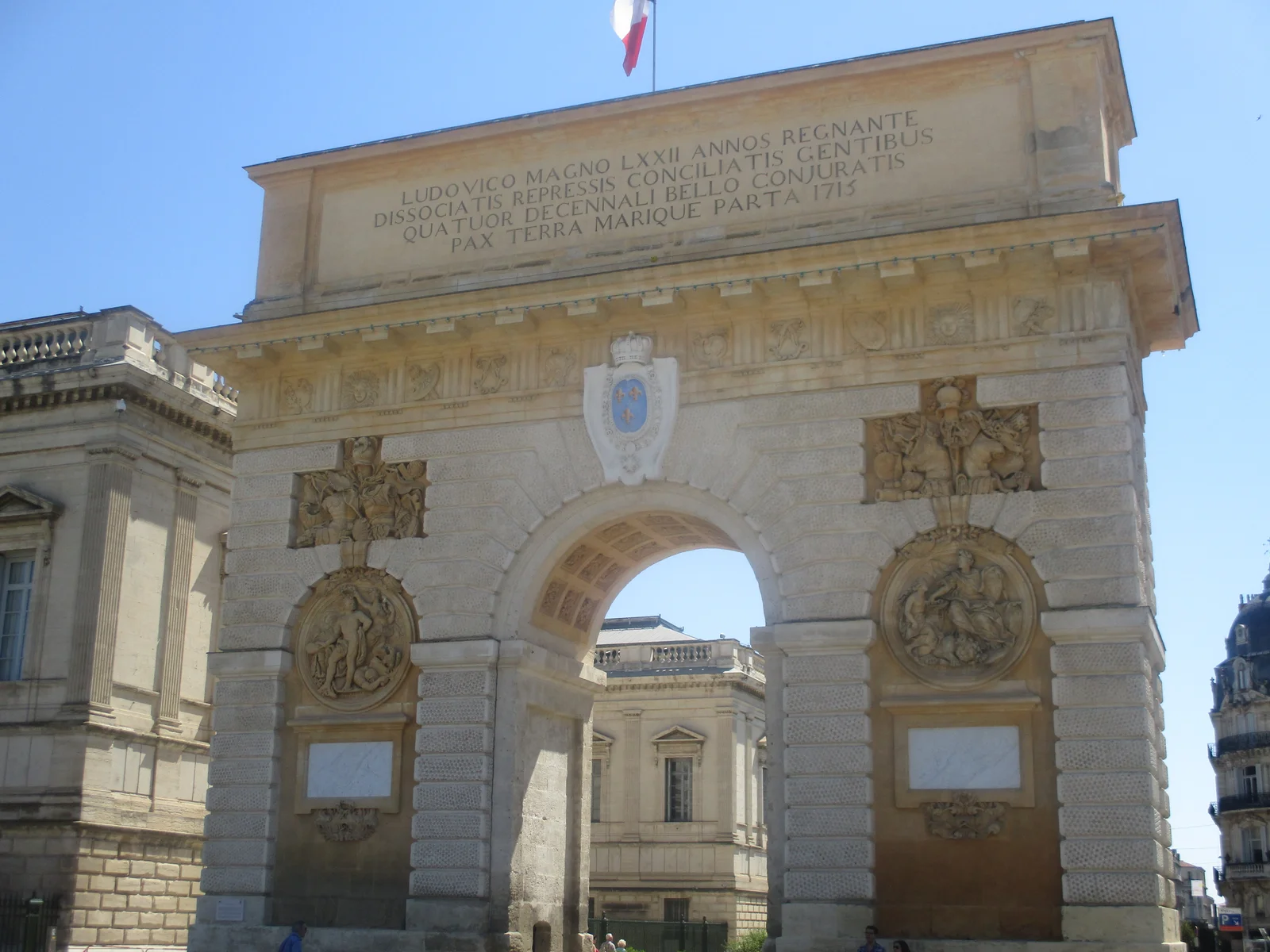
The most rewarding frames are the courtyards themselves: an open cour ouverte door gives you a dark-to-light shot from plain lane into sculpted Renaissance staircase. The fortress-porch west front of the Cathédrale Saint-Pierre photographs best in late-morning light, while the Porte du Peyrou triumphal arch marks a dramatic western threshold to the quarter. For street scenes, the narrow lanes off Rue de l'Ancien Courrier catch beautiful raking light at golden hour.
What visitor etiquette and practical tips apply when exploring L'Écusson?
Comfortable shoes are essential for the worn cobbles and uneven flagstones that pave the quarter end to end. Look for cour ouverte signs before entering any courtyard, and remember these are private homes: keep voices low, and avoid photographing windows and interiors. Courtyard hours run roughly 9 AM to 6 PM, with some closing over the lunch break, and step-free routes are limited for wheelchair and stroller users.