
Roman Theaters of Fourvière timeline
- 43 BC
Lugdunum founded
Lucius Munatius Plancus founded the colony of Lugdunum on and around Fourvière hill, and it soon became the capital of the Three Gauls and a hub of the imperial road network.
- c. 15 BC
Grand Théâtre built
Under Augustus, a theater was cut into the hillside — the earliest in Roman Gaul and today counted as France's oldest Roman theater.
- c. AD 120
Theater enlarged, Odéon added
Early in the 2nd century the cavea was widened to 108 metres for up to 10,000 spectators, and the smaller covered Odéon rose alongside for music and recitals.
-
Claudian Table unearthed
Vineyard workers on the Croix-Rousse slope dug up the bronze tablet recording Emperor Claudius's AD 48 speech admitting Gauls to the Roman Senate.
-
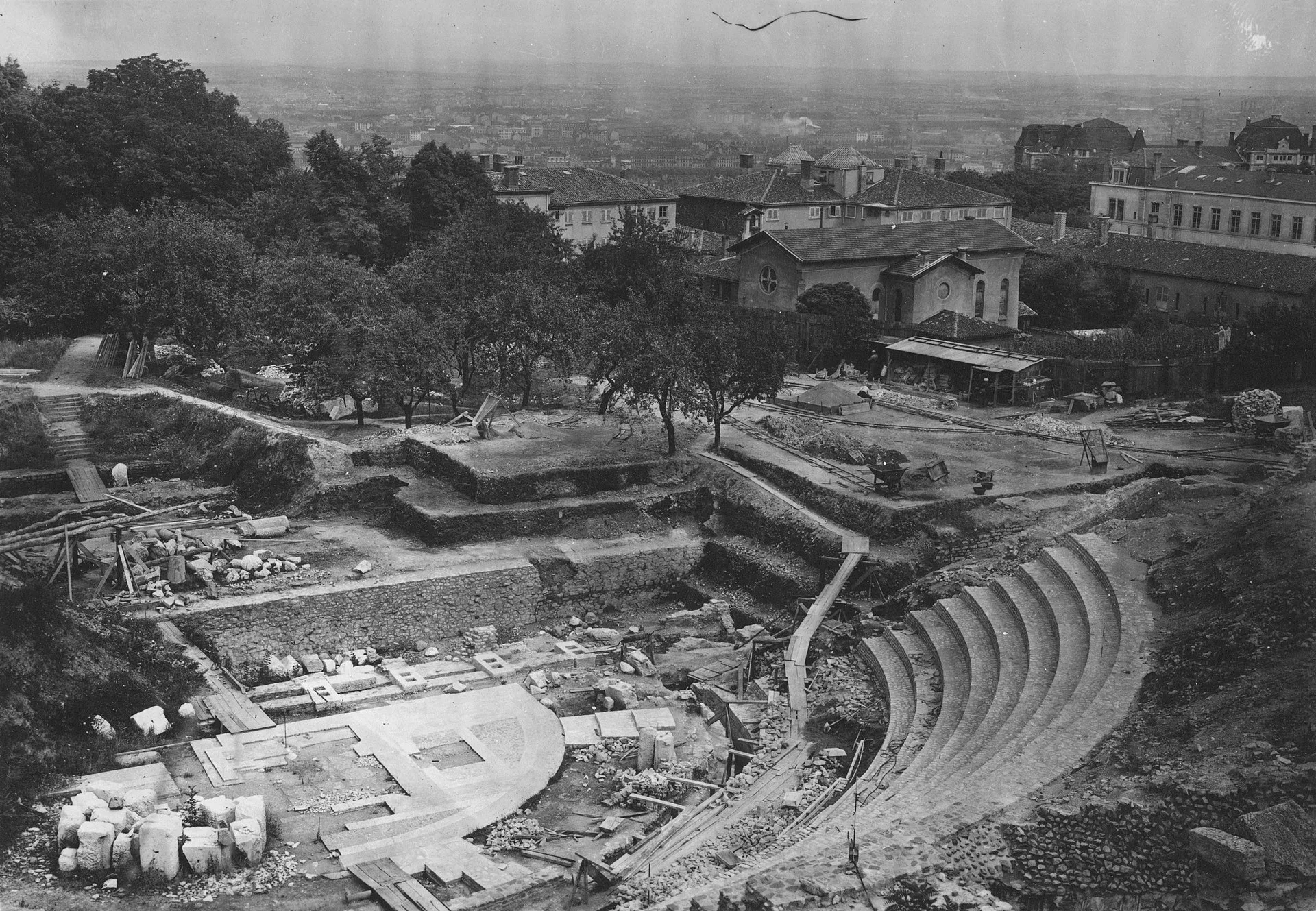
Theaters rediscovered
Building work on Fourvière exposed the buried tiers; systematic excavation soon followed under archaeologist Amable Audin.
-
Nuits de Fourvière begins
The Grand Théâtre was brought back into use for a summer festival of concerts, dance and theater that still fills the ancient stone each June and July.
-
Gallo-Roman museum opens
Bernard Zehrfuss's concrete museum, now called Lugdunum, opened embedded in the hillside so its windows frame the ruins outside.
-
UNESCO World Heritage listing
The theaters were inscribed within the Historic Site of Lyon, honouring two millennia of continuous settlement on the hill.
Key Artifacts
The neighbouring Lugdunum museum holds the finds that give the stones their story. Chief among them is the bronze Claudian Table (Table claudienne), inscribed with Emperor Claudius's AD 48 speech to the Roman Senate arguing that Gauls should be allowed to become senators — a document also echoed by the historian Tacitus, unearthed by vineyard workers in 1528. The plea was a personal one: Claudius was born in Lugdunum in 10 BC, the only Roman emperor native to Gaul, so the bronze preserves the words of a local son pleading for the province of his birth. The Circus Games mosaic shows a four-horse chariot race around a Roman circus, while further floor mosaics, sculpture, coins, ceramics and glass trace daily life across roughly 500 years of Roman occupation. Architect Bernard Zehrfuss cut the museum — for decades known as the Gallo-Roman Museum, renamed Lugdunum in 2017 — into the hillside so its openings frame the theaters themselves, letting you read the objects against the ground they came from.
Excavation History
For centuries the theaters lay buried under hillside gardens, their outline lost. Building work on Fourvière in 1933 exposed the tiers, and systematic excavation followed under archaeologist Amable Audin, who uncovered the Grand Théâtre's full 108-metre sweep — France's oldest Roman theater, first raised around 15 BC — and, shortly after, the adjacent Odéon with its geometric coloured-marble floor. The digs confirmed Lugdunum's standing as capital of Roman Gaul, and study of the site continues today. The results were gathered into the hillside museum that opened in 1975, and in 1998 UNESCO inscribed the theaters within the Historic Site of Lyon.
When to Visit
The archaeological site is open daily, 7 AM - 7 PM (until 9 PM in summer) and is free to walk through. The Lugdunum museum beside it runs Tuesday-Sunday, 10 AM - 6 PM. Come in the morning for quiet contemplation of the empty tiers, or in late afternoon when warm light rakes across the stone and the Odéon's marble floor. The season peaks in June and July with the Nuits de Fourvière festival, when the Grand Théâtre stages evening concerts and closes to day visitors on show days — check the calendar and book ahead. May through September offers the kindest weather for the exposed ruins; November through February is cold and quiet, best paired with the indoor museum.
Admission and Costs
Walking the archaeological site is free. The Lugdunum museum costs about €7 ($8) full price, with free admission for under-18s and on the first Sunday of each month. Guided tours of the theaters run €12-20 ($13-22) per person, and a private guide is typically €100-180 ($110-195) for a 1.5-2 hour visit. Nuits de Fourvière festival tickets range from about €20 to €60 ($22-65) depending on the performance and seating, and popular shows sell out months ahead. The F2 funicular up the hill is a single TCL ticket, roughly €2.10 ($2.30), or is covered by the Lyon City Card.
The Case for a Guide
Bare tiers of stone give up little on their own, which is exactly why the theaters reward a knowledgeable guide.
- The capital of the Gauls — a guide explains how Lugdunum governed Rome's three Gallic provinces, and why a theater of this scale rose here so early.
- Two very different venues — you learn what the open Grand Théâtre and the rare covered Odéon each staged, and how their designs differ down to the marble floor.
- Acoustics you can test — guides show how the raked cavea still carries a voice from the stage to the back row, a live demonstration of Roman engineering.
- Reading the museum next door — the same visit ties the ruins to the Claudian Table and the mosaics in the Lugdunum collection just uphill.
- Layering the hill's history — a local links the theaters to the medieval streets of Vieux Lyon below and the Basilica of Notre-Dame de Fourvière above.
Tips for Visitors
- Take the funicular up, walk down — ride the F2 line from Vieux Lyon to Minimes–Théâtres Romains, which opens beside the top tiers, then descend through the site on foot.
- Combine with the basilica — the Basilica of Notre-Dame de Fourvière crowns the same hill and pairs naturally with the theaters for a half-day.
- Book festival shows early — popular Nuits de Fourvière performances sell out months ahead, and the Grand Théâtre closes to day visitors on show days.
- Wear proper shoes — the ancient stone tiers and paths are uneven and can be slippery when wet.
- Picnic with a view — the upper terraces are a fine, permitted spot for lunch overlooking Lyon, best paired afterwards with the riverside Presqu'île.
Frequently Asked Questions
What season brings the Roman Theaters of Fourvière to life?
June and July are the peak months thanks to the Nuits de Fourvière festival, running here every summer since 1946, when the ancient Grand Théâtre hosts concerts, dance, and theater under the stars in a setting that has served audiences for over 2,000 years. May through August offers the best weather for exploring the open-air ruins and extended summer hours until 9 PM. Winter visits from November through February are quieter and colder, but the adjacent Lugdunum museum — built into the hillside beside the stage — provides an excellent indoor complement.
What time of day is best for touring the Roman Theaters of Fourvière?
Archaeological site: daily 7 AM - 7 PM (summer until 9 PM), free to enter. Lugdunum museum: Tuesday-Sunday 10 AM - 6 PM (about €7 / $8). Best time: morning for quiet contemplation of the empty tiers, late afternoon for warm light across the stone. During Nuits de Fourvière (June-July) the Grand Théâtre closes to day visitors on show days, so check the festival calendar and book ahead.
Why is it worth hiring a guide for the Roman Theaters?
A guide turns bare stone into a living city: how Lugdunum served as capital of the Three Gauls, what the Grand Théâtre and the rare covered Odéon each staged, and how the acoustics still carry a whisper from the stage to the top row. Guides also connect the ruins to the Claudian Table and mosaics displayed a few steps away in the Lugdunum museum, and to the medieval city that grew below.
What are the highlights at the Roman Theaters of Fourvière?
Grand Théâtre - 108-meter diameter, enlarged under Hadrian to hold up to 10,000 spectators, France's oldest Roman theater. Odéon - a rare covered concert hall with a floor of coloured-marble geometric paving. Lugdunum museum - Bernard Zehrfuss's concrete spiral cut into the hillside, home to the bronze Claudian Table and the Circus Games mosaic.
Which Roman emperor was born at Lugdunum?
Emperor Claudius was born in Lugdunum in 10 BC, the only Roman emperor native to Gaul. His connection to the city makes the museum's prize exhibit especially resonant: the bronze Claudian Table records his own AD 48 speech to the Senate arguing that leading Gauls should be admitted as senators. Unearthed on the Croix-Rousse slope in 1528 and echoed by the historian Tacitus, it is displayed in the Lugdunum museum a few steps from the theaters, a rare case of a monument preserving an emperor's exact words about the province of his birth.
How do you get to the Roman Theaters, and is the site accessible?
Take the F2 funicular from the Vieux Lyon–Cathédrale Saint-Jean metro station up to Minimes–Théâtres Romains, which opens right beside the upper tiers, on a standard TCL ticket (about €2.10 / $2.30). From there you walk down through the theaters. The archaeological site is steep and paved in uneven ancient stone, so it is difficult for wheelchairs and strollers, though the Lugdunum museum itself is fully accessible with lifts and ramps.