

What To Buy
Take home the specialties that made this market famous. La Mère Richard is the temple of French cheese, where the celebrated Saint-Marcellin is aged to a molten core alongside Beaufort, Comté, and other AOP treasures — Paul Bocuse himself bought his Saint-Marcellin here for decades, and the stall still trades on that pedigree. For charcuterie, Maison Collet and Colette Sibilia sell Lyon's signature rosette and saucisson brioché, the pork sausage baked in golden dough that locals prize.
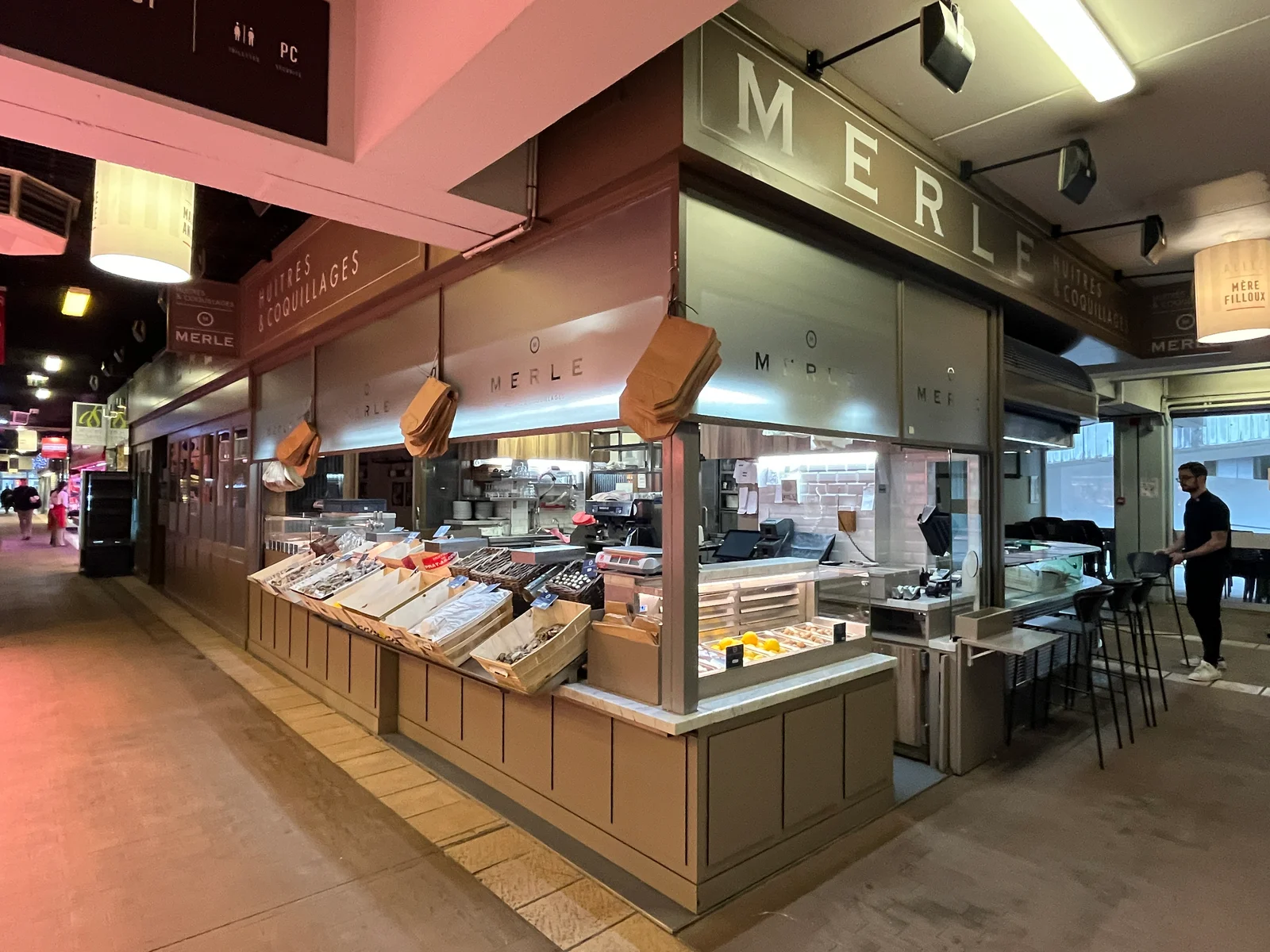
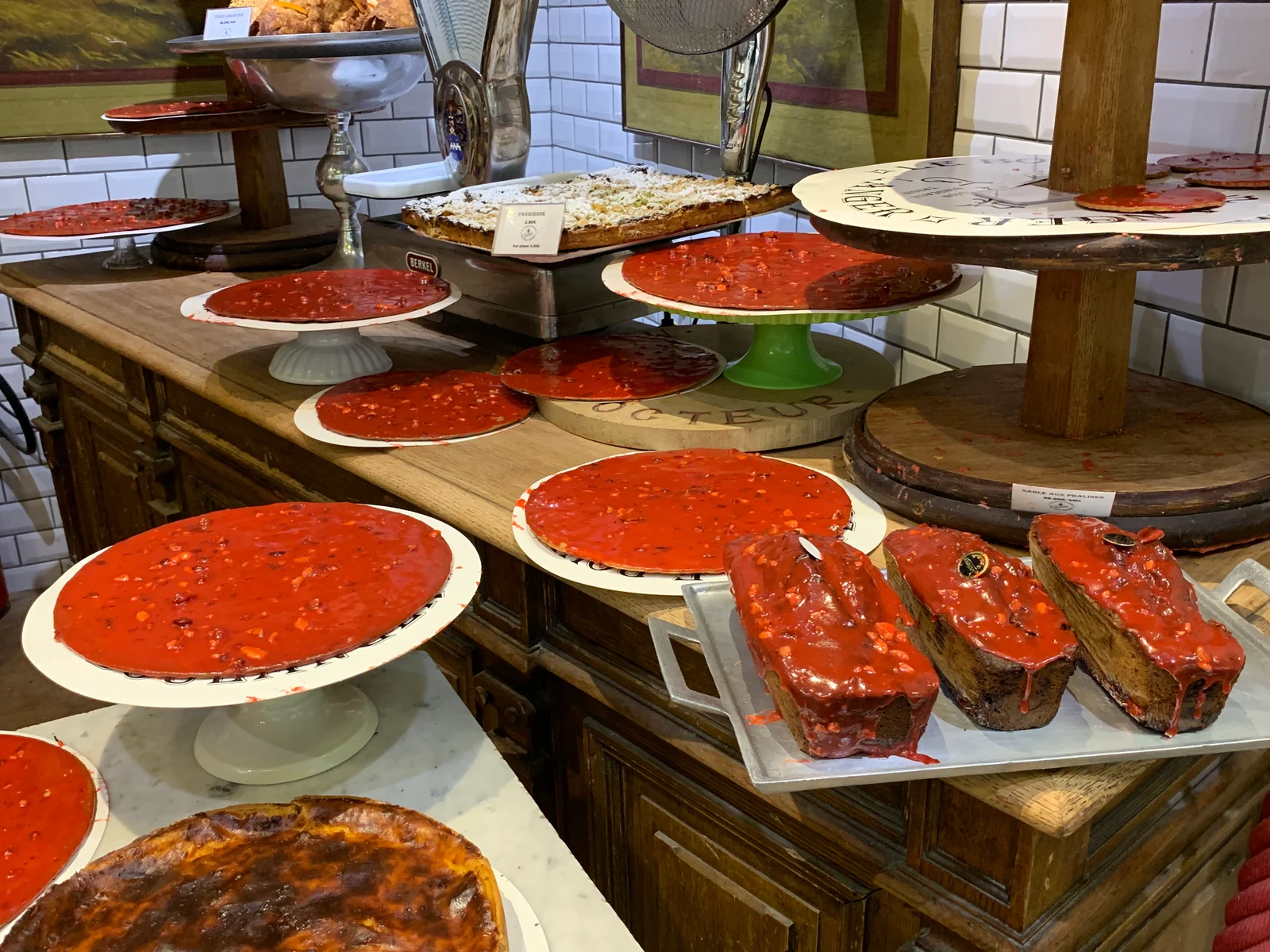
Pick up award-winning tarte aux pralines — the shocking-pink praline tart — and crusty baguettes from Boulangerie Jocteur, and reserve a box of jewel-like chocolates or macarons from pastry chef Sébastien Bouillet. Oyster lovers head to Cellerier, while Cave Reynon stocks the region's finest Beaujolais and Côtes du Rhône to pair with your haul.
A few things to skip or watch for: buy cheese and charcuterie cut to order rather than the pre-wrapped vacuum packs aimed at souvenir shoppers; the glossy branded gift boxes carry a steep markup over the same products bought loose; and leave the showiest out-of-season produce in the window display — the vendors will gladly steer you to whatever is actually at its peak that week.
Bring cash for the smaller stalls, come hungry because tasting is encouraged, and carry a wrapped picnic across to Parc de la Tête d'Or. Avoid the largest shopping bags, as some vendors prefer you browse hands-free before committing to a purchase.
Food Stalls
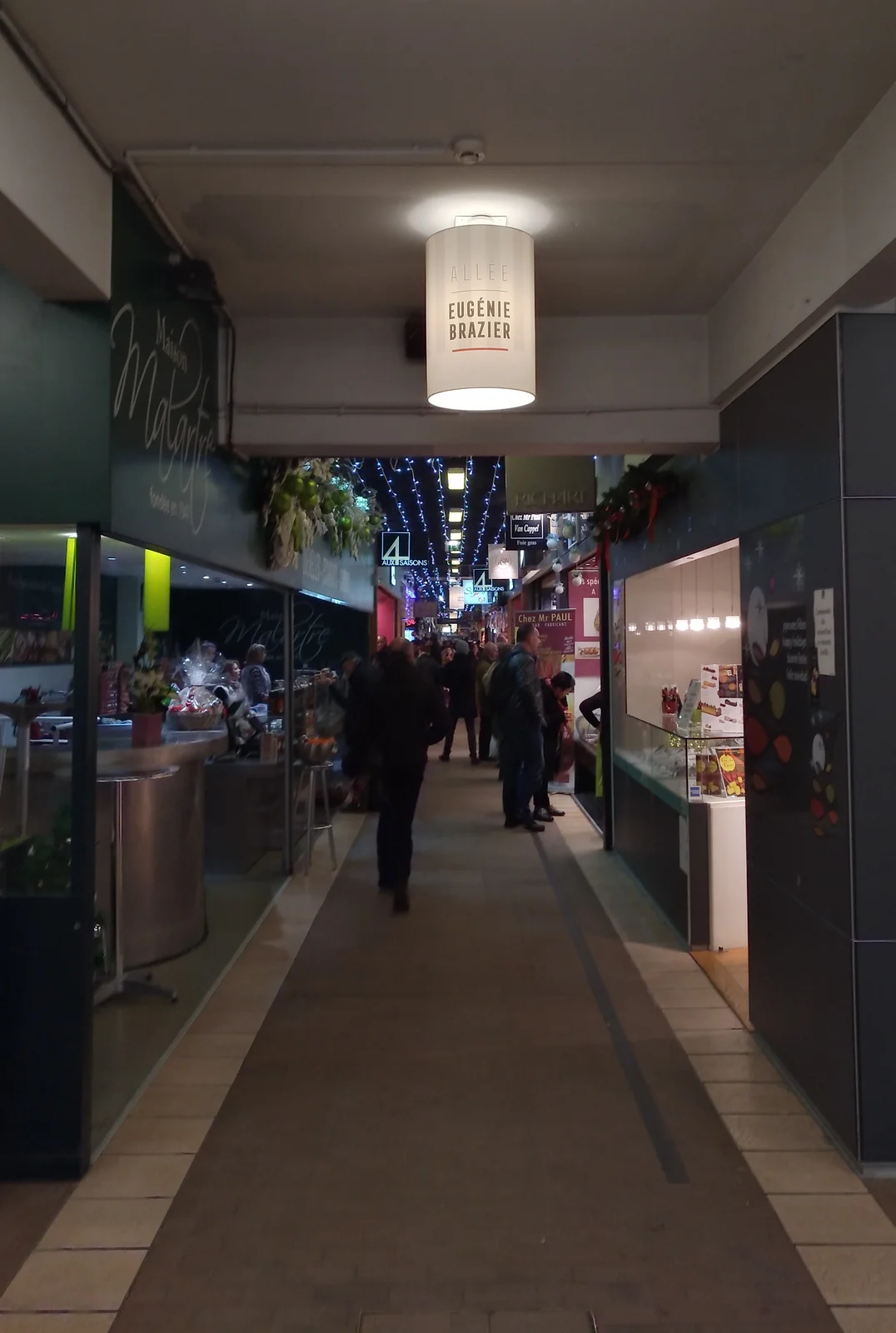
Beyond takeaway counters, Les Halles is a place to eat on the spot. Cellerier and other seafood stands shuck fresh oysters to order, served with a glass of Muscadet at the counter for a quick standing feast. Maison Malartre and the traditional bouchon-style comptoirs plate up Lyonnais classics such as quenelles de brochet, andouillette, the herb-and-garlic fromage blanc known as cervelle de canut, and creamy Saint-Marcellin warmed until oozing.
Grab a slice of pâté en croûte or a saucisson brioché baked that morning, or settle into one of the small sit-down restaurants tucked between the stalls for a €20-40 (about $22-44) market lunch. Sweet stalls tempt with praline-pink brioche and Sébastien Bouillet's pastries, best enjoyed with an espresso at a nearby counter.
The atmosphere peaks on Saturday from 10 AM to 1 PM, when chefs, families, and visitors crowd the aisles and the vendors are at their liveliest. Arrive hungry, eat standing like the locals, and let one tasting lead you to the next along the market's bustling rows.
Les Halles de Lyon Paul Bocuse timeline
-
First covered market on Cours Lafayette
Lyon's original Les Halles opened as an iron-and-glass hall on the Cours Lafayette, on the left bank of the Rhône.
-
Modern market building opens
The present concrete-and-glass hall replaced the 19th-century structure, anchoring the food trade beside the new Part-Dieu district.
-
Renovated and renamed for Paul Bocuse
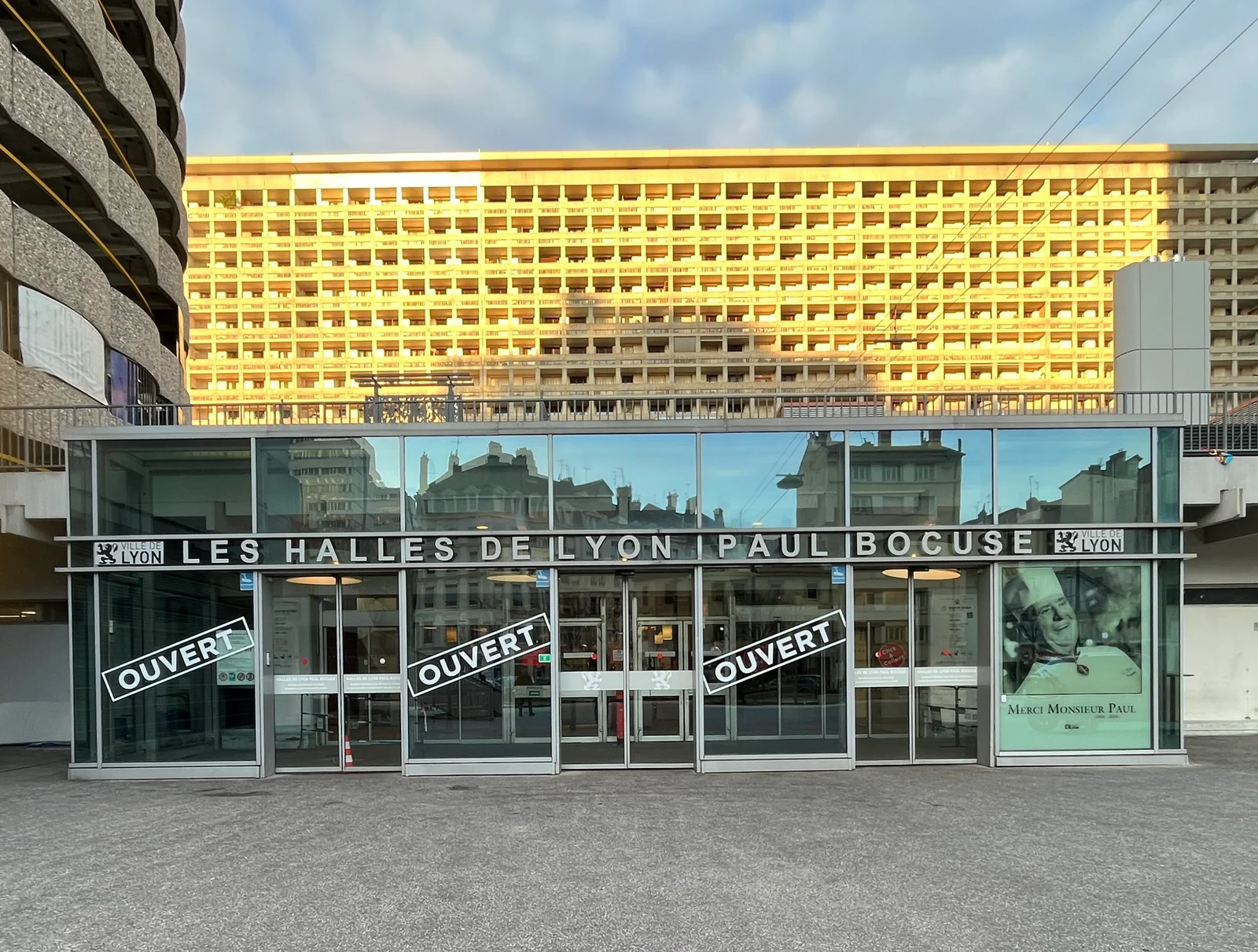
A full refurbishment modernised the hall, which took the name of Lyon's most celebrated chef, a lifelong patron of its stalls.
-
Bocuse's legacy sealed
The death of three-Michelin-star chef Paul Bocuse turned his namesake market into a living monument to Lyonnais gastronomy.
Les Halles de Lyon Paul Bocuse in Pictures
When to Visit
The hall keeps long hours — Tuesday to Saturday, 7 AM to 10:30 PM, Sunday 7 AM to 4:30 PM, and closed all day Monday — but it lives by a daily rhythm worth timing. Mornings belong to the trade: chefs and bouchon owners arrive before 9 AM to claim the best of the catch and the ripest cheeses, and the aisles are calm enough to actually talk to the vendors.
Saturday from 10 AM to 1 PM is the weekly climax, when Lyonnais families, chefs and visitors pack the rows and every counter is fully staffed. Sunday late morning has a ritual all its own: locals gather at the oyster and charcuterie counters for a stand-up mâchon — a plate of cold cuts or a dozen oysters washed down with a glass of white Mâcon or chilled Beaujolais — before the hall empties by mid-afternoon.
Come at lunchtime, noon to 2 PM, if you want a hot meal on the spot, because many stalls stop serving well before the posted closing time and the sit-down comptoirs fill fast. The one stretch to avoid is mid-August, when several family-run stalls shut for the French summer holiday and the selection thins; confirm current hours on the official market site before a special trip.
Admission and Costs
Entry is free — browse all fifty-odd stalls as long as you like. To taste as you go, budget €30-50 (about $33-55) for a spread of cheese, charcuterie, oysters and a glass of wine. A shared guided food tour runs €75-120 (about $82-130) per person and usually includes five to seven tastings with vendor introductions, while a private guide costs roughly €200-350 (about $220-385) for a group of up to 6 people.
A sit-down market lunch at one of the in-hall comptoirs is €20-40 (about $22-44) a head. Bring cash for the smaller producers, though most counters now take cards, and factor in €2 (about $2.20) for a single TCL metro ticket rather than the pricey Part-Dieu car parks.
The Case for a Guide
Les Halles rewards someone who can read it for you. A licensed Lyon food guide knows which stalls are the genuine artisans behind the famous names and which simply trade on reputation, and can decode the city's specialities on the spot — the terroir behind a wedge of Comté, why a saucisson brioché is sliced the way it is, which Beaujolais cru belongs with a slice of rosette.
- Vendor access — guides have standing relationships that unlock off-menu tastings and explanations you would never get as a stranger.
- Product fluency — cheese terroirs, charcuterie traditions and wine pairings explained clearly rather than guessed at.
- Context — the story of the mères lyonnaises, of Paul Bocuse sourcing his Saint-Marcellin here, and of how the hall became the city's culinary engine.
- Efficient grazing — a route through fifty-plus stalls that builds a balanced tasting instead of filling you up at the first counter.
A food tour here pairs naturally with a wider walk through Vieux Lyon or the grand squares of the Presqu'île.
Tips for Visitors
- Go early or go Saturday — weekday mornings are calm and conversational; Saturday 10 AM to 1 PM is the full, buzzing experience.
- Eat standing, like the locals — shuck oysters at the counter with a glass of Muscadet, or grab a slice of pâté en croûte and move on to the next stall.
- Bring cash for the smallest producers, and come hungry, because tasting is encouraged and expected.
- Travel light — some vendors prefer you browse hands-free, so leave the bulky shopping bags until you are ready to buy.
- Mind the language — many vendors speak limited English, so a few words of French (or a licensed local guide) smooth the way and unlock the best recommendations.
- Getting there — the hall sits a short walk from Lyon Part-Dieu station; take Metro line B to Place Guichard or Part-Dieu, or tram T1, then stroll to 102 Cours Lafayette. From the Presqu'île it is a 10-minute hop across the Rhône.
- Pair it with a picnic — carry your haul north to the lawns of Parc de la Tête d'Or for an open-air feast.
Frequently Asked Questions
Does the season affect what you can taste at Les Halles Paul Bocuse?
The indoor market delivers outstanding food year-round, but autumn from September through November brings the most exciting seasonal produce including wild mushrooms, game, and freshly pressed walnut oil from local farms. The August vacation period sees some vendors close for their annual holiday, slightly reducing the selection. Saturday mornings in any season are the peak experience when local chefs shop alongside visitors and the market hums with its fullest energy.
When is Les Halles de Lyon Paul Bocuse open to visitors?
Tuesday-Saturday: 7 AM - 10:30 PM. Sunday: 7 AM - 4:30 PM. Monday: Closed. Best time: Saturday morning for full atmosphere and vendors. Sunday late morning is the local ritual for oysters and a glass of white wine.
What are the prices at Les Halles de Lyon Paul Bocuse?
Entry: Free (browse all you want). Tastings: Budget €30-50 (about $33-55) to sample cheese, charcuterie, oysters, wine. Guided food tours: €75-120 (about $82-130) per person (includes 5-7 tastings). Private guide: €200-350 (about $220-385) for up to 6 people. Sit-down market lunch: €20-40 (about $22-44).
What extra do guides offer at Les Halles de Lyon Paul Bocuse?
Vendor relationships: Guides get special tastings and explanations. Product knowledge: Learn cheese terroirs, charcuterie traditions, wine pairings. Avoid tourist traps: Know which vendors are authentic artisans and which trade on reputation. Context: The story of the mères lyonnaises and of Paul Bocuse shopping these aisles.