
Formation
The Rovinj islets are the drowned tops of a gently folded limestone landscape, the same karst that underlies the whole Istrian coast. As sea levels rose after the last glaciation, the low ridges and hillocks of what had been a coastal plain were partly submerged, leaving their higher points standing as islands — which is why the archipelago is a scatter of low, rounded islets rather than dramatic sea stacks. The rock is porous and pale, dissolving into the shallow shelves and coves that make the swimming so good, and the thin soil on top supports the drought-tolerant holm oak, pine, and maquis scrub typical of the northern Adriatic. Rovinj's own old-town peninsula was, until the 1763 infill, simply the largest island in this same group.
Wildlife
The reserve status pays off underwater and overhead. Beneath the surface, protected Posidonia seagrass meadows shelter bream, wrasse, sea bass, and the occasional octopus, and the clear water makes for rewarding snorkelling over the rocky shelves. Above, the islets and coastal pines host gulls, shags, and migrating songbirds, while the planted groves of Red Island and the Golden Cape draw more woodland species than the bare karst would alone. Dolphins — chiefly bottlenose — range through these waters and are sometimes spotted on the longer boat trips, though sightings are a matter of luck rather than schedule. Visitors are asked to take nothing from the sea or shore and to keep to the paths on the wooded islands, so the reserve stays as intact for the next boat as it was for yours.
When to Visit
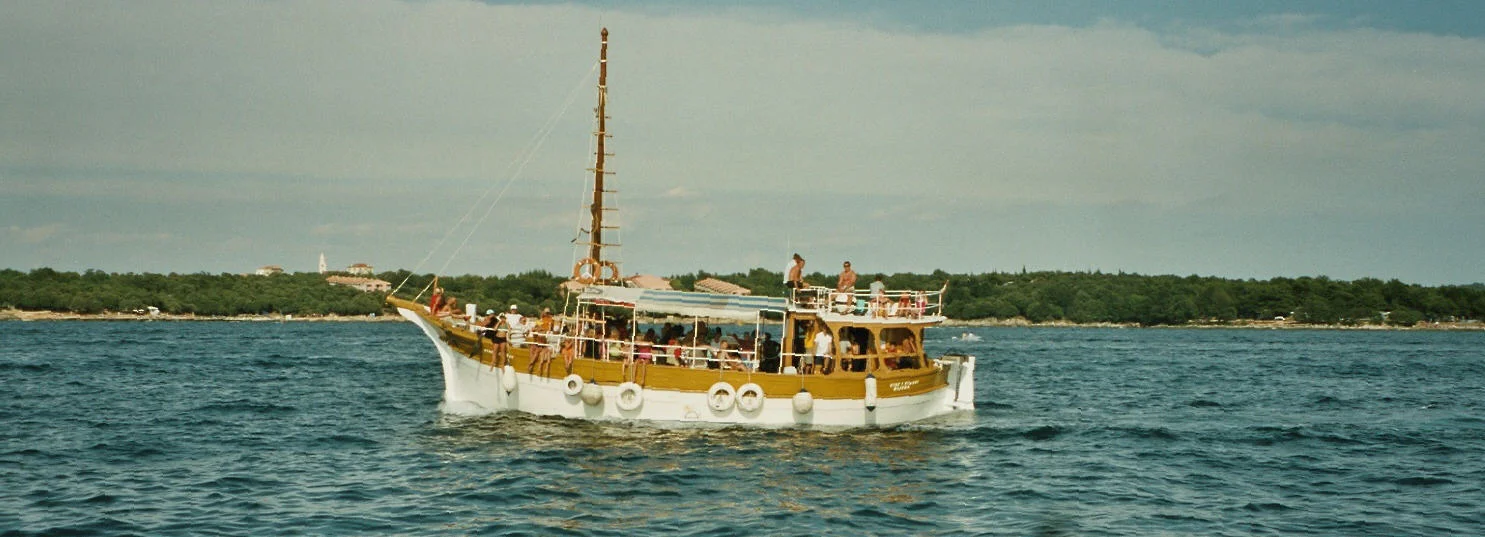
This is a warm-season attraction. Scheduled boats to Red Island and Katarina run frequently from roughly May into October, thin out sharply at the shoulders, and effectively stop in winter, when the islets are for hardy walkers only. The sea is comfortable for swimming from about June through September, warmest in July and August. On summer days, go early or late: the mid-morning-to-mid-afternoon boats are the busiest, and the light on the water is loveliest in the first and last hours. Sunset seen from Red Island or Katarina, looking back at the floodlit old town, is one of Rovinj's signature experiences — check the timing of the last return boat before you commit to it. Allow a half to full day if you want to swim, walk the wooded paths, and not rush the crossings.
Admission and Costs
Scheduled boat trips are inexpensive: a return crossing to Red Island or Katarina costs roughly €6–15 per person depending on the operator and season, with boats leaving the Rovinj harbour front through the day in summer. Hiring a small private boat or water taxi to reach the quieter islets or to island-hop runs €80–150 for a few hours, and guided kayak tours around the archipelago typically cost €40–70 per person including equipment. Landing on and walking the islands is free; you only pay for the boat and anything you buy at the island cafés or beach bars, which are seasonal and priced for a captive audience. As always, treat these as estimates and confirm current fares at the harbour kiosks, which post schedules daily in season.
The Case for a Guide
A guide is not strictly necessary to catch a scheduled boat and swim, but the right one deepens the day considerably. Local skippers and nature guides know which cove will be sheltered on a given wind, where the seagrass and fish life are richest for snorkelling, and how to time a crossing so you land on Red Island for the sunset light rather than the midday crush. Guides steeped in local history can unpack the layered story of St Andrew's monastery and the Hütterott estate, and connect the planted islands to the Golden Cape park and the old town's Austro-Hungarian heyday. For kayakers, a guided paddle unlocks the quieter islets safely, keeping clear of the boat channels while finding the inlets the scheduled ferries never reach.
Tips for Visitors
Bring water shoes — the coves are rock and shingle, not sand, and the entries can be sharp. Pack water, sunscreen, and a hat: shade on the islets is patchy away from the planted groves, and there is no fresh water beyond the seasonal cafés. Check the last return boat time the moment you arrive, especially if you are chasing a sunset from Red Island, because missing it means an expensive water-taxi home. For solitude, skip the two serviced islands at midday and either go early or hire a kayak to reach a smaller inlet. Combine the trip with the Golden Cape Forest Park on the mainland, an easy walk or cycle south from the harbour, for more swimming rocks without needing a boat at all. Strong swimmers should still respect boat channels near the jetties.
Frequently Asked Questions
How many islands are in the Rovinj archipelago?
The cluster offshore from Rovinj contains around twenty small islands and islets, most of them low, wooded, and uninhabited, scattered within easy rowing or boat distance of the old-town harbour. A number of them, together with a strip of the mainland coast, are protected as a special forest-vegetation and marine reserve, which is why the islets keep their dense Mediterranean maquis and pine cover rather than being built over. The most visited are Red Island (Crveni otok) and Katarina Island, both served by regular boats in season; the rest are the preserve of kayakers, small-boat owners, and swimmers seeking an empty cove.
What exactly is Red Island (Crveni otok)?
Red Island is really two islets — Sveti Andrija (St Andrew's) and Maškin — joined by a short stone causeway. St Andrew's carries a former Benedictine, later Franciscan, monastery that was rebuilt in the late 19th century into a residence and estate by the Austro-Hungarian industrialist Georg Hütterott, who planted the island with exotic trees; today it houses a hotel, but the wooded paths, chapel remains, and swimming rocks are open to day visitors. Maškin is wilder and quieter. Boats to Red Island leave the Rovinj harbour roughly hourly in summer, and the crossing takes about fifteen minutes.
Can I swim and snorkel around the islands?
Yes — clear, protected water is the whole appeal. The islets are ringed with rocky coves and shallow shelves rather than sandy beaches, so bring water shoes for the entries, but the visibility is excellent and the marine reserve status keeps the seagrass meadows and fish life healthy. Katarina and Red Island both have easy swimming spots near their boat jetties, while the smaller islets reward anyone willing to kayak or hire a small boat to reach an empty inlet. The sea is warm enough for comfortable swimming roughly from June through September, peaking in July and August.