
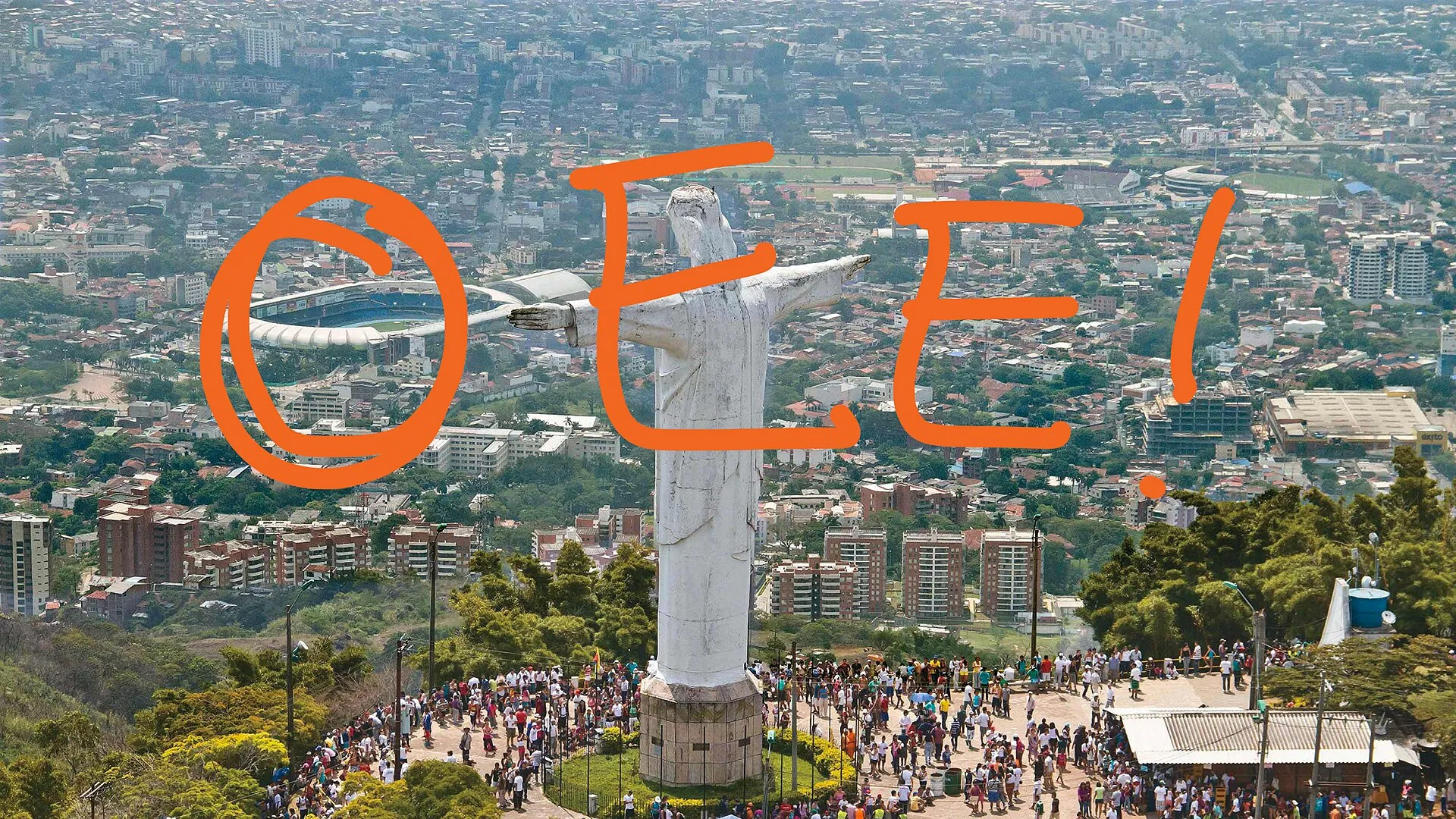
Spiritual Significance
The dedication to Cristo Rey — Christ the King — is the heart of the monument's meaning. The title comes from the Catholic Feast of Christ the King, instituted by Pope Pius XI in 1925 to proclaim Christ's reign over nations and consciences. Raising such a figure above Cali in 1953, exactly half a century after the Thousand Days' War, turned the statue into a public act of thanksgiving for peace as much as a work of devotion. For many Caleños it remains a place of quiet prayer and pilgrimage — visits swell around Easter's Holy Week and the November feast of Christ the King — even as it doubles as the city's favourite viewpoint. The 26 meters of concrete and iron, with their serene downward gaze over the Cauca Valley, read at once as a religious landmark and a civic emblem, in the same tradition of hilltop Christ figures that crown cities across Latin America.
Visitor Etiquette
Cristo Rey is an open-air monument rather than an enclosed church, so there is no dress code to enter, but it remains a place of devotion for local pilgrims — keep voices low near anyone praying and be considerate when a Mass or Holy Week procession is under way. Photographs of the statue are welcome; use discretion when worshippers are in frame. Practically, treat the summit as exposed high ground:
- Carry out everything you bring — there are few bins, and the hilltop's tropical vegetation is part of its appeal.
- Stay on the terrace and paths near the base; the surrounding slopes are steep and unfenced.
- Come early on Sundays and holidays, when Caleño families arrive in numbers and the small car park fills quickly.
Cristo Rey timeline
- 1899–1902
Thousand Days' War
Colombia's ruinous civil war between Liberals and Conservatives; the monument would later commemorate the fifty years of peace that followed its end.
-
Feast of Christ the King instituted
Pope Pius XI proclaimed the feast of Cristo Rey in the encyclical Quas Primas, the devotion the Cali statue honours.
-
Cristo Rey inaugurated
The 26-metre statue was completed atop the Cerro de los Cristales after roughly nine years of work in reinforced concrete and iron.
- Today
Cyclists' summit
The base is a daily gathering point for road cyclists and runners who race the winding climb before the heat sets in.
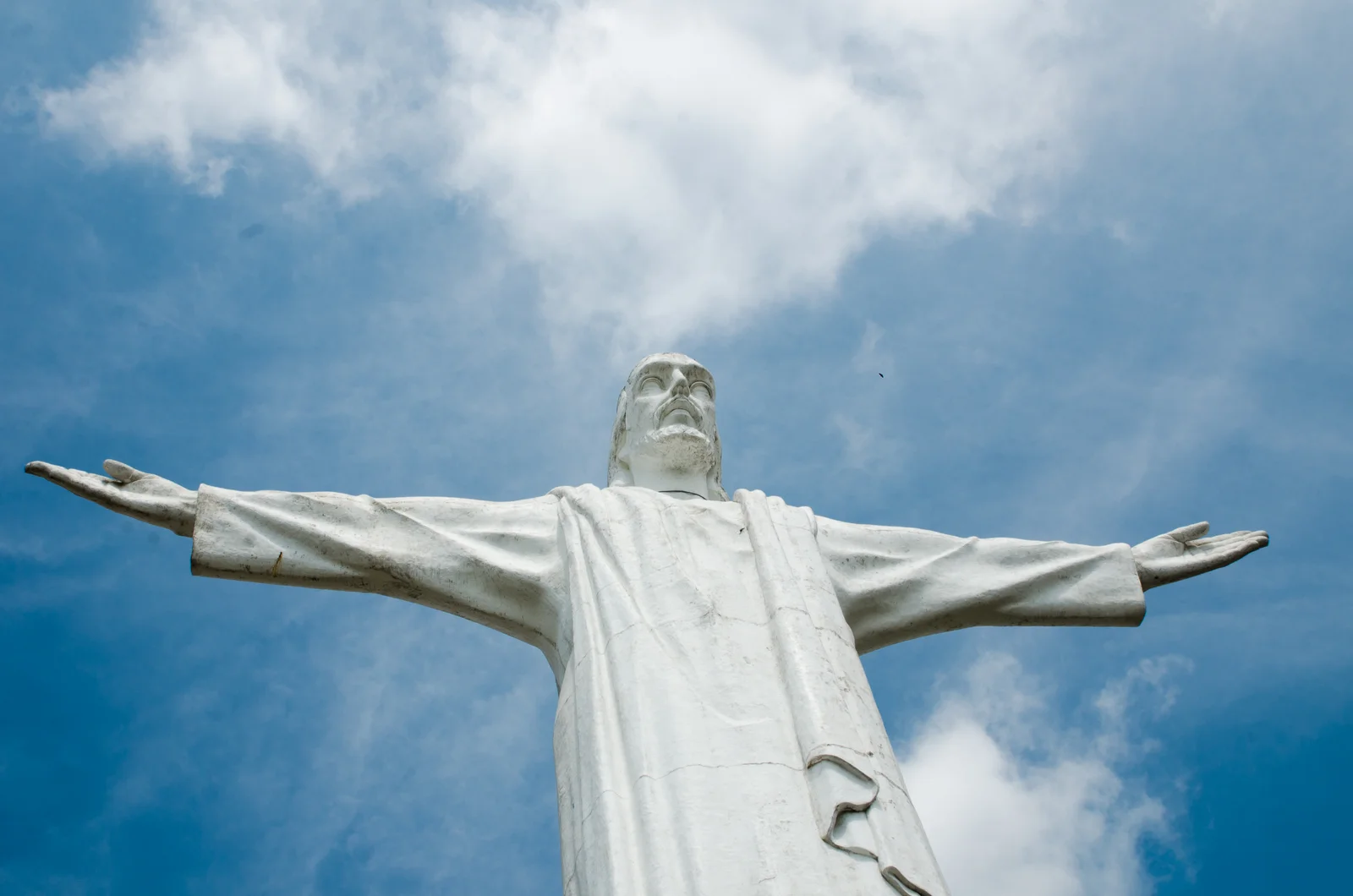
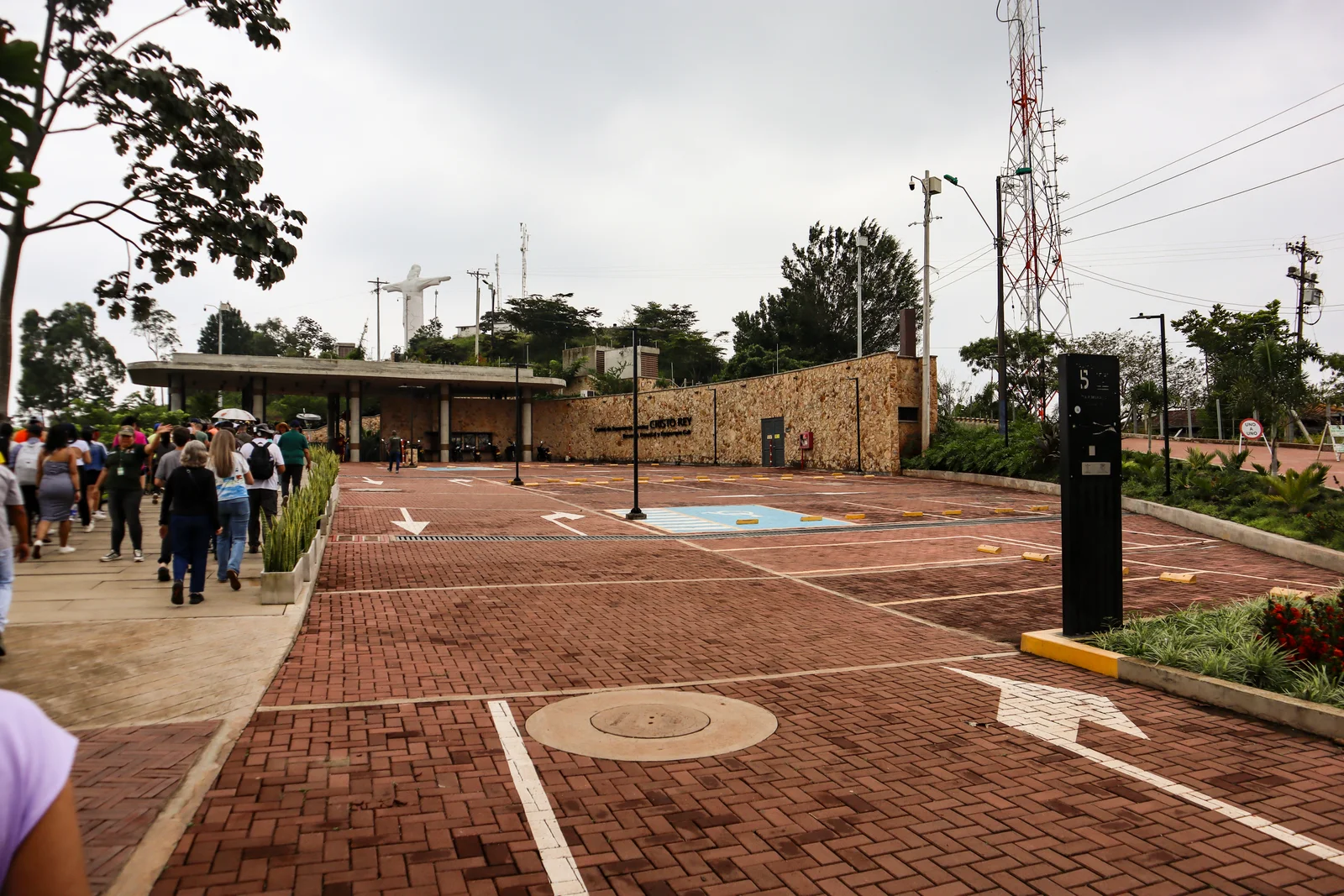
Cristo Rey in Pictures
When to Visit
Access: Daily 8 AM – 5 PM; the access road is closed by a gate outside these hours. Best: Early morning, 8–10 AM, for the clearest valley views and the coolest air before the tropical sun builds. Cyclists: Dawn belongs to local cycling clubs who tackle the climb as a workout — join them if you're fit. Avoid: Midday heat and the afternoon haze that commonly veils the valley from roughly 1 PM onward. Most visitors need only 30–45 minutes at the summit to walk the terrace, take in the panorama, and photograph the statue, so it folds neatly into a morning that continues down to San Antonio or the riverside Cat Park.
Admission and Costs
Entry to the statue and its terrace is free — getting up the hill is the real cost:
- Taxi round trip: COP 40,000–60,000 ($10–15) from central Cali or San Antonio, including the driver's waiting time at the top.
- Guided hike or tour: COP 60,000–100,000 ($15–25) per person, usually including transport up the hill.
- Private guide, half-day: COP 150,000–250,000 ($37–60), typically pairing Cristo Rey with the San Antonio neighbourhood.
Bring a little cash for the summit vendors selling water, fresh fruit, and cholado shaved ice, and note that no public bus runs all the way up — the MIO network stops well below the ridge.
The Case for a Guide
Cristo Rey is free to enter, so a guide's value here is access, context, and safety rather than a ticket. The summit road is isolated and served by no public transport, and a guide or trusted driver solves the logistics — arranging the climb, waiting at the top, and returning you without the anxiety of flagging a taxi on an empty hillside. Beyond the practicalities, a good local guide brings the monument alive: the Thousand Days' War it commemorates, the devotion to Christ the King behind its name, and how the hilltop fits into Cali's Afro-Colombian and Catholic identity. Most usefully, they thread the stop into a coherent half-day on foot and wheels that links Cristo Rey with the hilltop barrio of San Antonio and the riverside Cat Park below, so you are not doubling back across the city.
Tips for Visitors
- Go with a guide or taxi: The road is safe by day but isolated — don't walk or cycle it alone, and arrange your return ride before heading up.
- Sun protection: There is no shade at the summit; a hat, sunscreen, and water are essential even for a short visit in Cali's heat.
- Combine with San Antonio: The San Antonio barrio sits at the base of these western hills — see both in one morning, then drift down to the salsa scene after dark.
- Photography: Morning light flatters the pale statue, while the best city and valley views open to the east — shoot the panorama before the afternoon haze rolls in.
Frequently Asked Questions
When is the best time of year to visit Cristo Rey?
The dry months of January through March and June through August offer the clearest valley views from the summit and the most comfortable conditions for the steep road climb. Rainy season months like April, May, and October can obscure the panorama with afternoon haze, though mornings often remain clear regardless of season.
When can tourists enter Cristo Rey?
Access: Daily 8 AM – 5 PM (the road is gated). Best: Early morning (8–10 AM) for clearest views and coolest temperatures. Cyclists: Dawn is popular with local cycling groups — join the climb if you're fit.
Are there any costs associated with visiting Cristo Rey?
Entry: Free. Taxi round trip: COP 40,000–60,000 ($10–15) with waiting time. Guided hike: COP 60,000–100,000 ($15–25) per person including transport. Private guide half-day: COP 150,000–250,000 ($37–60) combining Cristo Rey with San Antonio
What should visitors know before visiting Cristo Rey?
Go with a guide or taxi: The road is safe during daytime but isolated — don't walk alone. Sun protection: No shade at the summit — bring a hat and sunscreen.
What does the name Cristo Rey mean, and who is the statue dedicated to?
Cristo Rey is Spanish for "Christ the King," the title celebrated by the Catholic Feast of Christ the King that Pope Pius XI established in 1925. The Cali monument, unveiled in 1953, casts Christ as a king of peace watching over the city — a deliberate symbol of reconciliation half a century after the Thousand Days' War, the civil conflict of 1899–1902 that had torn Colombia apart.
How do you get from central Cali up to Cristo Rey?
There is no bus to the summit — the MIO rapid-transit network only reaches the foot of the western hills. Most visitors take a taxi or ride-hail from central Cali or San Antonio (roughly 30 minutes and COP 40,000–60,000 / $10–15 round trip with the driver waiting), join a guided half-day tour that includes transport, or cycle the 7 km climb at dawn with local riding groups.