
Activities
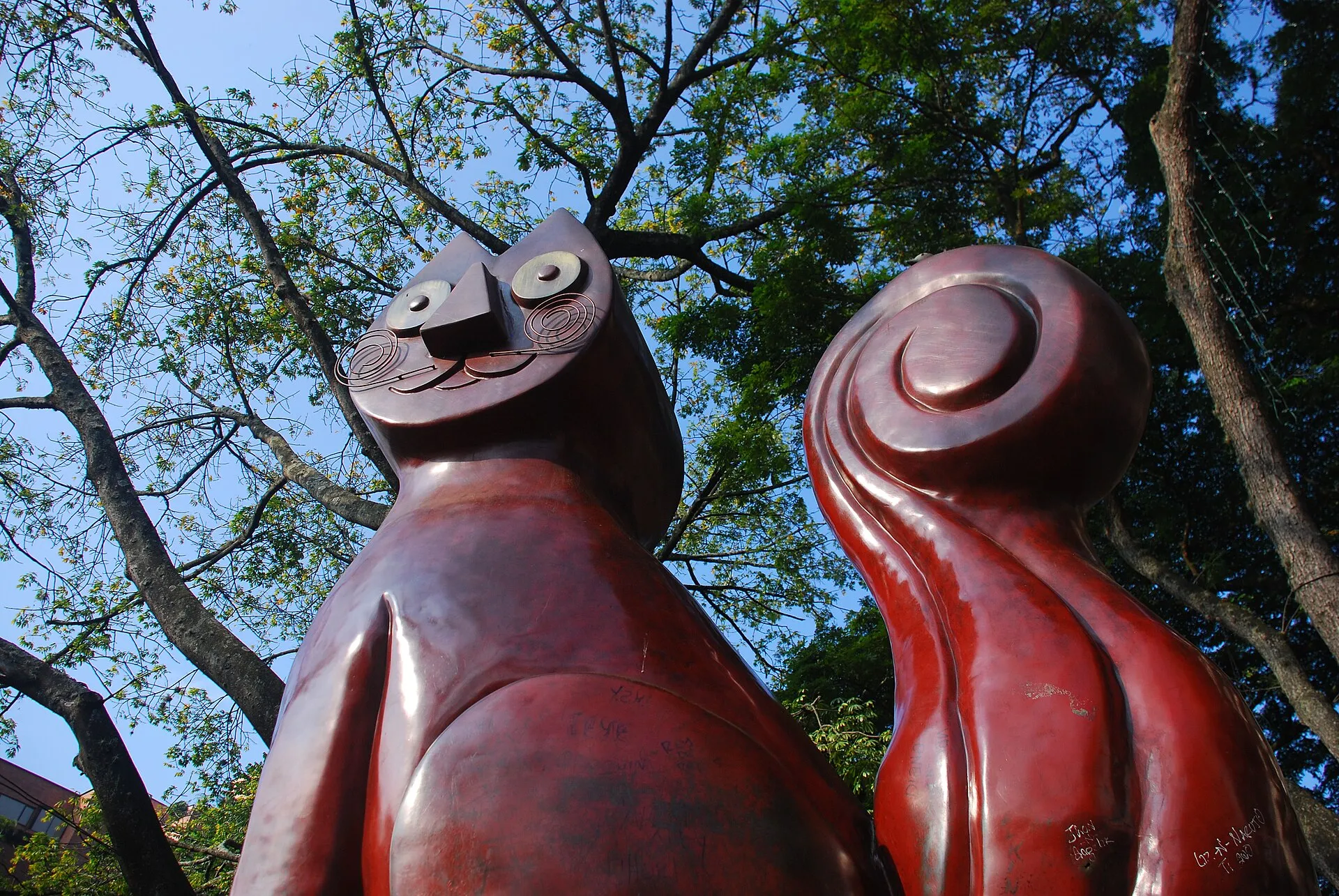
Start with El Gato de Tejada, the original bronze with its rounded belly and sly expression, then work along the row of Gatas del Río — the fifteen "girlfriend" cats installed in 2006 for the sculpture's tenth anniversary, each decorated by a different Colombian artist in a distinct palette and theme, so no two are alike. The shaded riverside walkway invites an unhurried stroll beside the Río Cali, connecting toward the restaurants of El Peñón and, further on, the city-centre promenade. It is also one of the city's favourite photo spots: the cats' playful poses reward close-ups as readily as wide shots that frame the whole feline gallery against the water.
Seasonal Highlights
Cali's equatorial climate keeps the riverbank green all year, but the calendar still shapes a visit. The Feria de Cali in late December is the headline event, when the streets around the park erupt into a week of salsa orchestras, parades and dancing — pair a sculpture stroll with the salsa scene for the full effect. During the drier stretches of June to September, clearer skies and cooler evenings draw the biggest weekend crowds, and craft and food stalls are at their busiest along the water.
When to Visit
The park is an open riverside promenade with no gates or opening hours, so you can visit whenever suits your day. Locals treat late afternoon, roughly 4 to 6 PM, as the natural window: the tropical heat softens, families and joggers spill onto the walkway, and the low sun warms the bronze for photographs. Come in the morning instead if you prefer softer light and fewer people. Weekends bring food carts and a busier, more festive mood along the water, and December turns the whole district lively during the citywide Feria de Cali.
Admission and Costs
Seeing the sculptures costs nothing — the park is free and always open. If you'd like context, a guided walking tour of central Cali that includes Cat Park runs COP 50,000–100,000 ($12–25) per person, and a private art-and-culture guide is COP 150,000–250,000 ($37–60) for a half-day. Save a little change for the riverbank vendors: a cholado (shaved ice piled with tropical fruit and condensed milk) or a cup of champús, the region's cinnamon-scented maize-and-lulo drink, costs about COP 3,000–6,000 ($0.75–1.50).
The Case for a Guide
The sculptures are free and self-explanatory at first glance, so the value of a guide here is context rather than access. A good walking guide reads the fifteen Gatas del Río as an open-air survey of Colombian art — pointing out which cats carry political satire, which nod to Cali's Afro-Pacific heritage, and how each artist reinterpreted Tejada's original silhouette. They can also place El Gato within Tejada's wider output and the city's tradition of public sculpture, and — most usefully — fold the stop into a coherent half-day on foot that links the riverbank to San Antonio and the restaurants of El Peñón without backtracking. For solo travellers, a local guide doubles as reassurance on which riverside stretches stay busy and safe after dark.
Tips for Visitors
Plan on 20 to 30 minutes for the sculptures themselves, longer if you keep walking the riverside path. Cat Park sits neatly between the city centre and the hilltop barrio of San Antonio, so it slots easily into a walking route that can also take in Cristo Rey earlier in the day. Come with a fully charged phone or a wide-angle lens: the row of cats is long and low, and the best frames catch several felines at once with the river behind. The riverbank is well lit and busy with locals after 5 PM, making an evening stroll one of the easiest ways to feel everyday Cali, though guides advise carrying only what you need and keeping cameras in hand rather than on show once the crowds thin. Reach the park on the MIO rapid-bus network — the Río Cali corridor stops are a short walk away — or take a quick taxi or ride-hail from most neighbourhoods.
Frequently Asked Questions
Who created the Cat of the River sculpture in Cali?
The original El Gato del Río is a 3.5-metre, roughly three-tonne bronze by Hernando Tejada (1924–1998), one of Colombia's most recognised 20th-century artists. It was unveiled on the bank of the Río Cali on 3 July 1996. In 2006, to mark the sculpture's tenth anniversary, fifteen smaller decorated cats — Las Gatas del Río, the Cat's 'girlfriends' — were added, each painted by a different artist, turning the riverbank into an open-air gallery.
When is the best time to visit Cat Park?
The riverside sculptures are outdoors and free to see at any hour, but late afternoon between 4 and 6 PM is the sweet spot: the heat eases, the light warms the bronze, and Caleños come out to walk the Río Cali. Mornings give softer photography light and thinner crowds. December is the liveliest month, when the Feria de Cali fills the surrounding streets with salsa orchestras and outdoor stages.
Is Cat Park free, and what does a guided visit cost?
Entry to the park is always free. A guided walking tour of central Cali that folds in Cat Park runs COP 50,000–100,000 ($12–25) per person, while a private art-and-culture guide is COP 150,000–250,000 ($37–60). Riverbank vendors sell cholado shaved ice and champús — a local maize-and-fruit drink — for about COP 3,000–6,000 ($0.75–1.50).
What is there to see and do around Cat Park?
Photograph Tejada's original El Gato, then hunt for your favourite among the fifteen decorated Gatas del Río, no two alike. From there the riverside walkway follows the Río Cali toward the restaurant-lined El Peñón district and the city centre, and the bohemian hilltop of San Antonio is a short ride away — most guides combine all three in a half-day walk.