
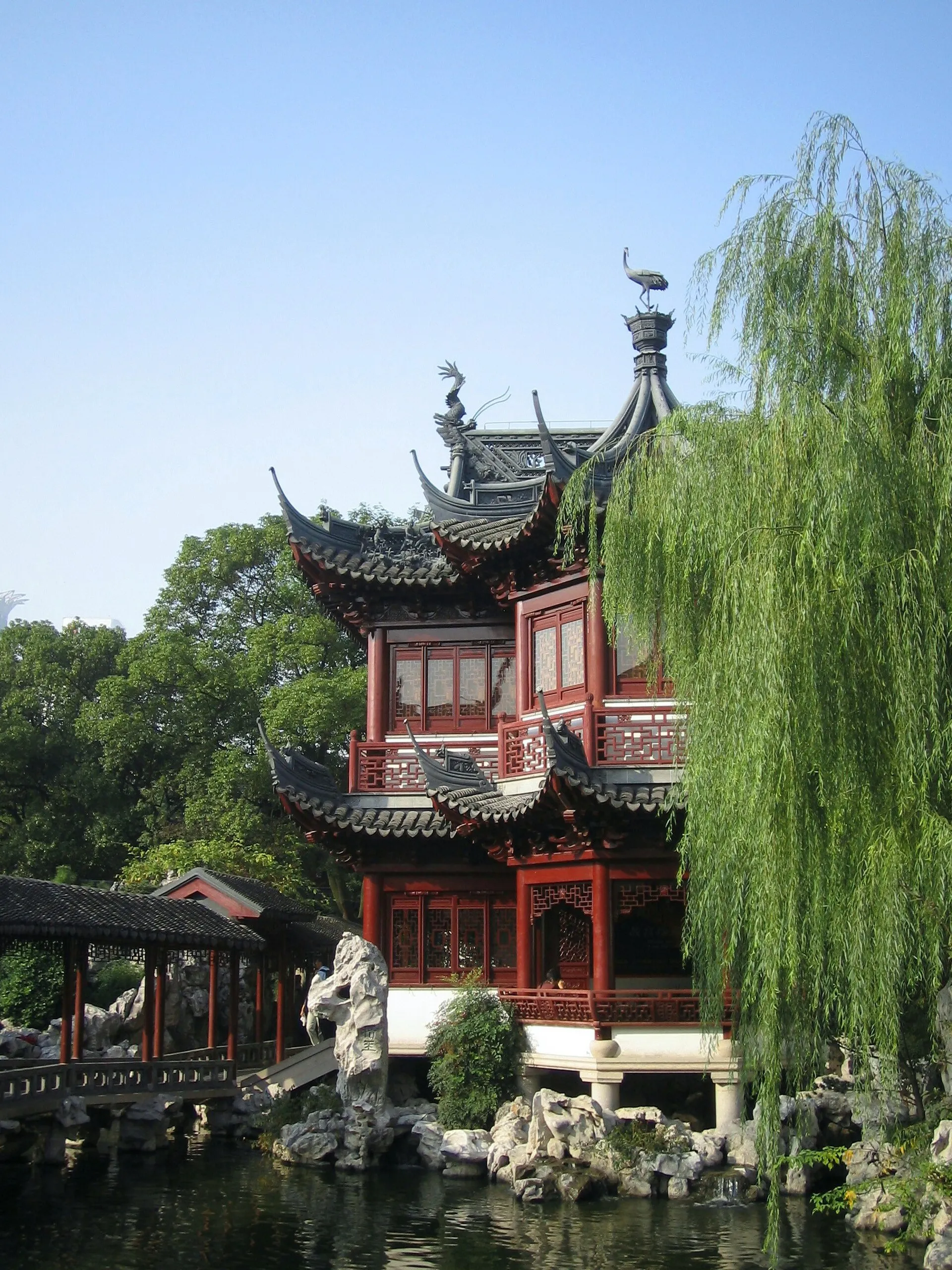
Activities
Exquisite Jade Rock: A 3.3-meter porous stone said to be one of three treasures originally destined for the imperial court. Dragon Wall: Undulating walls topped with sculpted dragons separate the garden's distinct scenic zones. Grand Rockery: A 14-meter artificial mountain of yellowstone, the garden's crowning masterpiece with hidden caves and paths. Huxinting Teahouse: The iconic zigzag-bridge pavilion, Shanghai's oldest teahouse dating to 1855. Ten-Thousand Flower Chamber: An elegant hall surrounded by seasonal plantings that change the view throughout the year. Zigzag Bridge: Nine sharp turns designed to thwart evil spirits, who according to tradition can only travel in straight lines
Seasonal Highlights
The Lantern Festival in February transforms the surrounding bazaar into a corridor of illuminated silk displays that glow above the zigzag bridge after dark. Summer lotus season peaks in July, when blooms fill the garden ponds and complement the rockery reflections. Chrysanthemum exhibitions take over throughout November, with hundreds of cultivated varieties arranged in the halls and courtyards.
When to Visit
Garden: Daily 8:30 AM - 5:00 PM (last entry 4:30 PM). Bazaar area: Shops typically open 9:00 AM - 9:00 PM. Best: First hour after opening when tour groups haven't yet arrived. Avoid: Chinese national holidays when the narrow paths become gridlocked
Admission and Costs
Garden admission: ¥40 (peak) / ¥30 (off-season December-March). Bazaar area: Free to wander and browse. Huxinting Teahouse: ¥50-80 per person for a traditional tea set. Nanxiang soup dumplings: ¥15-30 per steamer basket
Tips for Visitors
Garden first, bazaar second: Visit the garden when it's quiet in the morning, then browse the bazaar shops as they fill up. Hire a guide for context: Without explanation, the rockeries and halls look merely pretty - a guide reveals the symbolism woven into every stone. Skip the ground-floor dumplings: The famous Nanxiang restaurant's upper floors have shorter lines and better seating. Photography tip: Shoot through moon gates and window lattices to frame the garden scenes as the designers intended. Combine with Old City: The streets surrounding the bazaar contain remnants of Shanghai's pre-colonial Chinese city worth a wander
Frequently Asked Questions
When is the best season to visit Yu Garden?
May and October are the finest months, when mild temperatures complement the garden's seasonal plantings and lotus blooms or chrysanthemum displays fill the courtyards. The February Lantern Festival transforms the surrounding bazaar into a glowing spectacle, but January and December see smaller crowds and discounted admission during the quieter off-season.
What are the opening hours for Yu Garden and the surrounding bazaar?
Garden: Daily 8:30 AM - 5:00 PM (last entry 4:30 PM). Bazaar area: Shops typically open 9:00 AM - 9:00 PM. Best: First hour after opening when tour groups haven't yet arrived. Avoid: Chinese national holidays when the narrow paths become gridlocked
Is Yu Garden free to enter?
Garden admission: ¥40 (peak) / ¥30 (off-season December-March). Bazaar area: Free to wander and browse. Huxinting Teahouse: ¥50-80 per person for a traditional tea set. Nanxiang soup dumplings: ¥15-30 per steamer basket
What is the recommended order for visiting Yu Garden and the bazaar?
Garden first, bazaar second: Visit the garden when it's quiet in the morning, then browse the bazaar shops as they fill up.