
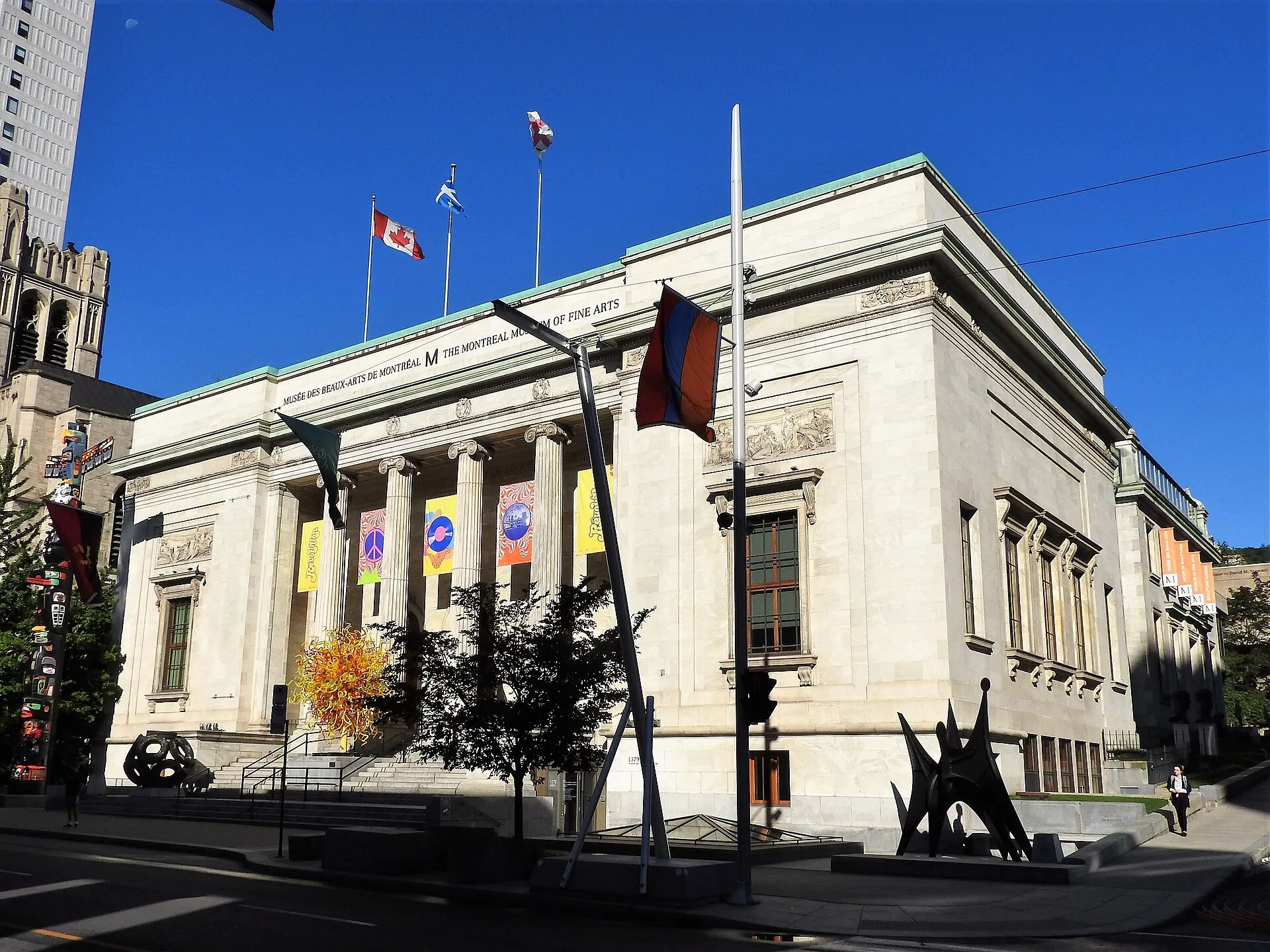
Collection Highlights
European old masters in the Desmarais Pavilion
The Jean-Paul Riopelle-facing wing gathers five centuries of European painting, from Mantegna and El Greco through Rembrandt, Tiepolo, and the great 18th-century portraitists to Monet, Cezanne, and the early moderns — a compact but genuinely encyclopaedic survey that rewards a slow, chronological walk.
Quebec and Canadian art in the Bourgie Pavilion
The heart of the museum for many visitors — sweeping Group of Seven wilderness canvases, Emily Carr's brooding West Coast forests, and Jean-Paul Riopelle's thickly troweled abstractions, all displayed inside the restored shell of the Romanesque Erskine and American Church.
Inuit and First Nations collection
One of the world's most significant public holdings of Inuit art — soapstone carvings of Sedna and transformation figures alongside Cape Dorset prints — tracing artistic traditions that predate European contact by centuries.
Bourgie Concert Hall and Tiffany windows
The deconsecrated nave of the Erskine and American Church now serves as a 444-seat concert hall wrapped in a celebrated ensemble of Louis Comfort Tiffany stained-glass windows, staging chamber-music recitals beneath glowing favrile glass.
Decorative arts and design collection
A permanent survey of furniture, glass, ceramics, jewellery, and industrial design traces everyday beauty from the 18th century to Bauhaus modernism and contemporary studio work, one of the strongest design holdings in North America.
World cultures in the Pavilion for Peace
The 2016 pavilion presents art from Africa, Asia, the Islamic world, and the pre-Columbian Americas organized thematically rather than by region, drawing unexpected visual conversations across civilizations.
Collections Highlights
Canadian and Inuit art — The Claire and Marc Bourgie Pavilion gathers the Group of Seven's sweeping northern landscapes, Emily Carr's brooding West Coast forests, Riopelle's lyrical abstractions, and a vault of Inuit soapstone carvings and Cape Dorset prints that reveal artistic traditions stretching back centuries before European contact. The pavilion occupies the restored Erskine and American Church, so the art hangs beneath Romanesque arches rather than the usual white cube.
European old masters — Across Sherbrooke in the Jean-Noel Desmarais Pavilion, five centuries of European painting run from Mantegna and El Greco through Rembrandt and Tiepolo to Monet and Cezanne, a compact survey dense enough to reward a slow chronological walk.
Fashion and design — A permanent decorative-arts and design collection traces the evolution of furniture, jewellery, glass, and haute couture from the 18th century through Bauhaus modernism to contemporary studio work — one of the strongest design holdings on the continent.
World cultures — The Michal and Renata Hornstein Pavilion for Peace presents art from Africa, Asia, the Islamic world, and the pre-Columbian Americas, organized thematically to draw unexpected connections across civilizations.
Blockbuster exhibitions — The museum consistently attracts loan shows of international calibre — past exhibitions have covered everything from Pompeii artefacts to the creative universe of Thierry Mugler — drawing audiences that rival those of New York and London institutions.
The Bourgie Concert Hall — The deconsecrated nave now serves as a 444-seat concert hall wrapped in a celebrated ensemble of Louis Comfort Tiffany stained-glass windows, staging chamber-music recitals beneath glowing favrile glass — a rare fusion of gallery and auditorium.
Sherbrooke Street setting — The museum anchors a stretch of Montreal's grandest boulevard, flanked by limestone mansions from the city's Gilded Age and within walking distance of the Ritz-Carlton and the leafy campuses of McGill University, at the foot of the slopes that climb toward Mount Royal.
Guided Tours
Art historian guides at the Musee des beaux-arts navigate the five-pavilion campus with thematic focus, constructing itineraries that connect works across centuries and continents. In the Canadian galleries of the Claire and Marc Bourgie Pavilion, they explain how the Group of Seven's wilderness canvases were a deliberate assertion of national identity distinct from European traditions, and how Riopelle's tachiste abstractions brought Montreal into the international avant-garde. In the Inuit art collection, guides decode the spiritual significance of soapstone carvings depicting Sedna (the sea goddess) and transformation figures that blur the boundary between human and animal — iconography rooted in oral traditions that predate European contact by millennia. The underground tunnel connecting the north and south pavilions becomes a gallery of contemporary Quebecois art, and guides trace the lineage from Automatiste painters of the 1940s through the Refus Global manifesto to today's video and installation artists. For visitors touring museums across the country — the Royal Ontario Museum in Toronto or the historic quarter of Quebec City — guides here frame how Montreal's collection fits the wider Canadian cultural map. For temporary exhibitions, specialist guides provide context that connects blockbuster loan shows to the museum's permanent strengths.
Montreal Museum of Fine Arts timeline
-
Art Association founded
The Art Association of Montreal began the institution that later became the city's major fine arts museum.
-
Sherbrooke Street museum opens
The museum moved into a purpose-built Beaux-Arts home on Sherbrooke Street.
-
Jean-Noel Desmarais Pavilion
The new pavilion expanded the museum across the street and reshaped the visitor route.
When to Visit
Regular hours: Tuesday to Sunday 10 AM - 5 PM, Wednesday until 9 PM, closed Mondays. Best time: Wednesday evenings after 5 PM, when the crowds thin and you can linger in the quieter pavilions without competing for sightlines. Busiest period: Weekend afternoons during major temporary exhibitions — expect queues at the ticket counter and congested galleries, so buy timed tickets online before you arrive. Free permanent-collection access: Visitors under 21 enjoy free admission to the permanent galleries at all times, which makes weekday school hours surprisingly peaceful for adult visitors. Allow at least two to three hours for a focused visit, or a full day if you intend to cross all five pavilions and pause for a chamber recital in the Bourgie Concert Hall.
Admission and Costs
Adult admission: CA$24 for access to the permanent collection across all five pavilions. Under 21: Free admission to the permanent collection — one of the most generous youth policies of any major museum in the world. Temporary exhibitions: May carry a surcharge of CA$5-12 above the base ticket, depending on the scale and lending institutions involved. Wednesday evenings after 5 PM the permanent-collection ticket is discounted, and a family or duo pass often undercuts buying separate adult tickets. Compared with a day out in downtown Montreal — a caleche ride in Old Montreal or a food tour through Jean-Talon Market — the museum remains one of the city's best cultural values, and the free youth policy makes it a rare no-cost outing for families.
The Case for a Guide
The Musee des beaux-arts rewards independent wandering, but a guide turns a five-pavilion maze into a coherent story — connecting a Rembrandt in one building to a Riopelle in another and explaining how a provincial art association grew into Canada's oldest museum.
- Reading the campus, not just the walls: A guide sequences the five pavilions so you move logically from 1912 Beaux-Arts rooms through Safdie's 1991 galleries to the 2016 Pavilion for Peace, using the underground tunnels rather than doubling back across Sherbrooke — the difference between two efficient hours and a footsore, disoriented afternoon.
- Decoding the Canadian canon: In the Bourgie Pavilion, guides explain how the Group of Seven's wilderness canvases were a deliberate assertion of national identity distinct from European tradition, and how Riopelle and the Automatistes pushed Montreal onto the international avant-garde stage.
- The Inuit collection in context: Guides decode the spiritual meaning of soapstone carvings of Sedna and transformation figures — iconography rooted in oral traditions that predate European contact — rather than letting visitors pass them as mere curios.
- Church turned concert hall: In the restored Erskine and American Church, a guide points out the Tiffany windows and the acoustic engineering of the Bourgie Concert Hall, tying the building's Presbyterian past to its present life as a stage for chamber music.
- Timing the temporary shows: For blockbuster exhibitions, a specialist guide connects the loan works to the museum's permanent strengths and steers you to the quiet hours when the galleries are navigable.
Tips for Visitors
Plan for scale: Five pavilions and 45,000 objects cannot be absorbed in a single pass — pick two or three collections that interest you most and save the rest for a return visit. Use the underground passages: The tunnels beneath Sherbrooke Street connect the north and south pavilions and double as gallery space, so you never need to cross traffic to move between buildings. Audio guide recommended: Available at the front desk, the multimedia guide adds context to key works and helps navigate a campus that can feel labyrinthine to first-time visitors. Check the concert calendar: A recital in the Bourgie Concert Hall beneath the Tiffany windows is a quietly memorable way to end a visit — programmes are posted online and often sell separately from museum admission. Gift shop detour: The museum boutique stocks an unusually well-curated selection of art books, Quebecois design objects, and exhibition catalogues that make worthwhile souvenirs. Combine with the neighbourhood: Crescent and Bishop streets, a short walk south, are lined with restaurants and terrasses ideal for a post-museum lunch or aperitif.
Frequently Asked Questions
What are the opening hours of Montreal Museum of Fine Arts and when is it quietest?
Regular hours: Tuesday to Sunday 10 AM - 5 PM, Wednesday until 9 PM, closed Mondays. Best time: Wednesday evenings after 5 PM, when the crowds thin and you can linger in the quieter pavilions without competing for sightlines.
What does admission to Montreal Museum of Fine Arts cost?
Adult admission: CA$24 for access to the permanent collection across all five pavilions. Under 21: Free admission to the permanent collection — one of the most generous youth policies of any major museum in the world.
What practical tips should visitors know before visiting Montreal Museum of Fine Arts?
Plan for scale: Five pavilions and 45,000 objects cannot be absorbed in a single pass — pick two or three collections that interest you most and save the rest for a return visit.
Which galleries and works should a first-time visitor prioritise?
If you have two hours, spend one in the Claire and Marc Bourgie Pavilion of Quebec and Canadian Art — Group of Seven landscapes, Riopelle abstractions, and the Inuit collection — and one in the Jean-Noel Desmarais Pavilion with the European old masters. Save the Bourgie Concert Hall and its Tiffany stained-glass windows for the end, housed in the restored Erskine and American Church.
How do you get to Montreal Museum of Fine Arts by public transport?
Take the STM green line to Guy-Concordia station and walk five minutes north up Crescent or Guy Street, or the orange line to Peel and stroll west along Sherbrooke Street. The museum straddles Sherbrooke West between Bishop and du Musee, a flat and walkable stretch of the Golden Square Mile with no stairs from either station.
Is Montreal Museum of Fine Arts worth visiting with children?
Yes — admission is free for everyone under 21, the underground tunnels between pavilions delight younger visitors, and the ArtVIP family trails and the education wing run hands-on studio activities. The world cultures galleries in the Pavilion for Peace, with mummies and pre-Columbian objects, tend to hold childrens attention longest.