
Walking Route
Engineering Facts
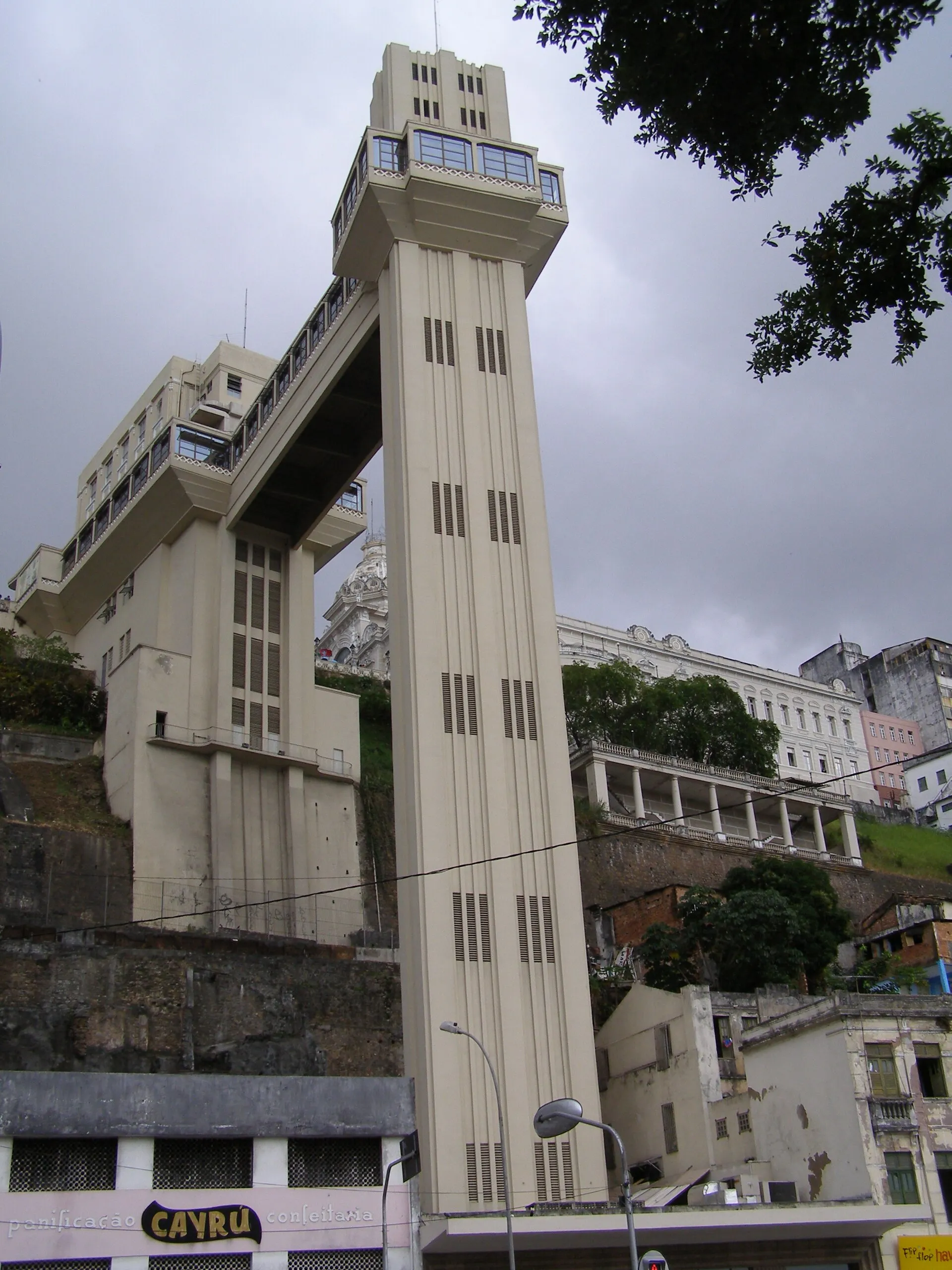
When it opened in 1873 — originally known as the Elevador da Conceição da Praia, after the church at its base — the structure ran on water pressure: two counterbalanced cars rode a single iron shaft driven by pumped water, making it one of the first urban passenger elevators anywhere in the Americas. The lift still carries the name of Antônio de Lacerda, the Bahian entrepreneur who built it. Its mechanism was converted to electric traction in 1906, cutting the ascent time sharply, and a complete 1930 reconstruction rebuilt the towers in reinforced concrete and gave the landmark its streamlined Art Deco profile, expanding the system to its present four cars. The taller of the twin towers houses the machine rooms and cabling, and both are anchored directly into the escarpment that splits the city in two. Because it has been repeatedly rebuilt and re-engineered rather than retired, the elevator is a rare working monument — roughly 150 years of continuous service across three distinct mechanical generations, still doing the same job it was built for.
Observation Points
The payoff of the ride is the upper station terrace, a free public viewing deck at the top of the cliff and one of the finest vantage points in the city. From the railing the full arc of All Saints Bay (Baía de Todos os Santos) — the largest bay in Brazil — opens out below, with the roof of the Mercado Modelo directly beneath you, the working harbour to the left, and ferries tracking across toward Itaparica island on the horizon. Late afternoon is the moment to be here: the low western sun turns the water gold and backlights the boats, and the terrace fills with baianos and photographers lining up the classic shot straight down the cliff face. Turn inland and the pastel rooftops of the Cidade Alta tumble away toward Pelourinho. For a very different frame, the plaza beside the Mercado Modelo at the base gives a dramatic worm's-eye view of the twin towers rising against the bluff. Bring a wide-angle lens to capture the whole sweep of the bay, and visit outside the commuter peaks so the deck is not wall-to-wall with people.
Elevador Lacerda timeline
-
Hydraulic elevator opens
Built by the Bahian merchant Antônio Francisco de Lacerda and first known as the Elevador da Conceição da Praia, the original lift raised two counterbalanced iron cars by water pressure — one of the earliest urban passenger elevators anywhere in the Americas.
-
Converted to electric traction
Water power gave way to electric motors, sharply cutting the ascent time and letting the elevator carry far heavier daily traffic between the Upper and Lower cities.
-
Art Deco reconstruction
A full rebuild recast the twin towers in reinforced concrete, gave the landmark its streamlined Art Deco silhouette, and expanded the system to the four cars still in service today.
- Today
Still in daily service
More than 28,000 people ride the Elevador Lacerda every day for a R$0.15 fare, making it a rare working monument with roughly 150 years of continuous operation across three mechanical generations.
When to Visit
The elevator runs daily, roughly 5 AM to 11 PM, and cars leave almost continuously, so waits are short outside the rush. If you are here for the view rather than a quick crossing, aim for the late afternoon, when the light over the bay is at its warmest from the upper terrace. Steer clear of the commuter peaks of about 7-9 AM and 5-7 PM, when all four cabins pack with people heading to and from work and the ride becomes a squeeze rather than a scenic pause. Seasonally, Salvador's drier, clearer months — roughly September through April — deliver the sharpest bay views, while the wetter stretch from May to August brings sudden downpours and haze that can dull the panorama, though the elevator keeps the same hours year-round. The crossing itself lasts only about 30 seconds, so save your real time for the two neighbourhoods it links rather than the ride.
Admission and Costs
The fare is famously trivial: R$0.15 (about US$0.03), paid with coins or a Salvador Card transit pass at the turnstile — among the cheapest attractions of its kind anywhere. There is no separate charge for the upper terrace or its view, and the Mercado Modelo at the lower station is free to browse for crafts, souvenirs and Candomblé items. If you want the history behind the ride, a guided walk taking in the elevator, the Mercado Modelo and Pelourinho typically runs R$100-150 (US$20-30) per person, while a private half-day guide covering both the Cidade Alta and Cidade Baixa is around R$200-350 (US$40-70). It is worth comparing the full range of Salvador guide rates before you book.
The Case for a Guide
The R$0.15 fare buys a 30-second ride, but a Salvador guide turns the crossing into a reading of the city's whole two-tier social geography — why the Upper and Lower cities exist, and who did the hauling before any lift was built.
- The colonial divide explained: A guide traces why the administrative and religious city sits on the bluff while the port and market city lie at the water, and how enslaved Africans once carried goods up the escarpment the elevator now climbs
- Three mechanical lives: The story of the 1873 hydraulic original, the 1906 electric conversion and the 1930 Art Deco rebuild is far richer than the single plaque at the station conveys
- Framing the bay: A guide knows which late-afternoon light turns All Saints Bay gold from the upper terrace, and where to stand for the classic shot straight down the cliff face
- Stitching the two cities together: The best walking tours use the elevator as the hinge between Pelourinho's UNESCO-listed streets above and the Mercado Modelo below, often continuing out to the hilltop Bonfim Church
Tips for Visitors
Carry the exact R$0.15 in coins or a topped-up transit card so you are not held up at the turnstile. Keep bags zipped and phones out of sight in the crowded cabins and on the busy plazas at either end — this is a known pickpocket spot at peak times. Treat the elevator as a link rather than a destination: ride up and walk straight into Pelourinho's UNESCO-listed streets, or ride down for the Mercado Modelo and the ferry terminal, where boats cross to Itaparica island and Mar Grande. The upper terrace is the spot to linger for photographs, so allow yourself a few extra minutes there even though the ride is over in half a minute. If the queue looks long, the commuter peaks usually clear within the hour.
Frequently Asked Questions
Which months are best for riding the Elevador Lacerda?
September through April are Salvador's driest, clearest months and give the sharpest views of All Saints Bay from the upper terrace. The wet stretch from May to August brings brief but heavy downpours and haze that can flatten the panorama. The elevator keeps the same hours all year, so the choice is really about weather and light rather than access.
What are the opening hours of the Elevador Lacerda?
It runs daily from about 5 AM to 11 PM, with cars leaving almost continuously. Late afternoon is the most rewarding time for the views, while the commuter peaks of roughly 7-9 AM and 5-7 PM are best avoided, when all four cabins fill with people travelling to and from work.
How much does it cost to ride the Elevador Lacerda?
The fare is R$0.15 (about US$0.03), paid by coin or Salvador Card transit pass, making it one of the cheapest rides of its kind in the world. The upper viewing terrace and the Mercado Modelo market at the base are both free to enter.
Is the Elevador Lacerda worth visiting, or just a way to get around?
Both. Locals rely on it as everyday transport between the Upper and Lower City, but for visitors the short ascent and the free bay panorama from the top terrace make it a landmark in its own right. Pairing it with a walk through Pelourinho or a stop at the Mercado Modelo turns a quick crossing into a proper introduction to Salvador's two-tier layout.