
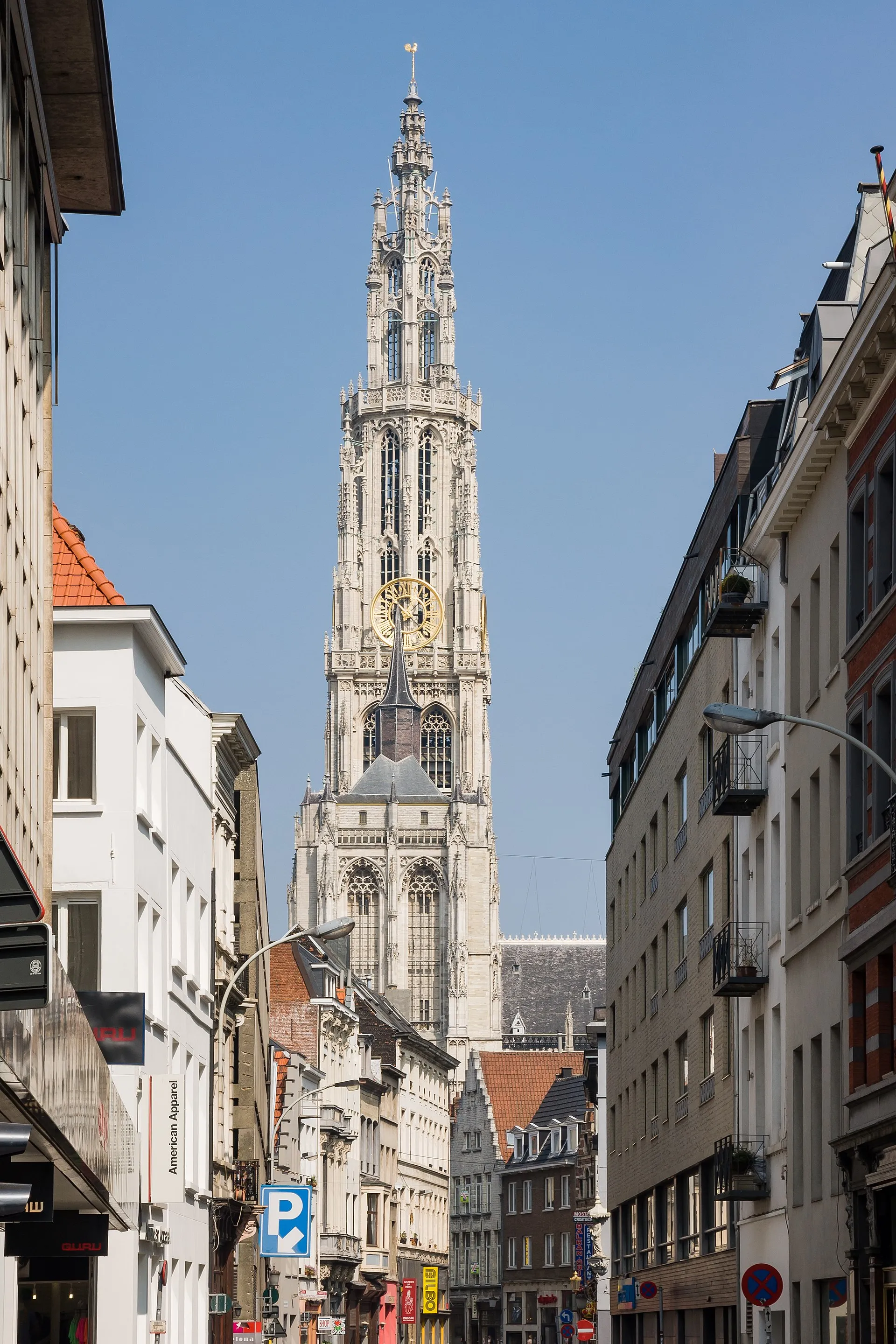
Visitor Etiquette
The Cathedral of Our Lady remains an active parish church: dress modestly (covered shoulders and knees), silence mobile phones, and refrain from conversation during services. Photography is permitted outside service times but flash and tripods are always prohibited to protect the 400-year-old Rubens canvases. During Sunday masses (10:00 AM and 11:30 AM), tourist access is restricted to the rear of the nave — sit respectfully if you choose to attend, and do not leave mid-service. The side chapels may be roped off during confession hours (typically Saturday mornings). If you encounter pilgrims praying at the Chapel of the Venerable, observe quietly rather than photographing. Remove hats upon entering, speak in whispers, and do not touch artworks, columns, or carved surfaces. Large bags and backpacks may need to be left at the entrance during peak visitor periods.
Spiritual Significance
The Onze-Lieve-Vrouwekathedraal has served as Antwerp's principal place of Catholic worship since the 14th century, surviving the Beeldenstorm iconoclastic riots of 1566 when Calvinist mobs destroyed much of its medieval religious art, the French Revolutionary confiscations of the 1790s that stripped the building of liturgical treasures, and two World Wars that damaged but never destroyed the structure. Rubens' four altarpieces were commissioned as acts of Counter-Reformation faith — visual arguments for Catholic doctrine deployed in a city where Protestant and Catholic factions competed for souls throughout the 16th and 17th centuries. The cathedral also houses the devotion to the Onze-Lieve-Vrouw (Our Lady) that gave the building its name, with Marian imagery appearing in stained glass, sculpture, and side chapel paintings spanning 600 years of continuous veneration. The 47-bell carillon in the northern tower has regulated civic and religious life since the medieval period, its chimes marking canonical hours and calling the faithful to worship.
Cathedral of Our Lady timeline
-
Foundation stone laid
Building began on the site of an earlier Romanesque parish church, launching a Brabantine Gothic project that would outlast its founders.
-
Northern tower and spire completed
After roughly 170 years of work the 123-metre spire crowned the skyline, the tallest in the Low Countries and a landmark visible far across the Scheldt.
-
Great fire abandons the second tower
A fire gutted the roof and interior; the cost of rebuilding drained funds, so the planned matching southern tower was left at foundation level.
-
Beeldenstorm strips the interior
Calvinist iconoclasts smashed altars, statues, and most of the medieval stained glass during the Iconoclastic Fury that swept the Low Countries.
-
Rubens' Descent from the Cross installed
The right-transept triptych (1612–1614) joined the Elevation of the Cross of 1610, giving the cathedral its two Baroque masterpieces.
-
French Revolutionary confiscation
Occupying French forces stripped liturgical treasures and carried the Descent from the Cross to Paris; it was returned in 1815.
-
UNESCO World Heritage listing
The tower was inscribed as part of the Belfries of Belgium and France, recognising its place in Brabantine Gothic architecture.
When to Visit
Cathedral hours: Monday-Friday 10:00 AM - 5:00 PM, Saturday 10:00 AM - 3:00 PM, Sunday 1:00 PM - 5:00 PM. Closed: During private events and select religious holidays — check website before visiting. Tower climbs: Seasonal availability (typically April-October), advance booking required, €8 (~$9) additional fee. Best: Weekday mornings (10:00-11:30 AM) for optimal natural lighting on Rubens paintings and smallest crowds. Atmospheric: Late afternoon (3:30-4:30 PM) when low-angle sunlight creates dramatic shadows through columns. Avoid: Saturday afternoons and Sunday late morning when wedding ceremonies and masses create access restrictions.
Admission and Costs
General admission: €8 (~$9) adults, €6 (~$7) students/seniors (65+), free for children under 12 — the small treasury is included. Audio guide: €3 (~$3) (available in English, Dutch, French, German, Spanish, Italian, Chinese, Japanese). Tower climb: €8 (~$9) additional — seasonal availability, advance booking recommended. Guided group tours: €25-35 (~$27-38) per person for a 90-minute architectural and art-history tour. Private guide: €200-280 (~$215-300) for a 2-hour specialized tour focusing on Rubens' altarpieces and Gothic construction techniques.
The Case for a Guide
Left to themselves, most visitors give the cathedral twenty minutes, photograph "The Descent from the Cross," and miss almost everything else. A guide who knows Rubens changes that. Standing before "The Elevation of the Cross" and "The Descent from the Cross," an art-historian guide explains why the two triptychs were painted for different patrons and guilds, how Rubens engineered their diagonal compositions to be read from the nave floor, and what the Counter-Reformation politics of a religiously divided 16th-century Antwerp asked those altarpieces to argue. They also connect the paintings to the wider city: the studio that produced them survives a few streets away as the Rubens House, and the guides who cover the cathedral usually build a half-day around both, so the altarpieces and the workshop become one story rather than two separate ticket stops — often extended toward the MAS Museum or the Diamond District for a fuller day in Antwerp. For visitors more drawn to stone than paint, a specialist traces the 170-year construction sequence across the exterior and decodes the Brabantine Gothic detailing that earns most tour groups only a passing glance.
Tips for Visitors
Lighting matters: Rubens paintings receive best natural illumination 10:00 AM-12:00 PM when morning sun enters through clerestory windows. Bring binoculars for examining details in paintings mounted high above floor level. Audio guide value: The €3 (~$3) audio guide covers major works competently but follows crowded routes and misses lesser-known treasures. Consider hiring a specialized art historian guide if Rubens or Gothic architecture particularly interests you. Tower climbs: The 500-step ascent is strenuous without rest platforms — only attempt if you're physically fit. Views are spectacular but similar perspectives exist from the nearby MAS Museum rooftop (free, elevator accessible). Photography: Flash and tripods prohibited. Rubens paintings behind protective glass create reflections — shoot at angles to minimize glare. Best photo opportunities exist in side chapels with less ambient light interference. Mass attendance: Attending Sunday 10:00 AM service (free, all welcome) provides acoustic experience and reveals the space's liturgical function. Treasury access: Included in general admission but easy to miss — entrance located near gift shop. Combine with Rubens House: Walking circuit connects the cathedral to Rubens' home/studio (850 meters, 12-minute walk) — seeing both sites in succession contextualizes the artist's life and work environment. Allocate at least 90 minutes to explore side chapels, examine architectural details, and sit quietly experiencing the space's atmosphere.
Frequently Asked Questions
Why was the cathedral's second tower never finished?
The design called for two matching western towers, but the money ran out. The northern tower alone took 59 years (1422–1481), and the great fire of 1533 that gutted the roof and interior drained the remaining building funds. By the time recovery was possible, architectural fashion had moved on from Gothic to Renaissance, so the southern tower was abandoned at foundation level. The result is the asymmetrical silhouette you see today: one 123-metre spire soaring beside a stunted stump.
When is the best time of day to see the Rubens paintings?
Aim for a weekday between 10:00 AM and noon, when morning sun angles through the south clerestory windows and lights the altarpieces mounted high above the nave. The paintings sit behind protective glass, so shoot or view them slightly off-axis to cut the reflections. Winter visits still work for the art, but the low, short days leave "The Descent from the Cross" and "The Elevation of the Cross" noticeably dimmer.
How much does it cost to visit the Cathedral of Our Lady?
General admission is €8 ($9) for adults and €6 ($7) for students and seniors aged 65 and over; children under 12 enter free. The treasury is included in that ticket. An audio guide costs €3 ($3) and is available in eight languages, while the seasonal 500-step tower climb carries an additional €8 ($9) fee and requires advance booking.
How do the Sunday Masses affect a tourist visit?
The cathedral is an active parish church, so Sunday worship at 10:00 AM and 11:30 AM restricts sightseeing to the rear of the nave, and side chapels can be roped off during Saturday-morning confession hours. If you would rather have unrestricted access to the art, come on a weekday morning; if you want to experience the space as a place of worship — with the carillon, the organ, and a full congregation — the Sunday services are open to all at no charge.
Is the Rubens House worth combining with the cathedral?
Yes — the two make a natural half-day. The altarpieces here were painted a few streets east at the studio now preserved as the Rubens House museum, an 850-metre, roughly 12-minute walk away. Seeing the workshop and the finished altarpieces in one circuit turns two separate ticket stops into a single story about how Rubens built and staged these commissions.