
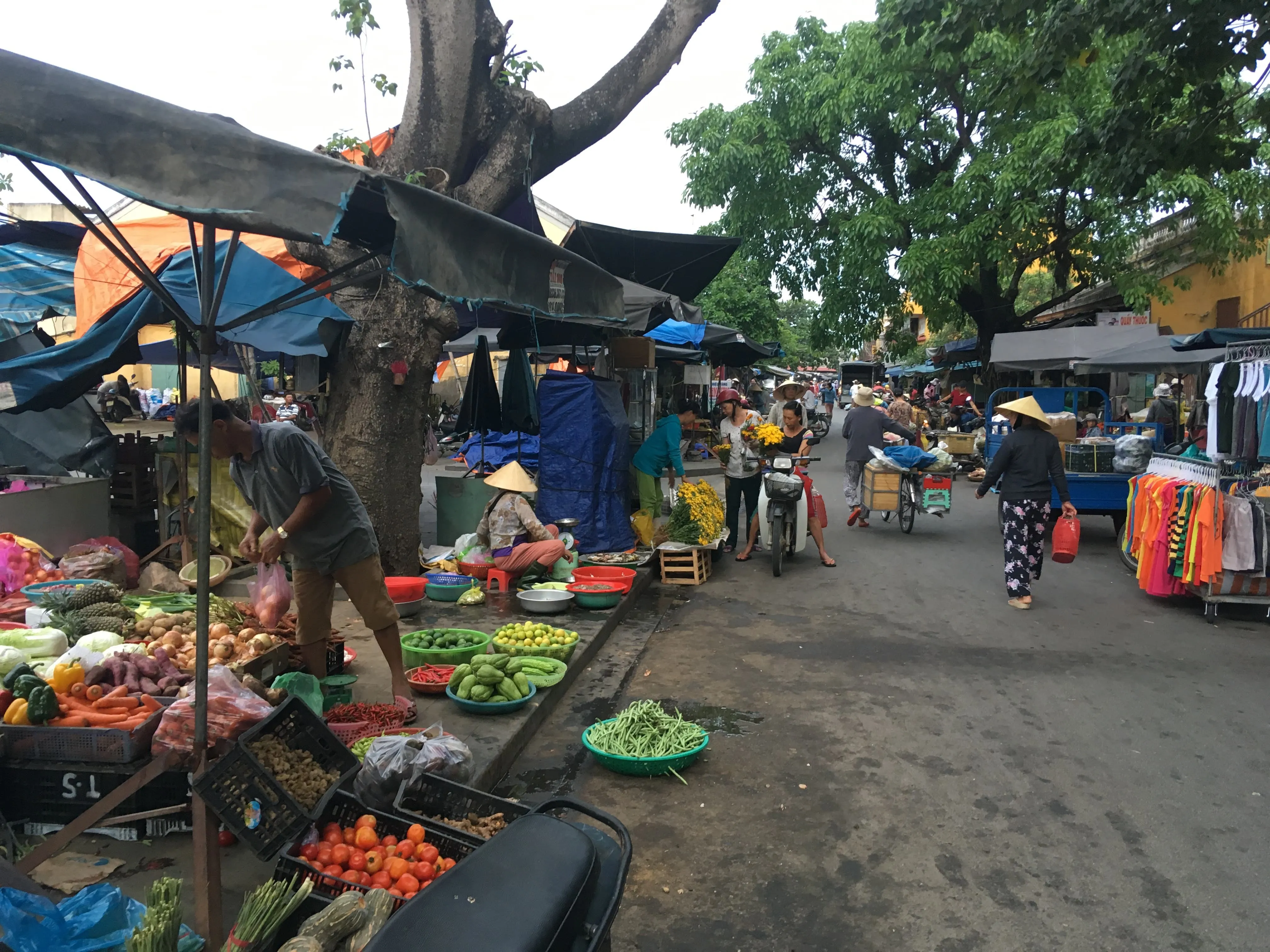
What To Buy
- Cao lau noodles — dried noodle bundles made with Ba Le Well water; available from vendors near the market centre, excellent as a souvenir
- Dried spices — lemongrass, galangal, turmeric root, star anise, and cinnamon sticks at prices far below supermarket rates
- Dried seafood — shrimp, squid, and anchovy paste (mam nem) used in regional cooking; good quality and genuine local product
- Fresh herbs for cooking classes — if you have enrolled in a cooking class, your teacher may send you to the market first to source ingredients as part of the lesson
- Tailor fabric — adjacent market sections sell silk, cotton, and linen fabric by the metre; many visitors buy fabric here and take it directly to a Hoi An tailor
- Woven baskets and lacquerware — small household goods made locally, better priced here than in the Ancient Town's tourist shops
Food Stalls
The cooked food section at Hoi An Central Market is a working canteen for the town's professional community — vendors, market porters, fishermen, and early-shift restaurant workers. The stalls are functional and unselfconscious, which is exactly what makes them excellent.
Recommended dishes to try in the market cooked food section:
| Dish | Description | Typical Price |
|---|---|---|
| Cao lau | Thick wheat noodles, pork slices, greens, crispy rice crackers in minimal broth | 30,000–50,000 VND |
| Com ga Hoi An | Hoi An chicken rice — poached chicken on fragrant rice, with a turmeric-yellow colour distinctive to this city | 35,000–60,000 VND |
| Mi quang | Turmeric-yellow broad noodles with a small amount of rich pork and shrimp broth, topped with toasted rice crackers | 30,000–50,000 VND |
| Banh xeo | Sizzling rice-flour crepe filled with shrimp, pork, and bean sprouts; eaten wrapped in lettuce with fresh herbs | 25,000–40,000 VND |
| Bun thit nuong | Cold rice vermicelli with grilled pork, herbs, and crushed peanuts | 25,000–40,000 VND |
A food tour that begins at the market and ends at a cooking class ties the ingredient sourcing to the cooking technique — the most complete food education available in Hoi An.
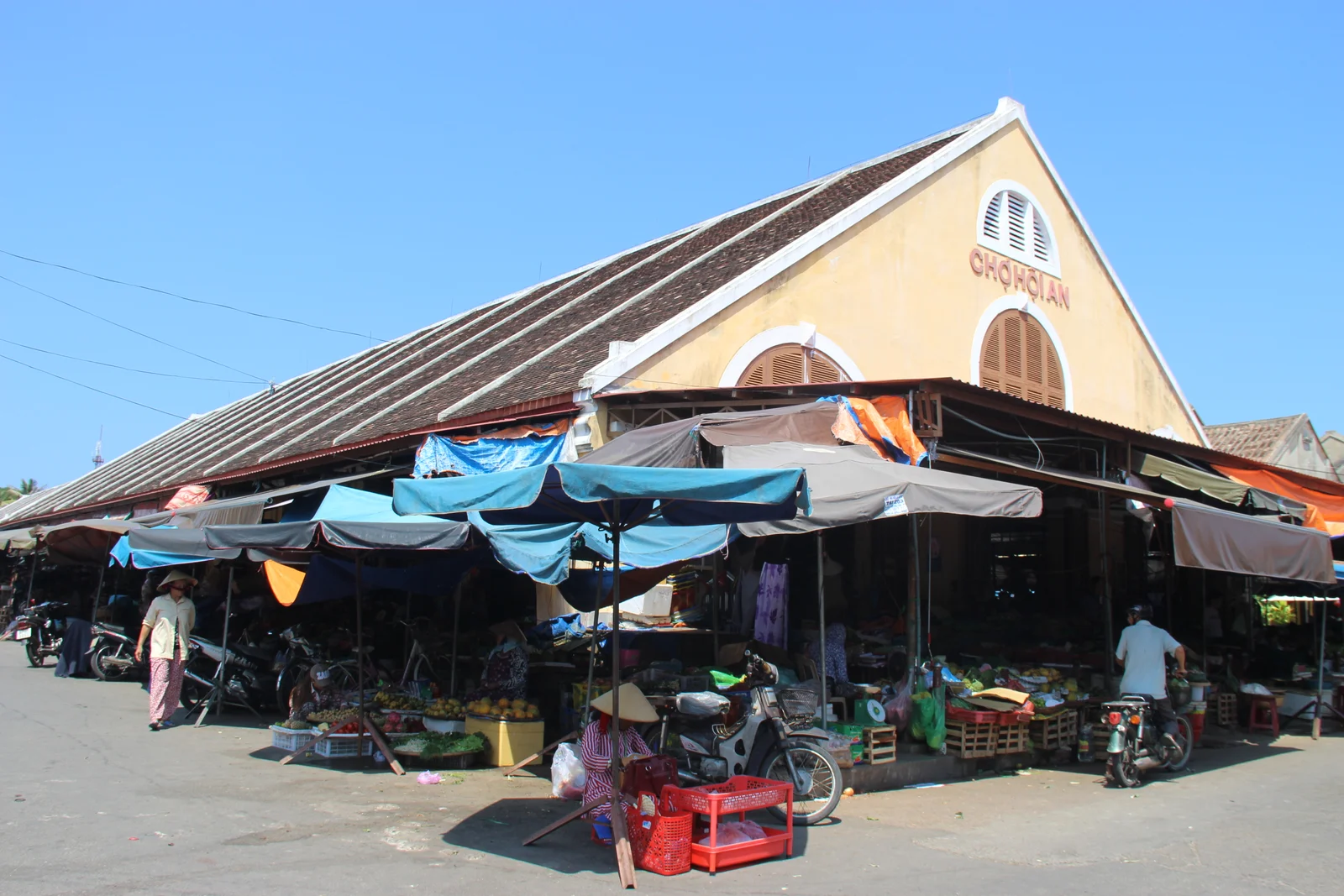
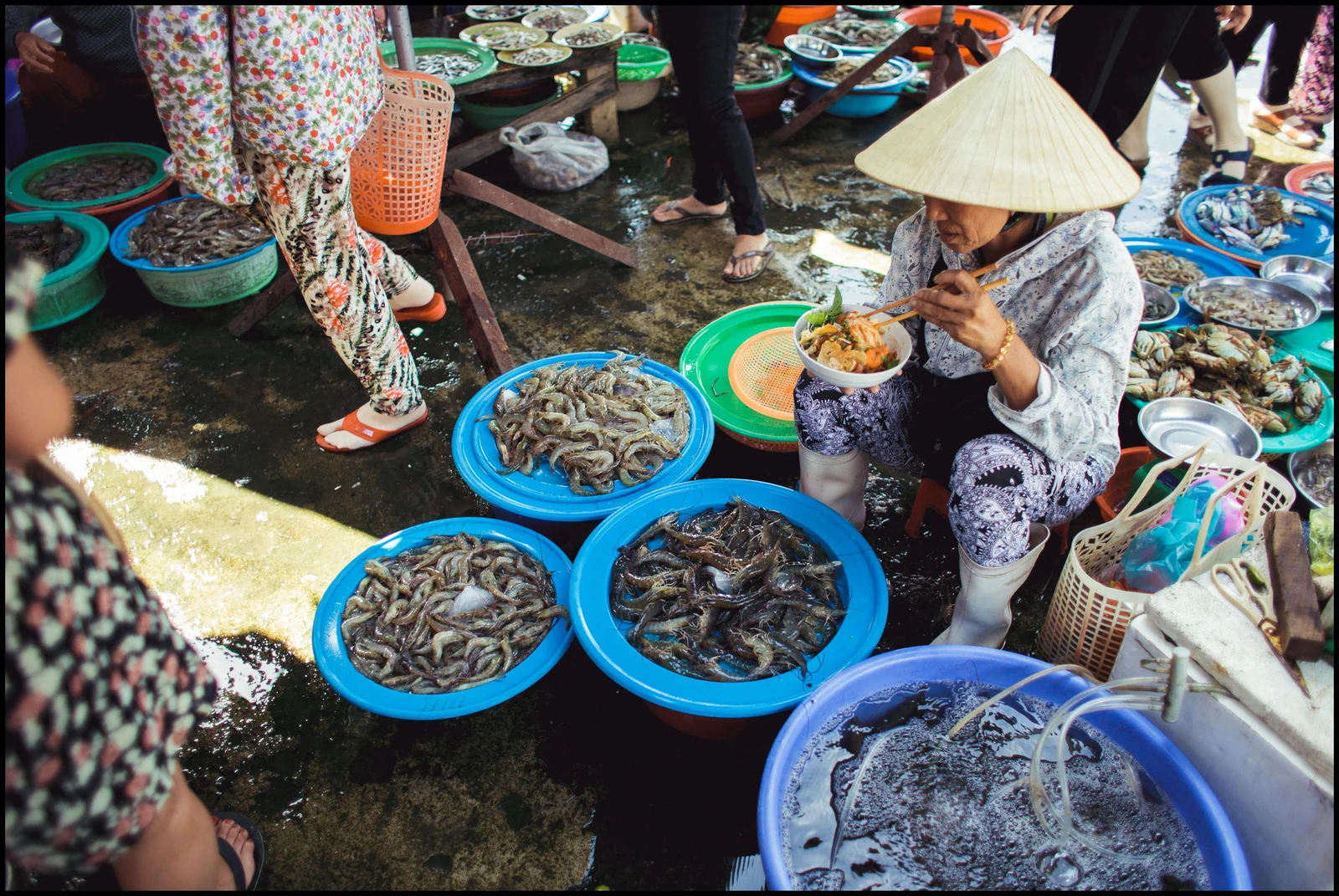
Hoi An Central Market in Pictures
When to Visit
- Opening: Daily 5:00 AM (cooked food stalls and fresh vendors)
- Peak activity: 5:30–8:00 AM — highest concentration of professional buyers, freshest produce, most active vendors
- Lunch service: Cooked food stalls at peak from 11:00 AM – 1:30 PM
- Afternoon wind-down: Fresh produce vendors pack up from 2:00 PM; cooked food continues to 5:00 PM
- Closing: Most vendors closed by 6:00 PM
- Best day: Any weekday morning; Sunday sees more domestic visitors but similar vendor activity
Admission and Costs
- Market entry: Free
- Cooked food prices: 25,000–60,000 VND ($1–2.40 USD) per dish; cao lau 30,000–50,000 VND; com ga 35,000–60,000 VND
- Fresh ingredients: Prices vary; herb bundles 5,000–15,000 VND; fresh fish 80,000–200,000 VND per kg depending on species
- Food tour with market visit: 400,000–700,000 VND ($16–28 USD) per person including tastings and cooking demonstration
- Cooking class starting from market: 600,000–900,000 VND ($24–36 USD) per person for 4–5 hours including lunch
Tips for Visitors
- Arrive before 7 AM for the full professional market experience; after 8 AM the fresh produce section begins thinning
- Follow your guide's vendor recommendations — not every cao lau stall sources its noodles from Ba Le Well; a guide who knows the authentic suppliers is invaluable
- Negotiate gently — prices in fresh produce sections are negotiable by 10–20%; cooked food stalls generally have fixed prices and are already excellent value
- Bring small notes — stall transactions are in cash; 5,000–20,000 VND denominations are most practical
- The banh mi question: The internationally famous Phuong stall (on Le Loi Street, not at the market) is worth the separate visit; the market bread vendors supply the raw baguettes that make all Hoi An banh mi exceptional
- Stomach preparation: If visiting early for the market, eat at the market — the cooked food section is excellent and the cheapest eating in Hoi An
Frequently Asked Questions
What is special about Hoi An's food and why does it differ from other Vietnamese cities?
Hoi An has developed three dishes that cannot be authentically replicated anywhere else on earth — a claim made by food geographers for a specific reason. Cao lau is a noodle dish whose characteristic mineral and earthy flavour derives from water drawn from a specific Cham-built well (Ba Le Well) within the Ancient Town, combined with ash from a specific tree species found only in the Cham Islands offshore. Change either ingredient and the dish loses its distinctive character. White rose dumplings (banh bao vac) are translucent shrimp dumplings resembling open roses, made by a single family that has controlled the recipe for generations and supplies all restaurants in Hoi An — you can eat them anywhere in the town, but the dumpling skins come from one kitchen only. Banh mi here has acquired international fame through Anthony Bourdain's endorsements — the Phuong banh mi stall on Le Loi Street has been named the best in the world by multiple food journalists. The Central Market is where the raw ingredients for all three dishes are sourced every morning from 5 AM.
What is the best time to visit Hoi An Central Market?
5:00–8:00 AM is the market's prime window — the hour when Hoi An's professional cooks, restaurant owners, and street food vendors arrive to source the day's ingredients. Fresh banh mi baguettes emerge from the bread ovens; fishing boats arrive at the river jetty beside the market with the night's catch; herb and vegetable vendors set up in tight rows; and the cao lau noodle sellers arrange their dried noodle bundles for restaurant collection. By 9 AM, this professional commercial activity is winding down and tourist-oriented activity begins. By noon, the market is in full daytime mode with cooked food stalls serving lunch. By 3 PM, the fresh produce vendors are packing up. The market closes around 6 PM. A guide who visits regularly knows which vendors are at peak activity at which hours and can time a visit to catch the most interesting activity.
Is Hoi An Central Market a good place to eat?
The market's cooked food section (accessed from the Tran Quy Cap Street entrance) is one of the best-value places to eat in Hoi An. The stalls specialise in local dishes: cao lau (the archetypal Hoi An noodle, 30,000– 50,000 VND per bowl), com ga (Hoi An's distinctive chicken rice, 35,000– 60,000 VND), mi quang (turmeric-yellow noodles with a minimum of rich broth, 30,000–50,000 VND), and banh xeo (sizzling rice-flour crepes filled with shrimp and pork, 25,000–40,000 VND). Eating at 6–8 AM alongside the vendors, fishermen, and market workers who have been awake since 4 AM is one of Hoi An's most authentic experiences. Most food tour operators begin their morning programs at the market precisely because the combination of fresh ingredient sourcing and immediate cooking provides the full story of how Hoi An's food culture works end-to-end.