
Walking Route
Walking Routes
The district rewards a slow, loose loop rather than a fixed march. These are the landmarks most guided routes string together, roughly in the order a walk from the Washington Avenue streetcar stop takes them:
- Lafayette Cemetery No. 1 — the walled, above-ground cemetery at Washington and Prytania, featured in Anne Rice's novels and the film Interview with the Vampire. Its crumbling whitewashed tombs make the most atmospheric burial ground in the city; public access is usually limited to guided tours.
- Colonel Short's Villa — the famous cast-iron cornstalk fence at 1448 Fourth Street, cornstalks wrapped in morning glories and cast in Philadelphia, is one of only two such fences in all of New Orleans.
- Commander's Palace — the turquoise-and-white Victorian restaurant at Washington and Coliseum has served Creole cuisine since 1893 and launched the careers of Emeril Lagasse and Paul Prudhomme.
- Magazine Street — six miles of independent boutiques, art galleries, vintage shops, and restaurants along the river side of the district. No chain stores, just locally owned businesses in converted 19th-century storefronts.
- Buckner Mansion — the enormous Italianate mansion at 1410 Jackson Avenue, its columns wrapped around three sides, served as the exterior of Miss Robichaux's Academy in American Horror Story: Coven.
- The Rink — an 1884 roller-skating rink on Prytania Street that now houses the Garden District Book Shop and other stores, a distinctly New Orleans approach to adaptive reuse.
- St. Charles Avenue oak canopy — the streetcar route running along the district's edge is lined with live oaks whose branches form a continuous tunnel, one of the most photographed urban corridors in the United States.
Local Life
Walking these blocks without interpretation means admiring architecture you cannot enter and stories you cannot access. Every mansion here is a private residence, occupied by families whose ancestors arrived with cotton fortunes in the 1830s or by newcomers who paid millions for the privilege of living behind those columned porticos. The gates do not open for tourists. Yet guides transform what would otherwise be a pleasant stroll past pretty houses into a narrative spanning cotton wealth, Civil War politics, the yellow fever epidemics that emptied entire blocks, and the architectural ambitions of a merchant class determined to outshine the Creole aristocracy they could not join.
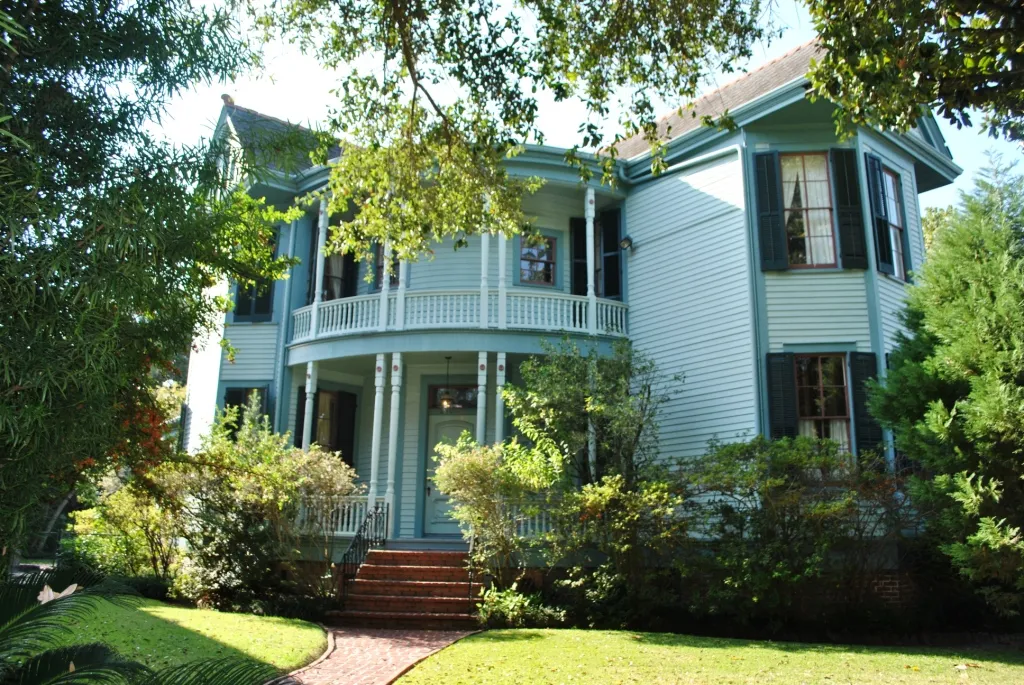
Architectural literacy separates informed appreciation from casual admiration. The difference between a Greek Revival mansion with soaring Corinthian columns and an Italianate villa crowned by a cupola with bracketed eaves stays invisible to most visitors, yet these stylistic choices signaled specific aspirations and wealth levels among the original owners. Guides decode the visual language of 19th-century status competition, explaining why certain families chose classical restraint while others embraced Victorian exuberance. They point to the corner where Anne Rice's Mayfair witches "lived," the villa with the cornstalk fence, and the mansions that television crews now rent for American Horror Story and other productions.
Lafayette Cemetery No. 1 occupies an entire block at Washington and Prytania, its above-ground tombs bearing inscriptions in English, French, German, and Irish Gaelic — a stone record of the immigrant waves that built this neighborhood, and of the epidemics that filled it. Without guidance, the cemetery is beautiful but bewildering, its crumbling vaults offering no explanation for the unusual burial traditions or the specific families interred within. With a guide, every significant vault tells a story that connects to the mansions visible just beyond the wall.
The tension between the Creole French Quarter and the American Garden District defined 19th-century New Orleans, a cultural rivalry that shaped everything from architecture to cuisine to politics. Guides who cover both neighborhoods reveal this dynamic fully, often recommending visitors experience both in a single day, connected by the St. Charles streetcar that runs beneath the ancient oaks bordering the district.
When to Visit
Neighborhood access: Public sidewalks are open at all hours and free to walk anytime. The district is residential, so keep noise down, particularly early morning and late evening.
- Best light for walking: Weekday mornings between 9 and 11 AM, when the sun filters through the oak canopy and the sidewalks are uncrowded. Golden hour before sunset is the other prime window.
- Lafayette Cemetery No. 1: Long-published gate hours were Monday–Friday 7:00 AM–3:00 PM and Saturday 7:00 AM–12:00 PM, but the cemetery has repeatedly closed for tomb restoration and now generally admits visitors only on guided tours — always confirm current access before you go.
- Magazine Street shopping: Most boutiques open 10:00 AM–6:00 PM, with later Saturday hours; art galleries often stay open until 8:00 PM during monthly Art Walk events.
- Seasonal note: Spring (March–May) brings the gardens to peak bloom; autumn offers comfortable temperatures and golden-hour light that turns the mansions into paintings.
Admission and Costs
Walking the district is completely free — the sidewalks are public and the architecture is the attraction. Beyond that, the typical costs are:
- Guided architecture walk: $25-40 per person for a 2-hour group tour covering mansion histories, architectural styles, and neighborhood legends.
- Private Garden District tour: $200-350 for up to 6 people, often combined with a St. Charles streetcar ride from the French Quarter.
- Cemetery tour: $20-30 per person for a guided walk through Lafayette Cemetery No. 1, covering burial traditions, above-ground vault construction, and notable interments.
- Literary walking tour: $30-45 per person tracing the homes and haunts of Anne Rice, Truman Capote, and other writers connected to the district.
- Getting here: the streetcar costs just $1.25 each way (exact change or a Jazzy Pass); a meal at Commander's Palace is the district's signature splurge.
The Case for a Guide
A guide is the difference between admiring pretty houses and reading a neighborhood that guards its best stories behind private gates. Because you cannot step inside, the interpretation is the experience.
- Decoding the architecture: A guide reads the facades for you — why one family chose Greek Revival restraint and a neighbor built an Italianate villa with a cupola, and how column orders, cast iron, and floor plans signaled exactly how much cotton money stood behind each door.
- The stories behind occupied homes: The gates never open, but a guide supplies what the sidewalk cannot: who built each mansion, which yellow-fever epidemic emptied it, and which are owned today by writers, chefs, and film productions.
- Making Lafayette Cemetery legible: Inside the walls, a guide explains above-ground burial, the reuse of family vaults, and the immigrant names carved in four languages — turning a bewildering maze into a readable history of the City of Lafayette.
- Separating literary fact from legend: Guides pinpoint the real Anne Rice house at 1239 First Street, the childhood corners tied to Truman Capote, and the mansions that stand in for fiction on screen, without inflating the myths.
- Route and logistics: A local knows the shadiest streets on a 95-degree afternoon, which blocks have the cleanest sightlines for photographs, and how to chain the district to the French Quarter by streetcar in one day.
Tips for Visitors
- Respect private property: These are occupied homes. Do not enter gates, peer into windows, or stand on porches for photographs — the sidewalk provides an excellent vantage point for every mansion.
- Wear real walking shoes: Garden District sidewalks are buckled upward by centuries-old oak roots, creating uneven surfaces that punish sandals and heels.
- Use the streetcar: The St. Charles line links the district to both the French Quarter downtown and Audubon Park further uptown, making a full-day itinerary easy for a $1.25 fare.
- Shade is your friend: The live oak canopy cools the sidewalks even on the hottest days, but carry water in summer, when temperatures regularly exceed 90 degrees.
- No public restrooms: The district is residential with few commercial establishments, so time a stop at Commander's Palace or a Magazine Street cafe.
- Pair it with a museum: The National WWII Museum sits in the adjacent Warehouse District, a short streetcar ride away; the two together make a full day exploring Uptown New Orleans — a change of pace from the bustle of Bourbon Street.
Frequently Asked Questions
When is the best season to walk the Garden District?
March through May is spectacular, when the azaleas, jasmine, and magnolias bloom beneath the live oak canopy and temperatures hover in the pleasant 70s. Fall from October through November offers comfortable walking weather and gorgeous golden-hour light that turns the antebellum mansions into paintings. The oak canopy shades the sidewalks even in summer, but July and August humidity makes extended outdoor walking unpleasant, so start early and carry water.
What time of day is best for photographing the mansions?
Early morning, roughly 8 to 10 AM on a weekday, gives you low-angle light filtering through the oaks, empty sidewalks, and the softest shadows on the columned facades. Golden hour before sunset is the other sweet spot, when the west-facing porticos on First and Fourth streets glow. Midday overhead sun flattens the ironwork detail and throws harsh contrast, so it is the weakest window for architecture shots.
Can you go inside the Garden District mansions?
Almost all of them are private, occupied homes, so the interiors are closed to visitors — the architecture is admired entirely from the public sidewalk. The neighborhood exceptions are commercial: you can step inside Commander's Palace for a meal, browse the Garden District Book Shop inside The Rink, and shop the boutiques along Magazine Street. Lafayette Cemetery No. 1 is the one historic site open to the public, though access is usually limited to guided tours.
How much should visitors budget for the Garden District?
Walking the district is completely free — the public sidewalks are the vantage point and the architecture is the attraction. Guided architecture walks run $25-40 per person for a two-hour group tour, private tours $200-350 for up to six people, and a cemetery tour of Lafayette No. 1 adds $20-30. Budget separately for a meal at Commander's Palace and the $1.25 St. Charles streetcar fare to reach the neighborhood.
How do you get to the Garden District from the French Quarter?
The historic St. Charles streetcar is the classic approach: board on St. Charles Avenue downtown and ride beneath the oak canopy to the Washington Avenue stop, about 25 minutes for a $1.25 fare, exact change or a Jazzy Pass required. Rideshares reach the district in 10-15 minutes, and it is a flat, walkable 30 minutes on foot from the upper French Quarter through the Lower Garden District if you want to see the neighborhoods change block by block.
What etiquette should visitors follow when photographing the mansions?
These are occupied family homes, so stay on the public sidewalk — do not open gates, step onto porches, or lean over fences for a shot, and keep your voice down since residents live just beyond the ironwork. The sidewalk gives a clean, unobstructed view of every facade. Photographing people's front doors is fine; photographing through their windows is not.