
Collections Highlights
The Giant Ocean Tank is the collection's crown jewel — a 200,000-gallon cylindrical Caribbean coral reef rising four stories through the building's core and home to Myrtle the green sea turtle, the aquarium's most beloved resident, who has lived here since 1970 and weighs an estimated 500-plus pounds. Spiral the ramp to catch sand tiger sharks, moray eels, barracuda, and southern stingrays layered at every depth.
Do not miss the Amazon rainforest gallery, a humid biome of piranhas, poison dart frogs, anacondas, and free-flying tropical birds, or the penguin colony near the entrance, where more than 80 birds across African, southern rockhopper, and little blue species inhabit a rocky island exhibit and are known individually by their keepers. The Edge of the Sea touch tank recreates a Gulf of Maine tidepool where visitors handle live sea stars, horseshoe crabs, and sea urchins under staff guidance.
Seek out the jellyfish gallery, where backlit moon jellies drift in hypnotic columns, and the shark and ray touch tank on the West Wing, where cownose rays and small sharks glide beneath your fingertips. Outside, the Atlantic harbor seal exhibit flanks the main entrance and is free to view from the plaza without admission.
Behind the exhibits, the aquarium's Anderson Cabot Center for Ocean Life anchors one of the Atlantic coast's most active marine rescue programs, rehabilitating hundreds of cold-stunned sea turtles and stranded seals each year — the conservation science that gives the whole collection its purpose and ties the exhibits directly to the working harbor that made Boston a maritime capital.
Guided Tours
The aquarium offers several guided experiences that reveal what self-guided visitors miss. The Behind-the-Scenes Tour ($75, roughly 90 minutes) takes small groups above the Giant Ocean Tank to the open-topped viewing platform, through the food-preparation galley, and into the animal care areas, where staff explain the veterinary work behind treating rescued sea turtles and seals.
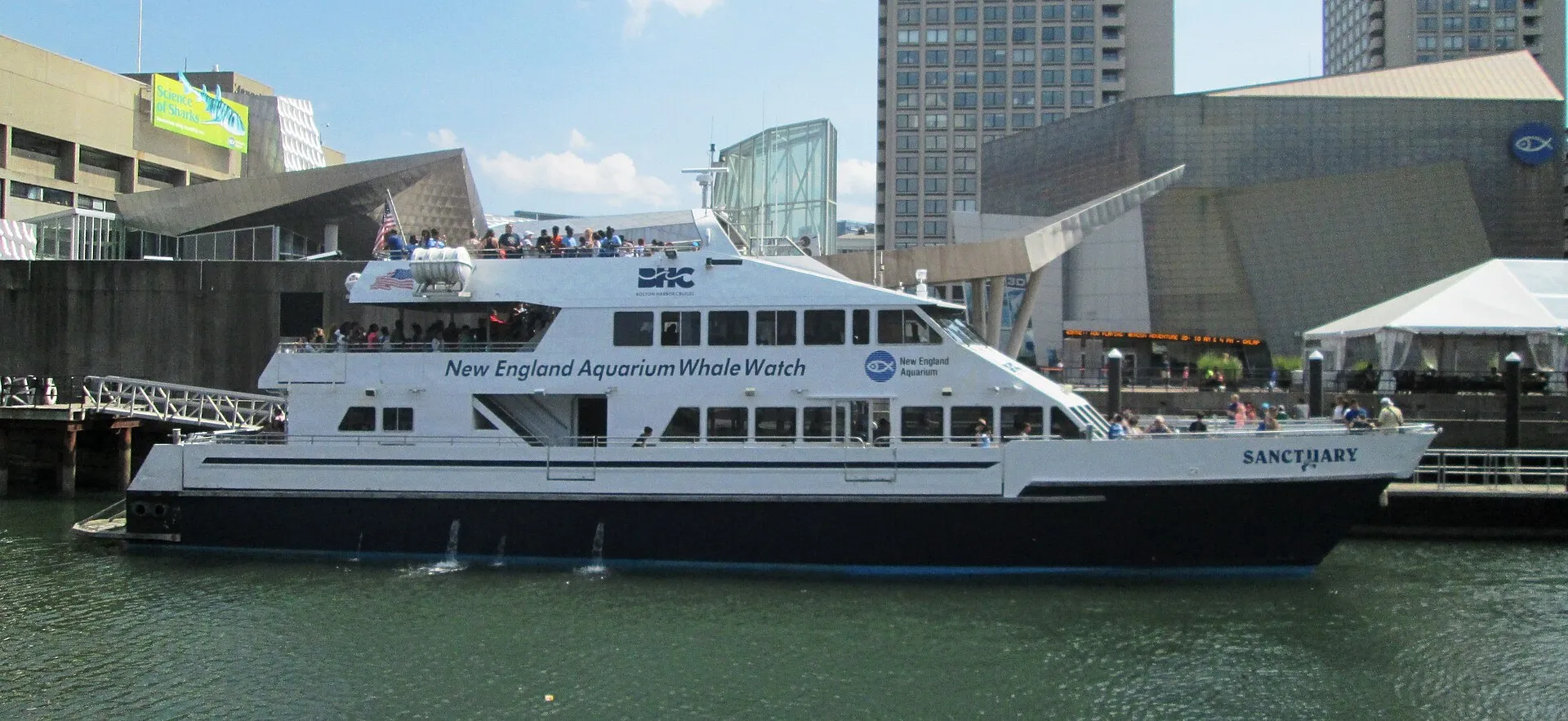
Throughout the day, divers enter the Giant Ocean Tank for feeding presentations, narrating live through underwater speakers and answering questions about the reef's inhabitants — a free, informal tour that transforms spectacle into science. Naturalist-guided whale watching trips depart the adjoining dock April through October; onboard educators from the aquarium's research team help spot and identify individual humpback whales at Stellwagen Bank National Marine Sanctuary by their tail-fluke patterns and explain feeding behaviors like bubble-net hunting.
For families, staff-led touch-tank sessions at the Edge of the Sea exhibit turn a quick look into a hands-on lesson about Gulf of Maine tidepool life. Members and school groups can book specialized tours covering the aquarium's rescue and conservation work, including its role in shaping federal marine policy.
Arrive early and check the posted daily schedule at the entrance, since dive presentations and feedings run at fixed times and the most popular tours sell out on summer weekends and school vacation weeks. Many Boston walking-tour operators fold the aquarium and a Central Wharf whale watch into a wider harbor-and-waterfront itinerary, so ask your guide about combining it with the nearby Faneuil Hall marketplace.
When to Visit
Aquarium hours run Monday through Friday 9 AM to 5 PM, weekends and holidays 9 AM to 6 PM; extended summer hours (late June through Labor Day) keep it open until 6 PM daily. Last entry is about an hour before closing. Because tickets are timed, arriving within your booked window — rather than piling in exactly at opening — avoids both the Central Wharf queue and the first-hour crush at the Giant Ocean Tank.
Whale watches depart April through October, usually at 10 AM and 2 PM, and last roughly 3-4 hours round trip to Stellwagen Bank. For the thinnest crowds, come on a Tuesday or Wednesday morning during the school year; rainy weekends and the February and April school-vacation weeks are the busiest days on the calendar.
Giant Ocean Tank dive presentations and scheduled feedings run at fixed times posted at the entrance, so check the day's board on arrival and plan your climb around them. The adjacent Simons IMAX Theatre screens ocean films on a six-story screen throughout the day, on a schedule independent of aquarium hours. The building is fully wheelchair accessible, with the spiral ramp step-free top to bottom and loaner wheelchairs available at the desk.
Admission and Costs
Aquarium admission is $34 for adults and $25 for children ages 3-11, with under-3s free; booking online saves about $2 and locks in a timed entry window that skips the Central Wharf ticket line. Whale watch tickets are separate — $63 adults, $43 children ages 3-11 — but sell at a discount when bundled with aquarium entry.
The Simons IMAX Theatre runs $13 adults and $11 children, with combo tickets available alongside admission. The outdoor harbor seal deck is free to view from the plaza without any ticket, a rewarding stop even for passers-by on the Harborwalk.
For a deeper look, the Behind-the-Scenes Tour costs $75 per person for a 90-minute walk through the medical center, food-preparation galley, and the open-topped platform above the Giant Ocean Tank. Members enter free year-round, and reciprocal programs extend discounted or free admission to members of many other accredited aquariums and science museums across the country.
The Case for a Guide
Self-guided visitors see the animals; a guide connects them to the science and history that make the collection coherent. Because the galleries spiral in one continuous loop with few labels at eye level, an informed companion turns a pretty climb into a reading of a whole ocean, one depth zone at a time.
- Reading the Giant Ocean Tank: A guide explains why the reef is stacked by depth, points out which sharks are the same individuals divers hand-feed, and translates the underwater narration into the biology of a living Caribbean reef.
- The whale-watch naturalist: On the Stellwagen Bank trip, onboard researchers from the Anderson Cabot Center for Ocean Life identify individual humpbacks by their tail-fluke patterns and read feeding behaviors like bubble-net hunting as they unfold.
- Conservation context: Guides tie the exhibits to the aquarium's rescue work — the cold-stunned sea turtles rehabilitated each winter and the research that has shaped federal marine policy — so the spectacle reads as stewardship rather than mere display.
- Timing the day: A guide schedules your visit around dive presentations, penguin feedings, and your timed entry so you never wait in the wrong line or miss a show, then folds in the seven-minute walk to Faneuil Hall.
Tips for Visitors
🐋 Giant Ocean Tank: Spiral up four stories around the 200,000-gallon Caribbean reef, watching sharks, sea turtles, and rays glide past at every level; the top-floor viewing platform lets you look straight down into the open water. 🚶 Pair it with the neighborhood: the aquarium is a seven-minute waterfront walk from Faneuil Hall and Quincy Market, so many visitors combine it with the Freedom Trail or lunch at the marketplace before or after.
🐧 Penguin colony: The African penguin exhibit near the entrance houses over 80 penguins in a rocky island habitat; watch for the daily feeding and the personalities that keepers know by name. ★ Touch tank: The Edge of the Sea tidepool exhibit lets visitors handle sea stars, horseshoe crabs, and sea urchins under staff guidance, a tactile highlight especially for children.
🐳 Whale watching: The high-speed catamaran reaches Stellwagen Bank in under an hour; humpback whales breach, bubble-net feed, and slap their tails within camera range from April through October. 🐾 Harbor seals: The outdoor seal colony is visible for free from the plaza; their playful swimming and sun-basking provide reliable entertainment before or after your visit. 🌊 Amazon rainforest gallery: A humid, plant-filled gallery with piranhas, poison dart frogs, and a free-flying tropical bird aviary that transports you from the New England coast to the tropics.
🚉 Getting there: The MBTA Blue Line stops at Aquarium station a few steps from the door, and harbor ferries link Central Wharf to the Seaport and the Charlestown Navy Yard at the end of the Freedom Trail. The Harbor Garage next door is the only on-site parking and fills early on weekends, so arriving by the T is almost always faster. ♿ Accessibility: The spiral ramp around the Giant Ocean Tank is step-free from top to bottom, and the aquarium loans wheelchairs at the entrance desk.
Frequently Asked Questions
What is the best time of year to visit the New England Aquarium?
The indoor exhibits are excellent year-round, but April through October lets you pair the aquarium with a whale watch from the adjoining Central Wharf dock, and peak humpback sightings on Stellwagen Bank run June through September. For the quietest Giant Ocean Tank, arrive at the 9 AM opening on a weekday during the school year; rainy weekends and February and April school-vacation weeks are the busiest. The outdoor harbor seal exhibit is most rewarding in warmer months when lingering along the waterfront is pleasant.
What are the New England Aquarium's opening hours?
The aquarium opens daily at 9 AM, closing at 5 PM Monday through Friday and 6 PM on weekends and holidays; extended summer hours (late June through Labor Day) keep it open until 6 PM every day. Last entry is typically an hour before closing, and the Giant Ocean Tank dive presentations run at fixed times posted at the entrance.
How much does admission to the New England Aquarium cost?
Timed-entry admission is $34 for adults and $25 for children ages 3-11, with under-3s free; buying online saves about $2 and locks in an entry window that skips the Central Wharf ticket line. Whale watch tickets are separate ($63 adults, $43 children) but sell at a discount when bundled with aquarium entry.
What are the must-see exhibits at the New England Aquarium?
Don't miss the four-story Giant Ocean Tank, a 200,000-gallon Caribbean reef spiraled by sharks, sea turtles, and rays; the African penguin colony near the entrance; the Edge of the Sea touch tank of tidepool creatures; and the free outdoor harbor seal exhibit. From April through October, the naturalist-led whale watch to Stellwagen Bank is the standout add-on.