
Collection Highlights
Dubai Aquarium & Underwater Zoo
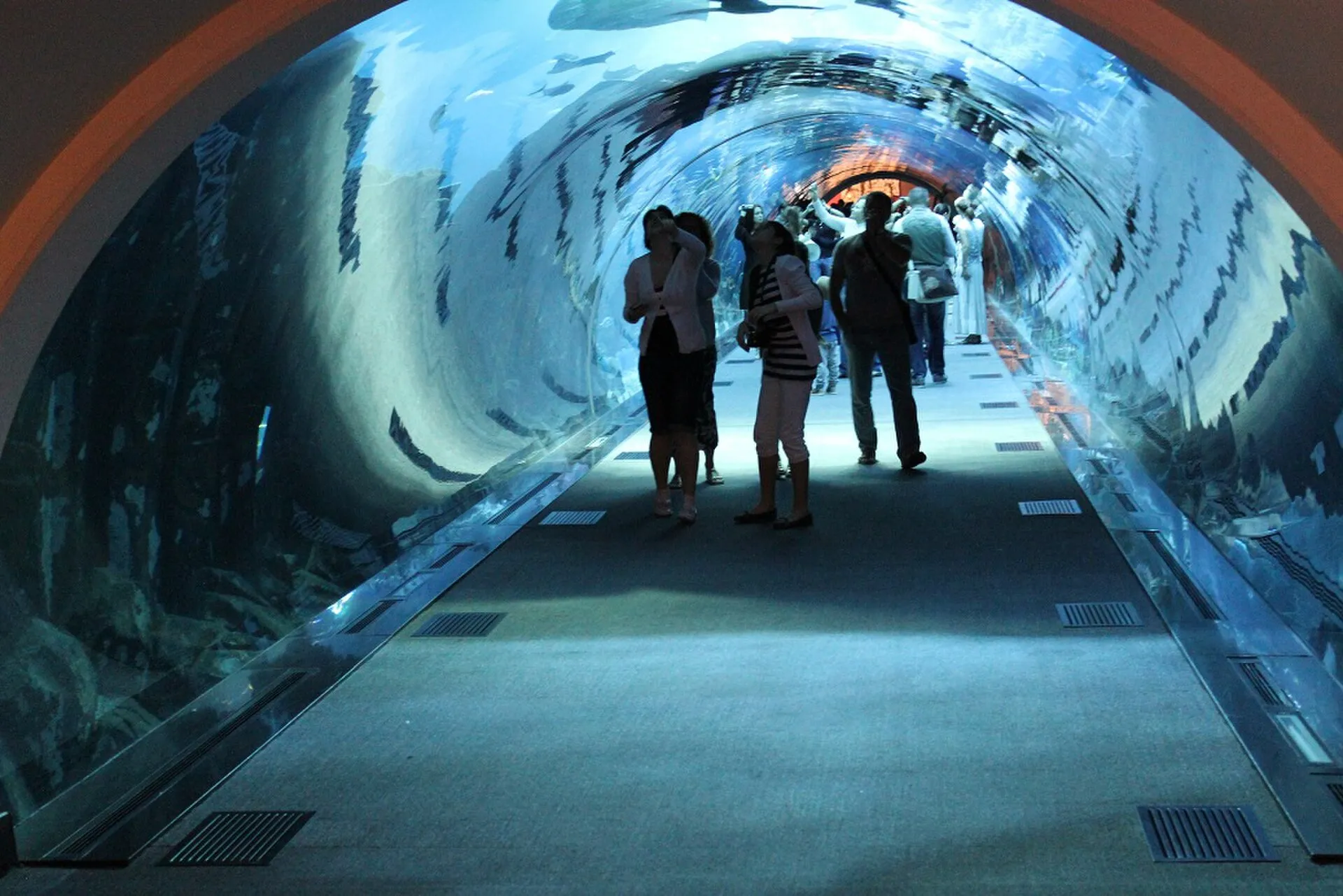
A 10-million-litre suspended tank holding more than 140 species and some 300 sharks and rays, fronted by one of the world's largest acrylic viewing panels. It is visible free from the walkway, with a walk-through tunnel, glass-bottom boat rides, and cage snorkelling sold separately.
The Dubai Fountain
Engineered by WET, the studio behind the Fountains of Bellagio, this 275-metre fountain shoots choreographed jets up to roughly 150 metres to music and light. Free shows run every 30 minutes through the evening from the waterfront promenade, with a ticketed lakeside boardwalk for closer views.
Fashion Avenue
The mall's luxury wing, enlarged by a major extension in 2018, gathers houses such as Chanel, Dior, Hermès, and Louis Vuitton beneath a dramatic sculptural roof. It rivals London's Bond Street for concentration of flagship boutiques and hosts seasonal runway events.
Dubai Ice Rink
An Olympic-size skating rink offering public sessions, lessons, and disco nights in air-conditioned comfort year-round. Admission of AED 75-90 includes skate rental, making it a refreshing pause from shopping and a family favourite during the summer heat.
The Souk
A lower-ground zone recreating a traditional Arabian market beneath a carved-timber ceiling, selling gold jewellery, oud perfumes, and craft goods, often at keener prices than the standalone boutiques. It offers a cultural counterpoint to the glass-and-marble luxury elsewhere in the mall.
VR Park & Reel Cinemas
A roughly 7,000 m² virtual- and augmented-reality park sits alongside a multi-screen cinema, anchoring the mall's indoor entertainment. Rides span motion simulators to interactive shooters, with tiered pricing from AED 125 to 200 depending on the attractions chosen.
The Grand Atrium & Waterfall
The Grand Atrium displays the DubaiDino, a genuine Diplodocus longus skeleton roughly 24 metres long and about 155 million years old, excavated from Wyoming's Dana Quarry and mounted on the Souk level, while a multi-storey Human Waterfall sculpture of diving figures cascades between floors. Together they form the mall's most photographed interior landmarks and a natural meeting point.
Events Schedule
The Dubai Aquarium & Underwater Zoo is the mall's signature draw: a 10-million-litre tank home to more than 140 species, including some 300 sharks and rays such as sand tiger sharks and giant groupers. Its acrylic viewing panel once held a Guinness World Record as the largest of its kind, and the tank is visible free of charge from the ground-floor walkway, with a walk-through tunnel, glass-bottom boat rides, and cage snorkelling sold separately.
The Dubai Fountain, set on the 275-metre Burj Khalifa Lake, was engineered by WET — the studio behind the Fountains of Bellagio in Las Vegas — and shoots jets of water up to roughly 150 metres in shows choreographed to music and light. Free performances run every 30 minutes through the evening, and a ticketed lakeside boardwalk brings spectators closer to the spray.
Indoors, the year-round Dubai Ice Rink offers Olympic-size skating in air-conditioned comfort, while VR Park spreads virtual- and augmented-reality attractions across roughly 7,000 m². The Fashion Avenue wing gathers houses such as Chanel, Dior, Hermès, and Louis Vuitton; the DubaiDino, a genuine Diplodocus longus skeleton about 155 million years old and some 24 metres long — excavated from Wyoming's Dana Quarry and mounted in the Grand Atrium — anchors the Souk level; and a multi-storey diving-figure Human Waterfall sculpture cascades between floors. Seasonal promotions, especially during the Dubai Shopping Festival (December–January), are published on the official mall website.
Seating Guide
The mall spans four floors across twelve zones, so first-time visitors should choose an entrance by interest rather than convenience. The Fashion Avenue entrance lands you among the luxury houses, the Ground Floor entrance near the aquarium is best for families, and the Waterfront entrance opens onto the promenade with Dubai Fountain views. Grab a paper map or open the app before you set off; the geometry defeats almost everyone at first.
With more than 200 restaurants and cafés, it pays to narrow your choice by cuisine and budget in advance — casual courts cluster near the cinema and the aquarium, while the waterfront terraces are reserved for fountain-view dining. The lower-ground Souk section sells traditional Arabian goods, oud perfumes, and gold jewellery, generally at keener prices than the standalone boutiques, and it pairs naturally with a later visit to old Dubai's Gold Souk. For VAT refunds, keep every receipt and validate the paperwork at the airport before departure. Allow a minimum of three to four hours for shopping, one or two attractions, and an evening fountain show; the Burj Khalifa observation decks are a short walk through the underground connection.
When to Visit
Retail hours run 10:00 AM to midnight Sunday through Wednesday and until 1:00 AM Thursday to Saturday, with the building itself opening earlier for walkers and morning coffee. Friday trading historically began at noon to allow for congregational prayers, and although hours have since relaxed, many stores still open late that morning — a quirk worth planning around. The least crowded window is any weekday morning between 10 AM and 1 PM.
The Dubai Fountain shows begin in the early evening and repeat every 30 minutes, best viewed from the waterfront promenade or a terrace restaurant. Avoid weekend evenings, which are extremely crowded, and steer clear of the peak of the annual Dubai Shopping Festival if you dislike dense holiday crowds — though the same festival is the highlight of the calendar for bargain hunters.
Admission and Costs
Mall entry is free, as is watching the Dubai Fountain from the promenade. The Dubai Aquarium tunnel walk costs from AED 150 (~$41), though the enormous tank is partly visible from the walkway at no charge. Ice-rink admission is AED 75-90 (~$20-25) including skate rental, and VR Park access runs AED 125-200 (~$34-54) depending on which rides you select.
Personal shopping-guide services cost AED 500-800 (~$136-218) for three to four hours of curated assistance. Food-court meals range from AED 30-80 (~$8-22), while sit-down restaurants run AED 100-400+ per person. Metered parking is free for the first hours but is capped on peak evenings, so arriving by the Burj Khalifa/Dubai Mall Metro station is often both cheaper and faster.
The Case for a Guide
Dubai Mall is deceptively easy to walk through and surprisingly hard to understand. Its scale means casual visitors see a fraction of what is there and rarely grasp how the retail, leisure, and civic pieces of Downtown Dubai fit together. A knowledgeable guide turns a bewildering circuit into a coherent half-day.
- Navigation without the wasted hours: With four floors and twelve zones, most first-timers backtrack repeatedly — a guide plots an efficient loop that hits the aquarium, the Souk, Fashion Avenue, and a fountain show without doubling back.
- Reading the retail landscape: Guides explain where genuine bargains sit — the lower-ground Souk and outlet corners — versus the full-price luxury of Fashion Avenue, and how the tax-free pricing and airport VAT refund actually work.
- Timing the Dubai Fountain and Burj Khalifa together: The fountain, the tower's observation decks, and the underground link can be sequenced into one seamless evening; a guide knows which show times and deck slots to book so the two icons don't clash.
- Cultural context most shoppers miss: The carved-timber Souk, the oud perfume trade, and the Friday prayer-time hours all carry meaning that a guide can unpack, connecting the glossy mall back to the merchant history of old Dubai and its Gold Souk.
- Family logistics under one roof: For families juggling the ice rink, VR Park, cinema, and aquarium, a guide coordinates ticketing, meal breaks, and stroller-friendly routes so the day flows instead of fraying.
Tips for Visitors
Download the mall app for its directory and navigation, but expect the layout to remain confusing on a first visit — pick a landmark entrance and orient from there. Wear comfortable shoes and plan for two to three kilometres of walking across multiple floors.
Remember that Friday mornings can open later than the usual 10 AM. The Metro provides direct, air-conditioned access via the Burj Khalifa/Dubai Mall station, sparing you the crowded car parks. Keep receipts for the UAE's VAT refund scheme, processed at the airport before departure, and change money downtown rather than at the in-mall booths, which offer weaker rates. Set aside a minimum of three to four hours, and consider bookending the day with contrasting sides of the city — a morning at the Gold Souk in old Deira, or an afternoon desert safari before returning for the evening fountain show.
Frequently Asked Questions
Is there a best time of year to visit Dubai Mall?
Dubai Mall is fully climate-controlled and equally enjoyable in any month, with the aquarium, ice rink, and 1,200 shops maintaining the same experience year-round. That said, the mall serves as a particularly welcome retreat during the scorching June-August period when outdoor Dubai becomes inhospitable, and the adjacent Dubai Fountain shows are most pleasant to watch from the terrace during the cooler winter evenings from October through March.
What are the opening hours for Dubai Mall?
Shops trade from 10:00 AM to midnight Sunday through Wednesday, and until 1:00 AM on Thursday, Friday, and Saturday, though the mall building itself opens earlier for walkers and coffee. Friday shopping historically began at noon to allow for congregational prayers, and while hours have relaxed, many stores still open late that morning. Restaurants along the waterfront run later than the retail floors, frequently until 1:00 AM or beyond, and the quietest window is any weekday morning between 10 AM and 1 PM.
What do tickets cost at Dubai Mall?
Entry to the mall itself is free, as is watching the Dubai Fountain from the outdoor promenade. The Dubai Aquarium & Underwater Zoo tunnel walk-through costs from AED 150 ($41), though the vast viewing panel is visible free from the ground-floor walkway. An Olympic-size session at the Dubai Ice Rink runs AED 75-90 ($20-25) including skate rental, and VR Park games cost AED 125-200 ($34-54) depending on the rides chosen.
How should visitors prepare for Dubai Mall?
Download the official mall app for its interactive directory and turn-by-turn navigation, as the four-floor, twelve-zone layout confuses almost everyone on a first visit. Wear comfortable shoes: a thorough visit involves two to three kilometres of walking across multiple levels. Dress is smart-casual and shoulders and knees should be covered out of respect for local custom, and it is worth reserving aquarium or cinema slots online in advance during peak winter season.
What is the history of Dubai Mall?
Dubai Mall was built by Emaar Properties as the retail heart of the multi-billion-dollar Downtown Dubai district and opened on 4 November 2008, in the middle of the global financial crisis. It launched with roughly 600 shops and has expanded steadily since, most notably with the enlarged Fashion Avenue luxury wing in 2018 and the later addition of Chinatown, the VR Park, and a reconfigured Souk. Designed alongside the Burj Khalifa and the Dubai Fountain, it was conceived to give Downtown Dubai a single centre of gravity.
How do you get to Dubai Mall by Metro?
The Red Line of the driverless Dubai Metro stops at the Burj Khalifa/Dubai Mall station, from which a long air-conditioned pedestrian link with travelators leads directly into the mall in roughly ten to fifteen minutes on foot. During peak evenings a free shuttle bus also runs between the station and the mall entrance. Arriving by Metro sidesteps the notoriously congested car parks, which hold around 11,000 vehicles yet still fill on weekend nights.