
Visitor Etiquette
Seville Cathedral is an active place of Catholic worship as well as a UNESCO World Heritage Site, and a little preparation keeps a visit smooth and respectful:
- Dress code is enforced: shoulders and knees must be covered for every visitor; there are no loaner garments at the door, so carry a light scarf in summer.
- Keep voices low in the nave, the side chapels, and around the Columbus tomb, which remains a site of genuine veneration.
- Photography without flash is permitted throughout; tripods are not.
- During scheduled Mass — typically mornings and Sunday afternoons — parts of the cathedral close to tourists and general sightseeing pauses.
- The Giralda closes about 30 minutes before the rest of the monument, so climb it early rather than saving it for last.
- Bags and backpacks pass through security screening at the entrance on Plaza del Triunfo, so travel light.
Check the day's Mass schedule and any feast-day closures on the official cathedral website before arriving.
Spiritual Significance
The cathedral is the seat of the Archbishop of Seville, one of the most influential centres of Catholic faith in Spain and, through the city's role in the Atlantic empire, across Latin America. Behind the main altar, the Capilla Real (Royal Chapel) is a place of living veneration: it holds the tomb of King Ferdinand III, canonised in 1671 as San Fernando for the Reconquista campaign that returned Seville to Christian rule in 1248, together with the venerated Virgen de los Reyes, whose feast on 15 August fills the cathedral each year. The nearby Sagrada Forma altar preserves a consecrated host long held to be miraculously incorrupt.
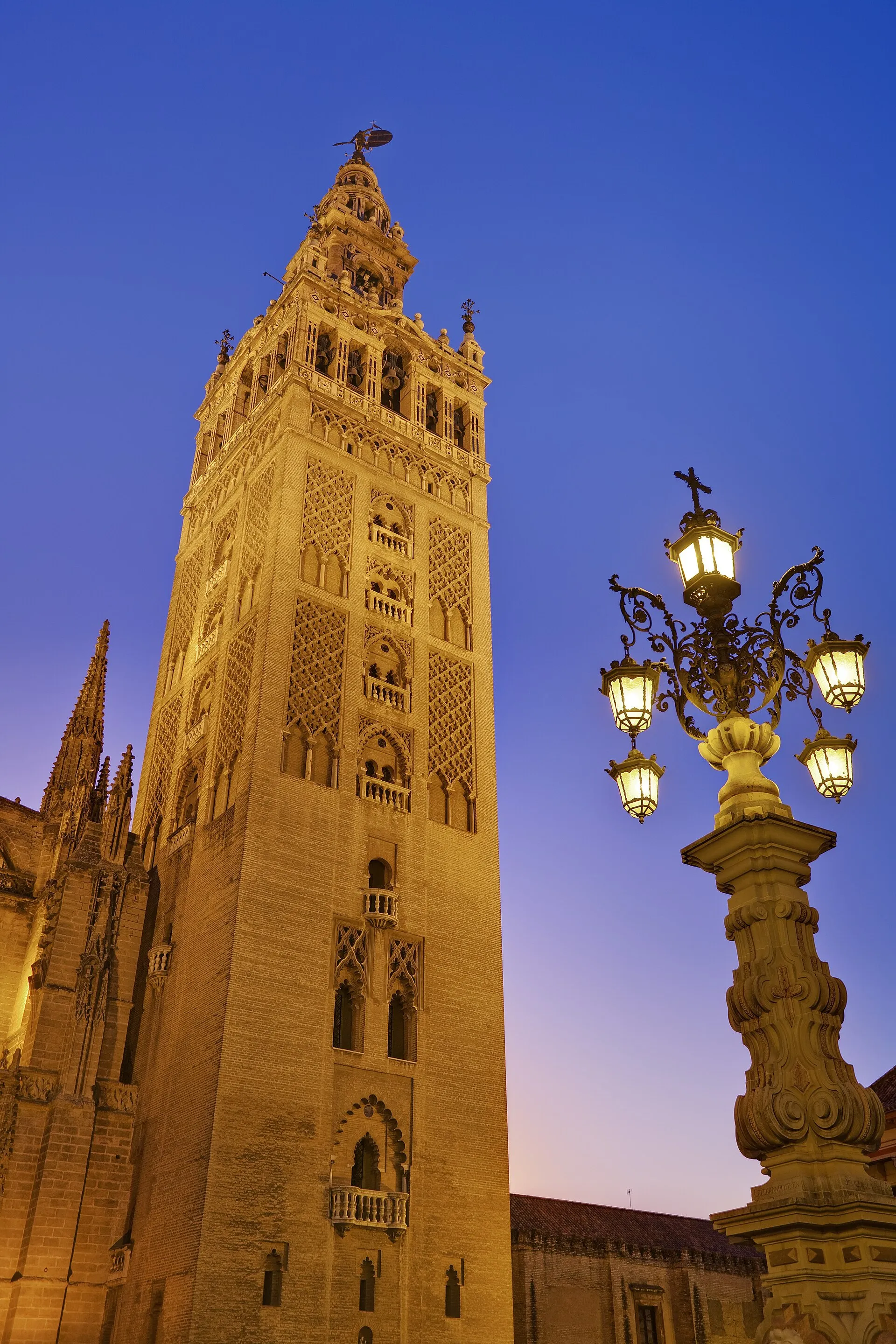
The building's whole spiritual identity turns on transformation. The Giralda rose around 1184 as the minaret of the Almohad mosque, its muezzin calling the faithful to prayer over medieval Ishbiliya; four centuries later Bartolomé Morel's bronze El Giraldillo was set on top as a weathervane personifying the Triumph of Faith, converting the very structure that once summoned Muslim prayer into a Christian emblem. It is the same layered story told in stone at the Mezquita-Cathedral of Córdoba and, in a royal key, at the Royal Chapel of Granada, where the Catholic Monarchs who completed the Reconquista are entombed.
Seville Cathedral and Giralda timeline
-
Almohad minaret begun
The brick tower that became the Giralda was raised for the great Almohad mosque under the architect Ahmad ibn Baso, a sister to Marrakesh's Koutoubia and Rabat's Hassan Tower.
-
Reconquista converts the mosque
Ferdinand III took Seville for Castile, and the Almohad mosque served as the city's Christian cathedral for more than 150 years before its ageing structure was deemed unsafe.
-
Gothic rebuilding begins
The cathedral chapter resolved to replace the old mosque with a Gothic church so vast that later generations would think them mad, laying out the largest Gothic footprint in Christendom.
-
Main body completed
After more than a century of work, the great nave, chapels, and vaults were finished, creating the world's largest Gothic cathedral by floor area.
-
El Giraldillo crowns the tower
Bartolomé Morel cast the bronze weathervane personifying the Triumph of Faith, set atop a new Renaissance belfry that turned the Almohad minaret into a Christian bell tower.
-
Columbus monument installed
Remains attributed to Christopher Columbus arrived from Havana and were placed beneath Arturo Mélida's tomb, borne by four heralds of the medieval Spanish kingdoms.
-
UNESCO World Heritage listing
The cathedral, the neighbouring Real Alcázar, and the Archivo de Indias were jointly inscribed on the World Heritage List.
When to Visit
Monday: 10:45 AM–5:00 PM · Tuesday–Saturday: 10:45 AM–6:00 PM · Sunday: 2:30–6:00 PM. The cathedral opens to tourists only after morning Mass, and the Giralda closes 30 minutes before the rest of the monument. Hours contract on major religious holidays, so confirm the calendar on the official website before your visit.
- Arrive at 10:45 AM opening, the moment morning Mass ends, for the thinnest crowds and the best light through the stained glass.
- Or come in the late afternoon, once the coach tours have moved on.
- Quietest days: Tuesday through Thursday, especially in winter.
- Allow 1.5–2 hours for a thorough visit, plus 30–45 minutes to climb all 35 ramps of the Giralda.
Spring (March–May) and autumn (October–November) are ideal; in July and August Seville routinely tops 40°C, turning the tower climb into an ordeal and stretching entry queues past an hour.
Admission and Costs
All prices are per person; the general ticket is a combined admission covering the Cathedral, the Giralda climb, and the nearby Church of El Salvador.
- General admission: €12 (~$13) — cathedral, Giralda, and El Salvador.
- Students and seniors (65+): €7 (~$8) with valid ID.
- Audio guide: €6 (~$7) supplement.
- Cubiertas rooftop guided tour: from €18 (~$20) — a timed climb across the vaults and buttresses, booked separately and selling out days ahead.
- Guided group tour: €35–50 (~$38–54) — around 1.5 hours with skip-the-line entry.
- Private guide: €160–280 (~$175–305) for up to six people, tickets purchased separately.
- Free entry during scheduled Mass — you cannot tour properly, but attendance costs nothing.
Buy timed tickets in advance on the official website; in peak season the on-the-day queue on Plaza del Triunfo can run 30–60 minutes or more.
The Case for a Guide
Seville Cathedral is the world's largest Gothic cathedral and holds one of history's most disputed tombs — a licensed guide navigates both the architectural labyrinth and the contentious questions no signboard will answer for you.
- The Giralda's ramps built for a horse: its 35 ramps rather than stairs let the Almohad muezzin ride to the top — a guide explains how the Christian belfry was raised above the minaret rather than replacing it, leaving one of Europe's finest surviving works of Almohad architecture, alongside the tower of the Mezquita-Cathedral of Córdoba
- The Columbus tomb debate: the coffin borne by four royal heralds is officially Christopher Columbus's, yet competing claims from Seville and Santo Domingo persist despite a 2006 DNA study by the University of Granada that supported the Seville remains — a guide lays out the evidence on both sides and why it still matters to Spanish and Dominican identity
- A cathedral too vast to read alone: most visitors see only the central nave and miss the side chapels holding masterworks by Murillo, Zurbarán, and Goya — a guide routes you efficiently through them and flags which canvases reward a close look
- The Patio de los Naranjos: the orange-tree courtyard was the mosque's ablution court, and a guide traces the Moorish water channels still cut into the paving and the symbolic passage from mosque to cathedral that it embodies
- The Sacristía Mayor treasury: home to the colossal silver monstrance (la Custodia) paraded at Corpus Christi and further works by Goya and Murillo — a guide explains their liturgical role and how American silver funded such splendour
The chapter's founding ambition still frames the whole visit:
Let us build a church so beautiful and so grand that those who see it finished will think we were mad.
— words traditionally attributed to Seville's cathedral chapter in 1401.
Tips for Visitors
- Book timed tickets online to skip queues that top 30–60 minutes in peak season.
- Arrive 10–15 minutes early for the security screening on Plaza del Triunfo.
- Dress for an active church: shoulders and knees must be covered.
- Pace the Giralda climb: 35 gently rising ramps, not steps, lead to the bell chamber at roughly 104 m — manageable for most, but there is no lift.
- Best photo opportunities: the tower framed from Plaza Virgen de los Reyes, the arcades of the Patio de los Naranjos, and the rooftop panorama on the Cubiertas tour.
- Combine next-door visits: the Real Alcázar is a two-minute walk across Plaza del Triunfo, and the flamenco barrio of Triana lies just over the river.
- Getting there: the T1 tram stops at Archivo de Indias beside the cathedral, and Metro Line 1's Puerta de Jerez is a five-minute walk; central Seville is flat and easily covered on foot.
- Allow 1.5–2 hours, or 2.5–3 hours with the Giralda climb and an unhurried look at the chapels.
Frequently Asked Questions
When is the best time to visit Seville Cathedral and the Giralda?
March through May and October through November are ideal, when Seville's temperatures are warm enough to enjoy the Giralda tower climb without the brutal heat that defines summer. Climbing the 35 ramps to the Giralda's bell chamber in July or August, when Seville regularly exceeds 40°C, is genuinely gruelling. Spring visits coincide with Semana Santa and the Feria de Abril, adding extraordinary atmosphere to the cathedral surroundings.
How hard is the Giralda climb, and are there stairs?
The Giralda has no staircase and no lift. Instead, 35 wide, gently sloping ramps spiral up the old Almohad minaret — originally built so the muezzin could ride a horse to the top. The climb to the bell chamber at roughly 104 metres is steady rather than steep and suits most reasonably mobile visitors, though there is nowhere to sit and the ramps narrow near the top. Allow about 30 to 45 minutes round trip, and go early in summer, when the enclosed tower becomes punishing by midday.
Is Christopher Columbus really buried in Seville Cathedral?
Almost certainly, at least in part. The ornate tomb near the south door, carried by four heralds representing the medieval kingdoms of Castile, León, Aragón, and Navarre, holds remains brought from Havana in 1898. A 2006 DNA study by the University of Granada compared them with those of Columbus's brother Diego and his son Hernando and found them consistent with the explorer. The Dominican Republic, however, maintains that Columbus rests in Santo Domingo, and because his body was moved repeatedly after death, both cities may hold a share. A guide can walk you through the competing claims at the tomb itself.
What does a Seville Cathedral ticket include, and should I book ahead?
The standard combined ticket (€12, about $13) covers the cathedral interior, the climb up the Giralda, and admission to the nearby Church of El Salvador; students and visitors over 65 pay €7. Rooftop Cubiertas tours across the vaults are sold separately and book out days in advance. Buying a timed ticket online through the official cathedral website is strongly advised, as the on-the-day queue on Plaza del Triunfo regularly runs 30 to 60 minutes in spring and autumn. Entry is free during scheduled Mass, though you cannot sightsee properly then.