
Observation Spots
Formation
Monte Igueldo is a headland of layered sedimentary rock, part of the folded flysch coastline that defines the Basque shore, where alternating beds of sandstone and marl were laid down on an ancient sea floor and later tilted upward. The hill forms the western horn of the bay; its twin, Monte Urgull, closes the eastern side, and the small island of Santa Clara between them is the drowned crest of the same ridge, now a natural breakwater that calms the water.
The headland's weather is pure Atlantic: mild, green, and famously changeable, with the clearest air often arriving on crisp winter days between storms. Long before any railway, the point served as a natural sea-mark for sailors steering into the bay, and a lighthouse still works the clifftop today. When nineteenth-century royalty turned San Sebastián into a fashionable resort, the panorama drew visitors up on foot — demand that the 1912 funicular and its summit fairground were built to answer.
Wildlife
The slopes below the summit are cloaked in maritime pine and holm oak, with gorse, bramble, and salt-tolerant scrub clinging to the windward edges. It is a quieter, wilder counterpoint to the manicured promenade down in the city, and the footpath that winds back toward Ondarreta passes through this green cover the whole way down.
Overhead, yellow-legged gulls and shags ride the updrafts off the cliffs, and the Bay of Biscay's seasonal migrations send gannets and seabirds past the point in autumn. Bring binoculars if you have them: from the Torreón balcony you can scan the open water for passing birds and, on the calmest days, the occasional dolphin or sunfish breaking the surface far below.
Trails
The summit rewards slow exploration. Here is how to make the most of the plateau and the paths around it:
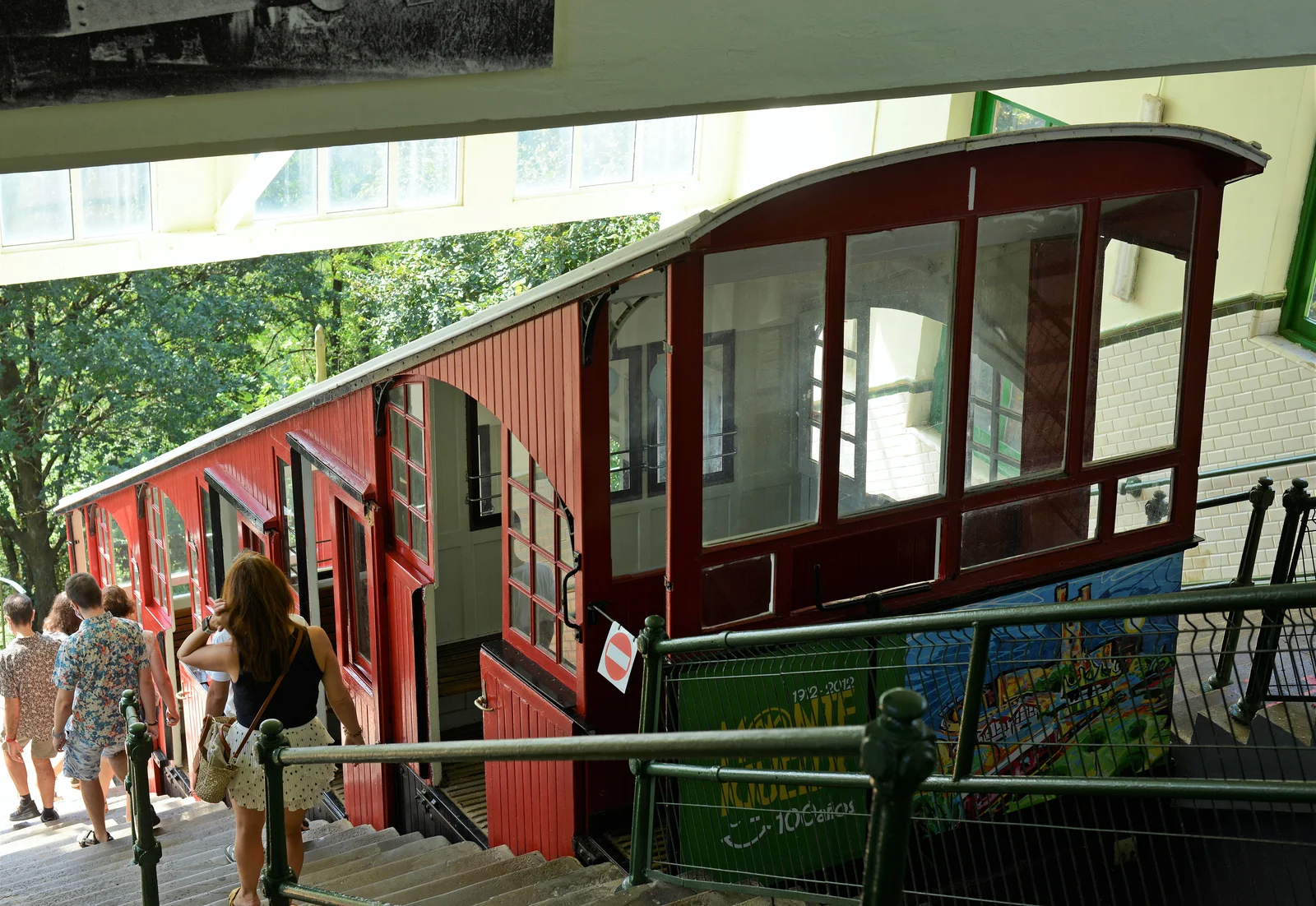
- Ride the vintage funicular — Board the wooden carriage at the Ondarreta base station and clatter up the steep grade through the trees, the bay widening beneath you at every metre.
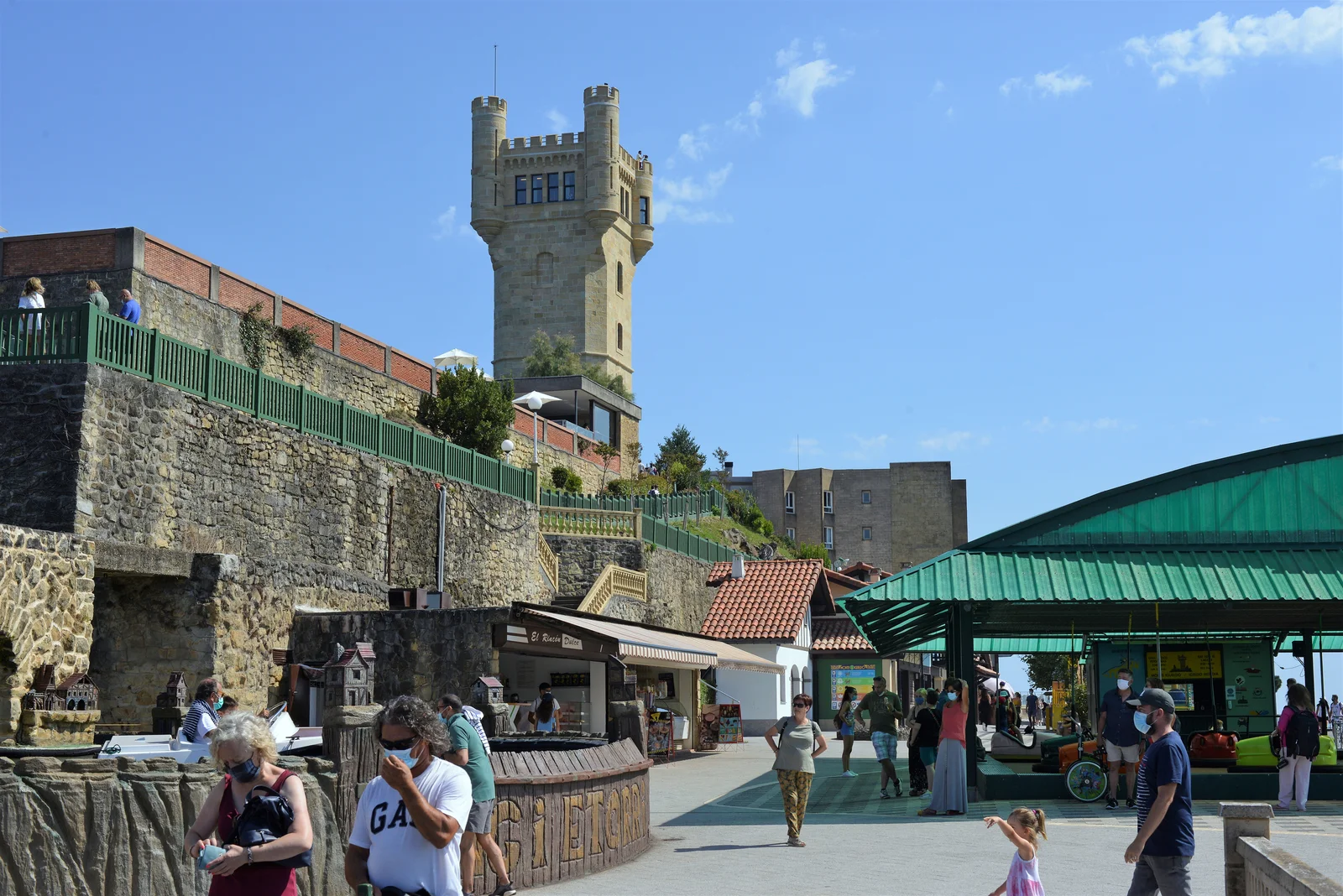
- Climb the Torreón — Ascend the stone turret for an unobstructed 360-degree sweep, from the French coast in the east to the green Basque hills rolling inland.
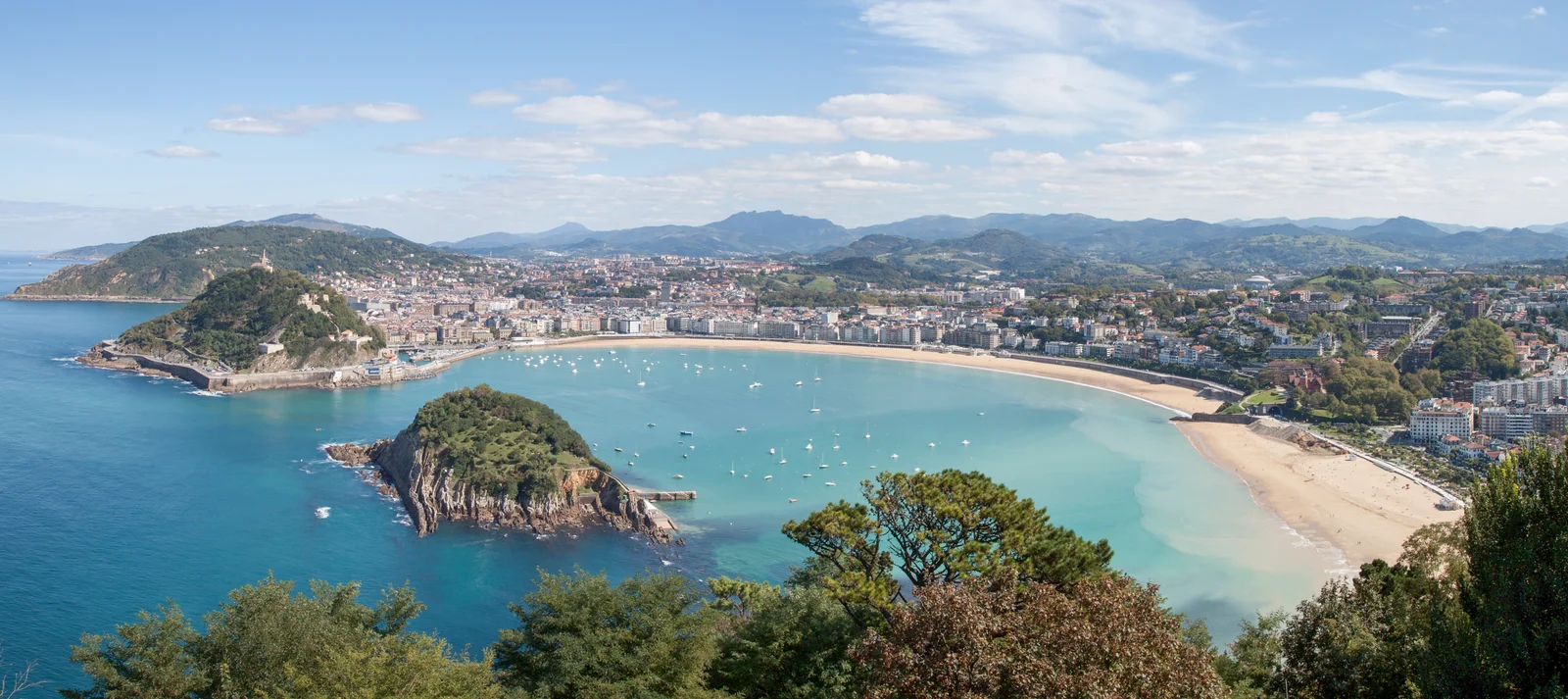
- Frame the classic bay shot — Compose La Concha's perfect crescent, Santa Clara island, and the city skyline in a single photograph from the western railings.
- Stay for sunset — The summit faces the open Atlantic, so linger as the sun drops and the sky flares orange and violet over the water.
- Walk down through the woods — Take the footpath down the pine-and-oak slope toward Ondarreta for a slower, quieter descent with the coast flickering through the branches.
Monte Igueldo timeline
- 19th century
A resort looks west
As Spanish royalty turned San Sebastián into a fashionable summer retreat, the headland's sweeping view over La Concha became one of the bay's defining attractions, reached on foot by the earliest visitors.
-
A fairground on the summit
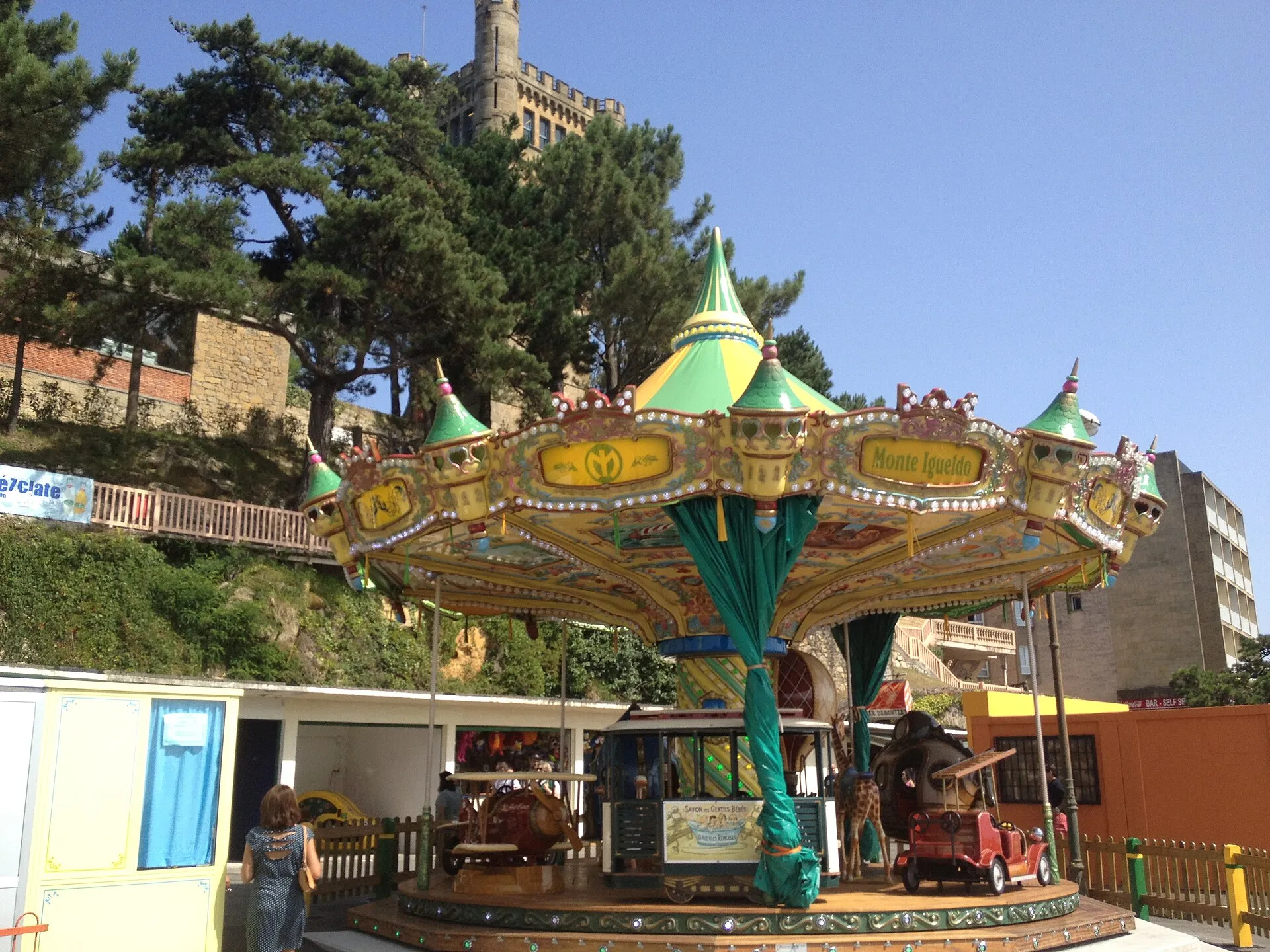
An old-fashioned amusement park took shape on the plateau around the Torreón tower, growing into one of the oldest fairgrounds still operating anywhere in Europe.
-
The funicular opens
The funicular railway began carrying visitors up the steep wooded flank from Ondarreta, a service it has run almost without interruption ever since.
Monte Igueldo in Pictures
When to Visit
- Late afternoon (4-6 PM) — The sun swings west and floods La Concha with warm golden light, the best conditions for photography and sheer visual impact.
- Sunset — Watching the sky change colour over the Atlantic beside the Torreón is unforgettable; arrive 30-45 minutes early, as the best viewing spots fill quickly.
- Weekday mornings — For the funicular, park, and viewpoints largely to yourself, come before noon on a Tuesday or Wednesday.
- Clear winter days — The air is often crispest from November to February, stretching visibility along the coast and toward the Pyrenean foothills.
- Avoid fog — Low cloud and coastal mist can erase the panorama entirely, so check the forecast or a local webcam before heading up.
Admission and Costs
- Funicular round trip — about €4 (around $4.50) for adults, €2.50 (about $2.75) for children aged 4-12, free under 4.
- Amusement park — free to enter the grounds; individual ride tickets run €1-3 (roughly $1-3.50) each.
- Torreón tower — included with park access at no extra charge.
- Driving up — road access is free, but parking at the top is limited and first-come, first-served.
- Guided visit — €15-25 (about $16-27) per person as part of a wider San Sebastián walking tour that folds in the funicular ride.
Fares and operating hours shift with the season, so confirm the current timetable with San Sebastián's tourism board before you plan around the last ride down.
The Case for a Guide
Monte Igueldo is easy to visit alone, but a local guide turns a photo stop into the moment the whole city clicks into place:
- Reading the landscape — A guide names every landmark in view: Monte Urgull's fortress, the Kursaal cubes, the Urumea river mouth, and the fishing villages strung along the coast.
- Timing the light — Locals know which week and hour deliver the clearest skies and the most dramatic light across the bay.
- The funicular's story — How the 1912 railway was built, why it was nearly scrapped, and how it became a beloved institution.
- Framing the shot — The angles and ledges that produce the best photographs, including a few spots just off the usual path.
- Joining the dots — Seen from here, the geography linking La Concha, the Parte Vieja, and the hills makes the rest of your visit richer.
Tips for Visitors
- Check the weather first — Monte Igueldo is all about the view, so if fog rolls in, save it for a clearer day.
- Bring layers — The summit is exposed and noticeably windier than the city below, even on warm summer afternoons.
- Beat the funicular queue — Peak-season waits can reach 20-30 minutes; walking up and riding down is a practical compromise.
- Mind the parking — If driving, arrive before noon or after 5 PM to improve your odds of a space at the top.
- Pair it with Ondarreta — The base station sits steps from Ondarreta beach, the western extension of La Concha — combine both in one afternoon.
- Carry some cash — A few rides and ticket booths still prefer coins and small notes.
Frequently Asked Questions
What time of day is best for visiting Monte Igueldo?
Late afternoon (4-6 PM): The sun swings west and bathes La Concha bay in warm golden light — the finest conditions for photography and sheer visual impact.
How much does it cost to access Monte Igueldo?
Funicular round trip: ~€4 adults, ~€2.50 children (4-12), free under 4. Amusement park entry: Free to enter the grounds; individual ride tickets €1-3 each. Torreon tower: Included with amusement park access, no extra charge.
What should visitors bring when visiting Monte Igueldo?
Check the weather first: Monte Igueldo's value is entirely in the views — if fog rolls in, save this visit for a clearer day. Bring layers: The summit is exposed and noticeably windier than the city below, even on warm summer days.
How do you get to Monte Igueldo from central San Sebastián?
The funicular base station sits beside Ondarreta beach at the western end of La Concha, about a 25-30 minute walk along the promenade from the old town, or a short ride on a city bus. From there the 1912 funicular carries you to the summit in a few minutes. Drivers can take the road to the top, though parking is limited and fills quickly in summer.
Is Monte Igueldo a good visit for families and less mobile visitors?
Yes — the funicular removes the climb, so the summit is reachable without a steep walk, and the vintage amusement park is squarely aimed at families with young children. The plateau itself is uneven in places and the Torreón involves stairs, so wheelchair users and anyone with limited mobility should expect some obstacles at the very top, even though the ride up and the main viewpoints are easy to reach.