
Observation Spots
Formation
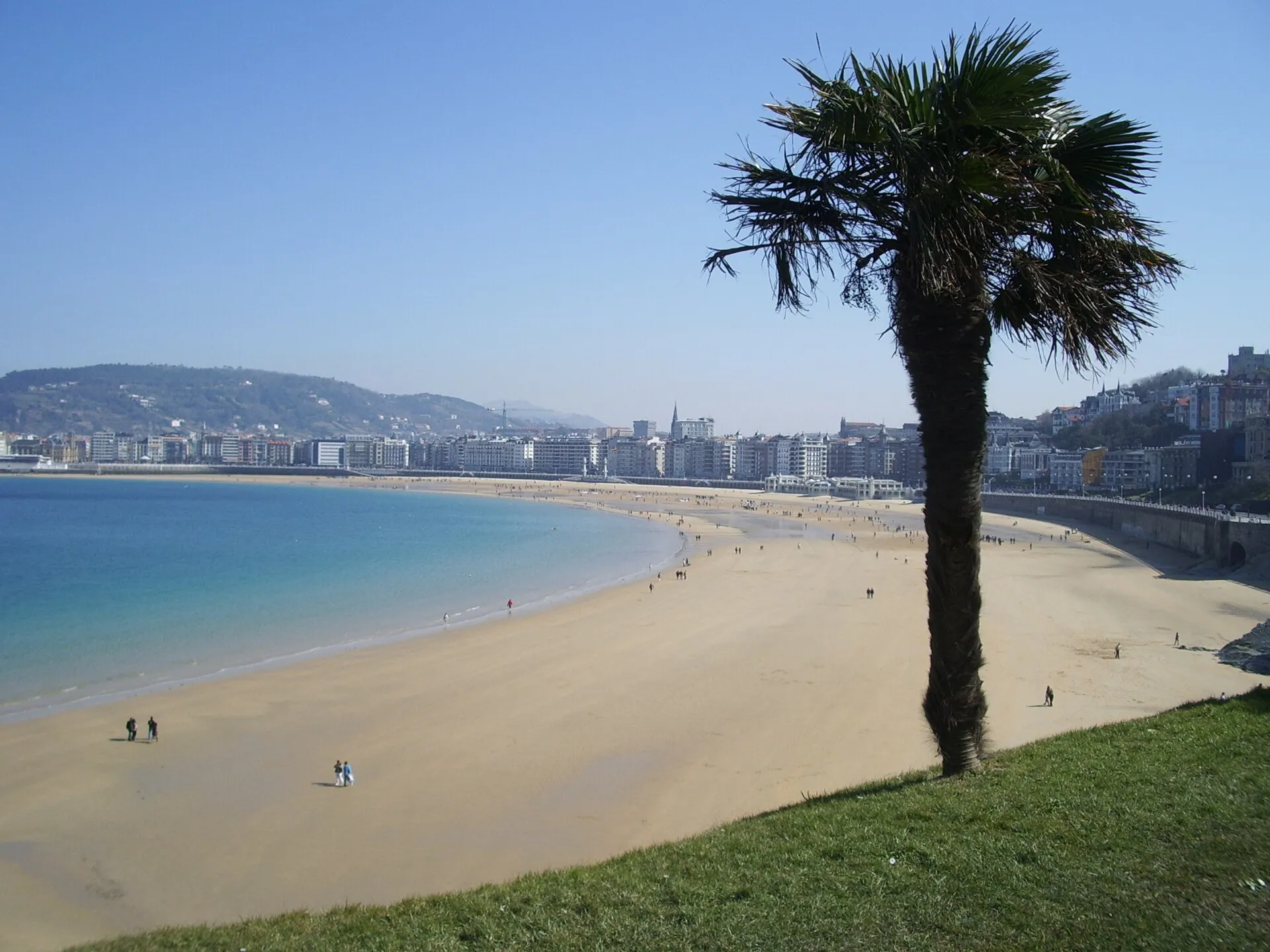
La Concha owes its sheltered calm to geology. The bay is scooped from the same folded flysch coastline that defines the Basque shore, where ancient beds of sandstone and marl were laid on a sea floor and later tilted upward. Monte Urgull and Monte Igueldo are the two horns of that structure, and Santa Clara island — the drowned crest of the same ridge — sits between them as a natural breakwater that tames the Atlantic swell.
The result is a rare thing on the open Bay of Biscay: a city beach with almost no wave action, backed by fine golden sand rather than the pebbles common further along the coast. The water is pure Atlantic — mild, green, and bracing even in high summer — and the climate is famously changeable, with bright spells and sea mist trading places within a single afternoon.
Tides shape the beach hour by hour. The Bay of Biscay has a wide tidal range, so at low water the sand nearly doubles in width, exposing firm flats ideal for walking and ball games; at high tide the sea pushes bathers back toward the promenade wall. Checking a tide table, available at the San Sebastián tourist office, is the single most useful piece of planning for a visit.
Wildlife
For all its urban polish, La Concha sits on a living stretch of Atlantic coast. Yellow-legged gulls and the occasional shag work the bay, while the pines cloaking Santa Clara island shelter small songbirds just offshore. On calm mornings you may spot mullet shoaling in the shallows near the quay, and autumn storms wash kelp and the odd by-the-wind-sailor onto the sand.
The warm months bring occasional blooms of jellyfish on Atlantic currents, which lifeguards flag when they drift in — the gentle sting of the mauve stinger being the usual culprit. The sheltered, shallow water also makes the bay a nursery for juvenile fish, one reason local swimmers and snorkellers find more life here than the manicured promenade above would suggest.
Beyond the sand, the green walls of Monte Urgull and Monte Igueldo frame the bay with maritime pine, holm oak, and salt-tolerant scrub, and seabirds ride the updrafts off both headlands. Bring binoculars: from the promenade railing you can scan the island and the bay mouth for passing gannets in autumn and, on the stillest days, a distant dolphin breaking the surface.
Trails
La Concha rewards more than a towel on the sand. The bay works as a hub for walks, paddles, and swims, several of which thread toward the city's other landmarks:
- Walk the full crescent — Trace the ornamental railing for the entire 1.35 km from the Miramar Palace gardens to the old town, one of Europe's great seafront strolls at any tide.
- Cross to Santa Clara island — Take the summer launch to the pine-topped island for a secluded swim, a low-tide beach, and a short climb to the lighthouse.
- Swim the bay crossing — Join local open-water swimmers on the roughly 800-metre route from the beach to Santa Clara through gentle, sheltered currents.
- Paddle by kayak or board — Glide across the calm water for a sea-level angle on the city skyline and the green hills behind it.
- Soak at La Perla — The La Perla thalassotherapy centre is built into the promenade, its seawater pools and floor-to-ceiling windows framing the bay.
- Continue to Peine del Viento — Walk west past Ondarreta to Eduardo Chillida's iron wind-combs, where the Atlantic crashes against the rocks at the foot of Monte Igueldo.
La Concha Beach timeline
-
The queen takes the waters
Queen Isabel II began bathing at La Concha on her doctors' advice, and fashionable Madrid society followed, turning a working fishing bay into Spain's most sought-after summer resort.
-
Miramar Palace
The royal family completed the Miramar Palace on the headland dividing La Concha from Ondarreta, confirming the bay as the summer seat of the Spanish court through the Belle Époque.
-
The white balustrade
The promenade's wrought-iron railing was installed along the crescent. Now the city's most photographed emblem, its twin-globe lamps give La Concha its instantly recognisable silhouette.
- 21st century
Europe's favourite city beach
Donostiarras still treat the sand as a shared living room in every season, and La Concha regularly tops international polls of the finest urban beaches in Europe.
La Concha Beach in Pictures
When to Visit
The bay has two rhythms worth planning around — the season and the tide — and getting both right transforms a visit.
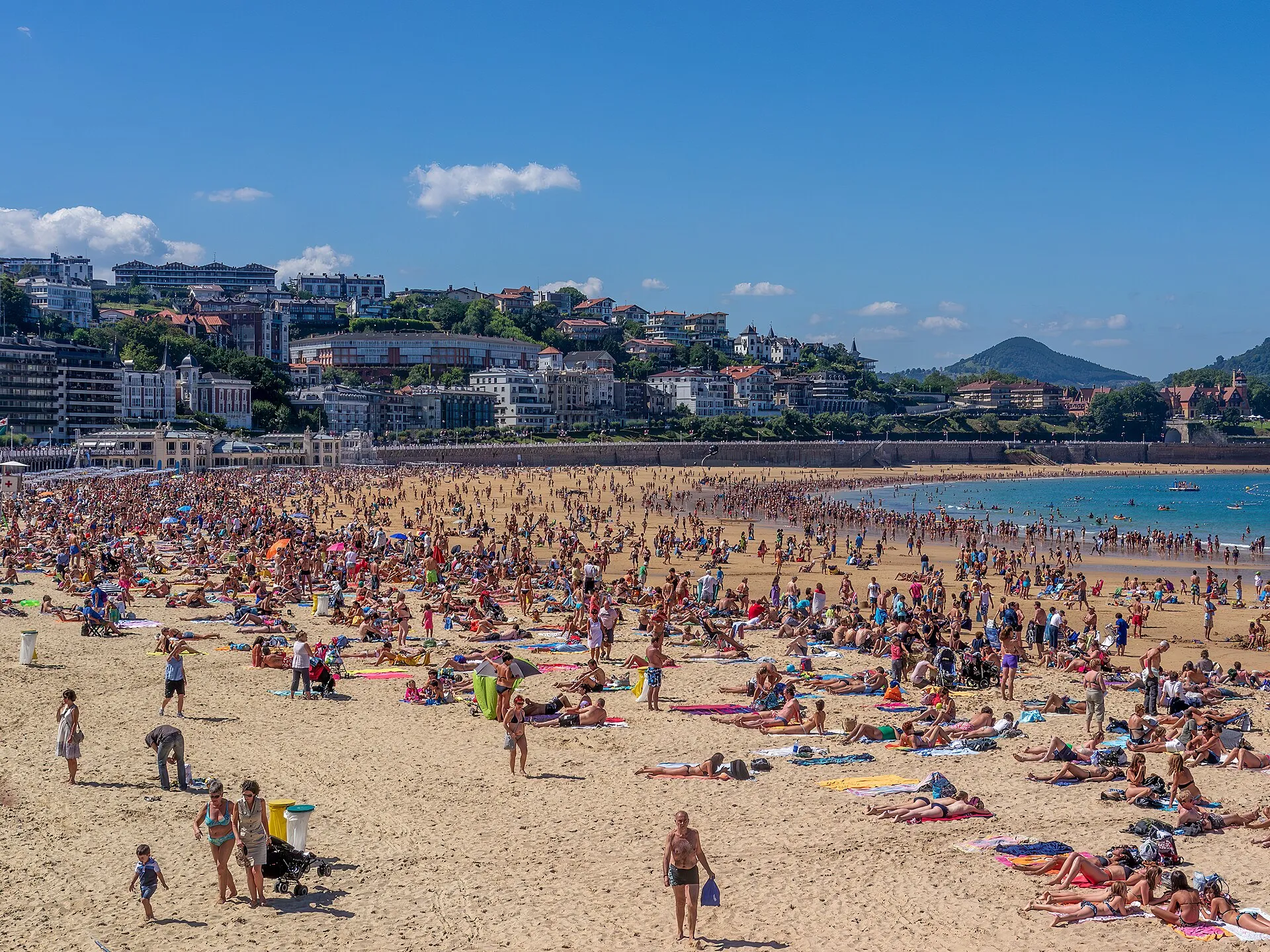
- Peak season (July-August) — Water reaches 20-22°C and sunshine averages eight hours a day, but open sand is scarce after midday; arrive before 10 AM for calm water, room to spread out, and soft photographic light.
- Shoulder season (June & September) — Pleasant air around 20-24°C, thinner crowds, and still-swimmable water make these the connoisseur's months.
- Low tide — The beach nearly doubles in width, revealing firm sand ideal for long walks; a glance at the tide table decides how much beach you will actually find.
- Sunset — Late-afternoon light pours gold across the bay, and the western end near the Miramar Palace gardens offers an unobstructed view of the sun dropping behind Monte Igueldo.
- Winter — The sand empties but the promenade stays busy with walkers; crisp, clear days deliver the sharpest views along the whole crescent.
Admission and Costs
One of La Concha's great virtues is how little it costs to enjoy. The essentials are free, and the extras are modest.
- Beach access — Completely free, year-round, with no reservation needed.
- Sun lounger — About €6-8 (around $7-9) per day in summer.
- Umbrella — About €5-7 (around $6-8) per day.
- Kayak hire — Roughly €12-15 (around $13-17) per hour from operators near the promenade.
- Paddleboard hire — Roughly €15-20 (around $17-22) per hour.
- Santa Clara launch — About €4 (around $4.50) round trip, summer only (June-September).
- La Perla thalassotherapy — Pool-and-spa circuits from roughly €25 (around $28); book ahead in peak season.
Fares and operating seasons shift year to year, so confirm the current timetable with San Sebastián's tourism board before you build your day around the last launch back from the island.
The Case for a Guide
La Concha is free to walk and easy to find, but a local guide turns a postcard beach into a layered story of the city:
- Royal history — How Queen Isabel II's doctor-ordered sea baths in 1845 transformed a fishing cove into the summer court of Spain, and why the Miramar Palace stands where it does.
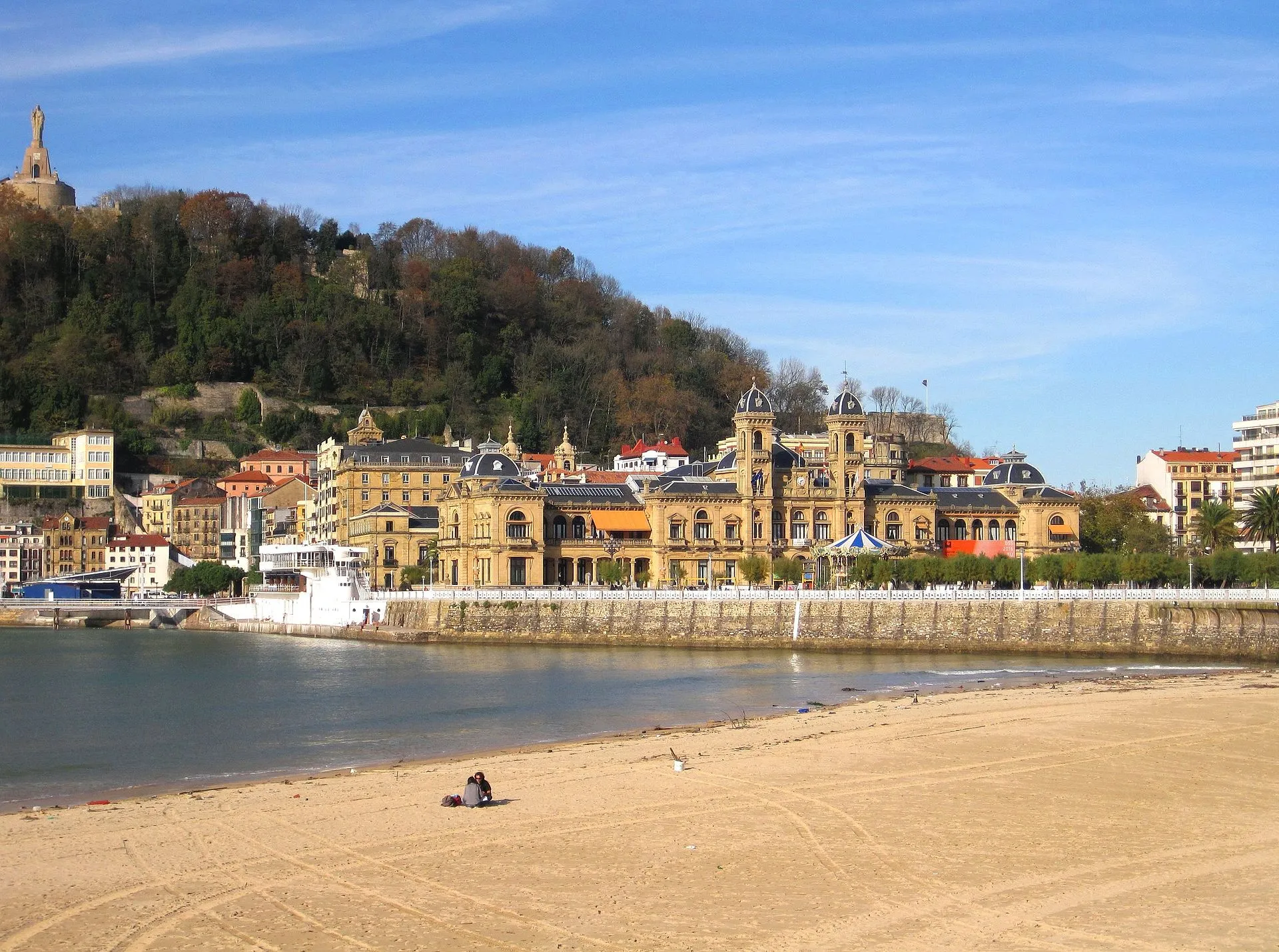
- Reading the architecture — The tales behind the 1916 balustrade, the twin-globe lamps, the former casino that is now the city hall, and the La Perla bathhouse.
- Working the tides — Locals know the exact windows when the sandbanks emerge and where the water stays clearest, knowledge that reshapes the day hour by hour.
- Hidden viewpoints — The lesser-known terraces above the bay, from the Miramar gardens to the Paseo Nuevo, that most visitors walk straight past.
- Joining the dots — Seen with context, the geography linking the beach, the Parte Vieja, and Monte Igueldo makes the rest of your San Sebastián visit richer.
Tips for Visitors
A few practical habits make a day on the bay smoother:
- Arrive early in summer — By noon on hot days open sand is hard to find; locals claim their spots by 10 AM.
- Check the tide — Low tide exposes wide, firm sand for walking and games; high tide pushes everyone toward the promenade wall.
- Bring water shoes — The bay is mostly sandy, but rocky patches appear near the western end at low tide.
- Mind the jellyfish flags — Lifeguards flag occasional summer jellyfish arrivals; yellow means caution, red means stay out.
- Rinse at the free showers — Public shower stations line the promenade, handy before heading to the Parte Vieja for pintxos.
- Skip the parking hunt — Street spaces near the beach fill early, so use the underground car park at the Boulevard or come by San Sebastián city bus.
Frequently Asked Questions
When is the best season to visit La Concha Beach?
Peak season (July-August): Water reaches 20-22°C, sunshine averages 8 hours daily, but expect crowded sand by midday. Shoulder season (June & September): Pleasant air temperatures around 20-24°C, thinner crowds, and still-swimmable water.
How much does it cost to access La Concha Beach?
Beach access: Completely free, year-round, no reservations needed. Sun lounger rental: €6-8 per day during summer months. Umbrella rental: €5-7 per day. Kayak hire: €12-15 per hour from operators near the promenade.
When is the best time of day to visit La Concha Beach in summer?
Arrive early in summer: By noon on hot days, finding open sand becomes a challenge — locals claim their spots by 10 AM.
How do you get to La Concha Beach?
The beach fronts the city centre, a flat five-to-ten-minute walk from the old town and most central hotels. Several Dbus city lines stop along the Boulevard and Alderdi Eder, and the underground car parks at the Boulevard and under the beach itself are the easiest places to leave a car, since nearby street parking fills early.
Is La Concha Beach safe for swimming and good for families?
Yes. Santa Clara island breaks the Atlantic swell, so La Concha is one of the calmest city beaches on the coast — gentle enough for small children. Lifeguards patrol in the bathing season and fly a flag system (green, yellow, red); a yellow or red flag usually signals surf or a jellyfish advisory rather than pollution.
Can you visit Santa Clara island in the middle of the bay?
In summer (roughly June to September) small motor launches run from the quay at the end of the beach to the island, where a tiny beach appears at low tide, a café operates seasonally, and a short path climbs to the lighthouse. Strong swimmers also make the crossing, and the water around the island is clearest at high tide.
Is La Concha Beach accessible for visitors with reduced mobility?
The promenade is flat, broad, and step-free along its whole length, so the bay is easy to enjoy from the railing without touching the sand. In the summer bathing season the municipal beach service runs assisted-bathing points with amphibious chairs and boardwalks onto the sand; confirm the current timetable and meeting point with the tourist office before you go.