
Walking Route
Walking Routes
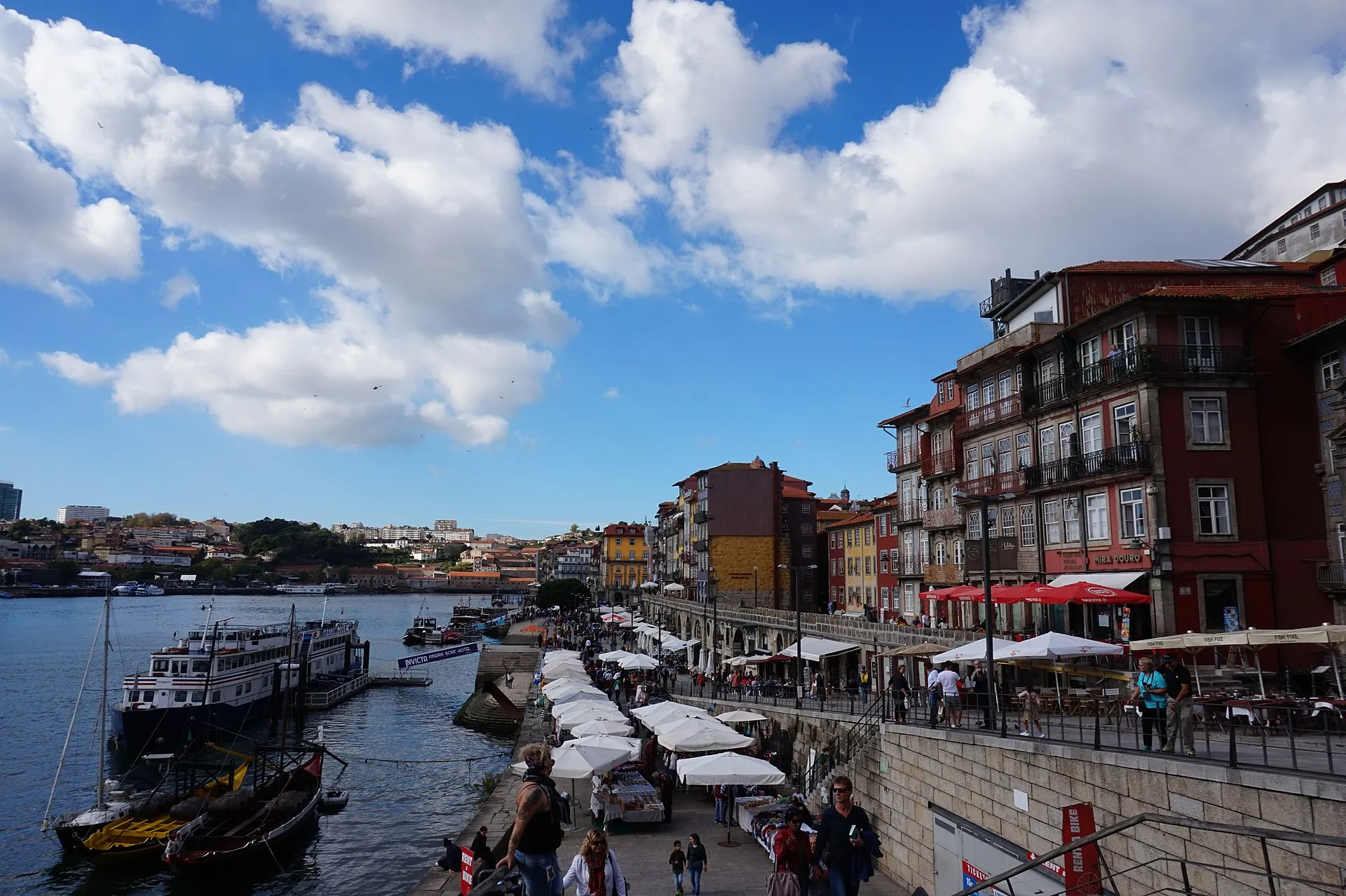
The most rewarding way to see Ribeira is on foot, descending from the cathedral terrace to the water. The numbered route above links the district's seven signature stops, but the pleasure is in what you pass between them: the arcaded ground floors of Rua da Fonte Taurina, one of the oldest surviving medieval streets; washing strung between windows four storeys up; and the narrow escadas — stepped alleys — that cut straight down the slope.
On the quay, moored rabelo boats sit bow-to-stern against the current, and the café terraces of the Cais da Ribeira face the full sweep of the Gaia waterfront. Keep a little energy in reserve: every route down ends with the climb back up to the upper city, or a crossing of the bridge to Gaia.
Local Life
Away from the postcard quay, Ribeira is still a lived-in neighbourhood. Mornings belong to residents and fishmongers before the tour groups arrive; washing hangs from the upper windows and neighbours trade news across the alleys. The food is honestly Porto: a bowl of caldo verde, grilled sardines in June, a plate of tripas à moda do Porto — the tripe-and-bean stew that earned locals the affectionate nickname tripeiros.
The genuine tascas sit one or two streets back from the river, where the menus are in Portuguese and the daily special is chalked on a board rather than printed in six languages. Uphill, the city opens onto the grand Rua das Flores and the celebrated Livraria Lello bookshop, a reminder that Ribeira is the ground floor of a much larger historic centre.
When to Visit
Morning (9-11 AM): quiet streets, fishmongers setting up, and golden light on the eastern-facing façades. Late afternoon (5-7 PM): the sun drops behind the Douro canyon and the Gaia lodges across the river glow warm. Evening: riverside restaurants serve grilled fish under string lights with the illuminated bridge overhead.
São João (June 23): Porto's biggest festival floods Ribeira with sardine grills, fireworks over the Douro, and the city's tradition of bopping strangers with squeaky plastic hammers. Avoid midday in July and August, when the sun reflects off the river and granite with no shade to escape to.
Admission and Costs
Walking the district: free — it is an open-air neighbourhood. Guided Ribeira walking tour: €10-18 per person (2 hours, history plus hidden corners). Six Bridges Douro cruise from the quay: €15-25 per person (50 minutes). Private food and wine tour: €60-120 per person (3 hours, with tastings in Ribeira and Gaia). Rabelo boat experience: €20-35 per person. Entry to the paid monuments nearby is separate — the Palácio da Bolsa guided visit runs around €12 ($13) and the Igreja de São Francisco about €9 ($10).
The Case for a Guide
A good local guide turns Ribeira's tangle of lanes into a legible story. The alleys twist and dead-end, so a guide threads you to the hidden squares and viewpoints most visitors walk straight past, and sequences the monuments — cathedral, Casa do Infante, Palácio da Bolsa, São Francisco — so you never double back.
The deeper value is context: the port-wine trade, the British Factory House on Rua do Infante Dom Henrique, and the economic forces that stacked these houses up the hillside come alive with narration rather than a plaque. Guides also steer you away from the interchangeable waterfront tourist traps toward the family tascas where locals actually eat, and time the Ribeira → Dom Luís Bridge → Gaia cellars sequence so you catch the best light on the river.
Tips for Visitors
Wear grippy shoes: the granite cobbles and stepped alleys are slick after rain and uneven everywhere. Eat one street back: restaurants just off the waterfront offer better food at lower prices than the quay-front terraces aimed squarely at tourists. Mind your valuables in the crowds along the Cais da Ribeira, where pickpockets work the busiest stretches.
For the classic wide-angle photograph of Ribeira, cross to the terrace of the Mosteiro da Serra do Pilar on the Gaia side. Combine smartly: Ribeira, then the Dom Luís I Bridge, then the Gaia port cellars makes a natural half-day sequence.
Frequently Asked Questions
How do visitors get down to Ribeira from the upper city?
Ribeira sits at the bottom of a steep slope, so the descent is part of the experience. From São Bento station you can walk down through Rua das Flores and Rua de Mouzinho da Silveira in roughly ten minutes, while the Funicular dos Guindais drops from Batalha to the riverside right beside the Dom Luís I Bridge. Taxis and ride-hailing can reach the quay along Rua da Alfândega, but the lanes themselves are pedestrian-only cobbles and stairways.
How long should I set aside for Ribeira?
Allow at least half a day. Wandering the quay, the Praça da Ribeira and the tangle of medieval lanes takes one to two hours, and most visitors add time to cross the Dom Luís I Bridge to the Gaia port lodges or to linger over lunch on a riverside terrace. Photographers chasing the golden-hour light along the Douro often return a second time near sunset.
Can I take a boat trip directly from Ribeira?
Yes. The Cais da Ribeira quay is the main departure point for the 50-minute Six Bridges Douro cruises aboard replica rabelo boats — the same flat-bottomed craft that once carried wine barrels downriver. Longer cruises upstream toward the terraced Douro Valley vineyards also leave from here and from the Gaia bank directly opposite.
Is Ribeira a good area to stay in Porto?
It is the most atmospheric base in the city, with guesthouses tucked inside restored townhouses steps from the river, but the steep stairways and lively late-night terraces are not for everyone. Visitors who prefer quieter nights and easier metro access often choose rooms on the streets above, around São Bento or the cathedral, and walk down into Ribeira by day.