
Walking Routes
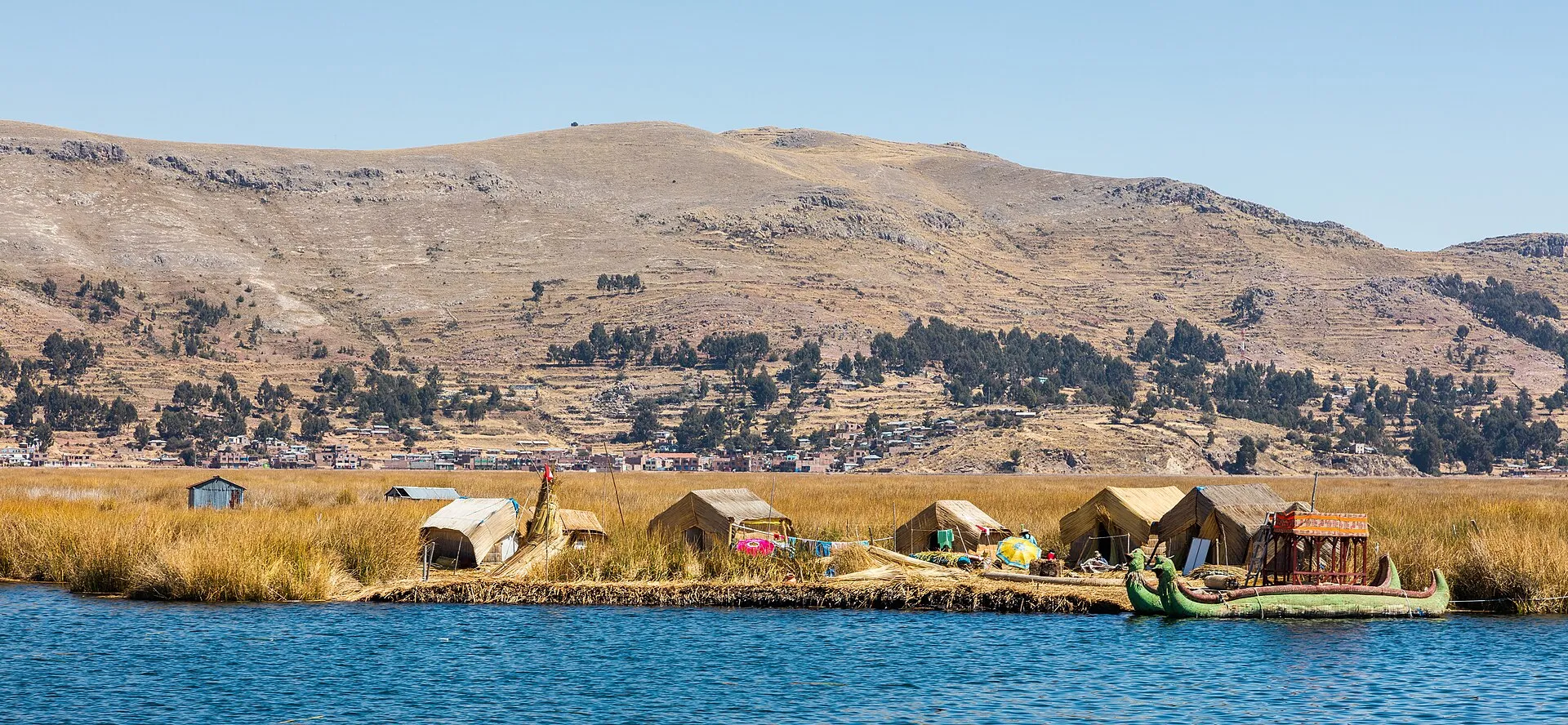
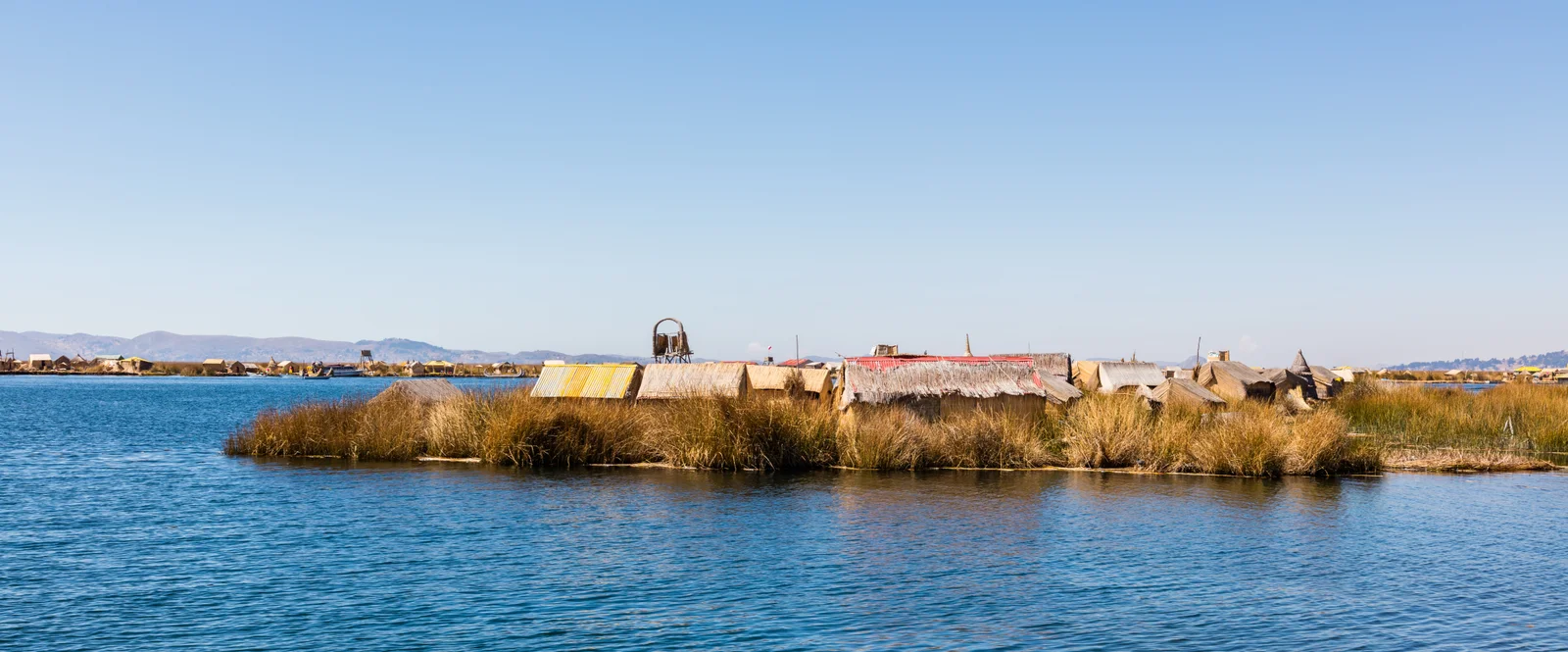
The floating village is less a single island than a scattered archipelago of roughly 70 small platforms, and a good visit strings several of them together on foot and by reed boat. Most tours land on a "welcome" island, where you step off the boat onto spongy totora and gather for the reed-stacking demonstration before setting out.
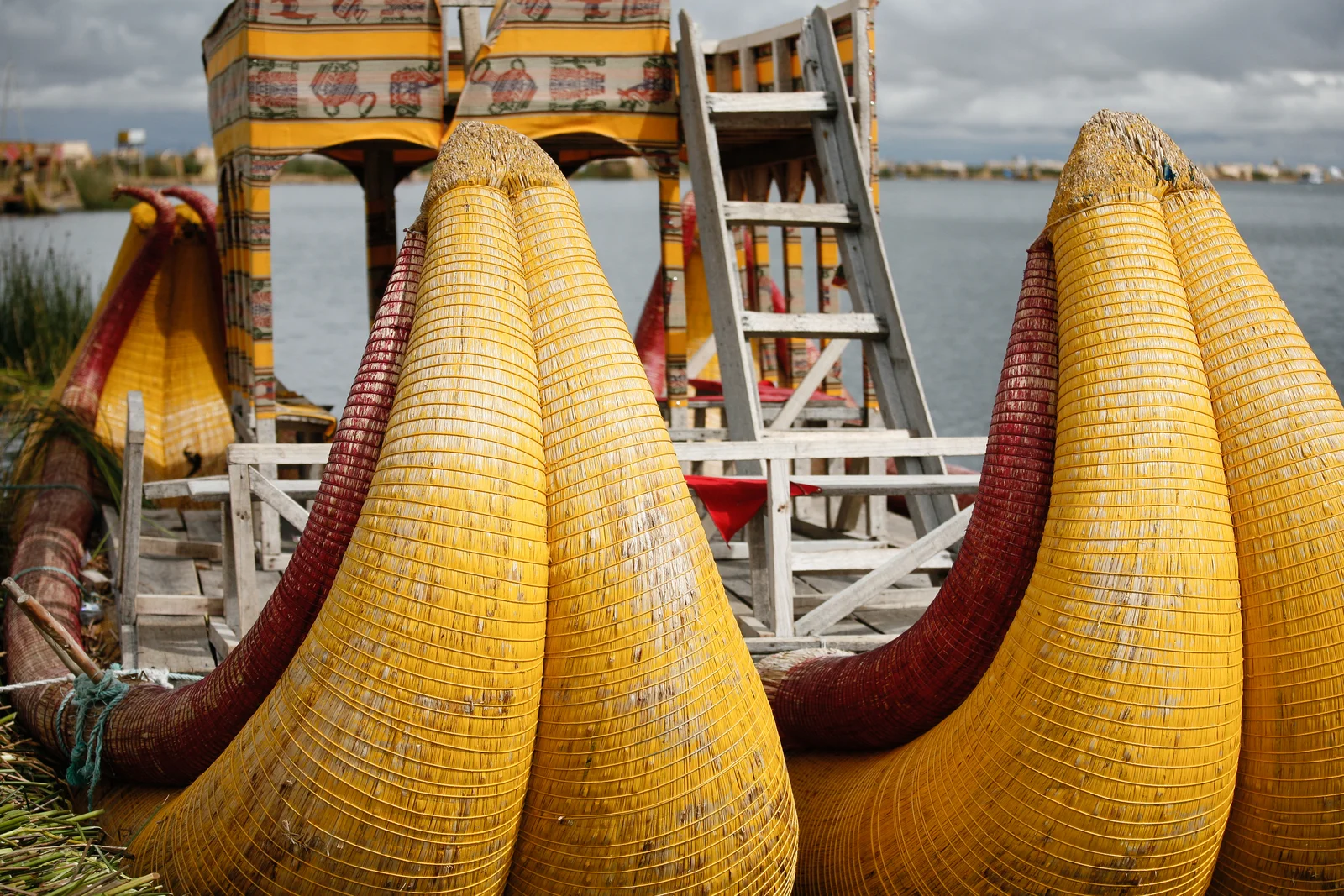
From there the natural loop is to cross the island's soft mat toward the reed watchtower, climbing it for a panorama across the Lake Titicaca channels, then descend to the mooring where a dragon-headed balsa de totora waits. The short cruise to a neighboring island is the walk's centerpiece — the islands sit only a few hundred meters apart, linked by open water rather than paths.
On the second island, follow the perimeter loop past the reed houses, the communal cooking area, and the small handicraft displays before circling back to the shaded gathering space. Ask your guide to route you to a quieter outer island, a longer boat leg from Puno, where the loop feels less rehearsed and you can walk the full length of the platform.
Underfoot the ground compresses and tilts, so pace yourself, keep to the thicker central mat, and stay clear of the soft edges where the reeds meet the lake. The entire circuit — two or three islands with boat legs between — takes about 1.5 to 2 hours at an easy pace.
Local Life
Life on the Uros islands still turns on the rhythms of the lake. Families rise early to check nets set overnight for carachi and other small Lake Titicaca fish, and to hunt for eggs and birds among the reed beds — the totora itself is food as well as building material, its white base peeled and eaten fresh. Every couple of weeks the community lays new bundles of reed over the platform as the underlayers rot away, a shared chore that keeps the ground firm and the settlement alive.
The women are the visible face of daily culture, weaving brightly colored tapestries and embroidered cloth on the doorstep between household tasks, while children paddle miniature reed boats and, on many islands, head off to a floating schoolhouse or a mainland school by boat. There are no cafes in the conventional sense; hospitality happens inside the reed homes, where families may offer mate de coca or muña tea and grilled trout to visitors who linger.
Solar panels now power radios and lights, and satellite dishes bring television to platforms that bob gently through the night, a quiet blending of old and new. The daily pulse is unhurried and communal — cooking over clay-based stoves, mending boats, tending reeds — and it is best felt on the outer islands, where the day continues around you rather than pausing for the camera.
Uros Floating Islands timeline
- Pre-Inca
The Uru take to the water
The Uru, who called themselves "people of the lake," are among the oldest peoples of the Andes. To stay beyond the reach of mainland rivals they wove platforms of totora reed and lived afloat, free to cut their anchor ropes and drift away from any threat.
- 15th c.
A refuge from Inca and Aymara expansion
As the Aymara kingdoms and then the Inca pushed across the altiplano, the floating islands let the Uru keep their independence on open water, paying tribute in fish and reed rather than surrendering their way of life.
- 16th c.
The colonial lake
Spanish conquest reorganised the shoreline around Puno, and over the following centuries the Uru increasingly intermarried with lakeside Aymara communities and adopted their language.
- 1950s
The Uru language fades into Aymara
The distinct Uru-Pukina tongue slipped toward extinction as Aymara became the everyday language of the islands, though reed-building skills passed down unbroken.
-
Titicaca National Reserve is created
Peru protected the lake's reed beds and birdlife as the Reserva Nacional del Titicaca, formally safeguarding the totora stands the islands are built and rebuilt from.
- 1980s
Tourism arrives from Puno
Organised half-day launches from Puno turned the nearest islands into one of Peru's signature cultural visits, bringing both income and the pressures of performance to the community.
- Today
Solar panels, floating schools and homestays
Roughly 1,200 Uru still live across the archipelago, blending solar power, radios, and visitor homestays on the outer islands with the centuries-old cycle of laying fresh reed every two weeks.
Uros Floating Islands in Pictures
When to Visit
Boat departures from Puno: Typically 7-8 AM; the islands are a 30-40 minute boat ride from the port. Visit duration: 1.5-2 hours on a half-day tour; longer with lunch or a traditional reed boat ride. Best: Morning light for photography; arrive with the first boats to beat the mid-morning crowd. Combine with Taquile: Full-day tours visit both — the Uros first, then continue to Taquile.
Admission and Costs
Community entry fee: S/10 ($2.70) per visitor, paid directly to the island community. Group half-day tour: S/30-60 ($8-16) per person including boat transport. Traditional reed boat ride: S/10-20 ($2.70-5.40) for a short cruise between islands. Private boat + guide: S/150-300 ($40-80) for a visit to quieter outer islands with more authentic interactions.
The Case for a Guide
Left to itself, a Uros visit can collapse into fifteen rehearsed minutes: a reed-stacking demonstration, a souvenir table, and a photo on a dragon-headed boat. A guide with real standing in the community is what turns it back into an encounter.
The engineering only makes sense when someone explains it: how the floating root-mass of khili is sawn free and lashed together as a foundation, why fresh totora must be laid every couple of weeks as the underlayers rot, and how eucalyptus stakes and ropes keep the whole archipelago from drifting across Lake Titicaca. A guide also carries the history — the Uru identity as "people of the lake," the retreat onto the water, the near-loss of the Uru language to Aymara — that no demonstration conveys on its own.
Just as importantly, a guide who works with families on the outer islands can route you past the crowded welcome platforms to where daily life carries on, translate a genuine conversation rather than a sales pitch, and steer your soles toward the households that benefit most. Pairing the visit with Taquile or the pre-Inca tombs of Sillustani rounds out a fuller picture of the Puno altiplano than the islands alone can give.
Tips for Visitors
Choose a good guide: Mass-market tours rush you through the closest islands for a rehearsed demonstration — seek operators who visit outer islands where daily life is less performative. Buy directly from artisans: Purchasing crafts on the islands supports the community directly — prices are fair and negotiation is gentle. Dress warmly: The boat ride across the lake is cold and windy, even on sunny days — bring a windproof layer and hat.
Combine with Taquile Island: The full-day Uros + Taquile combination offers the most complete Lake Titicaca experience. Respectful photography: Ask before photographing residents, especially children — most people are happy but appreciate the courtesy. Don't jump: The reed ground is soft but the islands can tilt — walk carefully, especially near the edges. Pair with the land: the pre-Inca chullpa burial towers of Sillustani make a natural half-day counterpart on a separate outing from Puno.
Frequently Asked Questions
When is the best season to visit the Uros Floating Islands?
May is the highest-rated month, marking the start of the dry season when Lake Titicaca's waters are calm, skies are brilliantly clear at altitude, and the totora reed islands are freshly maintained after the rains. April through October generally offers reliable conditions for the boat crossing from Puno. December through February brings the rainy season, with rough lake conditions that can make the 30-minute boat ride uncomfortable, and occasional storms that cancel departures entirely.
What are the public access hours for Uros Floating Islands?
Boat departures from Puno: Typically 7-8 AM; the islands are a 30-40 minute boat ride from the port. Visit duration: 1.5-2 hours on a half-day tour; longer with lunch or a traditional reed boat ride.
What does a visit to Uros Floating Islands cost?
Community entry fee: S/10 ($2.70) per visitor, paid directly to the island community. Group half-day tour: S/30-60 ($8-16) per person including boat transport. Traditional reed boat ride: S/10-20 (~$2.70-5.40) for a short cruise between islands.
What is the best way to experience Uros Floating Islands?
Choose a good guide: Mass-market tours rush you through the closest islands for a rehearsed demonstration — seek operators who visit outer islands where daily life is less performative.
How do you get to the Uros Floating Islands from Puno?
The islands sit in a sheltered bay roughly 5 km (3 mi) off Puno, reached only by boat from the city's lakefront port on Avenida El Puerto. Shared tour launches leave in the morning and take about 30-40 minutes across the reed channels; there is no road, bridge, or public ferry.
Nearly every visitor arrives on a Puno-based half-day tour that bundles the boat, the S/10 community entry fee, and a guide, often continuing on to Taquile Island afterward. Independent travellers can also negotiate directly with boatmen at the port, though a guided launch is usually cheaper once the entry fee and interpretation are factored in.
What should I bring for the altitude and the lake crossing?
Lake Titicaca sits at about 3,812 m (12,507 ft), so acclimatise in Puno for a day before the trip and move slowly on the spongy reed surface. The equatorial sun is fierce at this altitude even when the air is cold, so pack high-factor sunscreen, sunglasses, a brimmed hat, and a windproof layer for the exposed boat ride.
Bring small soles in cash for the entry fee, a reed-boat ride, and handicrafts, as there are no card facilities on the islands. Drinking water, coca tea or sweets for the altitude, and a light motion-sickness remedy for the choppier rainy-season crossings round out the essentials.